Learning as a Lifelong Experience
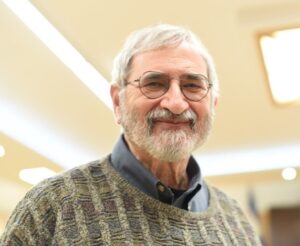
Nov 4, 2022 By Edward L. Greenstein | Commentary | Lekh Lekha
An attentive reading of the Torah and of Parashat Lekh Lekha in particular leads to a very different understanding. Abraham was a learner—he needed to grow in his trust of the Deity, and in himself. In this sense, Abraham’s career models the path of a lifelong learner.
Read More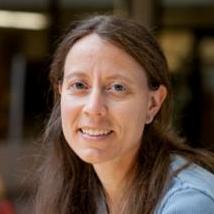
After the Flood
Oct 28, 2022 By Alisa Braun | Commentary | Noah
Today it’s common to find divrei torah that use Parashat Noah to raise awareness about our impact on the environment. Yet I recently discovered a voice from the first stirrings of modernity that seemed to already intuit, within a theological framework, the devastating impact of humans on the global environment. For Obadiah Sforno (1475–1550), the “lawlessness” during the days of Noah did not just cause God to flood to earth. It was a force capable of ruining the climate and planet, and thereby shaping the course of human history ever after.
Read More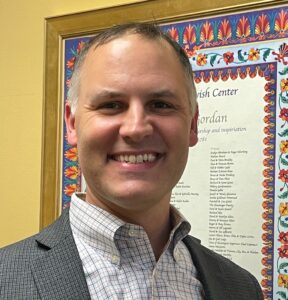
The World of Creation in Each of Us
Oct 21, 2022 By Israel Gordan | Commentary | Bereishit
One of the most well-known, and controversial, passages in the Torah comes after God creates man and woman: “God blessed them and said to them, ‘Be fertile and increase, fill the earth and master it; and rule the fish of the sea the birds of the sky, and all living things that creep on earth’” (Gen. 1:28).
Read More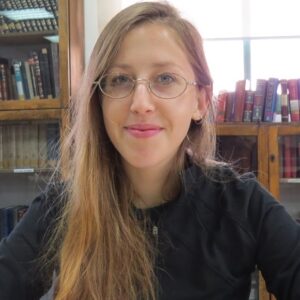
Impermanence by Design
Oct 14, 2022 By Grace Gleason | Commentary | Sukkot
If your sukkot are anything like mine, something usually falls off or blows away at some point during the week. This was true of my backyard sukkah in North Carolina, whose hanging decorations were not securely fastened enough to withstand the wind, and the skhakh of my Upper West Side balcony, which unfortunately ended up on someone else’s roof.
Sukkot are impermanent by design. This is our lesson and our meditation throughout the week. In the Babylonian Talmud (Sukkah 23a), our rabbis argue about how strong a wind a sukkah should be able to withstand in order to be considered kosher: does it need to be able to withstand a strong wind, or just average wind? We can feel the tension—on the one hand, we want our sukkot to be strong and sturdy, on the other hand, the holiday pushes us to acknowledge that they may just blow away. The Mishnah in Sukkah 22a suggests that in the ideal sukkah, one should be able to see stars through the roof—in order, I think, that we might contemplate the great expanse of the universe, and our relative temporality and insignificance.
Read More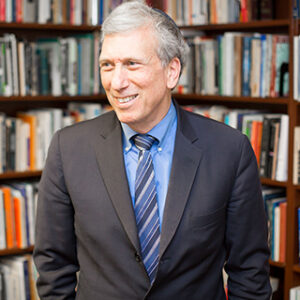
Making Every Word Count
Oct 7, 2022 By Arnold M. Eisen | Commentary | Ha'azinu
Ha’azinu is remarkable in two respects: what it says, and how it chooses to say it. My focus here will be the latter, but let’s note with regard to the former that in this, his final address to the Children of Israel before a set of farewell blessings, Moses reviews all of his people’s past, present, and future. He begins by calling on the God who had called Israel into being and called him to God’s service. He reminds Israel that God has chosen them and still cares for their well-being. He prophesies that despite all that God and Moses have said and done, Israel will abandon God, as they had in the past. God will punish them, as in the past, but never to the point of utter destruction. In the end, God and Israel will reconcile.
Read More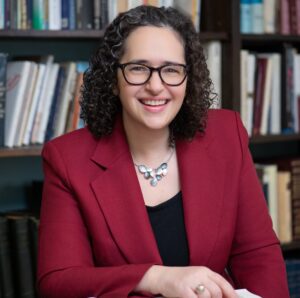
The Courage to Hope
Sep 30, 2022 By Rabbi Ayelet Cohen | Commentary | Shabbat Shuvah | Vayeilekh | Rosh Hashanah | Yom Kippur
Shabbat Shuvah represents the place between hope and fear; between transformation and unrealized aspirations. We may have made big promises on Rosh Hashanah, resolving to make significant changes in our lives, entering the year with a sense of excitement and optimism. But as Yom Kippur draws closer, we become more attuned to our own shortcomings. So much is beyond our control. Changing old patterns is arduous, the path uncertain. Confronting our own limitations, we can feel afraid and alone. The spiritual work of this moment lies in discerning the difference between acknowledging our limitations and succumbing to fear.
Read More
Confronting Our “Concealed Things”
Sep 23, 2022 By Gordon Tucker | Commentary | Nitzavim | Rosh Hashanah | Yom Kippur
The concealed things concern the Lord our God; but with overt matters, it is for us and our children ever to apply all the provisions of this Teaching. (Deut. 29:28)
There is, however, another reading of this verse, given by Nahmanides (Ramban), in the 13th century, and it is one that forces us to a certain deeper level of introspection at this time of year.
Here’s a paraphrase of what he says: The “concealed things” are not sins committed by others that are out of our view, and thus out of our control. Rather, they are the sins committed by us, but that are nevertheless out of our view and awareness. As long as we are not aware of them, they will be known only to God. But they are only out of our control because they are not known to us.
Read More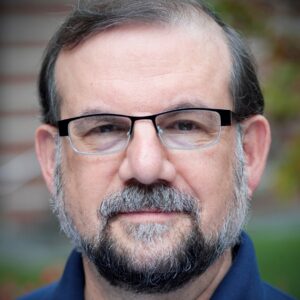
Count Your Blessings
Sep 16, 2022 By Burton L. Visotzky | Commentary | Ki Tavo
Ki Tavo is a Torah portion with three parts of interest. First, there are the curses and imprecations with which God threatens the Jewish people if we do not do God’s will. As we do when we read the Torah in synagogue, we will quickly and quietly move past the scary stuff.
Second, we are commanded to bring our first fruits to the Jerusalem Temple once we have settled the land. And then we are commanded to offer them to the priest in acknowledgement of God’s beneficence. When we do so, we recite a fixed liturgy, reinforced, no doubt, by hearing the many Israelites ahead of us in the line reciting the exact same words as the priest prompts them. “Repeat after me . . .” he says.
Arami oved avi—My ancestor was a wandering Aramean.” (Deut. 26:5)