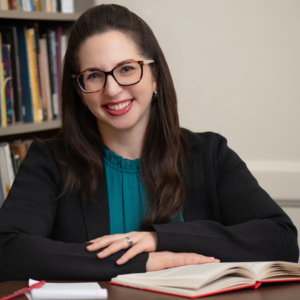
Why Does the Torah Care About Returning Lost Property?
Feb 17, 2023 By Yael Landman | Commentary | Mishpatim | Shabbat Shekalim
There is no obligation in the common law to retrieve someone’s lost property and return it. So why does the Torah make a point of establishing such a requirement? Why does the Torah specify that the owner of the lost animal is the finder’s enemy, and what is the scope of the finder’s responsibilities?
Read More
How Do We Meet At Sinai?
Feb 10, 2023 By Amelia Wolf | Commentary | Yitro
At the moment God initiates a new covenant with the People of Israel, they must learn to demarcate the spaces of their new relationship. Some of these boundaries are lines drawn by God. Others are fences maintained by human beings. How can humanity and the Divine exist in the same space and time? And what can we learn about how humans can exist in relationship with each other from that encounter?
Read More
How Do We Keep Our Hands Up?
Feb 3, 2023 By E. Noach Shapiro | Commentary | Beshallah
How, as a community, can we support the caregivers as they support the careseekers? What would it look like to, like Aaron and Hur, help hold their arms high? As a partial answer to that question, the Center for Pastoral Education will soon be launching two mental health/spiritual healing initiatives.
Read More
Purim and the Parashah
The Shabbat before Purim is called Shabbat Zakhor and is connected to the story of Amalek. Find more on Amalek and his connection to Haman here. Toledot Two Brothers, Two Candidates (Rabbi Joshua Heller) Tetzavveh How We Wear Our Judaism (Rabbi Lewis Warshauer) Clothing Ourselves in Sanctity (Rabbi Matthew Berkowitz) The Masks We Wear (Ofra Backenroth) Vayak-hel–Pekudei From […]
Read More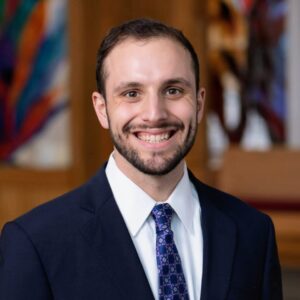
How Does Moses Cope When Expectations Fall Short?
Jan 27, 2023 By Andy Weissfeld | Commentary | Bo
Imagine the disappointment or sadness one can feel when a much more important matter fails to go as hoped. Moses finds himself in this situation in this week’s parashah, as God’s promise to free the Israelites has yet to fully play out. How does Moses cope with the fact that his expectations have not yet been met? One especially challenging section of our parashah offers a clue.
Read More
Why Did Moses Have a Speech Disability?
Jan 20, 2023 By Sarah Wolf | Commentary | Va'era
Moses is the quintessential prophet in the Jewish tradition. Moses’s job, like the task of all other prophets, is to convey the word of God to the people. He fulfills this role, the Torah tells us, in exemplary fashion: “Never again did there arise in Israel a prophet like Moses” (Deut. 34:10). Moses is not just the paradigm for all prophets that follow, he is the best in the business. But if Moses is supposed to serve as the first and foremost prophet—that is, to be the expert at telling people what God wants from them—why would God choose a mouthpiece who has a speech disability?
Read More
God’s Human Partner
Jan 13, 2023 By Ismar Schorsch | Commentary | Shemot
This week marks the 50th yahrzeit of Rabbi Abraham Joshua Heschel z”l. When visiting mourners in the immediate days after their loss, we comfort them by invoking God as Ha-Makom, the One who is present in every Place, as if to affirm that even when darkness befalls us, God is not absent. The absolute omnipresence of God in this unique divine name captures the very essence of Abraham Joshua Heschel’s resolve and courage to believe after the Holocaust.
Read More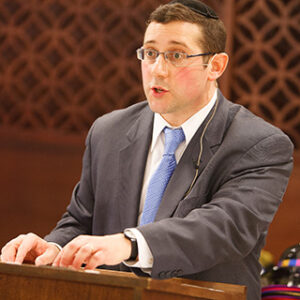
Parenting Lessons from the Parashah
Jan 6, 2023 By Jonathan Milgram | Commentary | Vayehi
Parashat Vayehi, the final parashah in the book of Genesis, presents the Israelites on the cusp of a major transition. While Genesis highlights family relations, Exodus introduces the idea of peoplehood. Genesis closes with a family gathering and, by next week, the Israelites will be described as a nation. What lessons does Genesis, and Vayehi in particular, offer about effective parenting? And what can the Torah teach us about the relationship between family and nation?
Read More