
Search Results
Back to JTS Torah Online's Main page
Time to Mourn
Jan 19, 2018 By JTS Alumni | Commentary
By Rabbi Joseph Krakoff (RS ’98)
Death can make us uneasy. We don’t always know what to say to the bereaved. We may attempt to bring comfort by offering words that, though well-meaning, often fall flat—or worse. The truth, though, is that there are no magical, healing words that have the power to bring instant comfort. Our Jewish tradition brilliantly instructs us to extend sincere wishes of comfort and then remain silent, allowing the mourner to shape the conversation as they see fit. The reality is that our presence and our hugs speak louder and truer than any words we could utter.
Read More
Miracles of Biblical and Everyday Proportions
Jan 19, 2018 By Joel Alter | Commentary | Bo
Last week, God pummeled Egypt unprecedentedly with hail:
The LORD sent thunder and hail, and fire streamed down to the ground, as the LORD rained down hail upon the land of Egypt. The hail was very heavy—fire flashing in the midst of the hail—such as had not fallen on the land of Egypt since it had become a nation. (Exod. 9:23–24)
On the combination of fire and ice, Ibn Ezra comments that this was “a wonder within a wonder.”
Read More
Forest Dark: A Novel
Jan 17, 2018 By Library of the Jewish Theological Seminary | Public Event video
A discussion with New York Times best-selling author Nicole Krauss on Forest Dark: A Novel.
Read More
A Jewish Response?
Jan 12, 2018 By Alisa Braun | Commentary
“And now in June 1943 something very strange is happening . . .”
Does Gertrude Stein belong on the “Jewish Bookshelf?” It probably depends on whom you ask. Alan Dershowitz accused Stein of being one of the collaborators who “made [the Holocaust] possible” since she had survived in France due in large part to a friendship with a Vichy government official. I’m guessing he would say “no.”
Read More
Redeeming the Plagues
Jan 12, 2018 By Miriam Liebman | Commentary | Va'era | Pesah
Every year at the Passover seder, there is a brief pause in the chaos when everyone dips a finger in their cup of wine and spills a single drop for each of the ten plagues. We are spilling wine to remind ourselves that although the plagues served as miracles for us, those miracles came at the expense of others.
Read More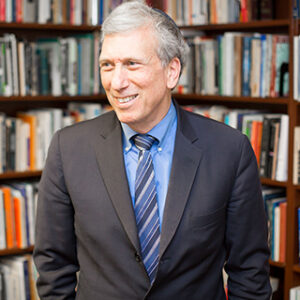
Summoning a People
Jan 5, 2018 By Arnold M. Eisen | Commentary | Shemot
Two very different stories about who we are as Jews are forcefully presented in the opening chapters of the Book of Exodus. One of them—captured in the Hebrew title of the book, Shemot or “Names”—declares that we are the Children of Israel: a nation, a people, defined in the first instance and forever after by our ancestors and the paths they travelled. The other story teaches that we are disciples of Moses, the human protagonist of the book, and, like him, are servants of the God Who called to Moses out of the Burning Bush and bound us in covenant at Sinai.
Read More
Reading Hosea Anew
Jan 5, 2018 By JTS Alumni | Commentary
By Dr. Mayer I. Gruber (RS ’70)
For 41 years, I taught and researched the biblical prophets, first at Spertus College of Judaica in Chicago and later at Ben-Gurion University of the Negev in Beer Sheva, Israel. I applied and developed the insights of my teachers at JTS—H. Louis Ginsberg, Robert Gordis, and Abraham Joshua Heschel, all of blessed memory, and, may he be distinguished for long life, Shalom M. Paul—into the intricacies of the biblical book of Hosea. The result is my new translation, introduction, and commentary.
Read More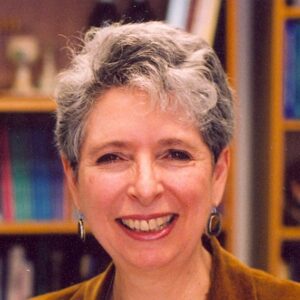
Can We Grow?
Dec 29, 2017 By Deborah Miller | Commentary | Vayehi
Family relationships are often complicated, but the family of Jacob is a particularly jumbled mess. In this week’s parashah, the story has hints and echoes of a decades-long, tangled skein of family dynamics. We see these in two particularly problematic scenes in this parashah. Both scenes illustrate William Faulkner’s truism that “the past is never dead. It’s not even past.” And in this story, we see how the past leaks into the future.
Read More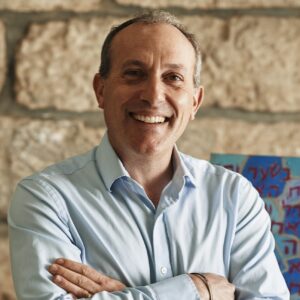
The Life of a Hebrew Poet
Dec 29, 2017 By Matthew Berkowitz | Commentary
Born in 1873 in Zhitomir, Ukraine, Hayim Nahman Bialik went on to become the greatest Hebrew poet “since the time of Yehudah Halevi.” Holtzman identifies what made Bialik a national poet of the Jewish people: “a biography of epic, symbolic dimensions; a profound sense of involvement and identification with the national drama; and incontestable literary genius” (62). From humble beginnings in a family involved in the lumber trade, Bialik left at age 17 for the Volozhin yeshiva in Lithuania. There he immersed himself in yeshiva learning while simultaneously expanding his secular knowledge in preparation for academic studies in Berlin.
Read More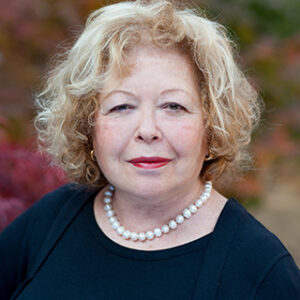
Shylock and the Jews
Dec 22, 2017 By Edna Nahshon | Commentary
In 1960, a global wave of anti-Semitic incidents led Orson Welles, known for his daring Shakespeare productions, to cancel his plans to star in The Merchant of Venice even though playing Shylock had been his lifelong ambition. He had been thwarted twice, he said. First, “a man called Hitler made it impossible,” and now, again, he felt he needed to give up the project as “hate merchants started scribbling swastikas all over the place,” referring to the onslaught of synagogue desecrations that had begun on Christmas Day 1959 in Cologne, Germany.
Read More
Hearing Our Own Stories
Dec 22, 2017 By Zohar Atkins | Commentary | Vayiggash
Although we know how it ends, this week’s Torah reading can be, by turns, anxiety-provoking, cathartic, and unsettling. We know a reconciliation between the brothers will take place, but we don’t fully understand how. We know a peace deal will be reached, but we suspect that, like all new agreements, its character will be tenuous, fragile, and ad hoc, its consensus constructed atop a minefield of lingering resentments and fundamentally conflicting narratives.
Read More
The Life of a Book
Dec 15, 2017 By Library of the Jewish Theological Seminary | Commentary
Every book has a life of its own, sometimes mundane and sometimes astonishing. The life of the book in which this page is found has been quite extraordinary. The book is a Hebrew Bible. It was born of fine parchment and ink, shaped by craftsmen and scribes who spared no effort to make it the best of its kind. It was written for a wealthy family in Toledo, Spain, in the 15th century, in order that they “and their children and their children’s children” might study it forever. Remarkably, it has survived to this day.
Read More
The Hanukkah Story I Need to Hear This Year
Dec 15, 2017 By David Hoffman | Commentary | Hanukkah
Stories have great power. We tell stories about ourselves and about our communities because they give our lives meaning, and they help us navigate between the past and the future. We use stories to help us make sense of the world and our place in it. Not far behind the seemingly innocent plots of many of the stories we tell about our community’s religious history lie profound cultural responses to our most pressing questions about what it means to be a human being and how to live life well.
Read More
Yosef: A Light in the Darkness
Dec 8, 2017 By Eitan Fishbane | Commentary | Vayeshev | Hanukkah
Parashat Vayeshev takes us deep into the pain and alienation of being human, of yearning from a low place of darkness and suffering. And yet the narrative also conveys the power of hope—a longing for God and redemption, for spiritual and moral healing in our human relationships.
Read More
Restoring a Commentary Maligned
Dec 8, 2017 By JTS Alumni | Commentary
By Dr. Morris M. Faierstein (GS ’75)
The Ze’enah U-Re’enah was first published about 1610 and has since been reprinted 275 times. Despite this great popularity, this edition is the first complete annotated critical translation of this classic to be published. Since the end of the nineteenth century, conventional wisdom has held that the Ze’enah U-Re’enah was a Yiddish translation of the humash written for women and ignorant men who could not understand the text in Hebrew.
Read More

Breaking the Bank: The High Cost of Low-Income Living
Dec 6, 2017 By The Jewish Theological Seminary | Public Event video
Why does it cost so much to be poor? NYC is an expensive place to live—and it’s the most expensive for New Yorkers living from paycheck to paycheck.
A discussion about how low-income New Yorkers manage their financial lives and the challenges they face, exploring how diverse resources, from loan funds to check cashers to fintech startups, are responding to the financial needs of struggling New Yorkers
Read More
Maimonides and the Merchants: Jewish Law and Society in the Medieval Islamic World
Dec 4, 2017 By Library of the Jewish Theological Seminary | Public Event audio
Mark R. Cohen’s new book Maimonides and the Merchants suggests that, like the Geonim before him, Maimonides wished to provide Jewish merchants an alternative and comparable forum to the Islamic legal system and thereby shore up an important cornerstone of communal autonomy.
Read More


SUBSCRIBE TO TORAH FROM JTS
Our regular commentaries and videos are a great way to stay intellectually and spiritually engaged with Jewish thought and wisdom.