
Search Results
Back to JTS Torah Online's Main page
Wrestling the Angels and the Demons within Us
Dec 1, 2017 By Jonathan Milgram | Commentary | Vayishlah
In this week’s Torah reading, Parashat Vayishlah, we read of the patriarch Jacob’s journey home with his family after freeing himself and his entire clan from his father-in-law, Laban’s, control. Along the route, Jacob prepares himself for his eventual reunion with his older twin brother Esau, whom he fears to be vengeful. Right in the middle of the parashah, in between the description of Jacob’s preparations and his actual meeting with Esau, Jacob is involved in a transformative experience: a physical struggle with a stranger.
Read More
A Sage for Today
Dec 1, 2017 By Barry Holtz | Commentary
In my new biography of Rabbi Akiva, I have tried to draw upon the latest scholarship about rabbinic stories to present the outlines of his life anew for our times, in the light of what we know about how to read these stories from our tradition and about the historical context of the ancient Jewish world. My goal was to present the various stories about Akiva’s life in an intellectually serious but accessible manner, highlighting their literary character and trying to discern the ways that Akiva’s story might speak to people today.
Read More
Can the Tribes of Modern Israel Dwell Together?
Nov 29, 2017 By Arnold M. Eisen | Public Event video
On the 70th anniversary of the UN Partition Plan for Palestine, a major step in the creation of Israel, the partitions within Israeli society threaten the very future of the State. Can the divisions be bridged between Israel’s secular, national religious, ultra-Orthodox, and Arab citizens? Can they talk to each other and work together to forge a new partnership? And what is the role of caring Diaspora Jews in achieving this goal?
Read More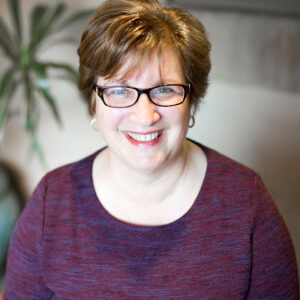
Escaping a Toxic Relationship
Nov 24, 2017 By Lilly Kaufman | Commentary | Vayetzei
Poor Jacob is triply triangulated in Parashat Vayetzei! His boss, Laban, is not only his uncle, Rebecca’s older brother, but also his father-in-law, Leah and Rachel’s father. Leah and Rachel are bitter rivals, Leah resenting Jacob’s love for Rachel, and Rachel wishing for children when God has blessed only Leah with fertility. Complicating this tangle of relationships is the fact that Jacob and Laban work together, and Laban is not a fair employer.
Read More
What Makes a Book “Torah”?
Nov 24, 2017 By Library of the Jewish Theological Seminary | Commentary
In the manuscript age, what distinguished “Torah” from other writing? One of the key answers to this question is that manuscripts were fluid and each copy therefore different from any other, while Torah—as the word of God and the source of Jewish tradition—had to be precise and unchanging.
Read More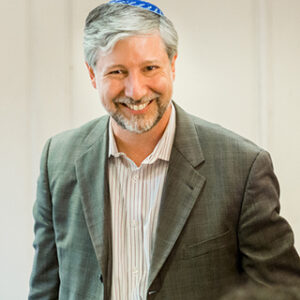
A Family of Covenant
Nov 17, 2017 By Daniel Nevins | Commentary | Toledot
The stories of Genesis are presented as family portraits, but simultaneously they describe the origins of a religious civilization. How did the people of Israel acquire and maintain its distinctive religious mission? Genesis offers not only a window into Israel’s past, but a blueprint for its future. Implicit is an invitation to contribute to this unfolding narrative, attaching the threads of our lives to the tapestry woven by our ancestors.
Read More
Speaking to God, Speaking to People
Nov 17, 2017 By JTS Alumni | Commentary | Text Study
By Rabbi Debra Newman Kamin (RS ’90)
Adonai, open my lips that my mouth may speak your praise. (Psalms 51:17)
My God, keep my tongue from evil and my lips from deceit. (BT Berakhot 17a, based on Psalms 34:14)
At different stages of my life prayer has been a challenge, but I have found it meaningful to think not just about each individual prayer but how the structure of the service helps us experience different facets of prayer.
Read More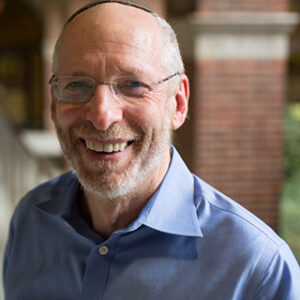
Leaving Home
Nov 10, 2017 By Eliezer B. Diamond z”l | Commentary | Hayyei Sarah
To the best of my knowledge, Hayyei Sarah contains the only instance in Tanakh of a parent asking his child’s wishes. Laban and Betuel cannot come to an agreement with Abraham’s servant—who we’ll call Eliezer—about whether Rebecca should remain in Haran for a time or depart immediately to Canaan. And so, they ask Rebecca to state her preference. Contrary to her family’s express wishes, Rebecca decides to leave immediately.
Read More
A Time for Silence and a Time for Speaking
Nov 10, 2017 By Matthew Goldstone | Commentary | Text Study
Whoever is able to protest against the [sins of the] people of his household and does not protest is caught in the [sins] of his household; against [the sins of] the people of his city [and does not protest] is caught in the [sins] of the people of his city; against [the sins of] the whole world [and does not protest] is caught in the [sins] of the whole world.
Read More—Babylonian Talmud, Shabbat 54b

Listening, Love, and Citizenship: Healing the Fractures in American Society
Nov 8, 2017 By The Jewish Theological Seminary | Public Event video
A panel discussion exploring what it means to be a citizen of the United States in today’s fractured society. What are the basic skills of citizenship that have eroded in our country? How can we learn to listen to and love one another to become responsible citizens?
Read More
Women of Faith
Nov 3, 2017 By Amy Kalmanofsky | Commentary | Vayera
Abraham passed God’s litmus test of faith. God commands Abraham to take his beloved son Isaac to the land of Moriah and kill him. Faithful Abraham does not hesitate. Genesis 22 may be the most loved and hated story in the Torah by every reader, no matter what their faith. Certainly, generations of Jews have struggled to make sense of this story, and of the father and God it portrays.
Read More
The Rabbis, the Romans, and Us
Nov 3, 2017 By Burton L. Visotzky | Commentary
In my most recent book I take up a quintessentially American Jewish subject: can we adopt the broader culture in which we live and still be Jewish? Is it possible to have a strong Jewish identity while living as Americans who are university educated and share our lives with our gentile neighbors? To answer this I turned to the centuries and texts which birthed Judaism as we know it.
Read More
Einstein and the Rabbi: Searching for the Soul
Oct 31, 2017 By The Jewish Theological Seminary | Public Event video
Rabbi Naomi Levy (JTS ’89) takes us on a journey into the world of our souls, inspired by correspondence between Albert Einstein and a grieving rabbi. We often get so distracted by life’s surface demands and pressures that we rarely take the time to see what’s planted deep inside us. By listening to our souls we can uncover our true goodness, our calling, our yearnings, our gifts, yes, and even our greatness. Once we begin listening to our own souls we begin seeing the souls of others, seeing beyond our differences, to the truth that unites us and unites all things.
Read More
Land and People—When Things Get Real
Oct 27, 2017 By Hillel Gruenberg | Commentary | Lekh Lekha
Lekh Lekha is one of my favorite parashiyot because it marks the entrance of the biblical narrative “into history.” Putting aside the historicity of the Bible—the subject of no small scholarly debate—Lekh Lekha departs from the preceding biblical text as it introduces us to the lands, people, and civilizations that will serve as a backdrop for the millennia of triumph and tribulation that await Abraham, his descendants, and their contemporaries. Until now, the story has been fundamentally supernatural and ahistorical—the creation of the world and all that is in it, heavenly gifts and divine punishment, a cataclysmic flood, and extensive genealogies of the forebears of future nations, whose lifespans number in the hundreds of years.
Read More
Distance Learning from the Back of Shul
Oct 27, 2017 By Library of the Jewish Theological Seminary | Commentary
When we think of “the book” (as in “the people of the book”), we picture a bound volume with pages sitting open before a reader on a table or a lap. It we are speaking of the Torah, that book is typically a humash, which will often be found in the seat back of the seat in front of you in the synagogue. The same is true of a prayer book.
Read More
Lioness: Golda Meir and the Nation of Israel
Oct 26, 2017 By Library of the Jewish Theological Seminary | Public Event audio
Francine Klagsbrun’s definitive new biography of Golda Meir brings to life a world figure unlike any other. An iron-willed leader, chain-smoking political operative, and tea-and-cake-serving grandmother who became the fourth prime minister of Israel, Meir was one of the most notable women of our time.
Read More
Lessons of Survival
Oct 20, 2017 By Melanie Levav | Commentary | Noah
וַיְהִי הַגֶּשֶׁם עַל-הָאָרֶץ אַרְבָּעִים יוֹם וְאַרְבָּעִים לָיְלָה:
The rain fell on the land for forty days and forty nights. (Gen. 7:12)
One need not look hard these days to read of the devastation brought by floods. In recent weeks, powerful hurricanes have caused destruction beyond belief, completely flooding parts of Texas, Florida, the Caribbean, and the entirety of Puerto Rico. Beyond the devastation of land and property, such storms leave a lasting impact on the people who survive the experience. How we respond to such disasters can make a difference in how we continue to live.
Read More
The Spirituality of Solitude
Oct 20, 2017 By JTS Alumni | Commentary
By Rabbi Martin S. Cohen (RS ’78, GS ’82)
It can’t have been easy having Rambam as your dad. But that was how things were for Maimonides’s only son, Abraham, born in 1186 when his father was already 51 years old and widely recognized as one of the greatest Jewish philosophers, commentators, and halakhic decisors ever. A contemporary Arab historian described Abraham as tall and lean, possessed of “pleasant manners and refined speech, and distinguished in medicine” (his chosen profession, as it had been his father’s).
Read More
Dinner at the Center of the Earth
Oct 18, 2017 By Library of the Jewish Theological Seminary | Public Event video
Dinner at the Center of the Earth, a new political thriller from Pulitzer finalist and best-selling author Nathan Englander, unfolds in the highly charged territory of the Israeli-Palestinian conflict.
Read More
The Other Peace Process
Oct 17, 2017 By Library of the Jewish Theological Seminary | Public Event audio
A discussion with Rabbi Ron Kronish on his new book, The Other Peace Process: Interreligious Dialogue, A View from Jerusalem.
Read More


SUBSCRIBE TO TORAH FROM JTS
Our regular commentaries and videos are a great way to stay intellectually and spiritually engaged with Jewish thought and wisdom.