

Search Results
Back to JTS Torah Online's Main page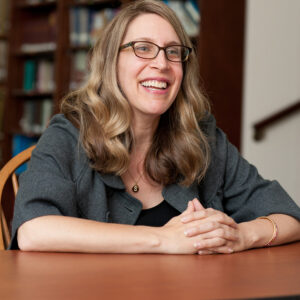
Easing the Transition From Shabbat
Apr 1, 2016 By Shira D. Epstein | Commentary | Shemini
The parashah delineates several distinctions between holy and unholy: what constitutes an acceptable sacrifice; which animals fall within the category of kosher; the actions that might transition a vessel, oven, or garment to the status of unclean.
At the end of Shabbat, we invoke these same words during havdalah, praising God “who makes a distinction between holy and profane.”
Read More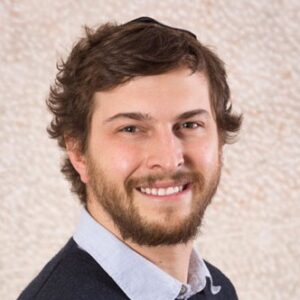
A Set Table
Mar 25, 2016 By Yonatan Dahlen | Commentary | Tzav
Read MoreI try to bless
When I wear Your stars as my blanket;
My winter coat when days are dark
When life is a knife
Resting on the altar of time.

Creating I-Thou Moments That Strengthen Relationships, and Communities
Mar 18, 2016 By Stephanie Ruskay | Commentary | Pekudei
Semikhah, ordaining of clergy, is on my mind these days as we move closer to my first JTS ordination as an associate dean. No longer the person receiving semikhah, this time I am privileged to help ordain new clergy.
Read More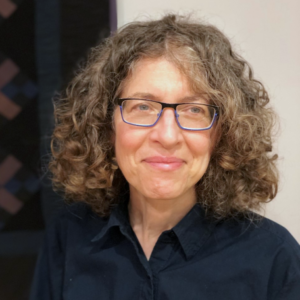
Purim Heroines
Mar 18, 2016 By Stefanie B. Siegmund | Commentary | Purim
I did not wear the crown and satiny dress, or stand in line for the beauty pageant. Queen Esther was not a role model I—or many other children—could choose. Later, in the academy, I understood that Esther’s subterfuge and seduction were the strategies of the weak, the politics of the minority.
Read More
The Call to Find a Mentor and to Mentor Others
Mar 11, 2016 By Mark Young | Commentary | Pekudei
In parashat Pekudei, the Israelites are on a journey to a new life, having escaped the Egyptians, experienced the revelation at Sinai, and completed the building of the Tabernacle. They are now in the wilderness, sometimes unclear about their direction, sometimes filled with fear, and in need of guidance. However, they had mentors to guide them. They had the cloud that indicated the Presence of God, and they had Moses on their side.
Read More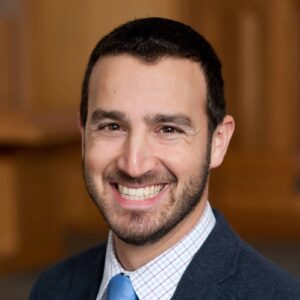
With God, It’s Complicated . . .
Mar 11, 2016 By Rami Schwartzer | Commentary | Pekudei
For a story that began with the promise of intimacy, I had hoped for a happier ending.
Read More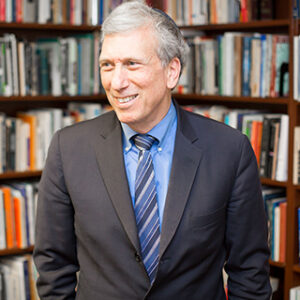
Imagining Community, Then and Now
Mar 4, 2016 By Arnold M. Eisen | Commentary | Vayak-hel
Anyone who has mounted a fund-raising campaign, or sought volunteers for an institution or organization, will immediately recognize the account of the Tabernacle’s construction in this week’s Torah portion as utopian in the extreme. “All the artisans . . . said to Moses, ‘The people are bringing more than is needed for the task entailed in the work that the Lord has commanded to be done.’ Moses thereupon had this proclamation made throughout the camp: ‘Let no man or woman make further efforts toward gifts for the sanctuary!’ Their efforts had been more than enough for all the tasks to be done” (Exod. 36:5–7).
Read More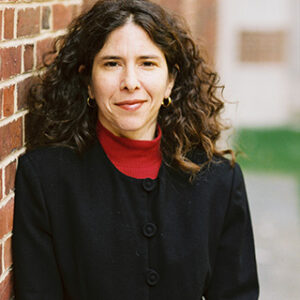
Artisan and Architect
Mar 4, 2016 By Barbara Mann | Commentary | Vayak-hel
Ben Uri looked at the work of his hands and was astonished at how the ark stood firm while he himself was like an empty vessel. His soul was sad and he broke out in tears.
—S. Y. Agnon, Agunot
Read More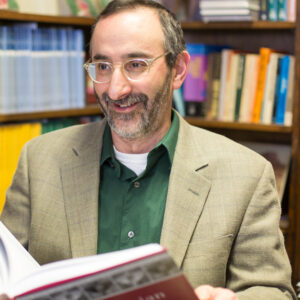
Who Wrote The Ten Commandments?
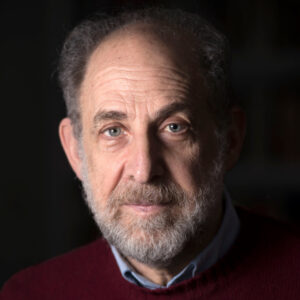
Feb 26, 2016 By Benjamin D. Sommer | Commentary | Ki Tissa
Where does our Torah come from? Did all the words of the Torah come from heaven, so that the Torah is a perfect divine work? If that is the case, then the tradition the Torah inaugurates is one that human beings should accept in its entirety without introducing any changes. Or is the Torah itself the result of human-divine collaboration? If that is the case, the tradition the Torah inaugurates may allow some change, at least by those Jews of each generation who accept the Torah and live by its commandments.
Read More
Bronze Bull, Golden Calf
Feb 26, 2016 By Tim Daniel Bernard | Commentary | Ki Tissa
The metal bovine with a peculiar magnetism that is known as the Golden Calf (Exod. 32) brings to mind Arturo Di Modica’s Charging Bull (1989). A potent Financial District icon, it exerts a remarkable pull on passersby (on its webcam you can see the crowd so often around the statue). According to the artist’s website, it was designed as a “symbol of virility and courage” and “the perfect antidote to the Wall Street crash of 1986,” but it was also created without the invitation of the Wall Street community and was promptly removed from its original location in front of the New York Stock Exchange.
Read More
The Clothes Make the Man
Feb 19, 2016 By Rachel Smith | Commentary | Tetzavveh
Read More[The] unlikely alliance of diverse and superficially incompatible musical traditions, mysteriously accomplished under punk, found ratification in an equally eclectic clothing style which reproduced the same kind of cacophony on the visual level.
—Dick Hebdige, Subculture: The Meaning of Style, 26
Garments of Light
Feb 12, 2016 By Raymond Scheindlin | Commentary | Tetzavveh
Last week, we read God’s orders to Moses for the construction of the Tabernacle and its accoutrements. This week, our parashah continues on the subject of the Tabernacle and the preparations for starting the sacrificial cult, focusing on the Tabernacle’s personnel: the priests—particularly their vestments and the rituals for the priests’ consecration. These subjects will return, for after a week devoted largely to the story of the Golden Calf, the Torah will repeat the account of the Tabernacle nearly verbatim, not in the form of instructions for things to be made but as a narrative of their making.
Read More
Including the Broken
Feb 12, 2016 By Tobi Kahn | Commentary | Terumah
Arks in contemporary sanctuaries are spiritual descendants of the Ark whose construction and purpose is described in this week’s parashah. The ark above was created for Congregation Ohr Shalom–The Summit Jewish Community Center, in Summit, New Jersey.
Read More
Knowing the Feelings of the Stranger
Feb 5, 2016 By Marc Gary | Commentary | Mishpatim
This week’s parashah comprises a multitude of ordinances, providing an embarrassment of riches upon which to comment. Capital punishment, abortion, workers’ rights—to name just a few of the issues suggested by the parashah—offer ample grist for the commentator’s mill. Yet in this political year, with all of its focus on immigration, refugees, and minority rights, it would seem almost churlish to avoid addressing one of the key themes of the Torah reading: the treatment of theger (stranger).
Read More
The Spirit and the Letter
Feb 5, 2016 By Yonatan Y. Brafman | Commentary | Mishpatim
After the heights of the revelation at Sinai, Parashat Mishpatim settles down to more mundane topics, including a lengthy discussion of torts. Perhaps motivated by this sudden change of altitude, Nahmanides interprets these details as expansions on the Ten Commandments, such as the prohibitions on coveting and theft: “For if a man does not know the laws of the house and field or other possessions, he might think that they belong to him and thus covet them and take them for himself”.
Read More
Whose Revelation Is It, Anyway?
Jan 29, 2016 By Stephen P. Garfinkel | Commentary | Yitro
Parashat Yitro is a Torah reading of monumental ideas, foundational concepts, and widely-recognized importance. By all measures, this week’s portion must be considered a highlight of the entire Torah, since it includes no less (and a lot more!) than the Ten Commandments. This seems to be the right place to explore questions such as these: what did the actual revelation (Exodus 20) include? What were God’s commandments? Why were these statements singled out, especially given the amount of law scattered throughout the Torah? What gives these brief pronouncements their distinctive importance?
Read More
Nothing Is Enough
Jan 29, 2016 By Alisa Braun | Commentary | Yitro
sitting amid your litter, feet buried
by accumulated jars of buttons,
glasses lost beneath a decade of bank statements
and funny poems.
The obligation to honor your father and your mother (Exodus 20:12) is never simple, but it’s especially complicated when relations between parent and child are strained. In her moving poem “Mother,” Alicia Ostriker gives voice to the ethical challenge of caring for her mother when the conflicts of the past loom large.
Read More
A New Dayeinu
Jan 22, 2016 By Gerald Cohen | Commentary | Beshallah
As we progress through the cycle of Torah readings, we come to associate certain stories with a particular time of year: the creation story in early fall, Joseph and his brothers later in that season, the revolt of Korah in the summer. The story of this week’s Torah reading, however, has a double life in the course of the year: we associate it with the winter when we read the parashah in the cycle, but it also becomes the focus of our spring Pesah celebration in a few months.
Read More
What Next? A Free People Finds Its Way
Jan 22, 2016 By Daniel Nevins | Commentary | Beshallah
From the air Eretz Mitzrayim, “the narrow land” of Egypt, reveals itself as a vast expanse of sand and stone broken only by the twisting dark line of the Nile. I saw this first hand as a student in 1985, but you can look as well through satellite photos. On either side of the great river, a thin strip of green extends for a few kilometers to the east and west. The Nile looks like a mighty green cobra whose tail points at the first cataract near Sudan, and whose broad triangular head is the delta fanning out to strike the Mediterranean Sea.
Read More
The Power of Paradox for the Religious Life
Jan 15, 2016 By David Hoffman | Commentary | Bo
There are a few texts that have helped me get through dark and difficult periods in my religious life, first amongst them being several paragraphs by Rabbi Joseph Soloveitchik buried in a footnote in his essay Halakhic Man. At another stage of my life long since gone, I yearned for a simple faith in God. I yearned for a transcendent framework that might help me feel closer to a God that too many times felt too far away. I had believed that a sense of wholeness and integration were possible goals for the religious life.
Read More


SUBSCRIBE TO TORAH FROM JTS
Our regular commentaries and videos are a great way to stay intellectually and spiritually engaged with Jewish thought and wisdom.