

Search Results
Back to JTS Torah Online's Main page
The Torah of the New Year
Sep 6, 2023 By The Jewish Theological Seminary | Public Event video | Video Lecture | Rosh Hashanah | Shemini Atzeret | Yom Kippur
Join JTS faculty for a close reading of several of the biblical texts that we read during the fall holiday season. Discover new insights into these readings and reflect on what meanings they hold for us today.
Read More
Exile and Return as a Spiritual Paradigm
Sep 6, 2023 By Mychal Springer | Public Event video | Video Lecture | Rosh Hashanah | Yom Kippur
The haftarot of the High Holidays link personal teshuvah with the return to the land of Israel. When we hold these two returnings together the spiritual and communal dimensions of teshuvah come into powerful focus. We explore the exiles of our soul and pathways of return in this season of teshuvah.
Read More
Can Institutions Be Nimble? Community Organizing in Tumultuous Times
Aug 14, 2023 By Stephanie Ruskay | Public Event video | Video Lecture
It’s human nature to build and rebuild, organize and disorganize. Institutions both large and small are grappling with the challenging tasks of shaping the present and future. Rabbi Stephanie Ruskay, Associate Dean of The Rabbinical School, JTS, will lead us in a process of exploring communal narratives and asking provocative questions that help us discover solutions.
Read More
Becoming Jewish Americans: Popular Culture and Protest in Yiddish New York
Aug 7, 2023 By Annabel Cohen | Public Event video | Video Lecture
For newly arrived Jewish immigrants, New York was a city of contradictions. Here they experienced freedoms and opportunities they hadn’t enjoyed in the “old country,” allowing for the development of a mass popular culture that was at once Yiddish and American. Yet for many Jews, the pace of change was too fast, representing the decline of traditional Jewish values and cultures. Meanwhile, for those who found success on the Yiddish stage, screen, and in the press, America was indeed a “golden country,” but the vast majority of Jewish immigrants lived in extreme poverty and hardship. Home to the first popular Yiddish press and the world’s biggest Yiddish theater district, New York was also soon home to a sizeable Jewish labor movement and an important center for the transnational Jewish left. Using materials featured in the JTS Library’s exhibition, we learn about Jewish immigrants in late-19th to early–20th century New York, and the various ways that they embraced, resisted, and demanded change.
Read More
From Justification to Justice: Evolving Jewish Attitudes Towards Abortion
Jul 31, 2023 By Michal Raucher | Public Event video | Video Lecture
In the 1980s, the Committee on Jewish Law and Standards—the Conservative Movement’s central authority on Jewish law—ruled on abortion’s permissibility based on a justification framework. This framework assumes that abortion is generally prohibited but permitted in certain circumstances. They based their position on their reading of particular biblical and rabbinic sources. In the decades that followed, many Jewish institutions in the United States supported abortion rights on similar grounds and using the same texts. More recently, we’ve seen a shift in Jewish attitudes towards abortion. As more Jews have shared their own abortion experiences, their narratives have moved to the forefront and shifted the conversation. Jews are now advocating for abortion rights based on their experiences of abortion and a different reading of classical sources. In this session, we explore why and how this change occurred and consider the impact it might have on abortion rights in the United States.
Read More
The Evolution of Law in the Bible
Jul 24, 2023 By Benjamin D. Sommer | Public Event video | Video Lecture
Download Sources Part of the series, The Dynamics of Change This session has generously been sponsored by Yale Asbell, JTS Trustee. With Dr. Benjamin Sommer, Professor of Bible and Ancient Semitic Languages, JTS Professor Sommer will use laws pertaining to the Sabbath and Passover to show how ritual law evolved in the Bible. During the session, he […]
Read More
Tikkun Olam: Repairing the World, Healing God in Kabbalistic Thought
Jul 17, 2023 By Eitan Fishbane | Public Event video | Video Lecture
The term tikkun, which refers to the process of cosmic-divine repair as well as the personal-psychological repair of the human soul, was central to Jewish mystical thought and literature. The idea and practice flourished especially in the Zohar and related texts in 13th- and 14th-century Spain; in the teachings of Moses Cordovero, Isaac Luria, and other Kabbalists of 16th-century Tzfat; and in the Kabbalah of modern eastern European Hasidism. In this session, we will delve into sources that understand tikkun olam as an act of healing the Divine Self, which has the potential of bringing God closer to our world.
Read More
The Power of Words: How What We Say Affects Us and Those Around Us
Jul 10, 2023 By Eliezer B. Diamond z”l | Public Event video | Video Lecture
How does our speech affect us and others both for good and ill? How can changing our speech impact our character and our relationships with others? Dr. Eliezer Diamond guides us in the study of both traditional sources and contemporary discussions as we seek to answer these questions.
Read More
Patient Change, Slow Influence: The Model of the Rabbis of Late Antiquity
Jun 26, 2023 By David C. Kraemer | Public Event video | Video Lecture
Download Sources Part of the series, The Dynamics of Change With Dr. David Kraemer, Joseph J. and Dora Abbell Librarian and Professor of Talmud and Rabbinics, JTS Perhaps the most important change-agents in all of Jewish history were the Rabbis of Late Antiquity. It is they who transformed Judaism—and Jews—from a Temple-based religion to one that needed no […]
Read More
Between the Lines: Where I Am
Jun 20, 2023 By Library of the Jewish Theological Seminary | Public Event video
Dana Shem-Ur‘s book is a piercing novel about life abroad in a cultural setting not one’s own: Reut is an Israeli translator living in Paris with a French husband and their child. She’s made sacrifices for her family but now feels a simmering discontent and estrangement that erupts at a festive dinner party with affluent, intellectual friends. During the sumptuous meal, she navigates a tangle of cultural codes with which she’s never been fully at ease. This is a novel about big life choices that examines a woman’s attitudes toward belonging to a man, to a culture, to a language. Where I Am is an intimate, witty book portraying a profoundly human yearning to stop everything, to lay down one’s head, and to feel―if only for a moment―at home.
Read More
Between the Lines: The Confidante
Jun 13, 2023 By Library of the Jewish Theological Seminary | Public Event video
Christopher C. Gorham discusses his book The Confidante, the first biography of Anna Marie Rosenberg, a Hungarian Jewish immigrant with only a high school education who went on to be dubbed by Life Magazine, “the most important woman in the American government.” Her life ran parallel to the front lines of history, yet her influence on 20th-century […]
Read More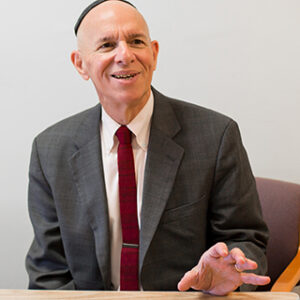
God: Unchanging?
Jun 12, 2023 By Alan Cooper | Public Event video | Video Lecture
When we sing the hymn Yigdal, we declare that God is One and unique in Unity, of mysterious and infinite Oneness. The idea that God is ineffable and unchanging is embedded in Jewish (as well as Christian and Muslim) thought. While that may be true of God, however, it does not apply to the various ways of discerning God’s Presence from biblical times to the present. In this session, we explore some of the ways in which perception of God has changed, especially in the transition from biblical religion to post-Temple and post-prophetic Judaism.
Read More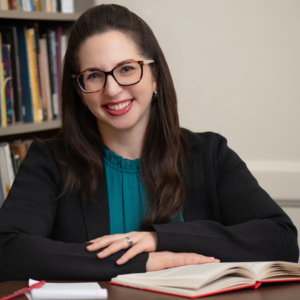
“Perhaps They Will Listen”: Prophets and the Art of Persuasion
Jun 5, 2023 By Yael Landman | Public Event video | Video Lecture
While the biblical prophets wore many hats—defense attorney, miracle worker, leader, and commander-in-chief, among others—one role of the prophets was to persuade their audiences. These audiences are often portrayed as uninterested in the prophets’ words, or even violently opposed to them. In the face of resistance, the prophets deploy numerous rhetorical strategies in order to convince their audiences to listen to them; many of these strategies, which we explore in this session, are the same devices that make biblical prophecies works of art that continue to strike a chord with readers today.
Read More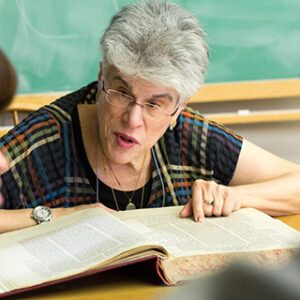
Kiddush and Havdalah: Marking the Boundaries of Sanctified Time
May 22, 2023 By Judith Hauptman | Public Event video | Video Lecture
Kiddush marks the onset of Sabbath sanctity and havdalah marks its end. Both of these ritual acts derive from the Talmud. A review of Talmudic texts reveals that although kiddush did not change much during the Talmudic period, havdalah underwent significant modification. It began as a simple statement of the end of Sabbath sanctity but evolved into a full-blown ritual in which we recite blessings, light a candle, smell spices, and drink wine.
Read More
Between Suns: Twilight in Rabbinic Sources
May 15, 2023 By Sarit Kattan Gribetz | Public Event video | Video Lecture
Rabbinic sources imagine the period of twilight between the six days of creation and the Sabbath to be a mystically productive time. It was then, they explain, that God created the rainbow and the manna, letters and writing, Abraham’s ram and Moses’s staff. But when is twilight and how long does it last? Does it belong to the day that is ending, the day that is beginning, or to both days at once? These questions are not merely theoretical—their answers determine important matters of Jewish practice.
Read More
Talmudic Writings on the Passage from this Life to the Next
May 8, 2023 By David C. Kraemer | Public Event video | Video Lecture
It may surprise you to learn that, in the opinion of Talmudic teachings and the traditions that emerge from them, death is not a moment but a process—a transition that leads from one stage of life (which we call “life”) to another (which we call “death”). These beliefs have profound implications for our understanding of Jewish rituals of death and mourning, Jewish theology, and much else. Prof. Kraemer offers a close reading of the texts that discuss these rituals as well as the beliefs underlying them.
Read More
Can Citizens Be Friends?
May 2, 2023
How much divisiveness, anger, contempt, distrust, and fear can democratic citizens have for one another before a democratic society irreparably weakens? Political philosophers since Aristotle have wondered about what citizens owe one another; whether they ought to recognize and respect one another’s views, profound disagreements notwithstanding. The ideal of mutual respect among democratic citizens as a foundation for a thriving civil society is called “civic friendship.” Join us as we explore this idea and its potential for diminishing the “civic enmity” that afflicts the US today.
Read More
Sarah’s Laugh: Doubt, Trust, and the Ambiguity of the Womb
May 1, 2023 By Mychal Springer | Public Event video | Video Lecture
On Rosh Hashanah we read about two central biblical characters, Sarah and Hannah, who after facing infertility for many years are told that they will conceive. Many years ago, when I was undergoing fertility treatments and listened to these stories on Rosh Hashanah, I felt as if my struggles were actually at the heart of Jewish religious experience, selected by the rabbis to echo in the birth of every new year for generations of Jews.
Read More
The Blasphemer in Leviticus: A Marginal Figure
Apr 24, 2023 By Alan Cooper | Public Event video | Video Lecture
The Bible abounds with characters who transgress boundaries, for better and for worse. One of these characters who comes to a bad end is the half-Israelite, half-Egyptian blasphemer in Leviticus 24:10-16, 23. It’s clear that the Bible wants this story to show the dire consequences for blasphemy, but why is the identity of the blasphemer so specific, and how does this story relate to other laws outlined in the same chapter of the Torah? We explore these issues with the aid of both traditional and modern critical commentary.
Read More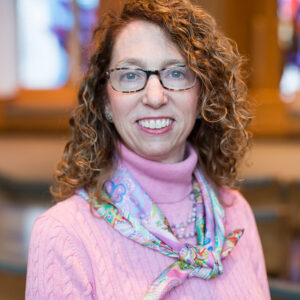
Defying All Categories: Witches in the Talmud
Apr 17, 2023 By Marjorie Lehman | Public Event video | Video Lecture
Together we explore the story of Rav Nachman’s daughters and examine their transformation from daughters and wives to witches. Taken into captivity and then returned, they emerge as women on the margins of rabbinic culture. For the rabbis this transformation represents a great challenge to the world order and thus is an expression of their deepest anxieties and fears where they must face that certain things are not within their control. In our reading of this story, we see how the women who are moved from inside the family to the margins of rabbinic life and culture reminds us of our own complicated journeys navigating where it is we are, and where it is we want to be.
Read More


SUBSCRIBE TO TORAH FROM JTS
Our regular commentaries and videos are a great way to stay intellectually and spiritually engaged with Jewish thought and wisdom.