
Search Results
Back to JTS Torah Online's Main page
The Give and Take of Strength
Mar 9, 2018 By Eliezer B. Diamond z”l | Commentary | Pekudei | Vayak-hel
Rituals of closure are common in both the secular and religious realms. An example of the first is the sounding of retreat and the lowering of the flag marking the end of the official duty day on military installations. An instance of the second is the siyyum, a liturgical ritual and festive meal that is occasioned by the completion of the study of a Talmudic tractate. Closure rituals relate not only to the past but to the future as well. On the one hand, the temporal demarcation of a past event facilitates the emergence of its distinct identity, internal coherence, and significance, thereby providing insight, understanding, and, at times, a sense of accomplishment. At the same time, by declaring an end, a closure ritual creates space in which one can—and must—begin anew; the past is to be neither prison nor refuge.
Read More
God, Judaism, and Divine Law
Mar 9, 2018 By Matthew Goldstone | Commentary
We all know that divine law is supposed to be true, unchangeable, universal, and make sense . . . right? Wrong. In fact, for the Rabbis, precisely the opposite may be the case. As Christine Hayes argues in her book What’s Divine about Divine Law, many of our preconceptions about what makes Jewish divine law “godly” are, in fact, incorrect.
Read More
Cosmopolitan Scholarship in Provence
Mar 2, 2018 By Tamar Marvin | Commentary
The intellectual achievements of the vibrant Jewish communities of medieval Provence—what is today the superlatively lovely Mediterranean coast of France—were largely lost to subsequent Jewish conversation. Situated at the crossroads of Sefarad and Ashkenaz, Provençal Jewry was influenced by northern European currents of thought while absorbing insights from the Judeo-Arabic sphere. The expulsions suffered by European Jews in the late Middle Ages included the dispersal of Provençal communities.
Read More
Kept by Shabbat
Mar 2, 2018 By Amy Kalmanofsky | Commentary | Ki Tissa
Ahad Ha’am famously said: “More than Jews have kept Shabbat, Shabbat has kept the Jews.” Pretty remarkable coming from the founder of cultural Zionism!
Parashat Ki Tissa either supports or challenges Ha’am’s words. This week’s parashah relates one of the lowest moments in Israel’s story—the sin of the golden calf—in which Israel dances before a god of their own making. Coming down Mount Sinai with the stone tablets inscribed by God’s finger (Exod. 31:18), Moses sees Israel’s frenzy and smashes the tablets. Moses spends the rest of the parashah picking up the pieces and working to restore Israel’s relationship with God.
Read More
The Jewelry of a Master Teacher
Feb 23, 2018 By Lilly Kaufman | Commentary | Tetzavveh
Without using alchemy, the 16th-century Italian commentator Seforno (1470–1550) turned gems into gold. Writing a few short words about the gemstones that adorned the clothing of the High Priest, described in Parashat Tetzavveh, Seforno shares a truly fine insight about achieving greatness as an educator.
Read More
A Precious Hebrew Manuscript
Feb 23, 2018 By Library of the Jewish Theological Seminary | Commentary
Knowing almost nothing about this beautiful manuscript, what would you guess it is? Finely decorated with gold leaf, Hebrew, small for easy carrying (these qualities are all obvious from the photo)—all of these characteristics suggest that it is a dear personal item, one that a wealthy Jew commissioned because of the importance of what it records. Knowing that it is a fifteenth-century manuscript, produced in Spain—before the age of printed books—would only highlight for us how rare it was.
Read More
An Edifice Complex for Our Time
Feb 16, 2018 By Marc Gary | Commentary | Terumah
Several years ago, while traveling far from home, I found myself in an affluent suburban community on Shabbat. I decided to attend the local Conservative synagogue in the morning and brought along a friend who I was visiting. The synagogue was newly constructed and architecturally magnificent with a ski-slope ceiling, beautiful stained glass windows, and much ornamentation in gold and silver. The ark was stunning, with a brightly colored tapestry parokhet above which hung a modernistic ner tamid (eternal light). The rabbi stood at a hand-carved lectern and delivered his sermon, which that week happened to be on Parashat Ki Tissa and the lessons of the Golden Calf. As the rabbi reached the climax of his sermon, his voice rose into a crescendo and he declared: “And the Golden Calf lives today!” At which point, my friend leaned over and whispered to me, “Yes, and I think we are sitting in it.”
Read More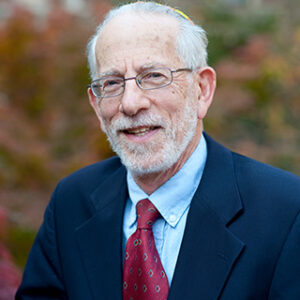
What’s the Masorah for?
Feb 16, 2018 By David Marcus | Commentary
The Masorah reflects the combined efforts of thousands of scribes known as Masoretes, working over hundreds of years, to establish a uniform and fixed version of the Hebrew Bible in the 6th-10th centuries CE. In order to ensure that the text they established would be transmitted correctly, the Masoretes counted every word, made copious lists, and wrote thousands of notes on the margins of the manuscripts.
I have transcribed, translated, and annotated some ten thousand of these notes in my multi-volume work, the first volume of which has just recently been published.
Read More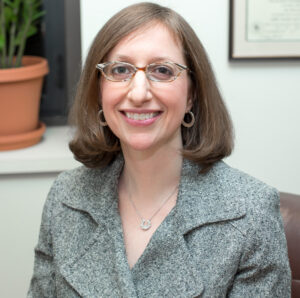
Kashrut and Refugees
Feb 9, 2018 By Julia Andelman | Commentary | Mishpatim
There’s an old joke based on the three appearances of the commandment “You shall not boil a kid in its mother’s milk”—the first being in this week’s parashah, Mishpatim (Exod. 23:19). The narrow prohibition against “eating the flesh of an animal together with the milk that was meant to sustain it” (Etz Hayim, 474) was expanded over time into a vast array of laws regarding the separation of all dairy and all meat.
Read More
Maimonides and the Merchants
Feb 9, 2018 By JTS Alumni | Commentary
By Dr. Mark R. Cohen (RS ’70, GS ’76)
In my new book, I explore a relatively unknown aspect of Maimonides’s Mishneh Torah, his comprehensive code of Jewish law. The study offers insight into Judaism’s continued evolution to account for wider societal trends and illustrates how the personal experience of lawmakers influences law.
Read MoreWhere Do We Look to Find Our Center?
Feb 2, 2018 By Adam Berman | Commentary | Yitro
We Jews read the Torah bit by bit, or parashah by parashah, over the course of a year. As a result, traditional Jewish interpretation of the Bible tends to focus on small units such as individual verses or short passages. But the Torah sometimes uses overarching structures in longer units to convey key themes. An important example occurs in this week’s parashah.
Read More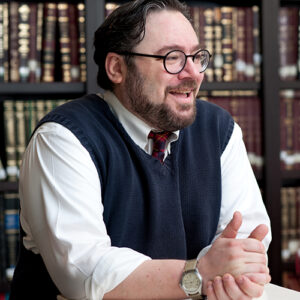
Jews, Gentiles, and Other Animals
Feb 2, 2018 By Marcus Mordecai Schwartz | Commentary
The most controversial tractate of the Talmud is undoubtedly Avodah Zarah, which discusses non-Jews and their religious practices. Most of the Talmudic passages in Justinas Bonaventura Pranaitis’s 1898 anti-Talmudic screed, Christianus in Talmud Iudaeorum (The Christian in the Talmud of the Jews) are drawn from this tractate. A surface reading of Avodah Zarah can be a demoralizing experience for modern Jews. Even though the Talmud is replete with more broadly humanistic statements, most of us would be scandalized by the provincial and xenophobic attitude toward non-Jews that one could take away from a rapid read through Avodah Zarah.
Read More
Finding the Golden Apple
Jan 26, 2018 By Tim Daniel Bernard | Commentary | Text Study
The Sage has said, “A word fitly spoken is like apples of gold in settings (maskiyyot) of silver” (Prov. 25:11). Hear now an elucidation of the thought that he has set forth. The term maskiyyot denotes filigree traceries . . . When looked at from a distance or with imperfect attention, it is deemed to be an apple of silver; but when a keen-sighted observer looks at it with full attention, its interior becomes clear to him and he knows that it is of gold. The parables of the prophets, peace be on them, are similar.
Read More—Moses Maimonides, Guide of the Perplexed (trans. S. Pines) (11–12)
Israel: Between Tears and Songs
Jan 26, 2018 By Hillel Gruenberg | Commentary | Beshallah
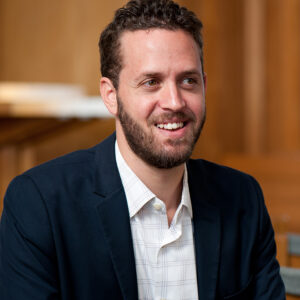
Beshallah holds special importance for me and my family—it was the parashah of the week of my son Zeke’s bris three years ago, and that of the week of my wedding to Yael two years before that. Under the huppah, my rabbi (and brother-in-law) Aaron Brusso referenced the Zohar’s likening of the parting of the Red Sea to a wedding for having weeping on one side of the event and singing on the other (Zohar 2:170b).
Read More
Time to Mourn
Jan 19, 2018 By JTS Alumni | Commentary
By Rabbi Joseph Krakoff (RS ’98)
Death can make us uneasy. We don’t always know what to say to the bereaved. We may attempt to bring comfort by offering words that, though well-meaning, often fall flat—or worse. The truth, though, is that there are no magical, healing words that have the power to bring instant comfort. Our Jewish tradition brilliantly instructs us to extend sincere wishes of comfort and then remain silent, allowing the mourner to shape the conversation as they see fit. The reality is that our presence and our hugs speak louder and truer than any words we could utter.
Read More
Miracles of Biblical and Everyday Proportions
Jan 19, 2018 By Joel Alter | Commentary | Bo
Last week, God pummeled Egypt unprecedentedly with hail:
The LORD sent thunder and hail, and fire streamed down to the ground, as the LORD rained down hail upon the land of Egypt. The hail was very heavy—fire flashing in the midst of the hail—such as had not fallen on the land of Egypt since it had become a nation. (Exod. 9:23–24)
On the combination of fire and ice, Ibn Ezra comments that this was “a wonder within a wonder.”
Read More
A Jewish Response?
Jan 12, 2018 By Alisa Braun | Commentary
“And now in June 1943 something very strange is happening . . .”
Does Gertrude Stein belong on the “Jewish Bookshelf?” It probably depends on whom you ask. Alan Dershowitz accused Stein of being one of the collaborators who “made [the Holocaust] possible” since she had survived in France due in large part to a friendship with a Vichy government official. I’m guessing he would say “no.”
Read More
Redeeming the Plagues
Jan 12, 2018 By Miriam Liebman | Commentary | Va'era | Pesah
Every year at the Passover seder, there is a brief pause in the chaos when everyone dips a finger in their cup of wine and spills a single drop for each of the ten plagues. We are spilling wine to remind ourselves that although the plagues served as miracles for us, those miracles came at the expense of others.
Read More
Summoning a People
Jan 5, 2018 By Arnold M. Eisen | Commentary | Shemot
Two very different stories about who we are as Jews are forcefully presented in the opening chapters of the Book of Exodus. One of them—captured in the Hebrew title of the book, Shemot or “Names”—declares that we are the Children of Israel: a nation, a people, defined in the first instance and forever after by our ancestors and the paths they travelled. The other story teaches that we are disciples of Moses, the human protagonist of the book, and, like him, are servants of the God Who called to Moses out of the Burning Bush and bound us in covenant at Sinai.
Read More
Reading Hosea Anew
Jan 5, 2018 By JTS Alumni | Commentary
By Dr. Mayer I. Gruber (RS ’70)
For 41 years, I taught and researched the biblical prophets, first at Spertus College of Judaica in Chicago and later at Ben-Gurion University of the Negev in Beer Sheva, Israel. I applied and developed the insights of my teachers at JTS—H. Louis Ginsberg, Robert Gordis, and Abraham Joshua Heschel, all of blessed memory, and, may he be distinguished for long life, Shalom M. Paul—into the intricacies of the biblical book of Hosea. The result is my new translation, introduction, and commentary.
Read More


SUBSCRIBE TO TORAH FROM JTS
Our regular commentaries and videos are a great way to stay intellectually and spiritually engaged with Jewish thought and wisdom.