


Between the Lines: Sanctified Sex
Jan 24, 2022 By Library of the Jewish Theological Seminary | Public Event video
Author Noam Zion discusses his book, Sanctified Sex, which draws on 2,000 years of rabbinic debates addressing competing aspirations for loving intimacy, passionate sexual union, and sanctity in marriage.
Read More
The Importance of Shame in Rabbinic Tradition
Jan 24, 2022 By David C. Kraemer | Public Event video | Video Lecture
We often think of shame or embarrassment as an experience to be avoided, and, to be sure, rabbinic tradition considers shaming someone else in public to be a grievous sin. But the Talmud also teaches that the capacity to feel shame is important, for the fear of shame will keep one from sin. Join Dr. David Kraemer to discuss this complicated emotion and how Jewish tradition “feels” about it.
Read More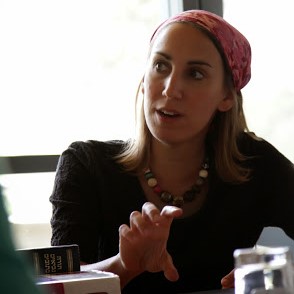
Strangers at a Revelation
Jan 21, 2022 By Miriam Feldmann Kaye | Commentary | Yitro
Parashat Yitro is framed by the geographical and conceptual ideas of exile and homecoming. Against the backdrop of Bereishit, the notion of movement is critical in framing the experiences of biblical characters: the exile from Eden; the exile of Cain; the “calls” to Abraham, Jacob, and others to move, relocate, and find new homes.
Read More
Commanded to Remember
Jan 14, 2022 By Nicole Wilson-Spiro | Commentary | Beshallah
In our Torah portion, after Amalek’s unsuccessful attack on the Israelites, God says to Moses, “Write this as a memorial in the book and tell it to Joshua because I will utterly blot out the memory of Amalek from under heaven” (Exod. 17:14). Deuteronomy 25:17–19 repeats the injunction: “Remember what Amalek did to you on your way after you left Egypt . .
Read More
Between the Lines: Embers of Pilgrimage
Jan 11, 2022 By Library of the Jewish Theological Seminary | Public Event video
Dr. Eitan Fishbane talks about his book, Embers of Pilgrimage (Panui Publications), a collection of original poems incorporating imagery from the Zohar and other Jewish mystical works.
Read More
Between the Lines: Remember KHURBM: The Forgotten Genocide
Jan 10, 2022 By Library of the Jewish Theological Seminary | Public Event video
Author Alexander Gendler shared his book, KHURBM 1914-1922: Prelude to the Holocaust. The Beginning, a collection of eyewitness testimonies and other sources that reveal the destruction of Jewish life by the Russian army during World War I.
Read More
Teach Your Children Well
Jan 7, 2022 By Dov Kahane | Commentary | Bo
In Parashat Bo, we read about “Pesah Mitzrayim”—God’s instructions to the Israelites for the eve of their exodus—including slaughtering the lamb and placing its blood on the doorposts as a marker of divine protection. In Exodus 12:21–28, Moshe conveys these rites, including the need to explain them to children. Many of these passages are most familiar to us from the Passover Haggadah. What can we learn from the way they have been incorporated there?
Read More
Cover Crop for a Hardened Heart
Dec 31, 2021 By Dave Yedid | Commentary | Va'era
These two verses describe the impact of the final plague in the parashah, hail. They come in the short thaw between Pharoah softening his heart—for the first time this parashah—and hardening it again, where our parashah ends. Why does our Torah mention these four crops? What do they have to do with the plagues, or in the calculation of Pharaoh’s change of heart?
Read More
Who is “Us”?
Dec 24, 2021 By Jessica Dell’Era | Commentary | Shemot
At first, Pharaoh feels sure he’s harming only them. These Hebrews that he’d inherited, who’d came with a story about some Joseph prince—but who cares about ancient history? In Pharaoh’s view, the Hebrews are merely a tool for building out new garrison towns. What is a Hebrew slave to mighty Pharaoh, a living god among his people?
Read More
Fear and Forgiveness
Dec 17, 2021 By Sarah Wolf | Commentary | Vayehi
ef; it can also reopen old wounds among relatives. This is what happens at the end of Parashat Vayehi, which is also the end of the book of Genesis, after the patriarch Jacob dies. Following Jacob’s death, his sons fear that things are not fully resolved in their family, and they become worried that their brother Joseph is still angry at them for the ways they mistreated him.
Read More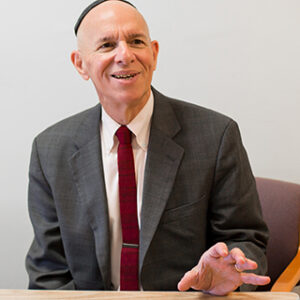
“It is not up to you to finish the work” (Pirkei Avot 2:21): On Striving for the Unattainable
Dec 13, 2021 By Alan Cooper | Public Event video | Video Lecture
Some of the most dramatic moments in the Tanakh describe the completion of work—the creation of the world (Genesis); the fabrication of the Tabernacle (Exodus); and the construction of the Temple (Chronicles). In contrast, at the end of chapter 2 of Pirkei Avot, Rabbi Tarfon admonishes us that while we are under pressure with much work, a tight deadline, a penchant for laziness, and a demanding boss, nevertheless “it is not up to [us] to finish the work.”
Read More
Faith by Numbers
Dec 10, 2021 By Joel Seltzer | Commentary | Vayiggash
Most often, when I describe my own faith in God, I liken it to a number line from middle school math class. On the left are the negative numbers, in the center is the lonely zero, and to its right are all the positive numbers, stretching toward infinity.
Read More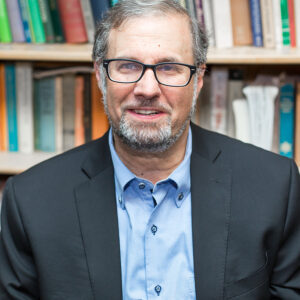
When Matzoh Bakers and Tallis Weavers Went on Strike: The Jewish Workers’ Movement in Eastern Europe
Dec 6, 2021 By David Fishman | Public Event video | Video Lecture
The grandparents or great grandparents of most American Jews were poor wage-earning workers from Eastern Europe. This session will explore the world of Jewish workers in Tsarist Russia, in particular the Jewish labor movement that arose at the end of the 19th century. The movement organized strikes, underground trade unions, classes, and cultural activity for workers in Yiddish, and a Jewish socialist party known as the “Bund.” Its ideas and practices migrated to the United States and left a powerful imprint on American Jewish life.
Read More
Joseph’s Brothers and the Naked Truth
Dec 3, 2021 By Howard Markose | Commentary | Miketz
Parashat Miketz, Jacob sends Joseph’s brothers on a mission to procure rations for the family, which is facing starvation in Canaan. The ten sons of Jacob, however, could not have anticipated what was to transpire upon their arrival. An intense interrogation by Egypt’s viceroy is followed by three days in detention, the incarceration of Simon, and a demand to bring Benjamin, their youngest brother, to Egypt. The brothers find no relief from their ordeal, and this unrelenting strain manifests itself both in the way they respond to Joseph’s questioning, as well as how they retell the incident to their father, Jacob, upon their return to Canaan.
Read More
Maimonides at Work: A Rabbi’s Workday in Medieval Egypt
Nov 29, 2021 By Tamar Marvin | Public Event video | Video Lecture
Toward the end of his life, Maimonides received a request from his translator and admirer in France: to come and visit the great rabbi and discuss with him the important matter of translating his most sensitive work, The Guide of the Perplexed. In response, Maimonides waves off Samuel Ibn Tibbon, the translator, recounting how busy he is. The correspondence between Maimonides and his translator is rich in detail, providing insight into Maimonides’ life.
Read More
From Podcast to Parashah
Nov 26, 2021 By Shuly Rubin Schwartz | Commentary | Vayeshev
Many of us have become podcast connoisseurs during the pandemic. For me, the interview format has proven most appealing, and within that genre, The Axe Files stands out. Why? Like many interviewers, David Axelrod speaks to authors, politicians, thought leaders, and public figures. What sets his questioning apart is his ability to elicit the background story of his guests: Where were their grandparents from? Where did they grow up? What was their family life like? What challenges did they face in their early lives? And how did this impact the people they have become?
Read More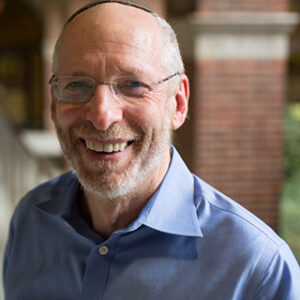
How to Make Work Meaningful for Us: Exploring the Value of Work in Biblical and Rabbinic Sources
Nov 22, 2021 By Eliezer B. Diamond z”l | Public Event video | Video Lecture
Work can be uplifting; it can also be draining and demoralizing. This depends not only on what we do but on how we do it. We’ll look at Jewish sources that offer us different ways of thinking about work and some wisdom about how to make the work we do work for us.
Read More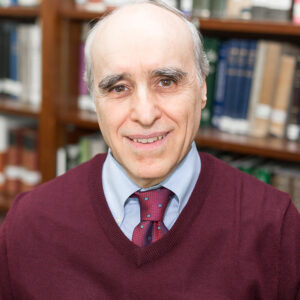
Facing Our Fears
Nov 19, 2021 By Walter Herzberg | Commentary | Vayishlah
Soon after leaving Aram, the home of Laban his father-in-law, along with his wives, children, and possessions, Jacob instructed messengers to go to his brother Esau in Edom and say: “Thus says your servant Jacob: With Laban I have sojourned and I tarried till now. And I have gotten oxen and donkeys and sheep and male and female slaves, and I send ahead to tell my lord, to find favor in your eyes” (Gen. 32:5–6). Upon returning, the messengers relate that Esau himself is coming to meet Jacob and bringing four hundred men!
Read More
If There Is No Bread, There Is No Torah: The Other Careers of the Talmudic Rabbis
Nov 15, 2021 By Rachel Rosenthal | Public Event video | Video Lecture
We often think of the rabbis in the Talmud as having careers as full-time rabbis. However, numerous narrative traditions tell us about their other jobs and their financial struggles. If one cannot make a living learning Torah, how should we balance Torah with more mundane concerns? We’ll study some of these stories together and look at some models for lives that are enriched both by Torah and by work.
Read More
The Give and Take of Biblical Vows
Nov 12, 2021 By Eliezer B. Diamond z”l | Commentary | Vayetzei
We live in a world of give and take. Transactions involving the exchange of money for goods and services, which the rabbis explicitly call משא ומתן, “taking and giving,” are central to economic life. Successful relationships, whether professional or personal, are the result of effectively balancing the pursuit of one’s own wants and needs with acknowledging and accommodating the needs and desires of others.
Read More


SUBSCRIBE TO TORAH FROM JTS
Our regular commentaries and videos are a great way to stay intellectually and spiritually engaged with Jewish thought and wisdom.