
After the Flood
Oct 28, 2022 By Alisa Braun | Commentary | Noah
Today it’s common to find divrei torah that use Parashat Noah to raise awareness about our impact on the environment. Yet I recently discovered a voice from the first stirrings of modernity that seemed to already intuit, within a theological framework, the devastating impact of humans on the global environment. For Obadiah Sforno (1475–1550), the “lawlessness” during the days of Noah did not just cause God to flood to earth. It was a force capable of ruining the climate and planet, and thereby shaping the course of human history ever after.
Read More
Between the Lines: Inside Jewish Day Schools
Oct 27, 2022 By Library of the Jewish Theological Seminary | Public Event video
Part of Between the Lines: Author Conversations from The Library of JTS Dr. Jack Wertheimer, professor of American Jewish history at JTS, co-authored with Alex Pomson the new book Inside Jewish Day Schools: Leadership, Learning, and Community, which seeks to demystify Jewish day schools. His book talk addresses a number of questions: What revolutionary changes characterize current […]
Read More
Written in Stone? Writing and Rewriting the Bible
Oct 24, 2022 By Benjamin D. Sommer | Public Event video | Video Lecture
Examine the way biblical scribes updated texts, sometimes replaced (and thus in a way censored) the older text, but sometimes kept the older text intact even as they added to it. In several cases, a text was updated with the intention of replacing the older one, but then the canon of the Bible ended up including the older version as well as the newer one.
Read More
The World of Creation in Each of Us
Oct 21, 2022 By Israel Gordan | Commentary | Bereishit
One of the most well-known, and controversial, passages in the Torah comes after God creates man and woman: “God blessed them and said to them, ‘Be fertile and increase, fill the earth and master it; and rule the fish of the sea the birds of the sky, and all living things that creep on earth’” (Gen. 1:28).
Read More
Impermanence by Design
Oct 14, 2022 By Grace Gleason | Commentary | Sukkot
If your sukkot are anything like mine, something usually falls off or blows away at some point during the week. This was true of my backyard sukkah in North Carolina, whose hanging decorations were not securely fastened enough to withstand the wind, and the skhakh of my Upper West Side balcony, which unfortunately ended up on someone else’s roof.
Sukkot are impermanent by design. This is our lesson and our meditation throughout the week. In the Babylonian Talmud (Sukkah 23a), our rabbis argue about how strong a wind a sukkah should be able to withstand in order to be considered kosher: does it need to be able to withstand a strong wind, or just average wind? We can feel the tension—on the one hand, we want our sukkot to be strong and sturdy, on the other hand, the holiday pushes us to acknowledge that they may just blow away. The Mishnah in Sukkah 22a suggests that in the ideal sukkah, one should be able to see stars through the roof—in order, I think, that we might contemplate the great expanse of the universe, and our relative temporality and insignificance.
Read More
Making Every Word Count
Oct 7, 2022 By Arnold M. Eisen | Commentary | Ha'azinu
Ha’azinu is remarkable in two respects: what it says, and how it chooses to say it. My focus here will be the latter, but let’s note with regard to the former that in this, his final address to the Children of Israel before a set of farewell blessings, Moses reviews all of his people’s past, present, and future. He begins by calling on the God who had called Israel into being and called him to God’s service. He reminds Israel that God has chosen them and still cares for their well-being. He prophesies that despite all that God and Moses have said and done, Israel will abandon God, as they had in the past. God will punish them, as in the past, but never to the point of utter destruction. In the end, God and Israel will reconcile.
Read More
The Courage to Hope
Sep 30, 2022 By Rabbi Ayelet Cohen | Commentary | Shabbat Shuvah | Vayeilekh | Rosh Hashanah | Yom Kippur
Shabbat Shuvah represents the place between hope and fear; between transformation and unrealized aspirations. We may have made big promises on Rosh Hashanah, resolving to make significant changes in our lives, entering the year with a sense of excitement and optimism. But as Yom Kippur draws closer, we become more attuned to our own shortcomings. So much is beyond our control. Changing old patterns is arduous, the path uncertain. Confronting our own limitations, we can feel afraid and alone. The spiritual work of this moment lies in discerning the difference between acknowledging our limitations and succumbing to fear.
Read More
Confronting Our “Concealed Things”
Sep 23, 2022 By Gordon Tucker | Commentary | Nitzavim | Rosh Hashanah | Yom Kippur
The concealed things concern the Lord our God; but with overt matters, it is for us and our children ever to apply all the provisions of this Teaching. (Deut. 29:28)
There is, however, another reading of this verse, given by Nahmanides (Ramban), in the 13th century, and it is one that forces us to a certain deeper level of introspection at this time of year.
Here’s a paraphrase of what he says: The “concealed things” are not sins committed by others that are out of our view, and thus out of our control. Rather, they are the sins committed by us, but that are nevertheless out of our view and awareness. As long as we are not aware of them, they will be known only to God. But they are only out of our control because they are not known to us.
Read More
Between the Lines: The Book of Revolutions
Sep 20, 2022 By Library of the Jewish Theological Seminary | Public Event video
This is a conversation about The Book of Revolutions: The Battles of Priests, Prophets and Kings with author Rabbi Edward Feld and JTS’s Rabbi Jan Uhrbach. In dramatic historical accounts grounded in recent Bible scholarship, Feld unveils the epic saga of ancient Israel as the visionary legacy of inspired authors in different times and places.
Read More
Count Your Blessings
Sep 16, 2022 By Burton L. Visotzky | Commentary | Ki Tavo
Ki Tavo is a Torah portion with three parts of interest. First, there are the curses and imprecations with which God threatens the Jewish people if we do not do God’s will. As we do when we read the Torah in synagogue, we will quickly and quietly move past the scary stuff.
Second, we are commanded to bring our first fruits to the Jerusalem Temple once we have settled the land. And then we are commanded to offer them to the priest in acknowledgement of God’s beneficence. When we do so, we recite a fixed liturgy, reinforced, no doubt, by hearing the many Israelites ahead of us in the line reciting the exact same words as the priest prompts them. “Repeat after me . . .” he says.
Arami oved avi—My ancestor was a wandering Aramean.” (Deut. 26:5)
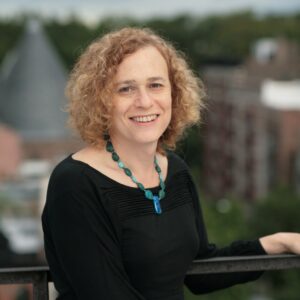
What Does the Torah Really Say about Cross-Dressing?
Sep 9, 2022 By Joy Ladin | Commentary | Ki Tetzei
Every year, Ki Tetzei returns us to the only verse of the Torah that seems to speak about transgender and nonbinary people, particularly about those like me who used to be known as “transsexuals,” people born physically male or female who identify so strongly with the opposite gender that we can only live authentically as that gender: A woman must not put on man’s apparel, nor shall a man wear woman’s clothing; for whoever does these things is abhorrent to your God. (Num. 22:5)
Read More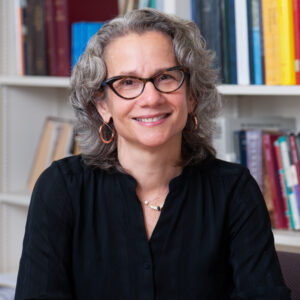
Prophets of Faith
Sep 2, 2022 By Amy Kalmanofsky | Commentary | Shofetim
I often distinguish between faith and belief and consider myself to be a person of faith. Whereas belief implies a degree of certainty that I am uncomfortable with, faith embraces doubt. To my ear, the statement that I believe something to be true communicates that you know something is true. The statement that I have faith that something is true suggests that you desire or suspect something is true. Belief seems restrictive to me—confined by only what is known or can be known—and is at risk of dogmatism.
Read More
The Meaning of Repetition, Repetition
Aug 26, 2022 By David Zev Moster | Commentary | Re'eh | Shabbat Rosh Hodesh
When it comes to reading the Tanakh, much is lost in translation, so even a bit of knowledge of Biblical Hebrew can go a long way. Here is one grammatical insight into this week’s parashah, Parashat Re’eh. According to Deuteronomy 14:22, Israelite farmers must tithe the produce of their field שָׁנָה שָׁנָה, shanah shanah, which […]
Read More
The Stories that Objects Tell
Aug 22, 2022 By Barbara Mann | Public Event video | Video Lecture
Download sourcesBibliography | The Object of Jewish Literature Book Information Part of the series, “Stories and Storytelling” With Dr. Barbara Mann, Chana Kekst Professor of Jewish Literature This session is generously sponsored by Yale Asbell, JTS Trustee ABOUT THE SERIES Join JTS scholars to explore a selection of stories drawn from across ancient, rabbinic, medieval, and modern […]
Read More
Raising Children in a Land of Plenty
Aug 19, 2022 By Gavriella Kornsgold | Commentary | Eikev
The book of Hosea captures the problem of human nature in Parashat Eikev when God proclaims, “I did know you in the wilderness, in the land of great drought. When they were fed, they became full; they were filled and their heart was exalted; therefore they have forgotten me” (Hos. 13:5–6). There are endless historical and contemporary examples that mirror this cycle, such as the immigrant parent who achieves worldly success and becomes worried about the spiritual well-being of their children. Or, to take a scene from popular culture, after the beloved Rocky wins the heavyweight boxing title, he succumbs to the lure of fame, spoils his child, and loses his edge—the eye of the tiger. A close reading of chapter eight in this week’s parashah teaches us how our tradition responds to the perennial problem of raising children in a land of plenty.
Read More
Alexander, Was He Great?
Rabbinic Criticism of Rome through Alexander Narratives
Aug 15, 2022 By The Jewish Theological Seminary | Public Event video | Video Lecture
The rabbis of late antiquity did not write books of theology or political treatises. Rather, they composed stories that would draw the heart and guide the mind to communicate those ideas and practices they deemed essential to Jewish continuity and growth after the destruction of the Second Temple. To accomplish this the sages often redesigned existing literature from the surrounding culture. In “Alexander, was he great?” Ben Levy explores the ways that the rabbis of late antiquity lampooned stories of Alexander appearing in the popular Greek Alexander Romance to criticize Roman imperialism and creatively resist their rule.
Read More
Never Too Late to Get Close
Aug 12, 2022 By Benjy Forester | Commentary | Va'et-hannan
From a young age, I knew I was supposed to like Neil Young. The stereo was turned up whenever his signature falsetto voice came on the radio, and before my bar mitzvah I was taken to see the 2006 documentary concert/film Neil Young: Heart of Gold. My initiation was complete with my first Neil concert […]
Read More
The Protest Literature of Mizrahi Writers
Aug 8, 2022 By Beverly Bailis | Public Event video | Video Lecture
Download Sources With Dr. Beverly Bailis, Adjunct Associate Professor of Jewish Literature Dr. Bailis discusses protest literature written by different generations of Mizrahi writers and examine how these literary works give voice to these writers’ experience in Israeli society, from the Great Immigration in the 1950s to today. In particular, considering how the stories these writers […]
Read More
Moses’s Retirement Speech
Aug 5, 2022 By Raymond Scheindlin | Commentary | Devarim
Deuteronomy, which we begin reading this week, is devoted to Moses’s farewell to his people. Deuteronomy is preeminently Moses’s book; in it, Moses mostly speaks in his own voice, so that instead of the ever-recurring third-person opening line “And the Lord spoke to Moses . . .,” we read “The Lord spoke to me” (Deut. 2:2). Deuteronomy contains not one but a series of farewell speeches and prophetic poems in which Moses recalls the forty years since the Exodus from Egypt and looks ahead to the future in the promised land.
Read More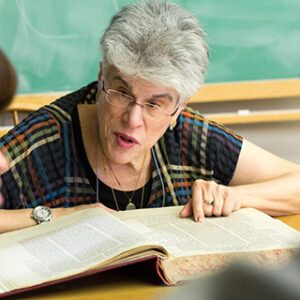
What Six Short Stories in the Babylonian Talmud Tell Us About Jewish Law and Life
Aug 1, 2022 By Judith Hauptman | Public Event video | Video Lecture
By reading six very short stories in the Babylonian Talmud, we discover that not just rabbinic pronouncements established Jewish law, but so did reports of rabbinic performance of the law. We will see Rabbis complying with, and sometime rebelling against, earlier stated rules. As we read these texts, we will tease out details of everyday life and relations between the sexes. Whether these anecdotes actually took place or not makes no difference. They are an invaluable source for understanding how the Rabbis viewed and modified transmitted traditions.
Read More


SUBSCRIBE TO TORAH FROM JTS
Our regular commentaries and videos are a great way to stay intellectually and spiritually engaged with Jewish thought and wisdom.