Where Is Authority Found?
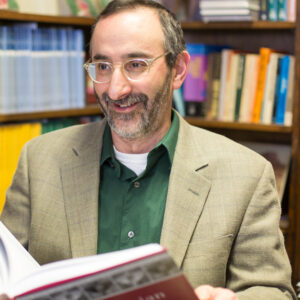
May 6, 2016 By Benjamin D. Sommer | Commentary | Aharei Mot
People familiar with the dietary laws of Judaism know that meat from an animal that died a natural death or was torn apart by wild beasts is not kosher. This is stated explicitly in the Torah. Exodus 22:30 reads, “You shall be my holy people: you may not eat meat torn by beasts in the field; you should throw it to dogs.” (The Hebrew word for “torn by beasts”—terefah—refers specifically to torn flesh in biblical Hebrew.)
Read More
Shevi’i Shel Pesah: Living at the Frontier
Apr 29, 2016 By Lauren Henderson | Commentary | Pesah
On the seventh day of Passover (Shevi’i shel Pesah), we reached the frontier of our existence: Yam Suf, the Sea of Reeds. We had known slavery intimately, becoming deeply comfortable in Egypt even as we clamored to leave. And after all the plagues and darkness and death, we arrived, trembling, at the water’s edge, about to surface and breathe the unfamiliar air of freedom for the first time.

Remembering Pesah 1946
Apr 22, 2016 By Avinoam Patt | Commentary | Pesah
Every Passover as we read the Haggadah, we recite:
In each and every generation, a person is obligated to regard himself as though he actually left Egypt. As it says: “You shall tell your son on that day, ‘It is because of this that God took me out of Egypt.’” (Exodus 13:8)
Seventy years ago, in April 1946, the first Passover in postwar Germany followed the liberation of the concentration camps. The survivors who gathered to form the She’erit Hapletah, the surviving remnant, felt this transition from slavery in a more immediate sense than any generation of the children of Israel in the 2,000 years that preceded them.
Read More
Beyond the Exodus from Egypt
Apr 15, 2016 By Arnold M. Eisen | Commentary | Shabbat Hagadol | Pesah
Most of us, at one time or another, have asked the question about the Passover seder that the Haggadah attributes to the “wicked son”: What is the point of all this? At such moments of skepticism, we probably understand why an annual family gathering is worthwhile, we perhaps remember fondly the seders of our youth, and we may even confess to being moved by the rituals reenacted at the seder table year after year: reciting the four questions, dripping wine from cup to plate at the recital of the ten plagues, singing Had Gadya. But really, we ask: Why is the event of Israelite slaves leaving Egypt over 3,000 years ago (if it ever happened in the first place) so important that an entire holiday is devoted to it (not to mention countless daily prayers)?
Read More
With God, It’s Complicated . . .
Mar 11, 2016 By Rami Schwartzer | Commentary | Pekudei
For a story that began with the promise of intimacy, I had hoped for a happier ending.
Read More
Here I Am, Tzara’at and All
Apr 8, 2016 By Rachel Rosenthal | Commentary | Tazria
When I was 12, a few weeks before my bat mitzvah I went in to meet with one of the rabbis of my synagogue. At the time, the synagogue newsletter included a “pasuk of the week,” a verse from that week’s Torah portion that was particularly interesting or thought provoking. However, as the rabbi confessed to me, the week of my bat mitzvah was to be the end of that custom. He just couldn’t find anything that fit the bill. That week’s parashah? Tazria.
Read More
Our Capacity for Evil, Our Capacity for Good
Jul 27, 1996 By Ismar Schorsch | Commentary | Va'et-hannan
On the first anniversary of the bomb blast which erased 168 lives in the Federal Building in Oklahoma City on April 19, 1995, the New York Times ran a photograph on the front page of Jannie Coverdale, who had lost two grandsons.
Read More
Jewish Time
Jul 13, 1996 By Ismar Schorsch | Commentary | Masei | Mattot
The tantalizingly fragmented book of Numbers closes with a new generation of Israelites, born and bred in the wilderness, poised to cross the Jordan from the west at Jericho.
Read More