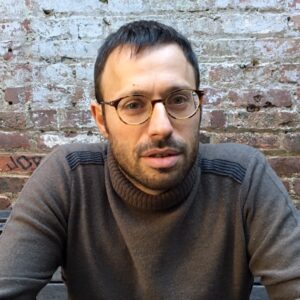
What Was Promised to Abraham?
Nov 11, 2016 By Hillel Ben Sasson | Commentary | Lekh Lekha
In this week’s parashah, Abraham makes his dramatic first appearance on the stage of the Torah, when he follows the command to go forth to an unknown land, relying on the promise of an unknown God. His moving story, along with that of his sons and grandsons, has captivated readers from all three large monotheistic religions. Generation after generation wished to read these patriarchal and matriarchal stories into their lives, their time and place.
Read More
Building a Boat and a Tower
Nov 4, 2016 By Daniel Nevins | Commentary | Noah
Does it feel lately that the fate of the world is at stake? If so, the Torah seems intent to validate and deepen our concern. Here we are just days before one of the most disconcerting elections in American history, and we have also arrived at Parashat Noah, the original dystopian tale.
Read More
Reading and Rereading
Oct 28, 2016 By Avi Garelick | Commentary | Bereishit
There’s a good quip about the Jewish people: we’re the longest running book club on the planet. This week, in synagogues and study halls across the world, Jews are rolling the scroll of the Torah back to the beginning and starting again.. This is a different kind of reading than we do in other spheres of our lives. We read books, articles, and stories at specific times. They could be life-changing—we might return to those texts and re-read them—or they could quickly be forgotten. Some people will do that more than once, at which point they have become either fans or scholars, giving those texts a place of privilege in the formation of their individual identity.
Read More
Face to Face
Oct 21, 2016 By Stephanie Ruskay | Commentary | Sukkot
We’ve lost touch with how to speak with one another. How else can we understand our current political reality?
Seemingly overnight, our national conversation has sunk into a morass of racism, classism, Islamophobia, and misogyny. And yet it didn’t happen overnight. We created—and allowed to be created—a system that encourages each of us to demonize anyone from a different background and with a different perspective. We got used to interacting only with people who agree with us.
Read More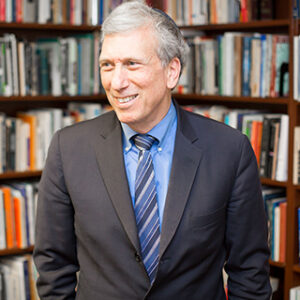
Making Every Word Count
Oct 14, 2016 By Arnold M. Eisen | Commentary | Ha'azinu
Ha’azinu is remarkable in two respects: what it says, and how it chooses to say it. My focus here will be the latter, but let’s note with regard to the former that in this, his final address to the Children of Israel before a set of farewell blessings, Moses reviews all of his people’s past, present, and future. He begins by calling on the God who had called Israel into being and called him to God’s service. He reminds Israel that God has chosen them and still cares for their well-being. He prophesies that despite all that God and Moses have said and done, Israel will abandon God, as they had in the past. God will punish them, as in the past, but never to the point of utter destruction. In the end, God and Israel will reconcile.
Read More
Is This the Fast I Desire?
Oct 11, 2016 By Julia Andelman | Commentary | Yom Kippur
When I was a congregational rabbi, my practice was to offer a sermon on Yom Kippur morning relating to social justice. I would raise an issue of ethical concern in the world; share my reading of what Jewish texts and tradition had to say on the matter; and suggest actions for individuals and for the community.
Read More
Returning with God
Sep 30, 2016 By Mychal Springer | Commentary | Nitzavim
This week’s Torah Portion, Nitzavim, speaks profoundly about teshuvah, the literal and figurative struggle to return to God. When we turn back to God “with all [our] heart and soul,” the parashah tells us, then God “will bring you together again from all the peoples where the Lord your God has scattered you” (Deut 30:3). Being scattered is a state of disorientation and disconnection. Teshuvah represents a coming home. There’s an organic connection between the return to the Land of Israel—the land at the center of the Jewish soul, from which we have been banished—and the return that involves changing our ways and opening our hearts to God.
Read More
What It Means to Enjoy
Sep 23, 2016 By Alan Cooper | Commentary | Ki Tavo
At one of our Shabbat afternoon Talmud classes some 50 years ago, after the usual bout of eating, drinking, and singing, the topic under discussion was what it means to “enjoy” Shabbat and Yom Tov (Sabbath and Festivals). We discussed Rabbi Eliezer’s statement that Festival “rejoicing” is obligatory, as well as the two alternative ways he proffers for attaining pleasure: either by eating and drinking or by sitting and studying. Rabbi Joshua interjects that it should be half of one and half of the other (BT Pesahim 68b).
Read More