

Search Results
Back to JTS Torah Online's Main page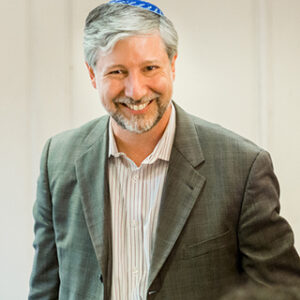
Giving Blessings on a Full Stomach
Nov 13, 2015 By Daniel Nevins | Commentary | Toledot
Some stories are rich with visual imagery, while others resound with song. But it is fragrance, specifically the smell of savory food, which infuses Parashat Toledot. Food plays an essential role in several pivotal scenes. It is with a pot of lentil stew that Jacob purchases Esau’s birthright, and it is with a steak dinner that he secures the senior blessing from his father. The first story is simple—Esau is famished and ready to trade away anything for a bowl of soup. But the second story is enormously complex.
Read More
Worn Torn
Nov 6, 2015 By Amichai Lau-Lavie | Commentary | Hayyei Sarah
“Abraham mourned and wept for Sarah.” (Gen. 23)
Did he rip his clothes? And what did Isaac do when hearing that his mother died?
I think of him this year as the verse in “the Life of Sarah” leaps again beyond the Speaking Scroll, an annual review of loss and mourning. Just about a year ago my father died. In the moments following the news, alone in a hotel, far away from anyone and anywhere, my first instinct was to tear my shirt, observing “keri’a.”
Read More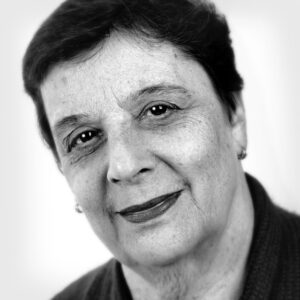
Love and Covenant
Nov 6, 2015 By Blu Greenberg | Commentary | Hayyei Sarah
In the mid-90s, Bill Moyers of the eponymous television show invited viewers to watch Genesis: A Living Conversation, the 10 part series he conducted with Bible scholars, writers, psychologists, lawyers, artists, and communal and religious leaders of Judaism, Christianity, and Islam. The invitation frontispiece read: “Rape, fratricide, jealously, temptation, fear, rage, murder . . . Welcome to Genesis.” Moyers was capturing the powerful “flawed models” nature of biblical heroes that make them eternally accessible and the inescapable truth about the human capacity for evil: “And the heart of man is evil. . . from his youth.” (Gen. 6:5)
Read More
I Am My Beloved’s: Challenges of Marriage and Relationships in Contemporary Society
Nov 5, 2015
This panel, featuring Daniel Jones, editor of “Modern Love,” Dr. Mona Fishbane, couple therapy specialist, and Rabbi Aaron Brusso of Bet Torah, Mount Kisco, New York, focuses on the challenges within contemporary marriages and relationships in our society and particularly in the Jewish community. Rabbi Mychal Springer, Helen Fried Kirshblum Goldstein Chair in Professional and Pastoral Skills and director of the Center for Pastoral Education at JTS, moderates.
Read More
What Did Abraham Actually Know?
Oct 30, 2015 By Tim Daniel Bernard | Commentary | Vayera
“But was he really as strongly convinced of such a revealed doctrine, and also of its meaning, as is required for daring to destroy a human being on its basis?”
—Immanuel Kant, Religion within the Boundaries of Mere Reason §4, transl. George di Giovanni
What would you do if a voice told you to sacrifice your child?
Read More
Ultimate Values and the Akedah Story
Oct 30, 2015 By Leonard A. Sharzer | Commentary | Vayera
Can there be anything left to say about the Akedah, perhaps the most discussed and analyzed story in the Torah? Clearly if this were simply the story of an old man who hears voices and travels to a nearby mountain with his son in order to kill him there, and who, at the last moment, sees a ram and kills it instead, we would not still be fascinated talking about the story more than two millennia later. No, this is an allegory. . . and therein lies it survival and its power, and our task is to find meaning in the story for ourselves and for our lives.
Read More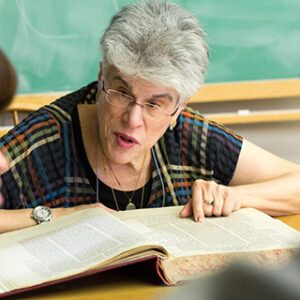
A Lesson for Abraham
Oct 23, 2015 By Judith Hauptman | Commentary | Lekh Lekha
Lekh Lekha was the first parashah I ever learned. As kids in Hebrew school, we were not taught Bereishit or Noah, probably because of the theological questions they would raise. We began Bible study with Lekh Lekha. I am happy to return to it as an adult and try to understand its message anew.
Read More
In God’s Image: Myth, Theology, and Law in Classical Judaism
Oct 20, 2015 By Library of the Jewish Theological Seminary | Public Event audio
A discussion with author Dr. Yair Lorberbaum, professor at Bar Ilan University Faculty of Law and senior researcher at the Shalom Hartman Institute.
Read More
The Dove
Oct 16, 2015 By Daniel Heschel Silberbusch | Commentary | Noah
This is part of a larger painting/collage that in turn is part of a children’s book I am making inspired by “Had Gadya,” the song we sing at the Pesah Seder’s conclusion. The piece this paper cut-out comes from interprets the song’s final verse “And God came and killed the angel of death.” The verse presents an obvious challenge to a Jewish artist reluctant to “portraitize” God. It also echoes this week’s parashah: God steps in after destruction and promises an end to such destruction (Gen. 8:10-22). Perhaps for this reason I gravitated toward recycling this image.
Read More
Before the Deluge
Oct 16, 2015 By Marc Gary | Commentary | Noah
Parashat Noah raises difficult questions about the relationships between the natural world, humanity’s morality, and God’s justice.
Read More
Portrait of the Kings: The Davidic Prototype in Deuteronomistic Poetics
Oct 15, 2015 By Library of the Jewish Theological Seminary | Public Event audio
A discussion with author Dr. Alison L. Joseph, adjunct assistant professor of Bible at JTS and visiting assistant professor at Towson University.
Read More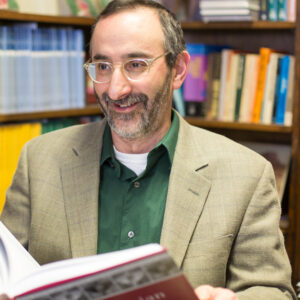
An Anthology of Beginnings
Oct 9, 2015 By Benjamin D. Sommer | Commentary | Bereishit
“In the beginning, God created the heaven and the earth.” These opening words of the Torah in most translations are clear, straightforward, and well known. But they don’t render the Hebrew original correctly. As Rashi already pointed out, the first verse of the Torah is not, by itself, a grammatical sentence. Instead, it is part of a longer sentence that continues through the end of verse three.
Read More
Grief in a Time of Joy
Oct 2, 2015 By Alex Braver | Commentary | Sukkot
My mother was diagnosed with acute myeloid leukemia the day before Erev Rosh Hashanah last year. Through the Days of Awe we discussed her genetic profile, her symptoms, bone marrow transplants, and chemotherapy. We approached Hanukkah unsure of what was working and what wasn’t. She died on Purim.
Read More
Ushpizin
Oct 2, 2015 By The Jewish Theological Seminary | Commentary | Sukkot
Ushpizin, (literally, “guests”) is the tradition of inviting the exalted men and women of the Bible into our sukkot. Each year, since 5772, professional and novice artists including JTS students, faculty, and staff have taken the concept of ushpizin as the centerpiece and inspiration for an art installation in the famed sukkot built each year in the JTS courtyard. Part of the JTS Arts Initiative, the sukkot exhibit is managed under the guidance of Tobi Kahn, JTS artist-in-residence.
Read More
The Ending That Wasn’t
Sep 25, 2015 By David Hoffman | Commentary | Ha'azinu
We Jews are not a religious lot. In fact, by a variety of metrics cited in the recent Pew report, Jews are less religious than any other religious group in America. For instance, only one quarter of Jews say religion is “very important” in their lives, compared with more than half of Americans overall. More to the point that I’d like to explore, a belief in God is much more common among the general non-Jewish public than among Jews.
Read More
The Heavens, the Poet, and the People
Sep 25, 2015 By David G. Roskies | Commentary | Ha'azinu
Between May and December 1943, the poet Yitshak Katzenelson was incarcerated with his last surviving son, Zvi, in Vittel, a German transit camp in France. There Yitshak kept a diary-cum-journal in Hebrew and completed The Song of the Slaughtered Jewish People in Yiddish, the longest epic poem to have survived the Holocaust. The pivotal ninth canto is a bold, even blasphemous, response to Parashat Ha’azinu.
Read More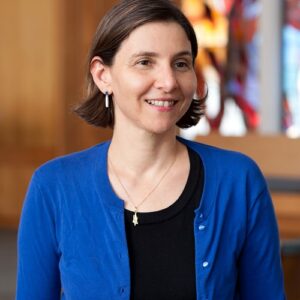
Be Strong and Resolute, Be Courageous and Strong
Sep 18, 2015 By Sarah Tauber (z”l) | Commentary | Vayeilekh
In 1974, Bob Dylan (born Robert Zimmerman) released his now famous song “Forever Young.” By that time Dylan was a father of four children and according to the lore of “Forever Young,” he composed the lyrics as a blessing to his youngest son, Jakob. Despite the title, the song actually centers on Dylan’s hopes for the kind of human being his son will grow up to become over time. In particular, he asks (prays?) as follows: “May you always be courageous / Stand upright and be strong.”
Read More
Love in Hiding
Sep 11, 2015 By Arnold M. Eisen | Commentary | Vayeilekh
When I prepared to chant Parashat Vayeilekh at my Bar Mitzvah, I don’t think I paid much attention to the theological import of the announcement that God would “hide My countenance” from the children of Israel. Nor is it likely that I felt the pathos of Moses giving up the mantle of leadership, on the far side of the Jordan, as his life’s journey came to an end.
Read More
Safe in God’s Memory
Sep 11, 2015 By Mychal Springer | Commentary | Nitzavim | Rosh Hashanah
This week’s Torah portion, Nitzavim, contains stunningly beautiful verses that teach us that God’s Torah “is very close to you, in your mouth and in your heart, to observe it” (Deut. 30:14). The language of the verses is full of rich, physical imagery, “It is not in the heavens, that you should say, ‘Who among us can go up to the heavens and get it for us and impart it to us, that we may observe it?’” The Torah, the wisdom, is not far away, is not other. It is in our hearts. If we give our hearts space to be known and embraced, our hearts can share the wisdom that dwells inside. With this space, the wisdom of Torah emerges in new ways. It is not general; it is very specific to each person, to the challenges and blessings that he or she has encountered in his or her life.
Read More
Beyond Dreams
Sep 11, 2015 By Rachel Rosenthal | Commentary | Nitzavim
Their moment has almost come. The Children of Israel stand poised on the edge of the Jordan about to enter the Land. The moment of their dreams is about to become reality. However, a new era of responsibility is about to begin as well. The Children of Israel will no longer be able to look to God to fulfill their every need. Instead, they must learn to support themselves and to take responsibility for their own behavior. As God tells the people in this week’s parashah, “It is not in the heavens . . . Rather, the thing is very close to you, in your mouths and in your hearts so that you can fulfill it.”
Read More


SUBSCRIBE TO TORAH FROM JTS
Our regular commentaries and videos are a great way to stay intellectually and spiritually engaged with Jewish thought and wisdom.