
Search Results
Back to JTS Torah Online's Main page
Counting Whole Jews
May 17, 2019 By Arielle Levites | Commentary | Emor
We are in a season of counting. Beginning on the second night of Passover, Jews around the world began a collective counting project, marking the days from the Exodus from Egypt to the holiday of Shavuot, which celebrates the Israelites’ receiving of the 10 Commandments at Sinai.
Read More
A Spiritual Caution for This Season
Apr 19, 2019 By David Hoffman | Commentary | Pesah
The Shulhan Arukh—the 16th-century law code that serves as the essential scaffolding for the Jewish legal system—introduces its discussion of the holiday of Passover with the Talmudic prescription:
We ask and inquire about the laws of Passover 30 days before the beginning of the Passover holiday. (OH 429:1, BT Pesahim 6a)
Rabbi Moshe Isserles (1530-1572) immediately comments on this law:
Read MoreIt is a custom to buy wheat and distribute it to the poor for the needs of Passover.

Passover after Pittsburgh
Apr 12, 2019 By Arnold M. Eisen | Commentary | Shabbat Hagadol | Pesah
“Why is this night different from all other nights?”
Whether you are a twenty-something, a Millennial, a Boomer, or a member of the Greatest Generation; whether you are attending your first Passover seder this year or the latest in a long line of sedarim, chances are good that the discussion at your seder table will be different from all Passovers past. The Jewish community of North America has markedly changed since last Passover, shaken to its core by the synagogue shootings in Pittsburgh and a significant spike in anti-Semitic incidents in the United States as well as in Europe that seem part of a larger outburst of racism and prejudice.
Read More
The Confusion of Revelation
Jan 25, 2019 By Barry Holtz | Commentary | Yitro
We have now come to Parashat Yitro in our annual Torah reading cycle, arguably the most significant sedra in the Humash. While Parashat Bereishit has the mythic power of the creation stories and Parashat Beshallah includes the narrative of the Exodus from Egypt and the miraculous crossing of the Sea, it is in Yitro that we see the culmination of that crossing, for here in Parashat Yitro we read about our first connection to the Torah, the single most significant element of Judaism as it later evolved.
Read More
Memory and the Exodus from Egypt
Jan 11, 2019 By Jan Uhrbach | Commentary | Bo
Zakhor—Remember this day, on which you went free from Egypt, from the house of bondage, for with a mighty hand Adonai brought you forth from this . . . (Exod. 13:3).
The Exodus from Egypt is the first of several things the Torah commands us to remember (zakhor). What does it mean to remember, and how do we accomplish it?
Read More
Open Your Eyes, Open Your Ears
Jan 4, 2019 By Jack Moline | Commentary | Va'era
Liberation being what it is, oppression is a necessary precursor. Would the world have been a better place if liberation were never necessary? That’s either a profound or a sophomoric question. Before I make my case, let me acknowledge that the question is purely hypothetical because liberation does exist as a response to the preexisting condition of oppression.
Read More
Holding Fast
Jul 27, 2018 By Mychal Springer | Commentary | Va'et-hannan
This week we emerge from the destitution of Tisha Be’av, the fast day that commemorates the destruction of the Temples, and receive the gift of Shabbat Nahamu, the Shabbat of our being comforted. נַחֲמוּ נַחֲמוּ עַמִּי יֹאמַר אֱלֹהֵיכֶם, “Comfort, oh comfort My people, Says your God” (Isaiah 40:1). What is comfort? One way of understanding the essence of comfort is by engaging with Moshe Rabbenu (our teacher, Moses) in this week’s parashah.
Read More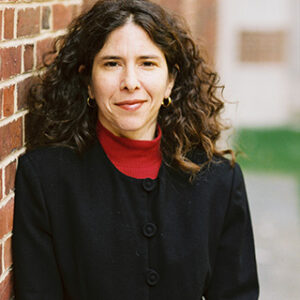
The Pogrom that Endured
Apr 5, 2018 By Barbara Mann | Commentary
The sun shone, the blossom bloomed, and the slaughterer slaughtered.
The image of the slaughterer in springtime is an indelible part of the DNA of twentieth-century Jewish experience, juxtaposing as it does the casual brutality of history with the most mundane of natural events. Its source is Bialik’s epic poem about the Kishinev pogrom of 1903. Despite the many words written about the events of that April—personal testimony, journalistic reportage, memorial texts, poetry, and even a Broadway play (The Chosen People by Evgenii Chiriko)—the warp and woof of this particular incident simply won’t let us alone.
Read More
Freedom through Torah
Apr 5, 2018 By David Hoffman | Commentary | Pesah
“The tablets were God’s work, and the writing was God’s writing, incised upon the tablets” (Exod. 32:17). Do not read, “incised,” (harut), rather [read] “freedom” (herut)—for no person is truly free except the one who labors in Torah. (Mishnah Avot 6:2)
Freedom in biblical and rabbinic Judaism is a highly complex idea. Consider the mishnah above. At first glance one might think the law, the Ten Commandments carved on the two tablets, would be limiting, constraining human freedom. Counterintuitively, the Sages argue that true freedom only comes from an engagement with Torah! How might “laboring in Torah” and living a life according to the demands of the Torah induce freedom?
Read More
Four New Questions from the Four Children
Mar 23, 2018 By Arnold M. Eisen | Commentary | Shabbat Hagadol
Here’s a challenge for the rising generations seated around the seder table this year: make sure your Four Questions address the ways in which things truly are different in 2018 from how they have been at Passovers in the past.
Read More
Redeeming the Plagues
Jan 12, 2018 By Miriam Liebman | Commentary | Va'era | Pesah
Every year at the Passover seder, there is a brief pause in the chaos when everyone dips a finger in their cup of wine and spills a single drop for each of the ten plagues. We are spilling wine to remind ourselves that although the plagues served as miracles for us, those miracles came at the expense of others.
Read More
Summoning a People
Jan 5, 2018 By Arnold M. Eisen | Commentary | Shemot
Two very different stories about who we are as Jews are forcefully presented in the opening chapters of the Book of Exodus. One of them—captured in the Hebrew title of the book, Shemot or “Names”—declares that we are the Children of Israel: a nation, a people, defined in the first instance and forever after by our ancestors and the paths they travelled. The other story teaches that we are disciples of Moses, the human protagonist of the book, and, like him, are servants of the God Who called to Moses out of the Burning Bush and bound us in covenant at Sinai.
Read More
Escaping a Toxic Relationship
Nov 24, 2017 By Lilly Kaufman | Commentary | Vayetzei
Poor Jacob is triply triangulated in Parashat Vayetzei! His boss, Laban, is not only his uncle, Rebecca’s older brother, but also his father-in-law, Leah and Rachel’s father. Leah and Rachel are bitter rivals, Leah resenting Jacob’s love for Rachel, and Rachel wishing for children when God has blessed only Leah with fertility. Complicating this tangle of relationships is the fact that Jacob and Laban work together, and Laban is not a fair employer.
Read More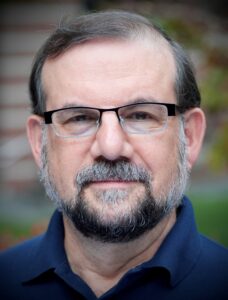
The Rabbis, the Romans, and Us
Nov 3, 2017 By Burton L. Visotzky | Commentary
In my most recent book I take up a quintessentially American Jewish subject: can we adopt the broader culture in which we live and still be Jewish? Is it possible to have a strong Jewish identity while living as Americans who are university educated and share our lives with our gentile neighbors? To answer this I turned to the centuries and texts which birthed Judaism as we know it.
Read More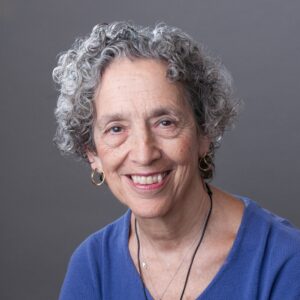
Another Passover Season
Apr 14, 2017 By Ruth Messinger | Commentary | Pesah
As we come, again, to the end of another Passover season, many of us are looking forward to moving beyond the matzah intensity. We are obliged, also, to ask ourselves what it means to have retold the story of our people’s quest for freedom, what new insights we might have gained, what the lessons are that we should take back into the world. I want to talk about our commitment to fight oppression as it manifests itself today in our lives and in the lives of others, and I want to make some observations about the roles there are to play in these struggles, about what we can learn about how to lead in these endeavors.
Read More
Retelling the Story
Apr 7, 2017 By Arnold M. Eisen | Commentary | Shabbat Hagadol | Pesah
Here’s a fifth question to ask at the seder this year, in addition to the usual four—a question likely to provoke discussion about the meaning of Passover that is especially timely in April 2017.
Why on all other nights (and days too) do we recall the Exodus from Egypt, but on this night, which is dedicated to the telling of that story, the Haggadah says little about what actually happened at the Exodus, and how it happened?
Read More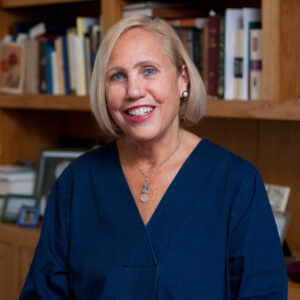
Two New Tunes for the Seder
Apr 7, 2017 By Nancy Abramson | Commentary | Shabbat Hagadol | Pesah
I have fond memories of my grandfather at the head of the table, chanting the Haggadah straight through in Hebrew. My grandmother, mother, and aunts would be busy in the kitchen while all of us kids were fidgeting, waiting for our cue to sing Mah Nishtanah, the Four Questions. The night of the first seder was always magical for me, and still is, as I try to infuse the tradition with contemporary ideas and some new melodies.
Read More
Crossing the Sea Every Summer
Feb 10, 2017 By Jacob Cytryn | Commentary | Beshallah
As a camp director, Beshallah speaks to me in certain rather obvious ways. It is focused on the power of song—both the Song of the Sea (Exodus 15:1-18) and Deborah’s Song (Judges 5:1-31) in the haftarah—and camp is nothing if not filled with song and music. Experience, similarly, is central to the entire endeavor, especially as recounted in the Passover seder. And Beshallah also represents the birth of possibility, the beginning of an independent community. In other words, this week’s parashah encapsulates the basic work we in the camp business embark on every summer.
Read More
“Us” and “Them”
Feb 3, 2017 By Paula Rose | Commentary | Bo | Pesah
“They tried to kill us, we won, let’s eat.”
This tongue-in-cheek summary of most Jewish holidays applies most strongly, perhaps, to the Passover Seder. We retell the story of the Exodus from Egypt, we praise and thank God for redeeming us, and then we eat a festive meal. Cast in that light, the story of the Exodus seems so straightforward. The Israelites are innocent victims, somehow pawns in God’s larger plan. The Egyptians, and especially Pharaoh, are wicked, oppressing the Israelites with forced labor.
Read More
Where Is Authority Found?
May 6, 2016 By Benjamin D. Sommer | Commentary | Aharei Mot
People familiar with the dietary laws of Judaism know that meat from an animal that died a natural death or was torn apart by wild beasts is not kosher. This is stated explicitly in the Torah. Exodus 22:30 reads, “You shall be my holy people: you may not eat meat torn by beasts in the field; you should throw it to dogs.” (The Hebrew word for “torn by beasts”—terefah—refers specifically to torn flesh in biblical Hebrew.)
Read More


SUBSCRIBE TO TORAH FROM JTS
Our regular commentaries and videos are a great way to stay intellectually and spiritually engaged with Jewish thought and wisdom.