Who Sees the Truth, and Who Speaks It?
Jun 26, 2026 By Loraine Enlow | Commentary | Balak | Hukkat
Long-time New York subway riders are familiar with the slogan, “See something, say something.” Balaam’s story in this week’s parashah is closer to: “Say something, because you didn’t see something.” After all, “See something, say something” assumes that the hard part is speaking up, but Parashat Balak suggests the hardest part may be noticing at all, especially when Balaam, the professional seer, can’t see the angel in the road that his donkey does. This reversal of who notices (and who misses what’s right in front of them) is what draws me into this passage. As a scholar working primarily on medieval Jewish and Christian biblical commentaries, I’m especially interested in noticing how texts travel, how communities guard them, and how outsiders can sometimes help shed light on a tradition. Biblical interpretation is itself, in a sense, the discipline of noticing ‘angels in the road,’ learning to see what is already present right in front of you in the text.
Read More
Fear, Truth, and a Donkey
Jul 11, 2025 By Joel Alter | Commentary | Balak
Bilam, the highly paid but visionless prophet, sits high in his saddle on his donkey’s back as she swerves off the path. She’s strayed, it seems, for no reason; an angel standing with sword drawn is as yet unseen by him. He beats the donkey to drive her back onto the path. The next time she stops short she traps her rider’s leg against a stone wall. He winces in pain. I imagine him throwing one hand down toward his leg and perhaps grabbing his headdress, by now slipping off, with the other. He frantically beats his donkey again, flailing to regain control. Bilam is coming undone: a prophet made a fool by an ass (Num. 22:22–25).
Read More
The Sound of No Hands Clapping
Jul 19, 2024 By Marcus Mordecai Schwartz | Commentary | Balak
The Yerushalmi (Jerusalem Talmud) will draw the connection between our parashah and clapping. It states that clapping, particularly when done in anger, is discouraged on Shabbat, and bases the prohibition on Numbers 24:10, where Balak, enraged by Balaam’s blessings instead of curses, claps his hands together in frustration. Balak’s clapping symbolizes a loss of control and submission to anger—actions that go against the peaceful spirit of Shabbat.
Read More
Dreaming of Being Balaam
Jun 30, 2023 By Jan Uhrbach | Commentary | Balak | Hukkat
The story of the heathen prophet Balaam—hired by Moabite king Balak ben Tzippor to curse the people Israel—is altogether strange. It concerns events happening outside the Israelite camp and seemingly unknown to them, characters we’ve not yet met, and a talking donkey. Its tone ranges from burlesquely funny to surreal.
Read More
The Thrill and the Terror of the Foreign Prophet
Jul 15, 2022 By Aaron Koller | Commentary | Balak
Prophecy among the nations fascinated and terrified ancient Jews. It must exist: If there is only one God, God of the whole world, why should divine inspiration be limited to the members of one nation? There is no reason that God cannot speak with the Greeks through an oracle or the Arameans through seers just as he spoke to the Israelites through their prophets. But while prophecy among other peoples testifies to the universality and all-encompassing power of God, does it not also challenge the uniqueness of Israel?
Read More
Greater than Moses?
Jun 25, 2021 By Burton L. Visotzky | Commentary | Balak
Although this week’s Torah reading is named for the Moabite king Balak, who sought to curse the Israelites, the real star of the show is the gentile prophet Balaam ben Be`or—with a special comedy cameo by his talking ass. Three whole chapters of the Torah (Num. 22–24) are given over to the efforts of Balak and Balaam to curse the Jews. In the end, of course, God prevails, and on Friday nights in Schul we still sing Balaam’s blessing, “Mah tovu ohalekhah Yaakov—How goodly are your tents, O Jacob, your dwellings, O Israel.”
Read More
Taking the Long View: Lessons of Leadership
Jul 3, 2020 By Shira D. Epstein | Commentary | Balak | Hukkat
The iconic story in our parashah of Moses striking the rock to bring forth water for the People of Israel is often framed as a morality tale, the consequence of a toxic—and disastrous—combination of unchecked rage and faltering faith. Indeed, God doles out the harshest possible punishment to Moses for flouting God’s directive to speak to the rock, in full display of the congregation: “Since you did not have faith in Me to sanctify Me in the eyes of the children of Israel, therefore you shall not bring this assembly to the Land which I have given them” (Num. 20: 12).
Read More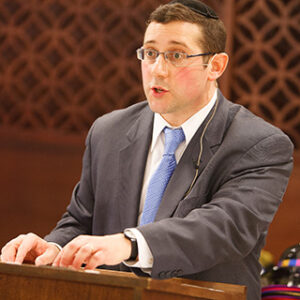
The Sorcery in Our Midst
Jul 20, 2019 By Jonathan Milgram | Commentary | Balak
In this week’s Torah reading, Parashat Balak, we read a riveting story of the diviner, Balaam, who was commissioned by Balak, king of Moab, to curse the Israelites (Num. 22:2–24:25). Balak’s goal was to weaken the Israelites, encamped at the borders of Moab, so that he could defeat them in battle. Balaam is richly and, at times, inconsistently described in our detailed narrative. Part of the story’s complexity is due to the historical fact that two narratives about Balaam were conflated in the finally redacted text of the Bible.
Read More