

Search Results
Back to JTS Torah Online's Main page
“Lights, Camera, Action!”
Jun 11, 2011 By Deborah Miller | Commentary | Beha'alotekha
We’ve all heard the adage about the opera not being over until the fat lady sings. But the opera doesn’t begin, at least not at the Metropolitan Opera, until the chandeliers go up. The performance starts even before the curtain opens, as the twinkling crystal chandeliers ascend to the ceiling. The stage has been set for something illuminating, magical, and transcendent. We are invited to enter into an alternate realm that whisks us away from the finite and ordinary world we inhabit.
Read More
The Idolatry of Stasis
Jun 11, 2011 By Andrew Shugerman | Commentary | Text Study | Beha'alotekha
Only in Hebrew leap years does Shavu’ot coincide with Parashat Beha’alotekha, but every day we are faced with the challenges that this midrash addresses.
Read More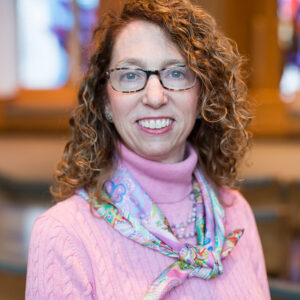
How We Build Character
Jun 4, 2011 By Marjorie Lehman | Commentary | Naso
Parashat Naso begins with the appointment of the Levite families of Gershon and Merari to take care of the Mishkan, the Israelites’ portable sanctuary in the desert. While Aaron and his family were given the responsibility of overseeing the actual service of God in the Mishkan, the descendants of Gershon and Merari were defined as mere helpers, charged with the role of caring for the structure of the Mishkan, its cloths, its equipment, its posts and their sockets, its planks, pegs, and furnishings. I have always wondered—why did God divide up the care of the Mishkan in this way?
Read More
Our Sacred Partnerships
May 27, 2011 By Mychal Springer | Commentary | Bemidbar
In this week’s Torah and haftarah portions, the specter of rupture looms repeatedly. First, we are reminded of the deaths of Aaron’s two older sons, Nadav and Avihu. Similarly, our parashah recounts the undoing of the sacred place held by the firstborn sons, chosen to be dedicated to God when they were saved from the 10th plague, the plague of the slaying of the firstborns. Finally, in the haftarah, Hosea tells the story of Israel the Unfaithful, through the vehicle of Gomer, his harlot-wife.
Read More
The Poetry of Sinai
May 27, 2011 By Andrew Shugerman | Commentary | Text Study | Bemidbar
I rarely encounter texts like the midrash above that so completely challenge static notions about Torah.
Read More
Blessing From the Inside Out
May 21, 2011 By David Hoffman | Commentary | Behukkotai
One of the claims that seems to have been made at different moments in my Jewish education is that Judaism concerns itself with what a person does in the world and not with what a person thinks. The Torah demands we pursue a life rightly lived over beliefs rightly held. This argument underscores that the project of Torah is concerned with our behavior and not our internal life.
Read More
The Ancestral Roots of our Morals
May 21, 2011 By Rabbi Abigail Treu | Commentary | Text Study | Vayikra
How wonderful to derive a great lesson from such a simple turn of phrase.
Read More
Man’s Plans vs. God’s Plans
May 20, 2011 By Rabbi Abigail Treu | Commentary | Text Study | Behukkotai
I have such good intentions when I start off my day or my week.
Read More
Freeing Today’s Slaves
May 13, 2011 By Daniel Nevins | Commentary | Behar
“Proclaim liberty throughout all the Land unto all the inhabitants thereof.” These words from our parashah (Leviticus 25:10) are famously inscribed upon the Liberty Bell in Philadelphia, and they have resounded as a message of hope for the oppressed throughout the world. Yet our parashah also contains a darker message that endorses slavery, just as America has paired proclamations of liberty with cruel practices of slavery and discrimination throughout its history. In the same chapter of Leviticus, we read that non-Israelite residents of the land may be acquired as permanent slaves, and may be kept “as a possession for your children after you, for them to inherit as property for all time.”
Read More
We Are All Borrowers
May 13, 2011 By Andrew Shugerman | Commentary | Text Study | Behar
I love discovering rabbinic texts like the one above that make such radical claims about Torah and God in general or about particular laws like tzedakah (righteous giving), one subject at the heart of this week’s Torah portion.
Read More
Bringing Compassion into Our Lives
May 7, 2011 By Andrew Shugerman | Commentary | Emor
Late this past Sunday night, Erev Yom HaSho’ah (the Eve of Holocaust Remembrance Day), I heard the news that Osama bin Laden was dead, that the most infamous nemesis of the United States since Hitler and Stalin had been killed in an American military operation to capture him. While watching the television reports of celebrations outside the White House and near Ground Zero, I felt mixed emotions: relief for the end of the manhunt; elation over the retribution for innocent lives lost; and discomfort with my pride in the violent end of another human life, even one as murderous as this adversary’s was.
Read More
The Cycles of Nature
May 7, 2011 By Rabbi Abigail Treu | Commentary | Text Study | Emor
A midrash for any attorney or accountant to love, the last line of which already rings with the oy vey iz mir tone which has come down to us via Tevye and Seinfeld as a quintessentially Jewish mode of wry humor.
Read More
Loving in God’s Image
Apr 30, 2011 By Andrew Shugerman | Commentary | Text Study | Kedoshim
At numerous points in Jewish history, rabbis and scholars have addressed the question of what tenet or observance represents the heart of Judaism. Seldom, however, have our teachers argued the converse about a biblical text that ought to be eliminated from the canon.
Read More
The Origins of a Nation
Apr 23, 2011 By Marc Wolf | Commentary | Pesah
As we set our tables and prepare for our seders, we cannot help but hear the echoes of our journey from persecution to freedom amplified in the headlines. Our holiday of Hodesh Ha’aviv—the “Month of the Spring”—comes at a time when the ripple effects of what has been dubbed the Arab Spring are just beginning to be felt.
Read More
Midrash as Filter
Apr 18, 2011 By Rabbi Abigail Treu | Commentary | Text Study | Pesah
From sensual poetry to rules and penalties: how did that happen?
Read More
A New Question for Passover
Apr 16, 2011 By Arnold M. Eisen | Commentary | Shabbat Hagadol | Pesah
The means to ultimate redemption—and a sure sign that redemption has arrived—is peace between the generations. We can’t hope for redemption of the world, the prophet says, if the hearts of fathers and sons (the literal translation of the prophetic verse) are not “returned upon” each other.
Read More
Singing about Sacrifice
Apr 16, 2011 By Judith Hauptman | Commentary | Pinehas
When I attended junior congregation as a child, one of my favorite Shabbat morning songs began with the words uv’yom haShabbat. We kids used to belt it out. I remember the same thing happening when I spent summers as a camper at Camp Ramah in the Poconos. But why sing today about slaughtering and offering up lambs on the altar in the Temple? An answer can be found in this week’s Parashat Pinhas, where these words, or rather these verses, originate.
Read More
Let All Who Are Hungry Come and Eat
Apr 16, 2011 By Andrew Shugerman | Commentary | Text Study | Aharei Mot | Shabbat Hagadol
One of my favorite customs for Shabbat Hagadol is to read the Maggid section of the Passover Haggadah in advance of the first seder.
Read More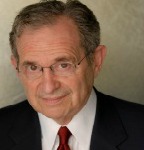
Metzora: Disease or Dis-ease?
Apr 9, 2011 By Leonard A. Sharzer | Commentary | Metzora
When I tell people that Parashat Metzora and Parashat Tazri·a, which we read last week, are among my favorite parashiyot, they often respond, “Well of course, you were a physician and they are filled with medical information.” But if Tazri·a and Metzora are to be read as medical texts, there would be very little point in reading them at all. For one thing, the dominant subject of the texts is something called tzara’at and we really have no idea what that is. Though often translated as leprosy, modern scholarship is quite consistent that whatever the condition is, it is not what modern medicine knows as leprosy. More importantly, besides not knowing what the described condition really is or precisely what some of the specific terms mean, I would like to suggest that these chapters were never intended to be read as medical texts.
Read More
Humanity: Both Glory and Shame
Apr 9, 2011 By Rabbi Abigail Treu | Commentary | Text Study | Metzora
Rabbi Morris Shapiro (z”l) spent his last years teaching in the JTS beit midrash. He was a Holocaust survivor and arguably one of the best talmudic minds of his generation, and we who had the privilege of learning with him here knew well that one of his most frequently cited teachings was the phrase this midrash brings to mind: know before Whom you stand.
Read More


SUBSCRIBE TO TORAH FROM JTS
Our regular commentaries and videos are a great way to stay intellectually and spiritually engaged with Jewish thought and wisdom.