

Search Results
Back to JTS Torah Online's Main page
The Problem with Priests
Jun 2, 2017 By Daniel Nevins | Commentary | Naso
Modern Judaism has a problem with the priesthood. The notion of hereditary holiness—that one segment of the Jewish people is set apart from others, given ceremonial privileges, and invited to bless the people—conflicts with our egalitarian ethos. The strange rituals of the priests, especially when they are invited to raise their hands in blessing the people, feel magical and irrational. For these reasons, many non-Orthodox communities have diminished or even eliminated the priestly privileges such as reserving the first aliyot for kohanim and Levi’im.
Read More
A Text That Mirrors Democracy
May 26, 2017 By David Marcus | Commentary | Bemidbar
The book of Numbers does not start with the word bemidbar, which occurs a little later in the first verse, but rather with vayedabber (“and he said”). In the standard Rabbinic Bible (Mikraot Gedolot), the first word of the book is introduced with an extraordinary flourish: The word vayedabber is printed in giant letters and enclosed in a decorative woodcut border in the shape of a parallelogram. This is surrounded by another rectangle consisting of two lines of Masoretic notations (traditional notes on the Biblical text) on each side; these notations are, in turn, surrounded by two biblical verses, one from Nehemiah and one from Daniel.
Read More
Becoming Like the Wilderness
May 26, 2017 By Eitan Fishbane | Commentary | Bemidbar
With the start of Sefer Bemidbar, the narrative of the Torah turns to the long journey of Benei Yisrael through the wilderness—punishment for the sin of the Golden Calf and preparation for entry into the Land of Israel. Passage into the sacred terrain first requires an arduous ordeal of wandering—a physical process of movement and quest. Penitence, pilgrimage, and transformation are anchored in the space of wilderness.
Read More
The Limitations of Ownership
May 19, 2017 By Yedida Eisenstat | Commentary | Behar | Behukkotai
Rashi, the well-known medieval northern French biblical commentator, begins his commentary on this week’s parashah with a famous question, loosely paraphrased as follows: In what way does the matter of shemittah [the sabbatical year] have anything to do with Mount Sinai? In other words, the laws of Leviticus 25—beginning with the agricultural restrictions of the seventh year, the regulations regarding the jubilee year, limitations on sale of land and slaves—are wholly dependent on Israel living in Israel. So why, Rashi asks, were these laws commanded so long before they would become relevant? Of what relevance are the laws of shemittah to the Israelites at Sinai?
Read More
בהר סיני (“At Mount Sinai”)
May 19, 2017 By Louis Polisson | Commentary | Behar | Behukkotai
At Mount Sinai
We chose Her
And what did She say?
Read MoreDeclare liberty for boy and girl
There shall be a Sabbath of complete rest for the land
A Sabbath
For Being
Law, Compassion, and Justice
May 12, 2017 By Eliezer B. Diamond z”l | Commentary | Emor
In the fall of 2012, I taught a course at the Princeton Theological Seminary entitled “An Introduction to Rabbinic Literature.” I saw my mission as twofold. My stated goal was to familiarize my students with the intellectual and spiritual world of the Rabbis through the study of representative texts from each of the genres of rabbinic literature: Mishnah, Tosefta, the Talmuds, and the halakhic and aggadic midrashim.
However, my study of text had a subtext: to disabuse my Christian students of the pernicious stereotypes of rabbinic Judaism that, some would argue, were first fostered by the apostle Paul and that persist to this very day in many Christian circles.
Read More
Casting Call: Leaders Wanted
May 12, 2017 By Avi Garelick | Commentary | Emor
For the stage, an actor works himself into a role… In this respect, a role in a play is like a position in a game, say, third base: various people can play it, but the great third baseman is a man who has accepted and trained his skills and instincts most perfectly and matches them most intimately with his discoveries of the possibilities and necessities of third base. On the stage there are two beings, and the being of the character assaults the being of the actor; the actor survives only by yielding.
Read More—Stanley Cavell, The World Viewed: Reflections on the Ontology of Film, 1971
Mighty Be Our Powers: Standing Together to Confront Tyranny
May 10, 2017 By Ruth Messinger | Public Event video
Renowned peace activist Leymah Gbowee delivers the annual John Paul II Lecture on Interfaith Understanding. Gbowee won the Nobel Peace Prize in 2011 for her work leading a women’s peace movement that brought an end to the Second Liberian Civil War.
Read More
The Arabic Translation and Commentary of Yefet ben ‘Eli on the Book of Proverbs
May 9, 2017 By Library of the Jewish Theological Seminary | Public Event audio
Ilana Sasson, instructor at Sacred Heart University and JTS alumna, will discuss her new critical edition of a key Arabic translation and commentary on the book of Proverbs.
Read More
Separation and Union: The Poles of Holiness
May 5, 2017 By Stephen A. Geller | Commentary | Aharei Mot | Kedoshim
These combined parashiyot are complex in their structure and content, yet a careful examination of these chapters reveals a striking and powerful theological insight. In terms of Bible scholarship, they extend across a major divide in the priestly literature: Leviticus 16 describes the detailed rites of yearly atonement that eliminated the taint of sinfulness from the priesthood, shrine, and people. In essence, it is a kind of re-creation of the initial state of purity of the Tabernacle on the day it was dedicated, as described in Leviticus 9-10. The link between atonement and dedication is made subtly, by the reference at the beginning of Leviticus 16 to the tragic deaths of Aaron’s sons, Nadab and Abihu, at the dedication of the Tabernacle, as recounted in Leviticus 10.
Read More
Leftover Scraps
May 5, 2017 By Julia Andelman | Commentary | Aharei Mot | Kedoshim | Shavuot
The Torah exhorts us in this week’s parashah: “When you reap the harvest of your land, you shall not reap all the way to the edges of your field, or gather the gleanings of your harvest…you shall leave them for the poor and the stranger” (Lev. 19:9-10). This mitzvah plays out in beautiful narrative form in the Book of Ruth, read on the upcoming holiday of Shavuot. But Ruth is the exception; she is rescued from her destitute state by Boaz, the owner of the field where she gleans, who marries her. What of all those who remained gleaners—whose survival depended on the daily toil of gathering other people’s leftovers?
Read More
Gender Inside and Outside the Camp
Apr 28, 2017 By Joy Ladin | Commentary | Metzora | Tazria
The idea that others would examine and report on intimate details of our bodies—that such things would be of communal concern, and subject us to institutional regulation—may seem archaic. But as transgender people know, when it comes to gender, this kind of surveillance is alive and well.
Read More
Guarding Our Tongues
Apr 28, 2017 By Abigail Uhrman | Commentary | Metzora | Tazria
Becoming is better than being.
—Carol Dweck, Mindset: The New Psychology of Success
This week’s parashah discusses tzara’at, a skin disease understood in rabbinic tradition as punishment for lashon hara, evil speech. The public castigation that the metzora suffers is a powerful warning for us to “guard our tongues.” It was with words that God created the world, and our words have potential to build, create, and sustain life and human dignity, or to be a source of pain and destruction.
Read More
A World Turned Upside Down: A Conservative Jewish Response
Apr 26, 2017 By Arnold M. Eisen
Read More
Making Meat
Apr 21, 2017 By Daniel Nevins | Commentary | Shemini
Dr. Mark Post of the University of Maastricht stunned the world several summers ago by producing the most expensive burger in history. Working from stem cells taken from a live cow, his team cultured muscle tissue that they then turned into an edible product resembling ground beef. Amongst all the specifications for kosher animals in this week’s parashah, lab-grown meat is unsurprisingly absent. Jews therefore want to know—is it kosher? Could it even be pareve?
Read More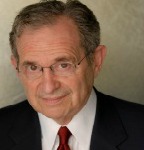
A Love That Transforms
Apr 21, 2017 By Leonard A. Sharzer | Commentary | Shemini
This week’s parashah includes the tragic story of Nadav and Avihu, Aaron’s two eldest sons, who died, consumed by divine fire, after bringing an offering of alien fire within the sacred precincts of the Mishkan. Considering the dramatic nature of the narrative, and its compelling pathos, the story is told with remarkable terseness.
Read More
Another Passover Season
Apr 14, 2017 By Ruth Messinger | Commentary | Pesah
As we come, again, to the end of another Passover season, many of us are looking forward to moving beyond the matzah intensity. We are obliged, also, to ask ourselves what it means to have retold the story of our people’s quest for freedom, what new insights we might have gained, what the lessons are that we should take back into the world. I want to talk about our commitment to fight oppression as it manifests itself today in our lives and in the lives of others, and I want to make some observations about the roles there are to play in these struggles, about what we can learn about how to lead in these endeavors.
Read More
A Scroll of The Song of Songs
Apr 14, 2017 By Library of the Jewish Theological Seminary | Commentary | Pesah
This decorated scroll of Shir Hashirim (which is read on the Shabbat of Pesah) is a product of the circle of the Bezalel Academy of Arts and Design in Jerusalem, dated to circa 1930, though the scribe and artist are unidentified. The artistic movement associated with this school was informed by the Zionist ideals of the society in which it was immersed.
Read More
Retelling the Story
Apr 7, 2017 By Arnold M. Eisen | Commentary | Shabbat Hagadol | Pesah
Here’s a fifth question to ask at the seder this year, in addition to the usual four—a question likely to provoke discussion about the meaning of Passover that is especially timely in April 2017.
Why on all other nights (and days too) do we recall the Exodus from Egypt, but on this night, which is dedicated to the telling of that story, the Haggadah says little about what actually happened at the Exodus, and how it happened?
Read More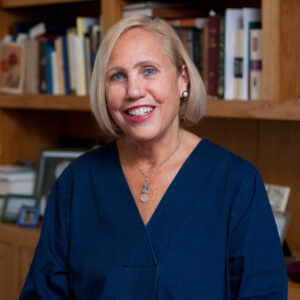
Two New Tunes for the Seder
Apr 7, 2017 By Nancy Abramson | Commentary | Shabbat Hagadol | Pesah
I have fond memories of my grandfather at the head of the table, chanting the Haggadah straight through in Hebrew. My grandmother, mother, and aunts would be busy in the kitchen while all of us kids were fidgeting, waiting for our cue to sing Mah Nishtanah, the Four Questions. The night of the first seder was always magical for me, and still is, as I try to infuse the tradition with contemporary ideas and some new melodies.
Read More


SUBSCRIBE TO TORAH FROM JTS
Our regular commentaries and videos are a great way to stay intellectually and spiritually engaged with Jewish thought and wisdom.