
Search Results
Back to JTS Torah Online's Main page
The Evolution of Torah: A History of Rabbinic Literature
Nov 21, 2019 By Marcus Mordecai Schwartz | Podcast or Radio Program
An introduction to the first 1000 years of rabbinic literature with Rabbi Mordecai Schwartz.
Read More
Gene Editing and the Transformation of Human Life: Perspectives from Jewish Ethics
Nov 21, 2019 By The Jewish Theological Seminary | Public Event video
Revolutionary technology known as CRISPR has enabled scientists to change human genes, holding great medical promise. But it also raises significant ethical questions. Should there be restrictions on the development of this technology? How can we avoid abuse? Should we be able to design human beings and control evolution? Join us to explore these vital issues from the perspective of Jewish ethics.
Read More
The Gravity of Laughter
Nov 16, 2019 By Ariella Rosen | Commentary | Vayera
Parashat Vayera opens with a flurry of action. Yet several of the narrative’s most significant moments are driven not by action, but by reaction.
After Abraham runs to welcome the three wandering strangers he sees from the entrance to his tent, inviting them to bathe, rest, and feast, the action slows, opening space for a story to play out in the realm of emotions. The strangers share the news that in one year’s time, Sarah will give birth to a son, ending the couple’s decades-long wait to fulfill their destiny as the parents of a nation.
Read More
Translating the Book of Job
Nov 14, 2019 By Library of the Jewish Theological Seminary | Public Event audio
A discussion with renowned scholar Dr. Edward Greenstein about his revelatory new translation of the Book of Job.
Read More
Go Forth: The Grammar of Remembrance
Nov 4, 2019 By David G. Roskies | Commentary | Lekh Lekha
Jewish destiny begins with “Lekh-lekha,” “Go forth.” It marks the beginning of our journey through covenantal space; the beginning of our obligations under the terms of the covenant; the beginning of our family romance, so fraught with jealousy and betrayal; and the beginning of our ongoing dialogue with God. God speaks to Abram seven times in the parashah, tracking his every move, until, having reached the age of 99, Abram is addressed for the first time by his new covenantal name of “Avraham.” God speaks to him both oracularly, in verse, and in simple prose; both by day and by night: sometimes in a state of wakefulness and sometimes in a vision.
Read More
Feeling the Flood
Nov 1, 2019 By Mary Brett Koplen | Commentary | Noah
As the curtains close on Parashat Bereshit, we find God steeped in sadness.
וַיִּנָּ֣חֶם ה’ כִּֽי-עָשָׂ֥ה אֶת-הָֽאָדָ֖ם בָּאָ֑רֶץ וַיִּתְעַצֵּ֖ב אֶל-לִבּֽו:
“And Adonai regretted that God had made humanity on earth and God’s heart was grieved.” (Gen. 6:6)
God is heartbroken. The people whom God formed with such care, the people into whom God exhaled God’s own divine spark, the people God loved—had chosen a path of corruption and crime.
Read More
Don’t Wait Until Next Week
Oct 25, 2019 By Burton L. Visotzky | Commentary | Bereishit
Authored together with Karenna Gore, Director, Center for Earth Ethics, Union Theological Seminary
The Earth is the Lord’s and all that is in it, the world and all its inhabitants. God founded it upon the oceans and set it on the rivers. (Psalm 24:1-2)
As the Jewish community once more begins its annual reading of the Torah, and as we recount the grandeur of God’s creation, we focus on God’s charge to newly created humanity: “The Lord God took Adam and placed him in the Garden of Eden, to serve and protect it.” (Gen. 2:15, authors’ translations).
Read More
Confronting Hate
Oct 24, 2019 By Library of the Jewish Theological Seminary | Public Event audio
A discussion about the social justice work of the late Rabbi Marc H. Tanenbaum, with his widow Dr. Georgette Bennett, a humanitarian and philanthropist.
Read More
Human Lives and the Natural World
Oct 18, 2019 By Shuly Rubin Schwartz | Commentary | Sukkot
For many of us who live in dense metropolitan areas, spending time in national parks gives us a unique opportunity to experience in more immediate fashion the majesty of our world. Vacationing in the Canadian Rockies this past summer—hiking in the mountains, walking on glaciers, boating in deep blue lakes, cooling off in the spray of gorgeous waterfalls, identifying rare birds and seeing moose, elk, deer, and the occasional bear (thankfully from a distance)—I felt awed and fortunate to behold this.
Read More
This is My Decree
Oct 11, 2019 By Raymond Scheindlin | Commentary | Ha'azinu
After surveying the 40 years of wandering in the desert; after reviewing and expanding the laws that God had given the Israelites during that period; and after repeating the terms of the covenant between God and Israel with its promises of a long and prosperous life in their own land if they fulfill God’s commands and its threats of impoverishment and expulsion if they fail to fulfill them, Moses now sums up his message in a poem designed to be memorized and recited regularly so that it might easily and reliably be transmitted from generation to generation.
Read More
The Value of Doubt
Oct 4, 2019 By Julia Andelman | Commentary | Shabbat Shuvah | Rosh Hashanah | Yom Kippur
The more one invests in trying to have a meaningful and genuine High Holiday prayer experience, the more one stands to lose if the words of the mahzor fall short of one’s aspirations. The mahzor is conceptually and theologically dense. If one takes the time to meditate upon the assertions of the prayers as they go by, one is sure to eventually encounter a text that rings false, problematic, or even alienating.
Read More
We Need Each Other
Sep 27, 2019 By Daniel Nevins | Commentary | Nitzavim | Rosh Hashanah | Yom Kippur
One of the greatest privileges and responsibilities of a rabbi is to train candidates for conversion to Judaism. Such people are often spiritual seekers, and their questions challenge teachers whose Jewish identity and practice are well established. Why do you do this? What do you believe? What does this text mean? Will this practice make any difference? Faced with such inquiries, it becomes harder for teachers to treat ritual as habit, and faith as dogma. The questions posed by converts, children, or adults who are first discovering the depths of Judaism are exciting to those of us who teach Torah, forcing us to reexamine our own beliefs and practices.
Read More

Speaking God, Speaking Humanity
Sep 20, 2019 By Lilly Kaufman | Commentary | Ki Tavo
What makes the Jews God’s people? On Yom Kippur, when we sing Ki anu amekha ve’atah Elohenu (For we are Your people and You are our God), what are we talking about? Is this triumphalism, elitism, exclusivity? Or could it be an ethic of communal, legislated kindness?
Read More
Do Not Turn Away—Then and Now
Sep 9, 2019 By Eliezer B. Diamond z”l | Commentary | Ki Tetzei
In 1861, as a great conflagration spread across our nation, the Bostonian abolitionist and women’s rights advocate Samuel Joseph May published a slender tract entitled The Fugitive Slave Act and Its Victims, an impassioned polemic against the Fugitive Slave Act of 1850. This federal law, born of the Missouri Compromise of the same year, required all federal, state and local authorities, including those in free states, to return fugitive slaves to their masters, while also criminalizing any attempt to aid and abet a slave seeking to escape bondage.
Read More
Prophets of Faith
Sep 6, 2019 By Amy Kalmanofsky | Commentary | Shofetim
I often distinguish between faith and belief and consider myself to be a person of faith. Whereas belief implies a degree of certainty that I am uncomfortable with, faith embraces doubt. To my ear, the statement that I believe something to be true communicates that you know something is true. The statement that I have faith that something is true suggests that you desire or suspect something is true. Belief seems restrictive to me—confined by only what is known or can be known—and is at risk of dogmatism.
Read More
Blood, Water, and Desire
Aug 30, 2019 By Marcus Mordecai Schwartz | Commentary | Re'eh
These days most observant Jewish women in North America do not soak and salt their own meat. What was once a common and familiar marker of Jewish kitchens, and a deeply gendered rite of passage for young Jewish women, has been professionalized and sequestered away from the eyes of most of those who cook and eat kosher meat. In the United States, the act itself is often performed by mostly non-Jewish workers under the supervision of Orthodox rabbis—a largely male caste. The sounds, sights, and smells of this “kashering” process as performed today would seem strange, unfamiliar, and perhaps even repulsive to most Jewish North American women.
Read More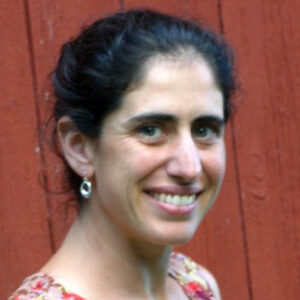
A Land That’s Too Good?
Aug 23, 2019 By Nicole Wilson-Spiro | Commentary | Eikev
I received a call one evening this summer from the doctor at Ramah Palmer. My son had tripped, and she wanted permission to bring him off camp the next day to have his swollen wrist x-rayed. Of course! But by the next morning I had convinced myself that I should pick him up from camp and bring him to our local orthopedist. I even convinced my husband that this would be best for insurance, since our orthopedist is in our insurance network. Unfortunately for me, the camp’s local hospital also turned out to be in our network. Truthfully, I wanted him to come home because I wanted to see him with my own eyes to make sure he was OK. My son is eleven, and he was hurt badly enough that he needed x-rays.
Read More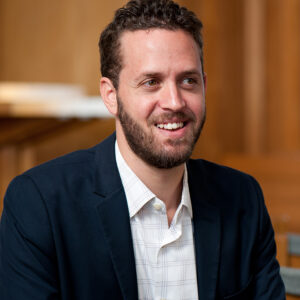
A Leader’s Limits
Aug 16, 2019 By Hillel Gruenberg | Commentary | Va'et-hannan
The very title of this week’s parashah, Va’et-hannan (“and I pleaded”), presents the larger-than-life figure of Moses in a humbling place. Before sharing with the people fundamental elements of the faith that they have taken on and the civilization that they aspire to become, Moses confessed to them that his exclusion from the destined land of promise was against his will, and in spite of emotional pleas to God (Deut. 3:23–26). The man who chose to forgo the trappings of a life among the royal Egyptian elite to lead an at-times ungrateful band of liberated slaves through the desert would ultimately be barred from tasting the final fruit of his sacrifice.
Read More
Hope Amid Destruction
Aug 9, 2019 By Sara J. Bloomfield | Commentary | Devarim | Tishah Be'av
Tishah Be’av, which begins immediately after this Shabbat, is a moment on the Jewish calendar when we pause to reflect on the nature, impact, and significance of destruction. I’ve spent 33 years working at the United States Holocaust Memorial Museum, so naturally I’ve thought intensely about what the catastrophic destruction of European Jewry means for me, for Jews, and for humanity.
Read More


SUBSCRIBE TO TORAH FROM JTS
Our regular commentaries and videos are a great way to stay intellectually and spiritually engaged with Jewish thought and wisdom.