
Search Results
Back to JTS Torah Online's Main page
A Single Star: Sarah’s Journey
Oct 30, 2020 By Maya Zinkow | Commentary | Lekh Lekha
“I know this is not fun to hear on a Wednesday afternoon, but I would really look into getting fertility tests if I were you.” The harrowing text message from my sister came as I was waiting to hear back from her and my sister-in-law about their most recent cycle of egg retrieval and genetic testing. It was her way of telling me that once again, they received news that their journey to parenthood would not be a simple one. But it was also her way of reminding me that our expectations about our bodies, so deeply ingrained in us from a young age, often do not come to fruition in the ways we expect them to.
Read More
Judaism (Religions of Humanity series)
Oct 26, 2020 By Burton L. Visotzky | Public Event video
How do you portray 2,000 years of Judaism in only three volumes? That’s what co-editors Dr. Burton L. Visotzky of JTS and Professor Dr. Michael Tilly of Tübingen University discuss at this celebration of Judaism. Their new three-volume compendium offers a global view of Jewish history, an overview of Jewish literature, and insight into Jewish culture and modernity.
Read More
Spiritual Meaning and Inspiration in Hasidic Teaching
Oct 26, 2020 By Eitan Fishbane | Public Event video | Video Lecture
In this session we explore several powerful examples in which hasidic spiritual masters read the Hebrew Bible figuratively in order to often playfully and brilliantly convey deep spiritual insights about the nature of life, of the world, and of God‘s immanent presence in our lives.
Read More
Looking Beyond Our Arks
Oct 23, 2020 By Yitz Landes | Commentary | Noah
It has never been easier to identify with Noah.
In a normal year, we would be reading this week’s parashah in an entirely different setting: after a summer of sun, camp, and trips, and following the long holiday season, we would be entering our homes and settling into the fall, saying goodbye to the physical togetherness that defines the summer and the holiday season, just as the day gets shorter and the month of Marheshvan commences.
Read More
Gifts of Wisdom: The Historical Traditions and Values of the Ethical Will
Oct 19, 2020 By Stefanie B. Siegmund | Public Event video | Video Lecture
At pivotal moments that make us think about death—encounters with serious illness, the loss of loved ones, advancing age, or even bringing children into our lives—we turn to lawyers to write or revise our wills. Writing a will is an opportunity to consider our priorities as we plan to distribute our estates to the people, organizations, and causes that we care about. What if you also tried to write a letter that would be read by your descendants, perhaps even at your funeral, about your values? What would you say? How does Judaism inform these values?
Read More
Beginning, Rebuilding
Oct 16, 2020 By Daniel Nevins | Commentary | Bereishit
Like millions of American children in the 1970s, I tuned in weekly to ABC’s Wide World of Sports. The opening sequence showed skiers gracefully racing down a mountain, and then spectacularly wiping out while the narrator promised viewers “the thrill of victory and the agony of defeat.” Something tragic and true was contained in this message. The possibility of calamity makes moments of triumph precious and worth pursuing.
Read More
Generosity, Gratitude, and Faith: Rav Eliyahu Dessler’s Integrative Approach to Creating a Meaningful Life
Oct 12, 2020 By Eliezer B. Diamond z”l | Public Event video | Video Lecture
What is the relationship between our level of generosity and our beliefs, our attitudes, and our actions? For Rav Eliyahu Dessler (1892-1953, England/Israel), love, faith, empathy, and social bonding are consequences of generosity—not its causes. In this session, we will discuss Rav Dessler’s insights and his vision for living meaningfully.
Read More
One Day More
Oct 9, 2020 By Rachel Rosenthal | Commentary | Shemini Atzeret
Of all of the holidays in the month of Tishrei, Shemini Atzeret is the most puzzling. Rosh Hashanah celebrates the new year for the world, Yom Kippur focuses on atonement and forgiveness, Sukkot is about joy and vulnerability. Even Simhat Torah, which is not mentioned in the Bible, has a clear purpose and clear rituals. But if asked to explain the purpose of Shemini Atzeret, beyond having the opportunity to pray for rain for the coming season, most people would be hard pressed to articulate what, exactly, this eighth day does for us, for God, or for the world.
Read More
Anticipating Death and Finding Satisfaction in Life: The Profound Wisdom of Kohelet
Oct 5, 2020 By David C. Kraemer | Public Event video | Video Lecture
Wise people will have different views about what constitutes a “Life of Meaning.” But no one researched this question more completely than the biblical author, Kohelet (Ecclesiastes). In this session we review his report in Ecclesiastes ch. 2 and evaluate his conclusions concerning what truly makes a life “well-lived.”
Read More
We are All Sukkah-Dwellers
Oct 2, 2020 By Eliezer B. Diamond z”l | Commentary | Sukkot
Since the accidental discovery of X-rays by Wilhelm Röntgen in 1895 and the subsequent creation of X-ray machines, we have been able to view our bodies through two different lenses. The first is what we see in the mirror—a body of flesh, which takes various forms and distinguishes one individual from another. The second is not visible to the naked eye; it is the skeletal structure that supports the flesh and organs that surround it. Though both are necessary constituent elements of our physical being, we are generally much more conscious of our outer being than our inner one. And yet, our bones are more durable than our flesh. Long after we die and our flesh has wasted away, our skeletal structure continues to exist.
Read More
The Poetics of Loss
Sep 25, 2020 By Ofra Arieli Backenroth | Commentary | Ha'azinu
Growing up, books were always present in our house, arranged by topic in large bookshelves. Arieli Press, an Israeli fine arts publishing company, was founded in 1922 by my grandfather, Yosef Arieli (z”l), a master printer and an author. My father, Ariel Arieli (z”l), and extended family were all involved in the printing business in some capacity. Printing has been regarded as a way to disseminate knowledge in a democratic way and it has been especially precious to the Jewish people who believed that spreading knowledge is Avodat Kodesh—holy work, akin to Moshe teaching Torah on Har Sinai.
Read More
Tip the Scales
Sep 18, 2020 By Shuly Rubin Schwartz | Commentary | Rosh Hashanah | Yom Kippur
“—who will live and who will die . . . who will come to an untimely end . . . . who by plague . . . who will be brought low, and who will be raised up?” (U-netaneh Tokef, from the High Holiday liturgy)
In my earliest memory of this prayer, I am a young girl standing between my mother and grandmother in synagogue amidst hundreds of others. Both women are sobbing uncontrollably, as they recited these words. I was puzzled by their outward display of anguish but knew enough not to interrupt them to ask what caused it. They grasped in a way I had yet to comprehend just how tenuous life is; they understood that this one prayer more than any other captures the fragility of human life that the Days of Awe magnify.
Read More
5781 High Holiday Message
Sep 18, 2020 By Shuly Rubin Schwartz | Short Video | Rosh Hashanah | Yom Kippur
Chancellor Schwartz shares her thoughts on the 5781 High Holiday season.
Read More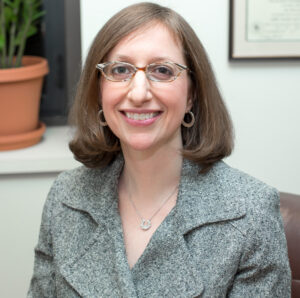
Restoring Balance: Exploring an Ancient Paradigm for Moving Beyond Our Mistakes
Sep 14, 2020 By Julia Andelman | Public Event video | Video Lecture | Yom Kippur
Yom Kippur is the Day of Atonement—yet the concept of atonement itself is rarely explored. The text of the mahzor (High Holiday prayerbook) asks God to “forgive us, pardon us, grant us atonement”—but how is atonement distinct from forgiveness and pardon? Through an examination of biblical and rabbinic sources, we will learn how our ancestors interpreted the concept of kapparah, atonement, and the great power it held in their understanding of how human beings—flawed in our very nature—can carry on in the world after we have sinned.
Read More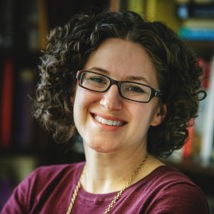
Democratizing Education: Lessons from this Week’s Parashah
Sep 8, 2020 By Michal Raucher | Commentary | Nitzavim | Vayeilekh
Since the start of the stay-at-home orders in March, my eight-year-old son, Naftali, has studied Mishnah on Zoom in a “Mishnah Club” for kids, taught by Rabbi Ethan Tucker (KS ‘06) of Hadar Institute. While my spouse teaches Mishnah to middle school students and my own scholarship involves a healthy feminist critique of the talmudic Rabbis, Naftali had never encountered rabbinic literature. I feared that Naftali might get lost in the complexity, become overwhelmed with the details, or confused by the logic of rabbis from 2000 years ago. I was also curious as to whether he would actually see himself in this discourse.
Read More
Joy Is a Radical Act
Sep 4, 2020 By Benjamin Freed | Commentary | Ki Tavo
“Art is a radical act. Joy is a radical act.”
—Rebecca Makkai, The World’s on Fire. Can We Still Talk About Books?
A few weeks ago, my fiancée and I re-watched the Disney/Pixar movie Inside Out, where anthropomorphized emotions work together and compete to control the feelings and actions of an 11-year-old named Riley. One of the primary lessons is that unchecked “Joy” cannot by itself bring true happiness or properly prepare us for handling life’s more difficult moments. Sadness, Anger, Fear, and Disgust all play a role in making us who we are, and we ignore those emotions at our own risk. As someone who strongly identifies with Amy Poehler’s peppy and unrelentingly optimistic “Joy” character, this message is both sobering and powerful.
Read More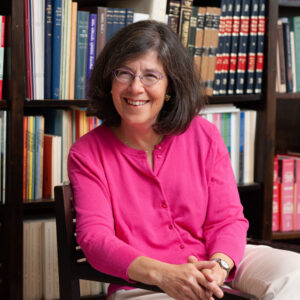
Faith, Forgiveness and Prayer: Finding Meaning in the Days of Awe
Aug 31, 2020 By Jan Uhrbach | Public Event video | Video Lecture | Rosh Hashanah | Yom Kippur
A series of online classes with JTS faculty and staff
Read More
Isaac Unbound: Judaism, Christianity, and Islam read the Offering of Abraham’s Beloved Son
Aug 31, 2020 By Burton L. Visotzky | Public Event video | Video Lecture
By reading texts from the New Testament, Church Fathers, and Quran we can see how Christians and Muslims read this seminal story. A medieval midrash shows how Rabbis responded to the interpretations of the other “Abrahamic religions.” The class concludes with a discussion of the problem with the ideology of martyrdom that all three religions read in the harrowing tale of Genesis 22.
Read More


SUBSCRIBE TO TORAH FROM JTS
Our regular commentaries and videos are a great way to stay intellectually and spiritually engaged with Jewish thought and wisdom.