
Search Results
Back to JTS Torah Online's Main page
Some Unexpected Stories About Women in the Talmud
Jan 25, 2021 By Judith Hauptman | Public Event video | Video Lecture
Although most Talmudic anecdotes feature men, some feature wives, mothers, and daughters of rabbis. These women learned Jewish law, and even, on occasion, helped formulate it. Join Dr. Judith Hauptman to study several of these short episodes and explore their significance, both historically and through the present day.
Read More
Sworn to Sacred Service
Jan 22, 2021 By Daniel Nevins | Commentary | Bo
The most powerful ritual in American life is the oath of office administered to our President. The text is prescribed by the Constitution, but its choreography is a matter of convention. Most Presidents have placed their left hand on a Bible as they raise their right and swear to execute their office faithfully, to “preserve, protect and defend the Constitution of the United States.” This ritual signals solemnity and anticipation for the work awaiting our new leader.
Read More
Speaking Out Against Hate
Jan 19, 2021 By Library of the Jewish Theological Seminary | Public Event video
Acclaimed Polish poet and musician Grzegorz Kwiatkowski speaks to the Library’s Dr. David Kraemer about his public condemnation of Holocaust denial, genocide, and the rise of populism, xenophobia, and nationalism in Poland and beyond.
Read More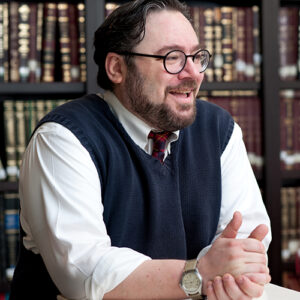
To Destroy and to Overthrow, to Build and to Plant
Jan 15, 2021 By Marcus Mordecai Schwartz | Commentary | Va'era
For me, this is one of the most troubling passages in the Torah. First, God assigns Moses and Aaron the task of speaking to Pharaoh, explicitly calling Aaron a prophet. Presumably, a prophet tells people what could come to pass, so that they have the opportunity to repent their sins and turn toward God.
Read More
The Relentless Pursuit of Racial Justice
Jan 15, 2021 By The Jewish Theological Seminary | Public Event video
For Martin Luther King, Jr.’s birthday, the Rev. John Vaughn of Ebenezer Baptist Church in Atlanta joins us to discuss renewing the Black-Jewish coalition for social Justice.
Read More
The Other in Jewish Text and Tradition
Jan 12, 2021 By The Jewish Theological Seminary | Public Event video | Video Lecture
We live in a time of such polarization—political, racial, economic, religious—that the gaps between us sometimes feel insurmountable. But this is not a new condition for Jews, either within or outside of the Jewish community. JTS scholars guide us on an intellectual journey through Jewish history and text to understand how these gaps have been understood and, at times, bridged.
Read More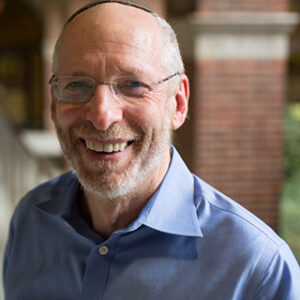
Demanding or Disengaging: How to Respond When We Feel Abandoned by God
Jan 12, 2021 By Eliezer B. Diamond z”l | Public Event video
Part of the series, “Hope in the Time of Covid” at B’nai Torah Congregation, Boca Raton, FL.
Read More
Judaism for the World: A Neo-Hasidic Perspective
Jan 11, 2021 By The Jewish Theological Seminary | Public Event video
Who are we? Why do we exist? Where are we going? How should we live? In his masterful new book, Judaism for the World: Reflections on God, Life, and Love, Rabbi Arthur Green offers a deeply resonant response to these eternal human questions.
Read More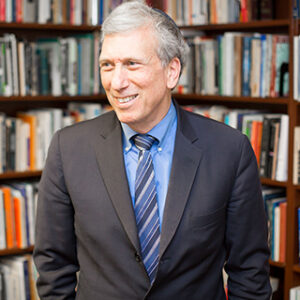
Guided by the Covenant
Jan 8, 2021 By Arnold M. Eisen | Commentary | Shemot
There is a wonderful midrash in Pesikta Derav Kahana that suggests a profound relationship between the arrival of the manna described in Parashat Beshallah and the giving of the Ten Commandments recounted in the following parashah, Yitro. Just as the manna tasted different to each and every Israelite, Rabbi Yosi teaches, so each was enabled according to his or her particular capacity to hear the Divine Word differently at Sinai (12:25).
Read More
The Challenge of Accepting the ‘Other’: Jewish Attitudes Toward Converts
Jan 4, 2021 By David C. Kraemer | Public Event video | Video Lecture
One of the best ways to understand the identity of a community or people is to consider what happens when someone who is originally an “other”—a “foreigner”—approaches to become a member of the community. How does the community respond? Does the community permit the “foreigner” to become one of its own? What residual attitudes are expressed toward one who began as “other” and part of the community? In the case of Jews and Judaism, all of these questions pertain to the case of the convert. In this session, we will examine how the convert has been viewed and treated in Judaism, from antiquity and through the ages. By doing so, we will gain a more nuanced understanding of who “we” are.
Read More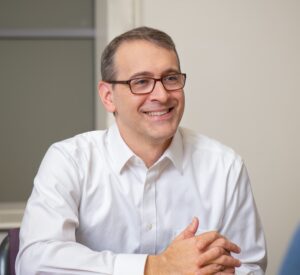
In Every Place
Jan 1, 2021 By Rafi Cohen | Commentary | Vayehi
Just about anyone who has moved homes will agree that sometimes one place will take on outsize influence in our lives. Indeed, even environments in which we’ve only briefly resided can have a resounding impact on our upbringing and outlook.
Read More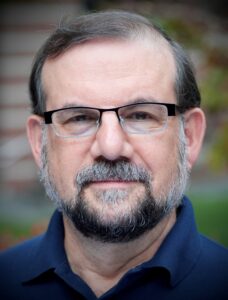
A Song of Hope
Dec 25, 2020 By Burton L. Visotzky | Commentary | Vayiggash
In a curious foreshadowing of the book of Exodus, in this week’s Torah reading (Gen. 46:8) we read, “Ve’eleh shemot—These are the names of the children of Israel who came into Egypt . . .” This is verbatim the same report as the opening verse of the book of Exodus. But there, the names are limited only to Jacob’s actual sons, and the full enumeration of their own offspring is absent.
Read More
Living a Life of Meaning
Dec 21, 2020 By The Jewish Theological Seminary | Public Event video | Video Lecture
The disruption to normal life, and, for many, close encounters with mortality, provides an opportunity to evaluate what is truly important in our lives. Guided by JTS faculty and fellows, we will discuss the role of values, ethics, and Torah in the quest for a well-lived life.
The Book Smugglers of the Vilna Ghetto: Choosing a Life of Meaning Under the Specter of Death
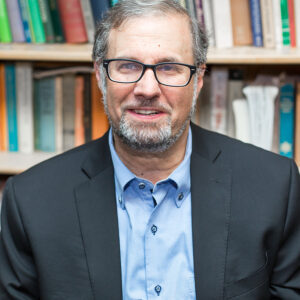
Dec 21, 2020 By David Fishman | Public Event video | Video Lecture
In Vilna, “the Jerusalem of Lithuania,” a group of Jewish writers and intellectuals risked their lives to rescue Jewish books, manuscripts, and art from the Nazis. While working as slave laborers for a Nazi looting agency, they “stole” Jewish cultural treasures from their masters, smuggled them into the ghetto, and hid them in underground cellars and bunkers. The few members of this group who survived the war returned to Vilna after its liberation, and led an operation to retrieve the treasures.
Read More
Strangers to Ourselves
Dec 18, 2020 By Jan Uhrbach | Commentary | Miketz
The Joseph narrative contains a striking number of contranyms—words that simultaneously convey opposite meanings. Why?
Contranyms are a natural linguistic expression of the Torah’s insistence that a “both/and” perspective is essential to understanding deep truths, other people, and ourselves. The portrayal of Joseph is a prime example.
Read More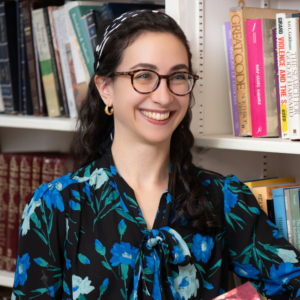
Sufferings Large and Small
Dec 15, 2020 By Sarah Wolf | Public Event video | Video Lecture
The ancient Rabbis struggled with the classic problem of theodicy: why would God let terrible things happen to good people? But they also struggled with what may seem like a more contemporary problem: if suffering is supposed to be meaningful in some way, is there any significance to our more mundane, everyday disappointments? Explore the rabbis’ perhaps surprising take both on what counts as “suffering” and what it ultimately means.
Read More
Mitzvot and the Path to Human Flourishing
Dec 14, 2020 By Yonatan Y. Brafman | Video Lecture
The medieval decisor and philosopher Moses Maimonides claimed that the mitzvot (commandments) are a divine law. By this, he meant not only that the mitzvot originate with God, but that they were a medium by which people could flourish both politically and personally—which for Maimonides meant the attainment of intellectual comprehension. This session explores the significance of Maimonides’ view and how two modern Jewish thinkers, Mordecai Kaplan and Eliezer Berkovits, built on Maimonides’ ideas to develop their own understandings of how observance of the mitzvot can advance human growth and the attainment of perfection.
Read More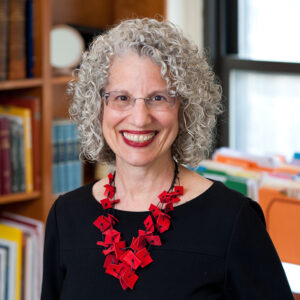
Chancellor’s 5781 Hanukkah Message
Dec 11, 2020 By Shuly Rubin Schwartz | Short Video | Hanukkah
Chancellor Schwartz shares her thoughts for Hanukkah.
Read More
Miracles of Today
Dec 11, 2020 By Shuly Rubin Schwartz | Commentary | Hanukkah
One of the things I love most about Jewish holiday observances is their evolution over time and space even as core rituals remain. Hanukkah exemplifies this phenomenon. Established by the Hasmoneans to commemorate the victory of the Maccabees over Antiochus, Hanukkah in the Talmud (composed several centuries after these events) focuses on celebrating the miracle of the Temple oil lasting for eight days. With few prescribed mitzvot associated with the holiday, Hanukkah has long been ripe for creative interpretation: theological, sociological, culinary, musical, and artistic. The Hanukkiah itself illustrates its generativity, for it has been hewn from the humblest potato or the most ornate, intricately designed sterling silver; it can take the form of a tiny travel jigsaw puzzle or an enormous outdoor display.
Read More
What a Manuscript Can Teach Us about the Jews of Medieval France
Dec 7, 2020 By David C. Kraemer | Short Video
Dr. David Kraemer explains what we can learn about the everyday lives of medieval French Jews from the text—and the margins—of a manuscript from the JTS Library collection.
Read More


SUBSCRIBE TO TORAH FROM JTS
Our regular commentaries and videos are a great way to stay intellectually and spiritually engaged with Jewish thought and wisdom.