After Liberation
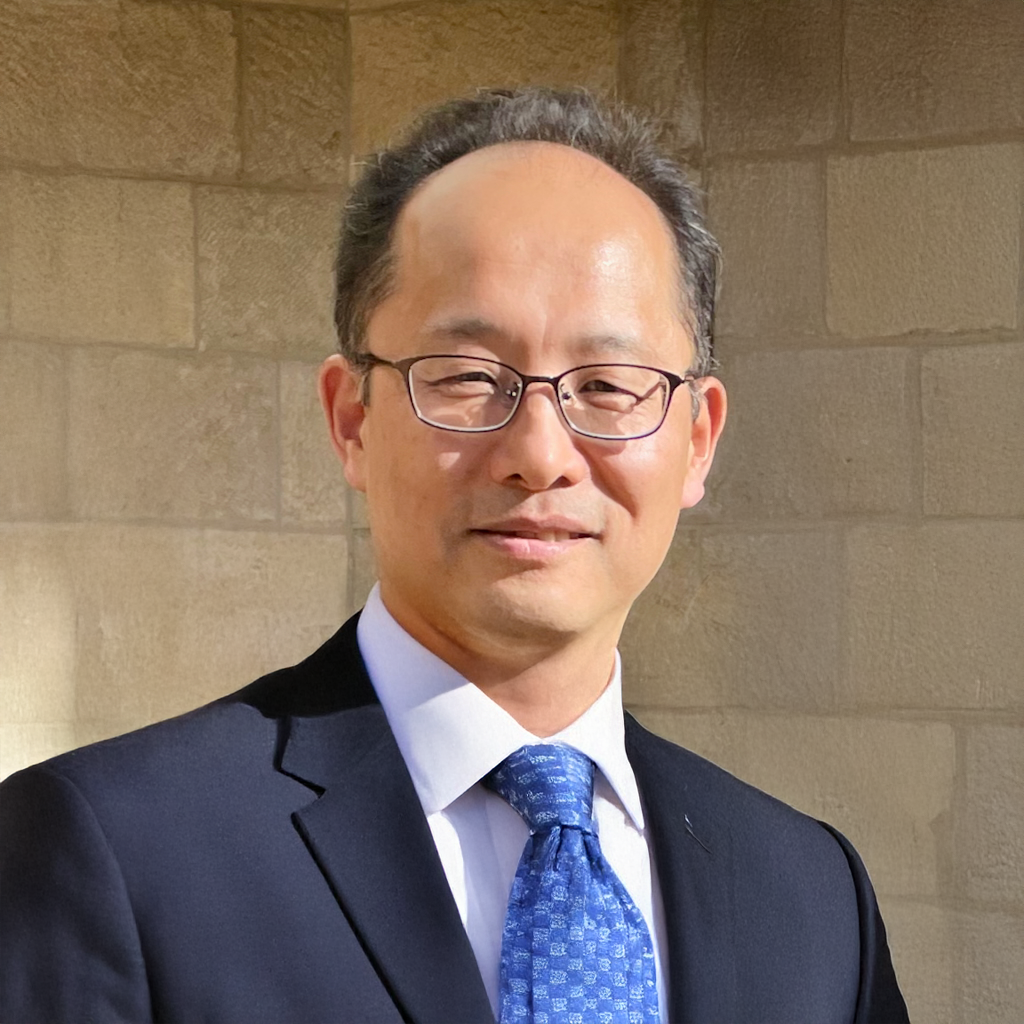
In memory of Avi Sagi (1953–2026)
Parashat Ki Tavo opens with two ceremonies: the presentation of the first fruits (Deut. 26:1–11) and a declaration made after distributing the triennial tithe to the Levite, the stranger, the orphan, and the widow (26:12–15). Their location is puzzling.
The first ceremony concerns an agricultural offering brought to the sanctuary and celebrated with the Levite and the stranger. It might therefore seem more at home in Deuteronomy 16, among the laws of the pilgrimage festivals. The second concerns the tithe distributed every third year to those without land or comparable security. Why was it not placed in Deuteronomy 14:22–29, where that tithe has already been commanded? In each case, the affinities are not only thematic but also phraseological. Their placement here, rather than alongside the laws to which they most immediately correspond, is therefore striking, made all the more suggestive by the presence of the stranger in both ceremonies.
Whatever the history behind their placement, the interpretive question remains. After legislation concerning worship, courts, kings, warfare, family life, property, and social obligation, the legal section culminates not in a grand public institution but in two declarations spoken by ordinary individuals: one while presenting produce, the other after distributing food. Is this merely an accident of arrangement, or might their placement disclose something about the purpose of the covenantal laws?
One way of reading these ceremonies is to consider them within the broader covenantal drama of the Torah. Read not only in its ancient context but also as a living source of insight into the human condition, this drama can illuminate several existential dimensions of freedom.
Exodus concerns Israel’s departure from Egypt: liberation from slavery and external coercion—from Pharaoh’s domination.
Numbers turns to what remains internally after that departure. Although the people have physically left Egypt, at moments of fear and deprivation they remember it with longing, recalling its food, proposing to return, and even describing it in the language of the promised land (e.g., Num 11:4–6; 14:2–4; 16:12–14). Egypt remains present in their imagination, continuing to shape how they perceive their circumstances and the future.
Deuteronomy turns to a further dimension of freedom: life after liberation, when a people becomes settled, secure, and affluent. The question is no longer only how people are released from external domination, or how it persists internally in the imagination, but how freedom itself may reshape the self. The capacity to think and act for oneself can gradually become the habit of seeing the world primarily, or even exclusively, from oneself.
Moses anticipates the Israelites saying in the promised land, “My own power and the might of my own hand have won this wealth for me” (Deut 8:17). The statement expresses more than pride in achievement or forgetfulness of its source. It describes a perspective in which success encourages the self to regard its life as self-generated and complete in itself. Agency can harden into self-sufficiency, enclosing the self within its own purposes and concerns.
Seen in this light, Egypt in biblical thought may signify not only a place or political regime but also an existential possibility. Pharaoh represents a form of selfhood enclosed within its own horizon, in which the sovereignty of the self leaves little room for the presence of the other, divine or human. A people may leave Egypt, and Egypt may gradually lose its hold on its collective memory, while this mode of selfhood can resurface—not outside, but within the liberated self. To live as a free people in the ancestral land is thus more than a political achievement. It remains an ongoing—and perhaps never-ending—existential challenge: the formation of a covenantal society whose way of life is fundamentally antithetical to Egypt.
Against this background, the conjunction of the two ceremonies in Deuteronomy 26 acquires particular interpretive force. They may be read together as moments in which the character of covenantal life comes into view along two axes: the vertical relation to the divine and the horizontal relation to other human beings.
In the first ceremony, the speaker recounts a history that begins with a “fugitive Aramean” and ends with the land YHWH “gave us” (26:5–9). Even someone born in the land declares, “I acknowledge this day … that I have entered the land” (26:3). The speaker is thus placed within a history of landlessness, dependence, and deliverance, so that present security and prosperity are understood not as self-generated but as something received through a past that precedes the individual.
The first fruits are therefore not “given” to God but “brought” as something God has first given: “I bring the first fruits of the soil which You, YHWH, have given me” (26:10). Along the vertical axis, possession is thus reinterpreted as reception rather than self-sufficiency.[1]
The horizontal axis then comes into view. The celebration includes “together with the Levite and the stranger” (26:11), while the second declaration concerns food already distributed to “the Levite, the stranger, the orphan, and the widow,” so that they may eat their fill (26:12–13).
The issue is not simply an obligation to assist those who have less. The deeper question arises precisely in moments of abundance and happiness. As the renowned professor of Jewish thought and ethics Avi Sagi observed, “self-fullness could lead to self-enclosure.”[2] Does happiness close the self within its own horizon, or leave the other—again, divine or human—visible and present?
Taken together, the two ceremonies connect self-understanding with its implications for the stranger. They thereby ask not only how the stranger is treated, but what kind of self emerges in freedom.
This twofold movement recalls Heschel’s oft-quoted reading of the Decalogue, whose two halves likewise proceed from the vertical to the horizontal axis, as a movement from outer to inner freedom: from the opening declaration of liberation from Egypt to the final prohibition against coveting.[3] Deuteronomy 26 may be read as giving ritual expression to that movement.
Such a reading offers an account of why the two ceremonies stand at the culmination of Deuteronomy’s covenantal laws. The first-fruits declaration begins with a landless ancestor and ends with the stranger joining the celebration. As Sagi writes, “The redemption of Israel is not redemption from the stranger but with the stranger.”[4] The movement is in fact reciprocal: recognition of the other’s humanity both grows out of and further deepens one’s own humanity. The enduring significance of the Exodus therefore lies not only in what freedom makes of the human being, but also in whether such recognition can become a lived reality. How, then, does it take root in human life? Do practices of remembering, declaring, and giving help bring it about, or are they themselves expressions of something already underway—through encounters, shifts in perception, a deeper transformation of inner life, or other paths yet to be named?
[1] On divine “giving” and human “bringing,” see Martin Buber, On the Bible: Eighteen Studies (ed. Nahum N. Glatzer; New York: Schocken, 1968), 122–130.
[2] Avi Sagi, Reflections on Identity: The Jewish Case (trans. Batya Stein; Boston: Academic Studies Press, 2016), 181.
[3] Abraham J. Heschel, The Sabbath: Its Meaning for Modern Man (New York: Farrar, Straus and Giroux, 1951), 89–90.
[4] Sagi, Reflections on Identity, 182.