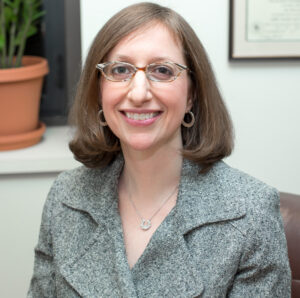
Kashrut and Refugees
Feb 9, 2018 By Julia Andelman | Commentary | Mishpatim
There’s an old joke based on the three appearances of the commandment “You shall not boil a kid in its mother’s milk”—the first being in this week’s parashah, Mishpatim (Exod. 23:19). The narrow prohibition against “eating the flesh of an animal together with the milk that was meant to sustain it” (Etz Hayim, 474) was expanded over time into a vast array of laws regarding the separation of all dairy and all meat.
Read MoreWhere Do We Look to Find Our Center?
Feb 2, 2018 By Adam Berman | Commentary | Yitro
We Jews read the Torah bit by bit, or parashah by parashah, over the course of a year. As a result, traditional Jewish interpretation of the Bible tends to focus on small units such as individual verses or short passages. But the Torah sometimes uses overarching structures in longer units to convey key themes. An important example occurs in this week’s parashah.
Read More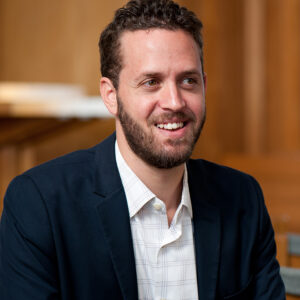
Israel: Between Tears and Songs
Jan 26, 2018 By Hillel Gruenberg | Commentary | Beshallah
Beshallah holds special importance for me and my family—it was the parashah of the week of my son Zeke’s bris three years ago, and that of the week of my wedding to Yael two years before that. Under the huppah, my rabbi (and brother-in-law) Aaron Brusso referenced the Zohar’s likening of the parting of the Red Sea to a wedding for having weeping on one side of the event and singing on the other (Zohar 2:170b).
Read More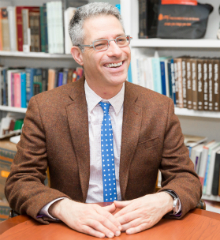
Miracles of Biblical and Everyday Proportions
Jan 19, 2018 By Joel Alter | Commentary | Bo
Last week, God pummeled Egypt unprecedentedly with hail:
The LORD sent thunder and hail, and fire streamed down to the ground, as the LORD rained down hail upon the land of Egypt. The hail was very heavy—fire flashing in the midst of the hail—such as had not fallen on the land of Egypt since it had become a nation. (Exod. 9:23–24)
On the combination of fire and ice, Ibn Ezra comments that this was “a wonder within a wonder.”
Read More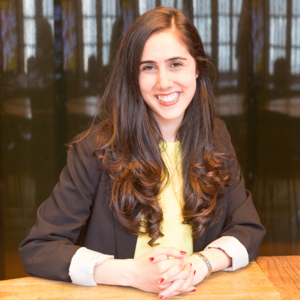
Redeeming the Plagues
Jan 12, 2018 By Miriam Liebman | Commentary | Va'era | Pesah
Every year at the Passover seder, there is a brief pause in the chaos when everyone dips a finger in their cup of wine and spills a single drop for each of the ten plagues. We are spilling wine to remind ourselves that although the plagues served as miracles for us, those miracles came at the expense of others.
Read More
Summoning a People
Jan 5, 2018 By Arnold M. Eisen | Commentary | Shemot
Two very different stories about who we are as Jews are forcefully presented in the opening chapters of the Book of Exodus. One of them—captured in the Hebrew title of the book, Shemot or “Names”—declares that we are the Children of Israel: a nation, a people, defined in the first instance and forever after by our ancestors and the paths they travelled. The other story teaches that we are disciples of Moses, the human protagonist of the book, and, like him, are servants of the God Who called to Moses out of the Burning Bush and bound us in covenant at Sinai.
Read More
Hearing Our Own Stories
Dec 22, 2017 By Zohar Atkins | Commentary | Vayiggash
Although we know how it ends, this week’s Torah reading can be, by turns, anxiety-provoking, cathartic, and unsettling. We know a reconciliation between the brothers will take place, but we don’t fully understand how. We know a peace deal will be reached, but we suspect that, like all new agreements, its character will be tenuous, fragile, and ad hoc, its consensus constructed atop a minefield of lingering resentments and fundamentally conflicting narratives.
Read More
The Hanukkah Story I Need to Hear This Year
Dec 15, 2017 By David Hoffman | Commentary | Hanukkah
Stories have great power. We tell stories about ourselves and about our communities because they give our lives meaning, and they help us navigate between the past and the future. We use stories to help us make sense of the world and our place in it. Not far behind the seemingly innocent plots of many of the stories we tell about our community’s religious history lie profound cultural responses to our most pressing questions about what it means to be a human being and how to live life well.
Read More