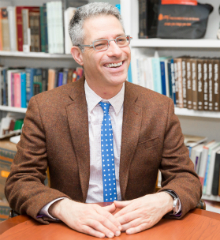
Going to the Head of the Prayer Line
May 25, 2018 By Joel Alter | Commentary | Naso
Sharp elbows at shul extend beyond the kiddush table line and back into the sanctuary. Prayer—or giving honor to God—can be a competitive business. There are lots of reasons why this is so, and some of them even have to do with loving God. But showing off how we love God can get us into trouble.
Read More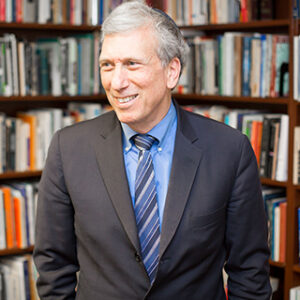
Politics as a Jewish Vocation
May 18, 2018 By Arnold M. Eisen | Commentary | Bemidbar
The book of Bemidbar, which aims to help its readers navigate the chaotic wilderness in which the Children of Israel have always lived and wandered, deals more directly than any other book of the Torah with what the great sociologist Max Weber called “Politics as a Vocation.”
Read More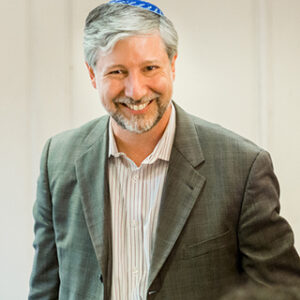
The Theology of Meteorology
May 11, 2018 By Daniel Nevins | Commentary | Behar | Behukkotai
Imagine if your weather app displayed not images of sun and clouds, but icons of good and evil, like this: ☺ ☹. Each city might have a virtue index—with the weather forecast tracking not the jet stream but morality, indicated by a friendly or fierce face. City X has been charitable, so they can expect light rains followed by sunny skies, but City Y has seen an uptick in violent crime, so it is in for a drought or hurricane. Such a system sounds absurd, and yet it is basically what the Torah presents as a theology of weather.
Read More
Who Belongs?
May 4, 2018 By Rachel Rosenthal | Commentary | Emor
Who is the Other? This question, which is asked more and more often in our world, is not often easy to answer. Can one choose to be part of a community? Are people who were once outsiders ever fully welcomed as insiders? In Judaism, these questions are especially important. While Judaism has categories to define and even praise non-Jews, opting into the Jewish community is not simple. However, the Talmud tells us that once someone converts to Judaism, we are supposed to treat them as any other Jew. Unfortunately, this is a mission in which many communities fail.
Read More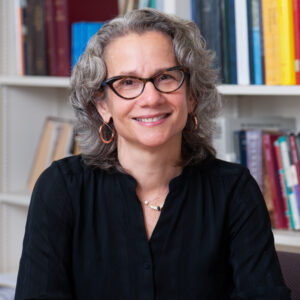
Body Language
Jun 1, 2018 By Amy Kalmanofsky | Commentary | Beha'alotekha
Jews love words. We love to talk and we love to read. It is telling that we celebrate our holiest day of the year, Yom Kippur, by gathering and reading aloud a 250-page book.
Parashat Beha’alotekha reminds us there is more to religious observance than words. There is profound power in body language—in nonverbal rituals that involve, even mark, the body.
Read More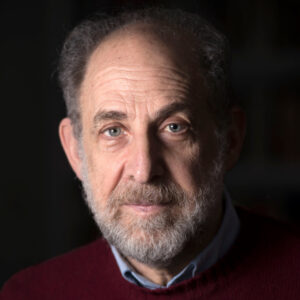
How to Be Holy
Apr 27, 2018 By Raymond Scheindlin | Commentary | Aharei Mot | Kedoshim
This week, we read two parashiyot from Leviticus: Aharei Mot and Kedoshim. Taken together, they cover five clearly defined topics. Aharei Mot deals with the rituals of the high priest on Yom Kippur; regulations governing the slaughter of animals for food and sacrifice; and the prohibition of various sexual relations, especially incest. This last subject is resumed at the end of Kedoshim. Between the two discussions of sexual relations is the famous Chapter 19, which opens Kedoshim.
Read More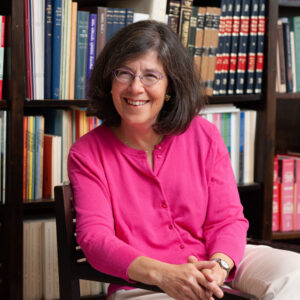
It Passes and We Stay
Apr 20, 2018 By Jan Uhrbach | Commentary | Metzora | Tazria
A Light exists in Spring
Not present on the Year
At any other period—
When March is scarcely here
The double parashiyot of Tazria and Metzora are devoted in their entireties to the Biblical notion of tumah, usually translated as “impurity.” In them, we learn three of the major sources of tumah: childbirth (Lev. 12); a condition known as tzara’at, which can manifest on skin, clothing, or the walls of one’s house (Lev. 13–14); and bodily secretions (Lev. 15). The two other primary sources of tumah are touching or carrying the carcasses of certain animals (Lev. 11) and contact with a human corpse (Num. 19).
Read More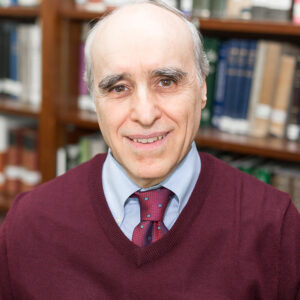
Six Takes on a Leader’s Attributes
Apr 13, 2018 By Walter Herzberg | Commentary | Shemini
In chapter eight of Leviticus, Moses is essentially serving as temporary kohen gadol, high priest, during the dedication of the Mishkan, the Tabernacle. On the eighth day, according to Rashi, Aaron and his sons are officially inaugurated into the priesthood. Moses transfers the position to his brother Aaron, who along with his descendants will officially serve as priests and high priest.
Read More