
A Blessing of Reconciliation
Dec 19, 2014 By Lilly Kaufman | Commentary | Miketz
In Parashat Miketz, the masterful Joseph, hashalit al ha’aretz (the sovereign of the land) engages in a series of tests of his brothers’ honesty. Also at stake is the resilience of their father Jacob’s legacies.
Read More
Living into the Mission of Our Lives
Dec 5, 2014 By David Hoffman | Commentary | Vayishlah
What are our greatest fears?
Read More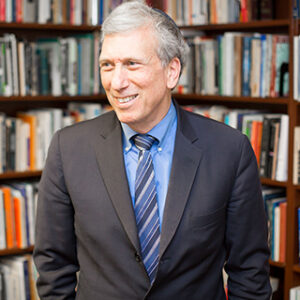
A New Question for Passover
Apr 16, 2011 By Arnold M. Eisen | Commentary | Shabbat Hagadol | Pesah
The means to ultimate redemption—and a sure sign that redemption has arrived—is peace between the generations. We can’t hope for redemption of the world, the prophet says, if the hearts of fathers and sons (the literal translation of the prophetic verse) are not “returned upon” each other.
Read More
Sympathy for Korah
Jun 25, 2011 By Arnold M. Eisen | Commentary | Korah
I have a great deal of sympathy for Korah and his rebel faction, despite the fact that they made life difficult for Moses, Aaron, and God.
Read More
Reclaiming Our Dreams
Nov 28, 2014 By Marc Gary | Commentary | Vayetzei
This week’s parashah, Vayetzei, covers a critical 20-year period in the life of our patriarch Jacob: the two decades that Jacob spends outside the Land of Israel, in Haran, in the house of his conniving uncle, Laban. They are years of treachery, deceit, exploitation, and fear. They are pivotal years in Jacob’s life—years in which Jacob confronts who he is and sees in Laban what he will become if he doesn’t pull back from the abyss. In the words of Aviva Gottlieb Zornberg, this is “the night of [Jacob’s] soul.” And, as if to drive this point home, the parashah begins with the setting of the sun and the onset of night, and ends with sunrise and the beginning of a new day.
Read More
The Pursuit of Justice
Sep 3, 2011 By Arnold M. Eisen | Commentary | Shofetim
Rousseau opened his famous essay on the ideal political order, “The Social Contract,” by stating his intention to “imagine men as they are and laws as they might be.” The same could be said of Moses’s objective in the book of Deuteronomy and particularly in this week’s parashah.
Read More
Father, Have You No Blessing Left for Me?
Nov 21, 2014 By Leonard A. Sharzer | Commentary | Toledot
In Parashat Toledot, the saga of our somewhat dysfunctional ancestral family continues, and included within is one of the family’s saddest and most poignant episodes. Yitzhak, scion of the family and heir to his father’s covenant with God, has just married at the age of 40. He and his wife, Rivkah, remain childless for 20 years, when, in response to his entreaties to God, she conceives. Unlike her late mother-in-law’s easy pregnancy at an advanced age, Rivkah’s pregnancy is complicated. We are told right away that “the children, the ‘sons’ in fact, were struggling within her womb” (Vayitrotzetzu habanim bekirbah; Gen 25:22). However, she does not know the reason for her discomfort and distress.
Read More
A Call for Hope
Sep 10, 2011 By Arnold M. Eisen | Commentary | Rosh Hashanah
In the face of a litany of personal, societal, and global woes that has seemed particularly long this year; in the face of our nation’s inability to shake the economy loose or defeat our enemies or work together despite our differences, the Jewish calendar insists there is something new in store—or that there can be, if we together do as the Torah commands.
Read More