
Jacob’s Prayer for Lasting Peace
Dec 9, 2000 By Ismar Schorsch | Commentary | Vayetzei
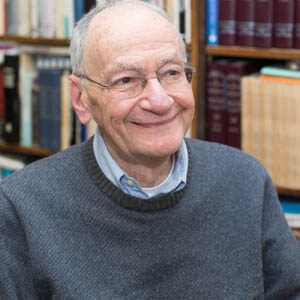
My grandchildren call their grandparents “Sabba” and “Savta.” These ancient Aramaic words for grandfather and grandmother are firmly ensconced in the vocabulary of contemporary Hebrew. Like “Abba” and “Imma” (the Hebrew words for father and mother), they are terms of address and endearment. They ring with love and intimacy. But they also connect us to something far beyond our family circle. They bind us to the State of Israel, where the language is Hebrew, and to the history of the Jewish people, whose literary, if not spoken language was always Hebrew. To make use of such linguistic fragments in our personal lives locates us in a cultural context and continuum that resonates with deep meaning.
Read More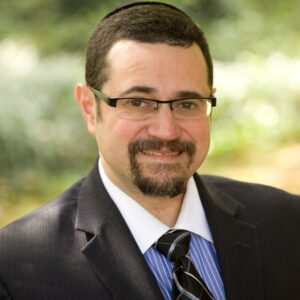
Two Brothers, Two Candidates
Dec 2, 2000 By Joshua Heller | Commentary | Toledot | Purim
This week’s parashah, Tol’dot, tells the story the story of Isaac and Rebecca’s twin sons, Esau and Jacob. Esau is born with a slight advantage of age, with Jacob born close at his heels. The two brothers vie, each with measures of bluster and guile and with the support of a favoring authority figure, for the birthright and the destiny of a nation. This story has been played out more than once in history- most recently between two candidates in our own day.
Read More
The Torah’s Slip of the Tongue
Nov 25, 2000 By Melissa Crespy | Commentary | Hayyei Sarah
There’s a certain delight in catching a person in a “slip of the tongue”, a so-called “Freudian slip”. Unintentionally, the person speaking has let us into his inner thoughts and revealed a concealed, sometimes profound, perception. In our Torah portion this week, we seem to be privy to just such a slip of the tongue – or slip of the text, in this instance – and it leads us to profound insights about the nature of human relationships.
Read More
The Mitzvah of Circumcision
Nov 11, 2000 By Matthew Berkowitz | Commentary | Lekh Lekha
Parashat Lekh L’kha is the story of God’s covenant with Abraham and, by extension, with all future Israelite generations. The climax of this story is the mitzvah of circumcision. Few mitzvot in our tradition have elicited the enduring commitment and unwavering observance of the majority of our people as has the ritual of circumcision. Few mitzvot have yielded the intensity of emotion and fascination which pervades any brit milah.
Read More
The Seventy Bulls of Sukkot
Oct 14, 2000 By Ismar Schorsch | Commentary | Sukkot
Sukkot is the most joyous and universal of the three harvest festivals ordained by the Torah. It marks the end of the agricultural year as well as the summer harvest, and we are explicitly instructed by the Torah to rejoice with our family and community (Deuteronomy 16:17). In that spirit, the Rabbis turned the common noun, hag (festival), into the proper name of the holiday, he-Hag (the festival par excellence). They also designated Sukkot as “the season of our joy” in the prayers for the festival.
Read More
Angel Analysis
Feb 3, 2001 By Lewis Warshauer | Commentary | Bo | Pesah
The Passover seder song, Had Gadya, is sung to a merry little tune that belies the violent content. Why this song is sung at Passover is the subject of varying interpretations, but one connection seems clear: malakh ha-mavet, the angel of death. After all wasn’t it the angel of death that slew the first-born of Egypt? Actually, it was not.
Read More
The Folly of Faith in Military Strength
Feb 10, 2001 By Ismar Schorsch | Commentary | Beshallah
Though separated by centuries, this week’s parasha and haftara overlap thematically. In each case, ancient Israel, aided by the forces of nature, prevails over a mighty enemy equipped with the most fearsome weapon of the day, the chariot. Pharaoh pursues the horde of Israelites departing Egypt with every chariot at his command, including his elite corps of 600. Drawn by two horses, each one of these swift vehicles was manned by a driver, warrior and officer. Clearly, Pharaoh intended to cow his just freed slaves into returning to Egypt without a struggle (Exodus 14:6-7).
Read More
Heroic Women
Jan 20, 2001 By Joshua Heller | Commentary | Shemot
In first few chapters of Exodus, the Egyptian Pharaoh enacts harsh decrees to curtail the fertility and fecundity of the Jewish people (Exodus1:9), “pen yirbeh” – lest the Jews multiply. His increasingly genocidal decrees are thwarted by increasingly heroic women. Last, and perhaps most daring of all, is Pharaoh’s daughter, who adopts the young foundling Moses right under her father’s nose, even though she knows that all Egyptians have been commanded to kill any male Jewish baby.
Read More

