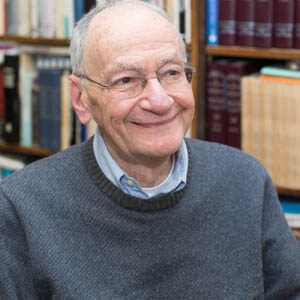
Kafka and Returning to Torah
Oct 22, 2000 By Ismar Schorsch | Commentary | Vezot Haberakhah | Simhat Torah
Ve-zot ha-b’rakhah is the one parasha that does not have a Shabbat unto itself. As the final two chapters of the Torah, it constitutes the main reading for Simhat Torah (the joy of Torah) when we both complete the annual Torah cycle and begin it immediately again by reading the first creation story of Genesis. As if to make up for the slight, we repeat the parasha until all who are present in the synagogue have been honored with an aliyah.
Read More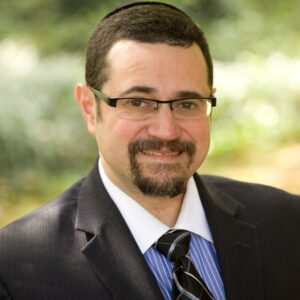
Doves, Hawks and Ravens
Oct 4, 2000 By Joshua Heller | Commentary | Noah
At moments like this in the history of the Jewish people, the image of the dove bearing an olive branch resonates in the communal consciousness, even if the peace that it represents seems to flee ever further. I don’t know if ornithological truth bears out the common conception, but in the rabbinic mind, the dove is stereotypically non-aggressive and defensive. Not surprisingly, the Rabbi often compare the Jewish people to the dove, for instance, “Just as the dove is only saved by its wings, so too Israel is only preserved by the mitzvot” (B.T. Brachot 53b).
Read More
The Genome Project
Oct 28, 2000 By Ismar Schorsch | Commentary | Bereishit
The genome project holds out the promise to alleviate some social as well as physical ills. This past summer the New York Times ran a long article in its weekly Science section (my favorite) to the effect that the noxious concept of race has no genetic foundation. Caucasians, Africans and Asians are genetically indistinguishable No more than .01 percent of our gene pool determines our external appearance, the basis on which we make racial distinctions. In contrast, many thousands of our 80,000 genes combine to produce such traits as intelligence, artistic talents and social skills.
Read More
Writing Your Own Obituary
Sep 30, 2000 By Ismar Schorsch | Commentary | Rosh Hashanah
A year ago a news story in The New York Times caught for me the essence of our annual High Holy Day season. Under the piquant title, “In their Obituaries, Absent Dads Face Life,” the Times reported on a job training program in Milwaukee with a twist. Its overt goal was to improve the work skills of fathers down on their luck who had abandoned their children. Child support could come only from men able to hold a job. But the program also aimed to imbue them with a sense of responsibility. A few weeks into their training, after a level of trust had been achieved, they were asked to imagine the obituary their children would one day write on their death and to share it with the group.
Read More
“Like Father, Like Son.”
Dec 23, 2000 By David-Seth Kirshner | Commentary | Vayeshev
My eight-year-old nephew, Caleb, is a young comedian with a natural wit about him. At family gatherings he sends his uncles and aunts, cousins and grandparents into fits of side-splitting laughter. Caleb’s personality, warmth and outlook can earn the trust and smile of a complete stranger.
Read More
The World-to-Come
May 24, 2003 By Ismar Schorsch | Commentary | Behukkotai
The penultimate chapter of Leviticus consists of a divine plea to heed God’s commandments. It takes the form of inducements and intimidations, promises of agricultural bounty and national tranquility and threats of defeat, chaos and exile. The future of ancient Israel in its homeland will depend entirely on its adherence to the revelation at Sinai. Aside form the poetry of the passage, its rhetoric pulsates with a tone of urgency. Free will has its risks; people may choose to put themselves in harm’s way. Rebellion against the strictures of God is the persistent evil that endangers society.
Read More
The Command to Plant Trees
May 3, 2003 By Ismar Schorsch | Commentary | Kedoshim
From our apartment on the Upper West Side of Manhattan, we enjoy a glorious view of Riverside Park below and the Hudson River beyond. Overnight, it seems, the trees have once again donned a glorious green canopy of leaves. Gone is the drab garb of winter. Life has surged back with irrepressible vigor and astonishing beauty. Each year I marvel at the swiftness of the scenic change.
Read More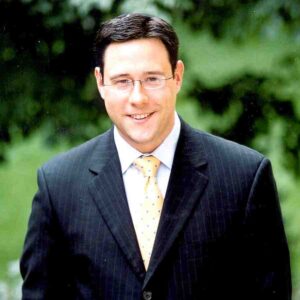
The Question That Matters
Apr 12, 2003 By Marc Wolf | Commentary | Shabbat Hagadol | Pesah
I have always been puzzled by the questions of the four children at the seder. Often, we gloss over them to get to the famed Hillel sandwich, pausing only to recognize the pedagogic missteps in providing answers to the four inquisitors; however, this year I am particularly struck by the question of the wicked child who asks, What is this service to you? This seemingly brazen question smacks with spite and makes me think back to younger days in shul when I just did not have the perseverance to sit still through the rabbi’s sermon, and I would lash out at my parents questioning the very relevance of the service.
Read More