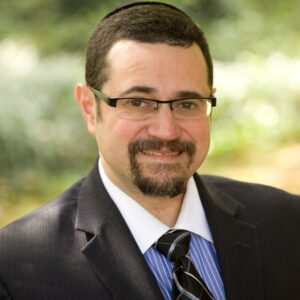
Turkey’s Kosher Journey
Aug 23, 2003 By Joshua Heller | Commentary | Re'eh
This week’s Parashah, Re’eh, contains a wonderful juxtaposition of mitzvot, which, when taken together, provide an insight into how Jews deal with novel situations and the disagreements that arise from them, and also allows me to share a peculiarity of my own family history. One of the commandments which the Jewish people have found most difficult to follow in practice is found in Deuteronomy 14:1: “lo titgodedu.” The plain sense of the verse is “You should not gash yourselves… because of the dead.” One must avoid pagan mourning customs that include self-mutilation. The rabbinic interpretation of the verse, however, is that Jews should not form themselves into multiple subgroups “agudot agudot” (B. Yevamot 13b) each following a different understanding of the law. Therefore, there should not be two Jewish courts in one city, one permitting a particular practice, the other forbidding it.
Read More
Judaism’s Message
Aug 9, 2003 By Marc Wolf | Commentary | Va'et-hannan | Tishah Be'av
Reenacting an historical moment through liturgy and deed is a forte of Judaism. Our calendar year overflows with holidays and observances that transport us to our former days and inspire us to reenter the narrative and relive salient moments of history. This week in particular, observing the 9th of Av, we read of the destruction of the Temple and continue the mourning of our ancestors for the calamities that befell them. While it is possible to read this narrative as a preventive measure to ensure that we, too, do not fall victims to George Santayana’s dictum condemning us to either learn from our history or repeat it, I believe that Judaism’s message is a blessing, not a curse. It is a blessing for us to be able to relive life’s difficult moments – and the reason why can be gleaned from Moses’ behavior and our parasha this week.
Read More
The Attributes of a Leader
Aug 2, 2003 By Lewis Warshauer | Commentary | Devarim
Much of the Book of Deuteronomy is taken up with Moses’ farewell address to the Israelite nation. He has served his people as their leader in every sphere: military, administrative, judicial and spiritual. Now, he reviews the events of the forty wilderness years, and presents, from his own perspective, a report of how he has led the nation.
Read More
Hebrew’s Answer to Life’s Deepest Riddle
Sep 13, 2003 By Ismar Schorsch | Commentary | Ki Tavo
The Bible’s most famous riddle was the brainchild of Samson. “Out of the eater came something to eat; out of the strong came something sweet” (Judges 14:14). Samson posed it on the occasion of his seven-day wedding feast to thirty young Philistine men who came to celebrate his marriage to one of their own. On the last day, the young men responded gleefully: “What is sweeter than honey, and what is stronger than a lion?” Dismayed, Samson accused them of coercing his bride: “Had you not plowed with my heifer, you would not have guessed my riddle.” And indeed, threatened by them with savage revenge, she had wheedled the answer out of Samson, only to betray him, exactly as Delilah would do later in his life.
Read More
The Power of the Spirit
Jul 26, 2003 By Ismar Schorsch | Commentary | Masei | Mattot | Tishah Be'av
This week’s parashah finds the Israelites routing the Midianites. The victory is total; the five kings of Midian and all their male subjects meet their death. The Torah appears to go out of its way to inform us that the Israelites “also put Balaam son of Beor to the sword (31:8).” It is a passing detail that triggered the rabbinic imagination. The narrative fragments which constitute the interaction of this pagan prophet with the fate of Israel seem little more than dots waiting to be connected midrashically. A form of reader participation, midrash embellishes the spare story line of Torah narrative. In the process, it tends to give the material a refreshingly moral twist.
Read More
Infusing the World with Holiness
Jul 12, 2003 By Ismar Schorsch | Commentary | Balak | Hukkat
After two impressive victories against the Canaanites of the Negeb and the Amorites in Transjordan, the looming military might of Israel throws the leaders of Moab into a panic. Only the land of the Moabites separates Israel from the Jordan River and the conquest of Canaan. Balak ben Zippor, King of Moab, knows that he is next. In desperation, he takes recourse in an unconventional pre-emptive measure. He summons Balaam son of Beor, a sorcerer from Mesopotamia to curse Israel, making it susceptible to defeat on the battlefield. Though Balaam comes, God frustrates the plan. Within the monotheistic framework of the Torah, Balaam can utter only what God imparts to him. Hence he ends up in rapturous praise of Israel, to the consternation of Balak.
Read More
Ritual Obligations and Moral Lessons
Jun 5, 2003 By Marc Wolf | Commentary | Korah
A colleague and friend who shares my fascination with golf as well as my plague of performing poorly, recently gifted me with a book entitled, Golf is Not a Game of Perfect.
Read More
My Grandfather’s Tallit
Jun 28, 2003 By Lisa Gelber | Commentary | Shelah Lekha
When I close my eyes to picture my grandfather, he is standing beside a long olive green bookcase, swaying and shokeling, his slight frame enfolded within his tallit, tefillin protruding from his forehead and wrapped about his arm, deeply engaged in conversation with God. At those moments, it always seemed that he had been transported to a different place and time. Perhaps it was that magic cape, I thought, the one with the strings attached. As a little girl, I yearned to wear a tallit, and so it is no surprise that some of my fondest childhood memories are of sitting with my grandfather in shul on Shabbat and sharing his tallit. Throughout the service, I would play with the tzitzit, enjoying the feel of the fringes as they slipped between my fingers, methodically adding new knots and removing them again before the conclusion of the service, each knot a blessing for myself or my family. My grandfather was a humble man, dedicated to his store, his family, and his God. He embodied a love for education and humanity. I knew that those cornerstones of his existence were somehow bound up within those carefully constructed knots.
Read More