Let’s Make the Early Rabbis Uncomfortable in Our Classrooms
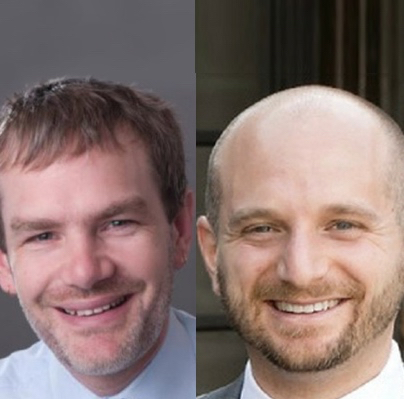
Aaron Dorfman and Rabbi Ayalon Eliach

AN OUTLINE FOR EDUCATING FOR APPLIED JEWISH WISDOM

“Moses received the Torah at Sinai and transmitted it to Joshua, Joshua to the elders, the elders to the prophets, and the prophets to the Members of the Great Assembly” (Pirkei Avot 1:1).

What often gets left out of that story is that in the course of transmission, Joshua forgot 300 halakhot, became uncertain about 700 more, and introduced 10 significant reforms (Babylonian Talmud, Temurah 16a; Bava Kama 80b-81a). On top of that, the elders, prophets, and Members of the Great Assembly made so many changes—from replacing animal sacrifice with prayer to instituting Torah reading as a weekly communal practice and developing many of the food practices that we now know as kashrut—that by the time the tradition was in the hands of the rabbis who wrote Pirkei Avot, it was unrecognizable. To capture this point, the Talmud goes so far as to describe Moses as traveling through time to sit in Rabbi Akiva’s classroom, but not being able to understand anything that was being discussed (Babylonian Talmud, Menaḥot 29b).

These transmitters of the tradition made such drastic changes because they believed that the ultimate goal of Jewish life is to help people live better lives. And in a constantly changing world, a Judaism that helps people live well must always evolve.

Today, the world is changing at breakneck pace, but Jewish life and education are all too often built on a model of preservation rather than adaptation. We need to regain the sacred chutzpah of Joshua, the elders, the prophets, and the Members of the Great Assembly to rework Judaism, often in radical ways, so that it can continue to be a source of guidance in our lives. As Dr. Jonathan Woocher (z”l), founding president of Lippman Kanfer Foundation for Living Torah (LKFLT), put it, we must switch our guiding educational question from, “How can we keep Jews Jewish as they go through the process of embracing American life?” to “How can we help Jews find in their Jewishness resources that will help them live more meaningful, purposeful, and fulfilling human lives?” (Reinventing Jewish Education for the 21st Century, 2012).

As LKFLT’s mission states, we believe that answering this guiding question entails “helping people apply particular Jewish wisdom to universal human questions.” This means expanding the focus of Jewish education from answering parochially Jewish questions (How am I supposed to pray or chant Torah with the words and melodies of my ancestors? Should we light Hanukkah candles from left to right or right to left?) to universal human ones (How might I be a good parent, friend, partner? How might I be a good citizen of my community, my country, and the planet? How might I be a responsible, economic actor?).

These are questions that Jews and others face not because they are Jewish, but because they are human. And they are questions to which the Jewish wisdom tradition offers compelling and inspiring answers. From mikvah helping people navigate life’s transitional moments, to Shabbat offering a pause from an increasingly unbound workweek, to studying the multivocal Jewish tradition as a means of cultivating appreciation for viewpoint diversity, and so much more, Jewish tradition offers an abundance of wisdom to draw on. Today’s Jewish educators have a tremendous opportunity to make this value proposition clear.

Reinventing Jewish education to meet these goals will take many partners, a lot of work, and patience. It also demands learning from past revolutions in Jewish education. While there are countless lessons we can learn from earlier generations, these four are essential:

  1. Leading thinkers who will dedicate themselves to the new paradigm. The seminal moment in the evolution of biblical to rabbinic Judaism was when Rabbi Yoḥanan ben Zakai acquiesced to Jerusalem’s downfall—including the destruction of the Second Temple, the center of Jewish life at the time—in exchange for the Romans permitting a group of rabbis to study in Yavneh (Babylonian Talmud, Gittin 56a-b). In today’s terms, Rabbi Yoḥanan effectively accepted the destruction of the existing Jewish paradigm so that a single fellowship of Jewish educators could create the next one. Thankfully, we do not need to make such extreme sacrifices in order to convene thought leaders to map out the future of Jewish education; and we are honored to have partnered with The William Davidson Graduate School of Jewish Education of JTS to create one in the form of the Fellowship in Educating for Applied Jewish Wisdom.
  2. Draw heavily on the wisdom of the past. When the Members of the Great Assembly and early Rabbis replaced sacrifice with prayer, they looked to the structure and function of the sacrificial cult for inspiration and guidance for creating new forms, without being beholden to the earlier ones. They were only able to draw on this wisdom because they committed to retaining, studying, reinterpreting, and drawing on the texts and praxis that preceded them. The scope of Jewish tradition is even larger today, but the lesson remains the same: interrogating the past offers unique perspectives for thinking about and designing the future.
  3. Create new content and frameworks. The chain of transmission, whose beginnings are captured in Pirkei Avot but which continues until today, didn’t just winnow down the Jewish tradition. Each link in the chain reimagined it and created entirely new content and frameworks for Jewish life. They created new practices, like prayer; new institutions, like the synagogue; new texts, like the Mishnah and Talmud; and new frameworks, like halakhah. The next paradigm of Jewish education will need new content and frameworks of its own. And while these will take time to develop, the fellows offered one example of what such a framework could look like with the Shlemut framework they developed.
  4. Develop new pedagogies. If the early Rabbis had just created the Talmud without an effective means of transmitting it, it’s unclear how successful their approach would have been. Part of what made their work so successful is that Jewish educators developed a pedagogy to accompany it: havruta learning. They realized that a multivocal text was best studied multivocally, and they popularized a form of dyad-learning to support that. We do not yet know what the content and frameworks of the new paradigm of Jewish education will be, but whatever they are, they will require new ways of teaching.

The new Jewish educational paradigm these principles produce will look quite different from what preceded it. One of the ways we will know our new institutions and frameworks are successful is when the early rabbis would be just as confused by them as Moses was in Rabbi Akiva’s classroom. The goal, however, is not to break with tradition—it is to continue it. If Moses had been comfortable in Rabbi Akiva’s classroom, Rabbi Akiva’s students would almost certainly not have been taught a Judaism that helped them live better lives in their historical context. Healthy continuity and adaptation are two sides of the same coin. As the second half of our mission statement states, when Jewish education once again returns to a focus on living a better life, Jewish continuity won’t be a goal in and of itself but rather an outcome of people wanting to “cultivate Judaism’s evolving wisdom tradition as an enduring source of value for human civilization over the long term.”

Aaron Dorfman is the president of Lippman Kanfer Foundation for Living Torah.

Rabbi Ayalon Eliach is the director of learning and strategic communications at Lippman Kanfer Foundation for Living Torah.
JTS supports rabbis of all denominations at every stage of their careers and journeys. We offer programs to foster your own personal, spiritual, and intellectual growth, as well as a rich variety of learning materials you can bring to your community. Explore how JTS can be your lifelong resource for sophisticated, meaningful learning.

Online Learning for Rabbis

  • Holiday Webinars: A free annual series, designed to inspire your derashot and teaching on the holidays. 
  • Online Mini-Courses: A year-round series of live, text-based courses that are open to all, with select courses offered at a higher level for rabbis and others with advanced text skills.
  • JTS Torah Online: A vast online archive of numerous divrei Torah for every parashah and holiday and a wealth of other content from JTS scholars.

Retreats and Conferences

  • The Rabbinic Training Institute (RTI): The premier continuing education program for Conservative rabbis in the field, meeting each January. Five transformative days of intellectual, professional, and spiritual growth facilitated by leading scholars and teachers.
  • Summer Rabbinic Learning Conference: A 48-hour intensive learning experience on our New York campus, exploring a different theme each July.

Center for Pastoral Education

Every day, spiritual leaders are called on to provide comfort, guidance, and support to people in crisis. JTS’s Center for Pastoral Education has set a new standard in preparing them to receive these calls, through a transformative educational process that is grounded in Jewish tradition, and open and relevant to people of all faiths. We offer a variety of clinical programs as well as flexible online options.

Curricula and Teaching Resources

JTS comes to Jewish communities across North America with rich content that rabbis can flexibly incorporate into existing adult learning frameworks.

Turnkey Courses:
Robust toolkits containing everything you need to teach substantive, thought-provoking adult education courses—including video lectures, study texts, hevruta questions, and extensive leader’s guides. Courses include:

Conservative Judaism Today and Tomorrow:
Chancellor Arnold Eisen’s collection of short essays exploring Jewish belief, practice, community, and identity in the 21st century—with discussion questions for both adult education groups and leadership groups such as synagogue boards.

Other Curricular Resources:

For Your Community

  • Livestreamed lectures: Our public events feature scholars, writers, artists, and community leaders who bring Jewish values and themes into dialogue with contemporary issues. Host a local screening for your community.
  • Parashah commentary: Join the many congregations who distribute print copies of our weekly parashah insights on Shabbat mornings—or share them with your constituents digitally.
  • Podcasts: JTS learning on-the-go—from in-depth topical explorations to our weekly parashah commentaries and dramatic readings of the haftarot.
  • Bring a JTS scholar to your community: We work with synagogues and other organizations to create customized programs, both online and in-person—lectures, courses, speaker series, and scholar-in-residence weekends—that respond to the intellectual and spiritual interests of your community.  

Contact Us

To learn more, contact us at rabbinicresources@jtsa.edu.

A Retrospective on Our Fellowship Through the Lens of Torah Godly Play

Gretchen Marks Brandt

THROUGH THE LENS OF TORAH GODLY PLAY

Imagine a piece of brown fabric on a carpeted floor with 20 pounds of sand forming a mound in the center. Our colleague Rabbi Dr. Michael Shire is sitting opposite our group of fellows on the other side of this fabric, gazing down at the sand. In a calm, slow, quiet voice, he begins to tell you about the sand as he runs his fingers thorough it, moving and molding it:

“This is the desert. It’s not all of the desert, it’s just a part of the desert.  We need the desert to tell our story today.“

“The desert is an amazing and interesting place; it can be dangerous but also great things can happen there.”

“When the wind blows, it changes the shape of the desert. People can get lost in the desert and may want help to find their way.”

“The desert can be a dangerous place. People don’t go out into the desert unless they have to. But the desert is also an open clear place without distraction and great things can happen in the desert.“

We the fellows at the Fellowship in Educating for Applied Jewish Wisdom first saw this piece of the desert within the context of a much larger desert, at a retreat center in Phoenix, Arizona in January 2018. In the warm desert, away from the myriad distractions of our busy lives, we were presented with the potential for amazing things to happen.

We gathered then as a group of strangers. We met in a room with comfortable oversized chairs and couches. We began by asking questions. One of the fellows, Rabbi Lizzi Heydemann, posed a question that continues to haunt me, “Are we just art-fully rearranging the chairs on the deck of the Titanic?” We were 11 fellows of different ages, from different parts of the country, different personal practices, serving different populations and functioning under different mission statements. What did each of us uniquely bring to the table, or deck, to extend the metaphor?

We discussed philosophy, learned in havruta (partner study), and shared our crafts. We pursued the question, “What is the ultimate purpose of Jewish education?” “Thriving” or “flourishing” seemed to evolve as that goal as we loosely compared our practice to “Soul Cycle.”

Another fellow, Beth Huppin, taught a text about tables: “It has become the custom in some places for a number of people to be buried in coffins which were made from the tables upon which they studied, or upon which they fed the poor, or upon which they worked faithfully at their trade.” (Kav HaYashar, Rabbi Tzvi Hirsch Kaidanover)

“Good-hearted people who fed the poor at their tables should have a coffin made from that table, as it is written: “And your righteousness shall go before you.”” (Isaiah 58: 8; Kitzur Shulchan Aruch, 1874)

We wondered at length about the meaning of these texts for us as Jewish educators whose lives are devoted to teaching our Torah at our tables, (or possibly on the deck of the Titanic).

A third fellow, Dr. Jane Shapiro, began a text study by using walnuts to engage our minds and our senses. Then she presented us with the text:

“When Israel was in Egypt, awareness was in exile; the shell which preceded the fruit, served to cover it. This is the hard shell of the nut spoken of in the Song of Songs “I went down to the garden of walnuts” (6:11), referring to the exile in Egypt. The nut has a hard outer shell and several finer membranes inside it, hiding the meat within. The hard outer shell was broken in Egypt so that we can see what is inside. The thin membranes are still there, until our messiah comes (speedily in our day!).Then inwardness will be revealed completely.” (Me’Or Eynaim on Parashat Va’era)

As Jewish educators, how do we nurture and strengthen those fine membranes?

After our time in Phoenix, we continued with virtual meetings in webinars taught by scholars and rabbis, followed by havruta sessions. Then in June 2018, we met again, in Chicago. This time, Michael did not bring sand, but rather a large circular piece of black felt, six small chalkboards, and six large wooden letters: S, P, I, R, I, and T. He had composed a new Torah Godly Play story, “Spirit” about the practice of Torah Godly Play and he used these elements to tell that story. While the chalkboards and letters did not mesmerize as the sand did, the model, with six points that became a Jewish star, promoted deep thinking and a different kind of wondering. Torah Godly Play is about sacred Space, Play (the work of childhood), the Imagination of the child, the child’s many Relationships, the child’s Inner life and the sacred Texts of our tradition. We then asked ourselves, could we envision a model for Jewish education with a similar six-pointed star?

The Torah Godly Play star actually had two sets of three points: one set (Play, Space, and Text) represented the approach and the other three (Imagination, Relationships, and Inner Life) represented the dispositions of the learner. Michael explained, “Torah Godly Play uses the features of a pedagogical practice to cultivate dispositions of heart and mind able to draw upon sources of Jewish language and story in order to form and deepen the spiritual lives from the very youngest to those ever open to spiritual awakening.”

Thus, our group of fellows began to wonder, could this be a model for what we all aspire to do? The Torah Godly Play model challenged us to create something that represented the “what” that we hope we do. It developed into a new set of six inter-related points that could also be a Jewish star:

  • Cultivating dispositions,
  • Being in relationship,
  • Attuning to the world,
  • Presencing the sacred,
  • Practicing Jewish, and
  • Authoring the self

For me, each session throughout this fellowship experience seemed to be highlighted with “I wonder” questions. While this journey has served to concretize my understanding of and investment in the Torah Godly Play philosophy and methodology, it has also stretched my thinking. In fact, within our group of fellows, we became a circle of critical friends refining our frameworks for questioning, clarifying, understanding, and responding.

As always, I would return to Torah Godly Play. After each Torah Godly Play story is told, those who engaged in the story are invited to wonder. The Torah Godly Play storyteller asks:

  • I wonder which part of the story did you like the best?
  • I wonder which part of the story is the most important?
  • I wonder which part of the story was about you or where were you in the story?
  • I wonder what part of the story could we leave out and still have all the story that we need?

As I consider our new inter-connected six-pointed star, or jewel, as some have begun to refer to it, I wonder, which point do I like the best? I wonder which point is the most important? I wonder where I might be in the star or which part of the star could be about me? Finally, I wonder if we could leave out any point on this star and still have all the points that we need?

I wonder where this will lead? I wonder who will join this journey? I wonder how might Jewish education provide opportunities for thriving and flourishing? I wonder which points on the star are essential for flourishing? I wonder where do we go from here?


Gretchen Marks Brandt serves as a Torah Godly Play instructor in the Shoolman Graduate School of Jewish Education, Hebrew College in Newton, Massachusetts. She is also associate head of school for education at MetroWest Jewish Day School in Framingham, Massachusetts.

Expressing Our Judaism Through Social Justice in 2019

CHERYL COOK

A homeless family tries to find housing in NYC with Section 8 vouchers and is turned away illegally by landlord after landlord. An asylum seeker who identifies as LGBTQ sits in a detention center. A couple who left the Ultra-Orthodox community is trying to remake their lives with no family and no resources. A woman who was trafficked to the United States tries to break free and rebuild her life here. These are just a few of the stories we hear at Avodah daily; they are a reminder of the huge amount of work needed to repair the many cracks in our broken world.

What is the Jewish response to this type of brokenness in our society? There’s so much wisdom in Jewish tradition about how every human being has inherent human dignity and worth, about how we should treat each other the way we treat ourselves, and about our ability to make a difference in the world. The Torah mentions the obligation to love the stranger 36 times, many more times than it mentions the obligation to keep kosher or observe Shabbat. Our tradition teaches that “anyone who destroys a single life is considered . . . to have destroyed a world, and anyone who saves a life is considered to have saved an entire world” (Mishnah Sanhedrin 4:5).

The field of Jewish social justice is a response to the brokenness of our world and a way to bring deep Jewish wisdom to that work. For our Jewish community to fully live our justice values, we cannot hold ourselves at arm’s length from those who are in need now. Our work for justice must flow from being in relationship with people who are vulnerable, from listening to the stories that they share, and from standing up for their needs.

At Avodah, a Jewish leadership development organization for young adults, we seek to connect a passion for social justice with Jewish values. Through our Jewish Service Corps program, we provide members with the opportunity to spend a year working at a nonprofit while living and learning with a group of peers. Our programs are grounded in Jewish teachings, preparing our participants to approach every situation with open hearts and minds, and to form relationships with clients, peers, and supervisors that are based on a belief that recognize the dignity and potential of all people. “Avodahniks” are then able to process their experiences with their bayit-mates (housemates) over Shabbat meals and daily interactions. Our Justice Fellowship brings together cohorts of young adults to learn about social justice through a Jewish lens as a community. Our goal is that our participants have the greatest possible direct impact on the thousands of people they work with and on the organizations they serve. In addition, our participants are transformed by their service and learning experiences into passionate and effective lifelong leaders for social change whose work for justice is rooted in and nourished by Jewish tradition.

According to the Pew Research Center’s 2013 Survey of US Jews, when asked what it means to be Jewish, one of the most common answers was “working for justice/equality.” We believe the Avodah model has been highly effective because of the meaningful connection it makes between Judaism and social justice. Eighty-five percent of our alumni remain in social justice work and the vast majority of members also report feeling more connected to Judaism. In addition, over the last 20 years, Avodah’s 1,000+ Jewish Service Corps members have provided $20 million in staff capacity to organizations fighting issues such as chronic poverty, homelessness, hunger, sex trafficking, and gun violence. 

So, how do we nurture impassioned Jewish change-makers and foster this type of Jewish expression? Here are some of the key concepts we embed in all our work:

  1. Being proximate to suffering is fundamental. It’s essential to understand why people are suffering in our society in order to create change. As Bryan Stevenson, founder and executive director of the Equal Justice Initiative, says, “When we get close, we hear things that can’t be heard from afar. We see things that can’t be seen. And sometimes that makes the difference between acting justly and unjustly.” At Avodah, this means that our Service Corps members work with undocumented immigrants, incarcerated people, individuals and families of people who are homeless and hungry, and victims of sex trafficking.
  1. We all have the ability to make a difference in the world. When asked what advice he had for young people, Rabbi Abraham Joshua Heschel said, “Let them be sure that every deed counts, that every word has power, and that we can do our share to redeem the world despite all absurdities and all the frustration and all the disappointment.” At Avodah, we are exposing young Jews to the many ways they can make change in the world and then helping them figure out which way they can lean in to make a difference. We are investing in creating leadership capacity and leveraging that experience into a lifelong personal and professional commitment to social change.
  1. Being rooted in community makes a vital difference. Avodah’s founder Rabbi David Rosenn speaks about how social change is inspired and sustained when people are a part of communities of moral courage and spiritual strength. Avodah focuses on the role of community for effective social justice work. Our Jewish Service Corps members live together in an intentional, pluralistic bayit (home) where they can discuss ideas, troubleshoot issues, forge lasting relationships through Shabbat meals and holiday celebrations, and process their work with a group of compassionate friends and housemates. Through our Justice Fellowship, we provide Jewish social justice professionals with an essential container for religious and secular learning, reflection, inspiration, and sustainability for lifelong social justice work over the long haul. As alumna Rebecca Mather says, “Intentional communities like those in Avodah give us the opportunity and challenge of living out the future we hope to build through our social justice work.”
  2. We need to aim for solutions rather than bandages. At Avodah, we explore the systemic causes of poverty and injustice in our communities and country. We ask deep questions about how to create permanent solutions for the most pressing issues, including racism, poverty, hunger, and immigration, and analyze how these challenges manifest themselves across cities, communities, and institutions. For example, while soup kitchens are necessary, Avodah’s participants ask, “How do we create a country and a world where no human being will go hungry?” Shaul Elson, a 2018 Service Corps member, said that Avodah taught him to “spot so much more of the injustice threaded through daily life, a skill that is essential for progress.”

Avodah is an example of how Jews actualize their deep understanding of the link between social issues and their Jewish expression. Through their work, they use this knowledge to guide their professional impact. At the same time, the organizations they work for benefit from the investment of hours and passion of our members. It is a win-win situation for all involved. Ultimately, we hope this model and the work of many other Jewish and social justice organizations will result in permanent and far-reaching healing in the world that recognizes the value of human dignity for all people. For now, though, it is our duty to keep trying.

Cheryl Cook is executive director of Avodah. Under her leadership, Avodah is expanding to new cities and creating innovative models for the Jewish community to help alleviate poverty in the United States. Cheryl has close to 30 years of leadership experience in the Jewish community. Cheryl is a proud alumna of the JTS/Columbia master’s program.


Bringing Students Inside of Jewish Ritual—So They Can Own It

Sue Bojdak

Blessed are you, Adonai our God, Ruler of the universe, who separates:

–Challah and siddurs from toilet plungers and the internet
–Sunlight and candlelight from dark rooms and dark holes
–My bed and my couch from the classroom and the cafeteria
–Books, videogames, and fun from tables and textbooks

This is the blessing our seventh graders at Congregation Sha’ar Zahav in San Francisco wrote to accompany their new ritual for separating themselves from their gadgets. Their true genius came out in their original (and hastily improvised) musical number “Put the Gadget in the Bag,” created for the community presentation of their project-based learning on ritual.

Over eight weeks, each of our grade groups studied the architecture of Jewish ritual and then created a ritual of their own. Their learning was guided by the work of scholar Vanessa Ochs who, in her work Inventing Jewish Ritual, identifies four key ritual elements: text, object, action, and a big Jewish idea. All students, in kindergarten through seventh grade, spent four weeks exploring specific Jewish rituals, both the breadth of ritual in our tradition and the depth of specific rituals. Along the way they were introduced to these four elements. Meanwhile they crafted Jewish ritual objects in our nascent makerspace. They made tzedakah boxes, hanukkiyot, and kiddush cups.

Over winter break, students and their families were assigned the task of looking for Ochs’s four elements in the rituals they encountered in holidays such as Christmas, New Year’s Eve, and Tu Bishvat, along with other rituals or holiday practices in their families. One student discussed the ritual of meeting their grandma at the airport, including their grandma’s traditional text, “How big you’ve gotten!” and her action, a giant hug.

Students reconvened to begin tinkering with rituals. In the makerspace, they created original blessings for their homes, including art and text. Using LEGOs, they designed and reimagined Jewish ritual objects: tzedakah boxes with openings large enough for a dollar bill and a highly portable mezuzah on wheels (a nod to our transient population), among others.

In the classroom, they thought about which rituals either moved or bored them, or which big Jewish ideas compelled them. Our kindergarten, first grade, and second grade group developed a ritual of bal tashchit (not wasting), focused on Hanukkah candle reuse: What do you do with your extra Hanukkah candles? Well, you could melt them down, pour them into a repurposed glass jar, and craft a candle that will bring the light of Hanukkah through the rest of the darkness of winter. And now there’s a blessing for that.

Our third, fourth, and fifth grade group pondered the interconnectedness of nature and the Jewish mandate to “Choose life.” They crafted a communal tree of life upon which people can hang leaves of gratitude or intention, linking themselves to the One-ness. And there’s a blessing for that. Our sixth graders searched for a Yom Kippur hack to break up the monotony of the day and make teshuvah (repentence) more concrete. They developed a ritual of repair through collage (broken pieces reassembled as something more beautiful), inviting folks to work on teshuvah together or to explore their personal commitments to repair. After their presentation to the community, a parent volunteered to bring this ritual to our communal Yom Kippur practice this fall.

Our seventh graders only wanted to talk about gaming. So we challenged them to create a ritual about gaming. We offered them havdalah (the closing service at the end of Shabbat, literally meaning “separation”) as a model of a ritual of separation from something that we love but that is special because it is time-limited. We shared with them ReBoot’s cell phone sleeping bag developed for their National Day of Unplugging. They responded with a gadget bag of their own, an adapted blessing of separation, and an original musical number.

All of this learning is about bringing students inside of Jewish ritual so that they can own it. Yes, we want them to be familiar with traditional rituals and to understand how they work and what they are for. But, more than that, we want them to live richer, deeper, and more intentional lives by knowing how to make meaning through ritual. We want them to live their Jewish values not only at synagogue on Shabbat morning but also at home in front of their screens, on dark January nights after Hanukkah is over, and on the playground when they need to repair a friendship. By bringing them inside of Jewish ritual to create it rather than teaching them about Jewish ritual to perform it, we put them in the driver’s seat of their Jewish experiences from the youngest age and invite them to create a Judaism that permeates the fabric of their lives.


Sue Bojdak is the director of education at Congregation Sha’ar Zahav in San Francisco, a Reform congregation with a focus on serving the LGBTQ community.

Taking the Ideas of Our Learners Seriously

Ilana Gleicher-Bloom

“Why are you always writing stuff down?” a kindergartener asked me the other day at Mensch Academy, Mishkan Chicago’s approach to Jewish education for kids and families. “I write down your comments and questions because I want to remember them,” I told him. He responded by telling me his latest idea—he thought that Rivka must be a vegetarian because the text says that Yitzchak favors Esav since he likes meat; therefore Rivka must love Yaakov because she does not like meat. I added this to my notes and went to listen to what other students were wondering about this text.

Every year at Mensch Academy, the students explore a piece of Torah. They read, analyze, ask questions, and develop their own interpretations of the text. This year, our students in kindergarten through fifth grade learned about Esav and Yaakov. They always begin by reading, or listening to, an English translation of the Torah text; by the end of the unit, each student has his/her own interpretation of something in the text. One of our fifth graders created an abstract painting that represented Rivkah’s feelings—a colorful pattern across the page with drops of paint interrupting the pattern. She explained:

This is from the point of view of Rivkah. It’s calm and soothing at first. Your life is going okay, and then there’s this big blotch of sadness or worry or disappointment in life. She’s trying to get her husband to give her favorite son a blessing and she’s not sure if it’s going to work so that’s the worry. She hears that her other son is going to kill her favorite so that’s also worry and disappointment, worry for one of her sons and disappointment in her other son for even thinking about killing another person.

I have felt worry and disappointment, but not in the same way, not for thinking of killing someone. But I have felt worried, and that’s almost the same thing. I was worried when my grandpa had cancer. I feel like I can understand where Rivkah is coming from.

This student took an experience from her own life, her grandfather’s cancer, and the worry she felt about it, and connected it back to how she imagined Rivkah felt. She was able to show how she sees worry and anxiety as something that drops into a seemingly normal life, when “your life is going okay,” and disrupts it. She brought the Torah narrative into her own experience, and we intentionally set up our sessions to give students the space to do just that.

At Mensch Academy, we respond to Dr. Jonathan Woocher’s (z”l) question, “How can we help Jews draw on and use their Jewishness to live more meaningful, fulfilling, and responsible lives?” by taking our students’ ideas seriously. This means that, among other things, we record their comments and questions, and let their ideas guide our learning process. I believe that Jewish education must be meaningful for the learners, and I also believe that students cannot have meaningful learning experiences unless they feel seen, heard, and safe enough to be vulnerable and share their ideas openly. Our students see us writing down their ideas, they hear us repeating their thoughts back to them and asking follow-up questions, and in those ways, we give them space to bring their full selves forward in connection to the Torah and in connection with each other and our Mensch Academy community.

As part of the Fellowship in Educating for Applied Jewish Wisdom, we crafted a set of six guiding principles toward educating for thriving/shlemut (wholeness). These include cultivating dispositions, being in relationship, attuning to the world, presencing the divine or sacred, practicing Jewish, and authoring the self.  

At Mensch Academy, we integrate all six of these principles into our setting. How do we manage this?

I work with our educators and we work with our students on becoming their best selves, not only in relation to themselves as individuals, but in relation to the community as a whole. As mentioned above, we actively and attentively listen to our students. We model a stance of kavod (dignity) for them, and in return they (usually) behave in the same way. When we notice that kids are not showing kavod, we pause and reflect with them about their behaviors.

Over a few weeks, we noticed that students were talking during tefillah, so in the next session, as students entered the space, we asked each one of them to write their hopes for tefillah. We read them their hopes and asked them how they thought tefillah was going so far, and what they thought could be changed so tefillah can meet their hopes. Some students pointed out that they feel that they don’t know the tefillot as well as others and are embarrassed to sing; others said it would help them to remember not to sit next to someone they know they will talk to during tefillah. Once we gave students the opportunity to search for their own meaning, and offer up their own solutions, tefillah changed. After tefillah, we asked them, how did this tefillah feel? Students said: “It felt amazing!” “I felt so connected to everyone here.” “Awesome!”

At Mensch Academy our vision is for kids to feel loved enough and safe enough to take risks and develop their own Jewish ideas. To this end, we have created teaching standards that help guide us. When we create lesson plans, we check back with each other to make sure we are doing the following five things:


  1. We teach from a place of kavod. This means that we check our teacher language. Is our language observational or judgmental? Are we listening to our students or interrupting them? Are we acting from a place of curiosity and empathy?
  2. We support students to develop their own Jewish ideas. Are we telling students how we interpret the text or allowing them to create their own ideas and interpretations?
  3. We develop playful experiences. Is the learning fun? Are students moving around? Are they interacting with each other?
  4. We design the learning environment with the students in mind. Are student ideas and questions displayed around the space in a way that they can access them and remember what they’ve been thinking? Can they access materials? Can they sit comfortably? Does the space feel warm and inviting?
  5. We plan learning experiences that respond to students’ ideas and needs. Were students super hungry when they came in? Do we need to move snack time earlier in the session? What were they most focused about in the text? Were most of them asking questions about Esav gathering 400 men? Make sure to return to that question, even if it might not be the place you, the educator has deemed “most important.”

The framing of Mensch Academy’s teaching standards is how we teach toward applied Jewish wisdom, toward shlemut. We make space for learners to create their own interpretations of Torah, and thereby develop their vision for how to apply Jewish wisdom to their lives.


Ilana Gleicher-Bloom is the founding vision director of Mensch Academy at Mishkan Chicago. Ilana previously taught Talmud and Tanakh at Rochelle Zell Jewish High School in Deerfield, Illinois, and at the Heschel High School in Manhattan.

Torah Godly Play: An Innovative Approach to Religious Education for Shlemut

Rabbi Michael Shire, PhD

The challenge of religious education is how to induct young people into a 4,000-year-old tradition and to inspire them to carry it forward, shaped by their own life experience. Jewish education has sometimes struggled with success in doing both. We have primarily relied upon the “grammar” of schooling and instruction to effect this goal. The emphasis has been on instruction, knowledge, and comprehension. More recently we have introduced the “grammar” of enculturation, or experiential learning, with its focus on application of learning and reflection on practice. Emerging for us now is a shift toward the personalization of tradition and religious values and practices that is called “shlemut.” This call for a new paradigm shift in religious education needs to find expression in educational strategies and practices that intentionally cultivate and foster personal meaning-making, while at the same time embedding spiritualized ritual practice, Judaism’s value claims, and most importantly, a sensing and knowing beyond self to community and commandment. Michael Rosenak described these two as combining inner and outer religiosity, drawing upon earlier medieval Jewish teachings of the duties of the heart and the duties of the limbs.

What is more is that this combination of inner, personal meaning-making and outer expression of practice and values has to be formed individually but fostered and sustained communally for Jewish education to be deemed successful. It is as if the very goal of religious education is, in the words of religious educator Dr. Bob Pazmino, to become “who you are and whose you are.” We will only know that if a generation finds that the tradition they have inherited and shaped is the very one that gives them meaning and purpose and to which they offer their loyalty and commitment sustained in communities of practice. It’s a tall order for 21st-century Jewish education—and yet a crucial and vital endeavor for our People and, in the light of our prophetic teachings, a repaired world.

I came to this understanding after Lippman Kanfer Foundation for Living Torah’s Fellowship in Educating for Applied Jewish Wisdom, but it did not emerge ex nihilo. My experience with Torah Godly Play had given me the insight into how this philosophical approach to 21st-century Jewish education could be implemented inside the ”grammars” of our instructional settings.

How do we help form and nurture the innate sense of God in our children in the light of our sacred texts and value claims? This was the question I was exploring when I came across a pedagogic method called “Godly Play” that is designed to do exactly that. Drawing upon the sacred stories of the Bible, Godly Play invites children into the entrancement of the narrative while leaving room for wonder, creativity, and imagination as they build their own spiritual search and discover a Divine presence in their lives.

The method requires a unique approach to storytelling, coupled with artifacts of natural materials, around which the children sit in a storytelling circle. The entrancement comes from preparing the children to be “ready” via a “doorkeeper” and inviting children “into” a story through the special guidance of the storyteller. Children find that the methodology draws them into an active engagement with the story so much so that they often are seen leaning into the space where the story resides.

The unique methodology is designed intentionally in all aspects for explicit and implicit religiosity. It enables the very youngest children to make these sacred stories their own and live within them as they imagine their own notions of God and bring into language their understanding of religious concepts that have been nonverbal. One six-year-old wondered about the bravery of Moses going up a mountain filled with fire and smoke, much as his own father went off to war in Iraq.

As we cultivate dispositions of trust, joy, contemplation, and love, we are beginning the work of authoring the self as a religious person. Artifacts and objects, made of wood, stone, cloth, or sand and used for telling stories, are carefully and intentionally designed for maximum spiritual resonance. Stories are beautifully crafted for the early childhood age and somehow also provide a rich and deep impact for adolescents and even adults. We ask, “I wonder where you are in the story or where the story is in you.”

Torah Godly Play is an adapted, innovative approach to religious education that seeks not so much to tell stories of faith in order that we will “know” them, but as a means to invite exploration, wondering, and meaning-making through encounter with the text. Did Pharaoh finally respond to Moshe, wondered a six-year-old, because Moshe always asked for what he wanted kindly? The pedagogical ideal of this approach is that, from the earliest age, children are invited to experience and become increasingly aware of the spiritual call within sacred story and of their own deep response as something naturally afforded by religious narrative.

Godly Play, founded by Dr. Jerome Berryman, a Christian theologian and educator, has been developed over three decades in the United States. Its respect for and attention to childhood spirituality and the significance of sacred story through its unusually contemplative and playful style address pedagogic strategies common to Jews and Christians. Godly Play was developed by Berryman as an outcome of his work with Montessori-based Religious Education, combined with a contemplative reading of sacred texts (the practice of Lectio Divina). In Berryman’s analysis, this is a return to the nonverbal, relational communication system that is foundational to spirituality and which we started with as children before shifting to a reliance on language for expression.

As such, it uses specially created artifacts and symbolic objects to enable a trained storyteller to powerfully engage children of all ages in the wonderment of sacred texts. It is not like anything else that we have witnessed in Jewish education, and in some ways it is countercultural to the norms in our community of “struggling” with or deconstructing the text. It might be considered much more a personal “encounter” with the text.

Research into children’s spirituality tells us that religious language is a key to either enhancing or suppressing innate spirituality. Our religious language for God and prayer derives from our adult theologies, but we superimpose it upon children before they are ready to comprehend and own it. It is only by listening for the language of the child that we can begin to understand their readiness for theological language. A child hearing the story of Abram’s call comes to wonder about how conceiving of God as One and Universal becomes true for her as well. Torah Godly Play focuses on the wondering language of the child, and the adults take their cue from that language both in their storytelling and in the children’s subsequent “work” of exploration and expression. As such, Torah Godly Play is not merely an educational method but also a means by which to enact the theology and liturgy of Jewish language. The time spent together in Torah Godly Play is a liturgical experience as much as it is a telling of a story.

As you can imagine, Torah Godly Play is a complex and intricate approach to religious education, inviting children into an encounter with sacred time and sacred space as a community of children. It involves a holistic approach to the prepared environment with a purposeful classroom setup, a means to foster readiness for encounter with a sacred text, a wondering time full of exploration, inviting the nonverbal to become verbal and a means to deepen that wondering through creative expression and playful reflection on experience. Most importantly it nurtures an intentional community of children who work and play collaboratively, sharing their wonder and searching. Adults enable the experience but not in the instructional mode. Rather, they honor the children’s experiences and offer the connections between implicit and explicit religiosity in the light of each child’s spiritual signature.

As we develop the frameworks for understanding religious education in all of its wholeness, we can draw upon innovative practices that seek to foster and deepen the six components of educating for shlemut. Torah Godly Play invites children to cultivate social, emotional, and spiritual dispositions while shaping their own experience of sacred text. They do so in an intentional community that enacts Jewish values and practices in sacred spaces. Our work together in the fellowship validated this approach to religious education and deepened my appreciation of the variety of possibilities that Jewish educators bring to the work of educating for shlemut.


Rabbi Michael Shire, PhD is the chief academic officer and dean of the Shoolman Graduate School of Jewish Education at Hebrew College Boston. He convenes a community of practice for Torah Godly Play, and offers training and consultancy in its practice.

One Teacher’s Path to Teaching Toward Shlemut

Dr. Jane Sherwin Shapiro

Once, a friend and colleague lovingly laughed at me because she thought I was the last Jewish educator standing with an appetite for reading educational philosophy. I now can say with firm conviction that within the Fellowship in Educating for Applied Jewish Wisdom, I have found my people. What emerged from our work together continues to inspire me.

Enriching ideas and theories aside, teachers like to apply the lofty to the practical. So, how do I use our six-pointed star, or jewel of shlemut, to prepare an actual lesson for my students? Perhaps the following course description can open up this collegial conversation.

Since September of last year, I have been teaching a class about Shabbat for a group of women whose children have grown and moved away from home. Their roles as Jewish mothers who cooked for Shabbat and taught their children how to celebrate Shabbat had come to an end, and now they were exploring how they might want to “practice Jewish” at this time in their lives and how Shabbat might become more of a personal spiritual practice.

As a teacher dedicated to constructivist teaching and learning, I planned the class from their current life experiences. Previously, our learning group has explored Dr. Barry Holtz’s book on Rabbi Akiva, reading many of the Talmudic passages he cites in fuller form. Participants became interested in the famous rabbinic personalities of Elisha ben Abuya and Rabbi Shimon bar Yochai, who were among Rabbi Akiva’s colleagues.

As a result, this class on Shabbat began with a two-month study of Shimon Bar Yochai as a teacher, father, and interpreter of what Shabbat is meant to be. Then we moved on to close explorations of biblical texts on Shabbat, Heschel’s The Sabbath, essays by Soloveitchik, Mishnah, Hasidic sermons by the Sefat Emet, liturgy, and poems from non-Jewish sources, including Rumi and David Whyte. The materials were selected specifically because they provided images and metaphors for Shabbat, used pointed and vivid language to talk about Shabbat, and had potential to help my students find inspiration and more clarification for what Shabbat could be for them going forward.

Texts about Shabbat can be accessible to all educators. But in trying to teach for shlemut (wholeness), my goal was to help students cultivate personal dispositions toward Shabbat, in ways that might unfold not just from Friday afternoon to Saturday evening but throughout their week. I was looking not for understanding about Shabbat but attunement toward it. Metaphoric language allowed students to develop a personal concept. As the group shared what they were thinking and feeling, their ideas circled back and forth and became interwoven. I believe that a “presencing of the sacred” occurred. The room often became still and quiet. Voices changed. Gazes shifted as participants reacted to the tranquility of the moment. Hand motions swirled, drew close to the heart, or even spilled over like Kabbalistic shefa. In these moments for the most part, my pedagogic practice is to become very still.

At this moment, each and every student experiences a new “authoring of the self.” Participants make a deeper set of connections between the source material and their inner sentiments and sensibilities. It often appears as imagination in action, with the added twist that it is about personal religious life. I help them strive for shlemut without trying to prescribe a set of concrete expectations or rituals. That may be a privilege in an adult-education classroom that is not attached to an institution.

When students speak of how they might bring the classroom experience back into a meditation before lighting candles or when they wish each other “Shabbat Shalom” at the end of class, I know what they are really saying: “I have had refuge in a morning of shlemut and I hope you have, too.”

Dr. Jane Sherwin Shapiro (DS’16) is passionate about all aspects of Jewish teaching and learning. She has been a teacher to many over the last 30 years, in classes ranging from weekly Torah study to Jewish thought, history, and literature. She has consulted with organizations ranging from the American Jewish Committee, JTS, Camp Ramah, Spertus Institute, and Jewish Federations of North America, and was honored to author the Mitzvah initiative Curriculum for Chancellor Eisen. Jane received her doctorate from The William Davidson School of JTS in 2016. In 2017 Jane received the prestigious Educators Award from the Covenant Foundation. In 2018 she was featured in an Eli talk on “The Torah of Bubbiehood.” She lives in Skokie, Illinois, with her husband, David. She is also mother to four sons, mother-in-law to three daughters, and grandmother to four grandchildren.

MORE ARTICLES FROM “GLEANINGS”

READ NOW