I am delighted to welcome you to the relaunch of Gleanings:“Portraits of Jewish Educational Leadership from the William Davidson School”in a fully online format. The theme of this issue, “Multicultural Pedagogies in Jewish Education,” highlights the ways in which four leaders are striving to respond to and meet the evolving needs of participants in residential summer camps, congregational schooling, and day schools. We remain true to the original vision of Gleanings, “introducing the cutting-edge principles, concepts, and programs that continue to be developed and implemented by the WDS” through profiles of trailblazers. In this issue, these professionals are enacting and modeling values of diversity and inclusion.
Some question the relevance of addressing diversity issues within seemingly homogenous Jewish communities and as a result underplay the import of training pre-service and in-service educators in multicultural pedagogies; the William Davidson School sees things differently. We espouse the perspective of multicultural education as a spiritual practice, what Dr. Kathleen Talvacchia calls a “habit of mind and heart.” It is a mindset of educating with attentiveness and connectedness to our learners. The William Davidson School trains professionals for spiritual leadership.
Our alumni, across the broad spectrum of roles and positions they hold, are the frontline Jewish educators providing just this type of leadership; they are offering online divrei Torah, organizing social justice projects, talking to students after a death or tragedy in the community, and leading havdalah. They are charged with designing access points for explored Jewish identity at congregational, day school, Hillels, and early childhood centers. The WDS has the imperative to train Jewish educators who reflect upon and think critically about their responsibility in crafting spaces where learners feel seen, heard, and welcomed in the range of their beliefs, backgrounds, family structures, and home ritual practice.
A “multicultural pedagogy” approach such as what we model at the William Davidson School explores questions such as:
Why is it important to reflect upon my own and my learners’ understandings of power and privilege? What are my own blind spots?
What are some lenses through which we should be examining who has power and privilege within Jewish learning programs?
How do educators respond to heightened emotions, and recognize their own emotions as engaged in this challenging work?
How do we foster sites of Jewish learning and engagement that value diversity in individual participants and families, alike, and what is our role as Jewish educational leaders in shaping and sustaining the conversation?
The recently released findings of the Pew 2020 survey confirm what we already intuitively recognized: North American Jewry is more diverse than ever, and this diversity requires leadership who hold a developed disposition of inclusion, a mindset and approach of fostering multiculturalism. Educational leaders need support in understanding their mandate in approaching every interaction and teaching moment as a pathway to shaping a culture of welcome and warmth—of belonging.
The William Davidson School strives to be an incubator for cultivating this disposition of inclusion, preparing educators to meet the evolving expectations and needs of increasingly multifaceted learning communities through our academic programs (MA, EdD) and Instructional Leadership projects. We do this through courses such as Multicultural Pedagogies and Jewish Education; faculty-led research projects such as “Engaging with Race in Jewish Day Schools”; and in cohort-based programs such as DSLTI, Standards and Benchmarks, and JECELI, where participants across all denominations live out this value as they study text together.
The four portraits of Jewish educational leaders in this issue of Gleanings highlight the ways in which this disposition of inclusion is enacted on the ground. We feature two recent alumni, Orlea Miller (‘19) and Yanira Quinones (‘19); one member of the JTS faculty, Dr. Meredith Katz; and one leader in the field, Rabbi Isaac Saposnik of Camp Havaya. I Invite you to read these portraits and to consider the impact and imprint of training and preparing Jewish educators both to hold the value of inclusion as well as to possess the methods and skills to design and advocate for programming, curricula, pedagogy, and engagement that will advance the agenda of welcoming communities.
Welcome from the Dean
Shira D. Epstein, EdD
I am delighted to welcome you to the January 2022 issue of Gleanings: Portraits of Jewish Educational Leadership from the William Davidson School. This recently revamped format remains true to the original vision of Gleanings, “introducing the cutting-edge principles, concepts, and programs that continue to be developed and implemented by the WDS” through profiles of educational leaders who are impacting the field. The theme of this issue, “Social and Emotional Learning in Jewish Education” highlights four changemakers across Jewish educational settings—in Jewish summer camps, afterschool learning, teacher training, and higher education.
While discourses of “self-care” and “wellness” have gained momentum and prominence in our national culture for several years, Covid has no doubt propelled related mental health concerns to the forefront of educational conversations. The overarching topic of Social and Emotional Learning has several strands:
Pedagogies addressing emotions in learning, such as introduction of a “feelings chart” to younger children; teaching of developmentally appropriate approaches to conflict resolution across ages and stages.
Integration of contemplative practices into daily schedule that encourage self-awareness, including meditation, yoga, arts-based activities, and journaling.
Institutional initiatives that address preventative mental health, such as increased counseling services and interventions.
Implementation of positive psychology best practices within learning communities, including protocols for offering feedback to learners and supervisees that convey appreciation, and daily schedules that build in time for both reflection and joy/play.
In the 1990’s and early 2000’s, curricula built upon “emotional intelligence” principles proliferated. Until fairly recently, many such approaches have been included in Jewish educational programming as one-offs or electives, dependent upon teachers or camp counselors with specialized training. An exciting shift is occurring today, as communities are exploring how they might foster learning that is “embodied”–we “know” something both in our minds and in our bodies, without privileging one over the other. This type of “knowing” flourishes within a culture that supports emotional health and resiliency.
Jewish educators are uniquely positioned to cultivate learning communities that build upon moral and character education. To this end, the William Davidson School holds growth mindset as a core value of our academic and instructional leadership programs; our training of Jewish educators for all facets of leading and learning is built upon all of the strands suggested above: self-awareness, reflection and contemplation, self-understanding, and appreciative inquiry within cohort and community.
The four portraits in this issue of Gleanings highlight the ways in which four Jewish educational leaders are living out and enacting their commitments to Social and Emotional Learning: Nancy Parkes, alumna of our in-house MA program and current executive doctoral candidate; Jill Goldstein-Smith, current MA distance learning student; Dr. Jeffrey Kress, provost of JTS; and Beverly Socher-Lerner, founding director of Makom Community. I invite you to read these portraits and hope that they will serve as inspirations to your own teaching and leading.
Learning and Meaning-Making at JTS and Beyond
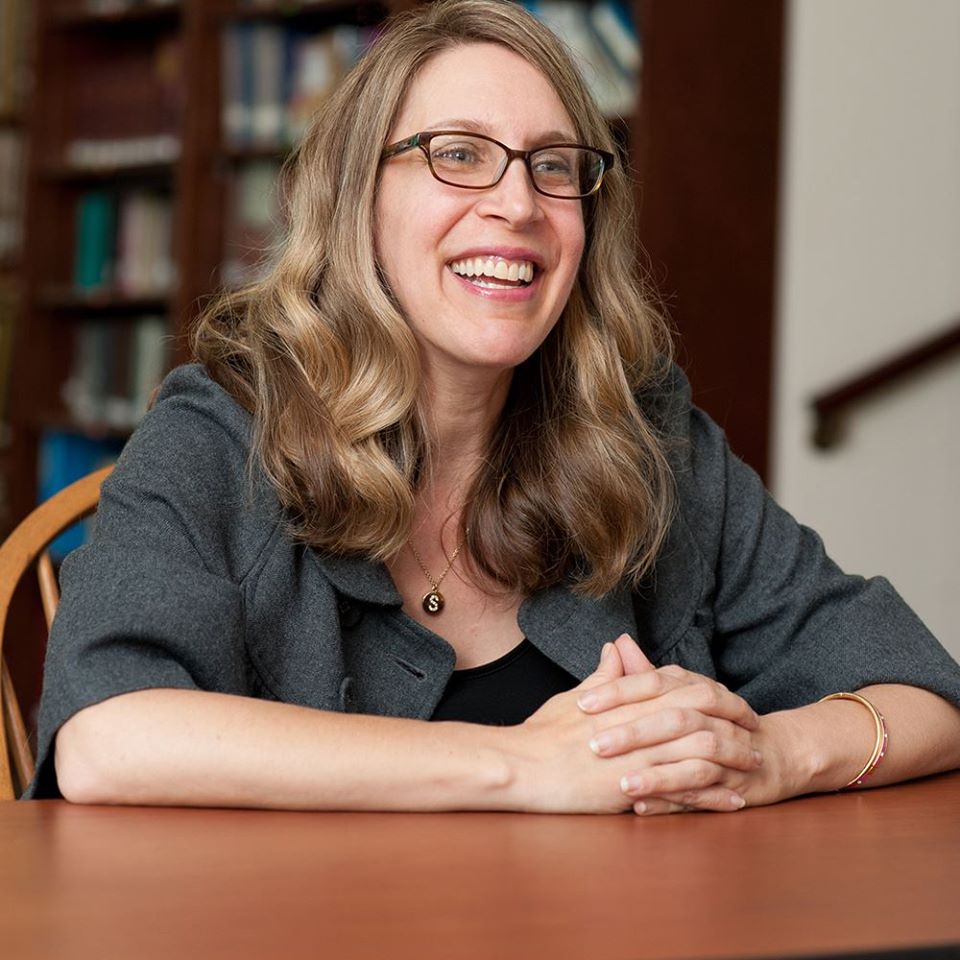
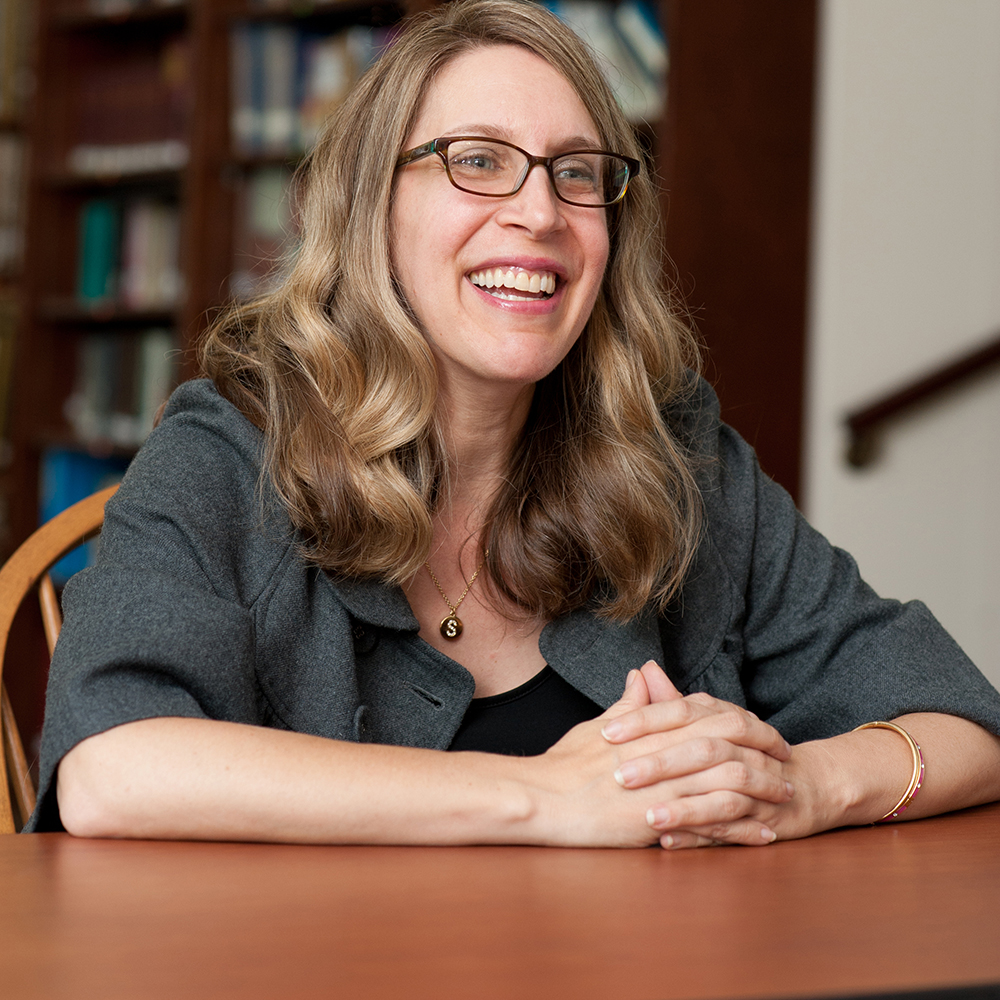
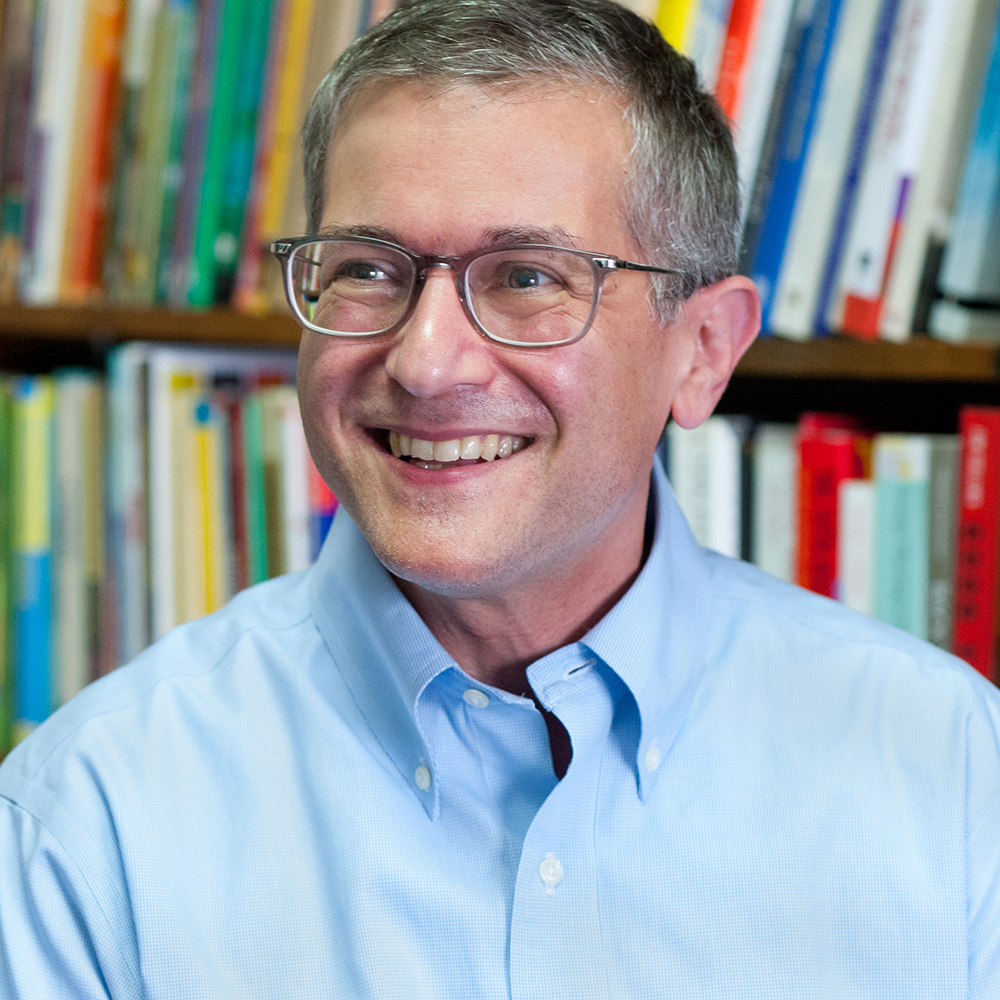
Dr. Jeffrey Kress, current JTS Provost and former Interim Dean of the William Davidson School, has devoted his career to social and emotional learning. From training hundreds of educators in the theory and practice of social and emotional learning to conducting field-building research in Jewish education, he now brings his expertise to his work across JTS—influencing campus culture, working with faculty, and supporting students.
When Jeff Kress entered a doctorate program in clinical psychology in the early 90s, he assumed he would pursue a career working with at-risk children. Fast-forward 30 years and he has published field-building research and trained hundreds of William Davidson School educated professionals to work with thousands of children so that they are better equipped to face troubles of all kinds. As JTS Provost, he now applies the values of social and emotional learning to his work across all schools.
“My work in graduate school coincided with the 1995 publication of Emotional Intelligence by science journalist Daniel Goleman, which profiled social and emotional learning programs,” said Kress. Even before Goleman’s book was published, priorities such as resilience and self-awareness were growing in prominence on the educational landscape. For example, in the 1980s the “Say No to Drugs” campaign was launched. “It turns out that it takes a fair bit of social and emotional skills to be able to say no,” said Kress.
“I started to learn about an approach that started with an innovative question: if we were seeing troubled kids who have problems with self-control, executive planning, managing communication, problem-solving, etc., why don’t we start before the trouble appears.” This model of preventive mental health shifted Kress’s own clinical orientation toward research and practice in social and emotional learning in educational settings.
Prior to coming to JTS, Kress worked at the Social Decision Making/Social Problem Solving Program, which was founded by his graduate school advisor, Dr. Maurice Elias. Through this community mental health arm of what is now Rutgers Medical School, Kress trained teachers in New Jersey public schools and exposed them to social and emotional learning approaches to help them influence the children in their classrooms.
“Things like classroom routine, décor, greetings—these play a role in helping children develop social skills,” said Kress. “Teachers probably have more ‘awake time’ with children than anyone else and are able to model and make a difference in the ways their students interact and make decisions, and ultimately in the sorts of people they become.”
Kress, a Jewish day school graduate and former Ramah swim staffer, began what he called “dabbling” in how social and emotional learning could be relevant in Jewish education. “The goals of social and emotional education are very consistent with the goals of Jewish education,” he said. “Jewish educators are trying to influence the person the learner becomes, how that person interacts with others and makes decisions.”
In Jewish educational settings, Kress discovered that the methods of achieving this influence did not always match the best practices. “There is actual learning theory on how to have impact in these realms,” said Kress. From early on at JTS, he offered courses in social and emotional learning and conducted training out in the field in formal and informal educational settings. In his research, Kress asked “how can what we know from psychological practice come together with Jewish learning in an authentic way?”
For Kress, this was not just about how an educator works with learners but also how school leaders work with their staff and how teachers manage changes in their own behavior. “Good educators are always doing this,” said Kress. “Early childhood and special education teachers have been doing it forever.”
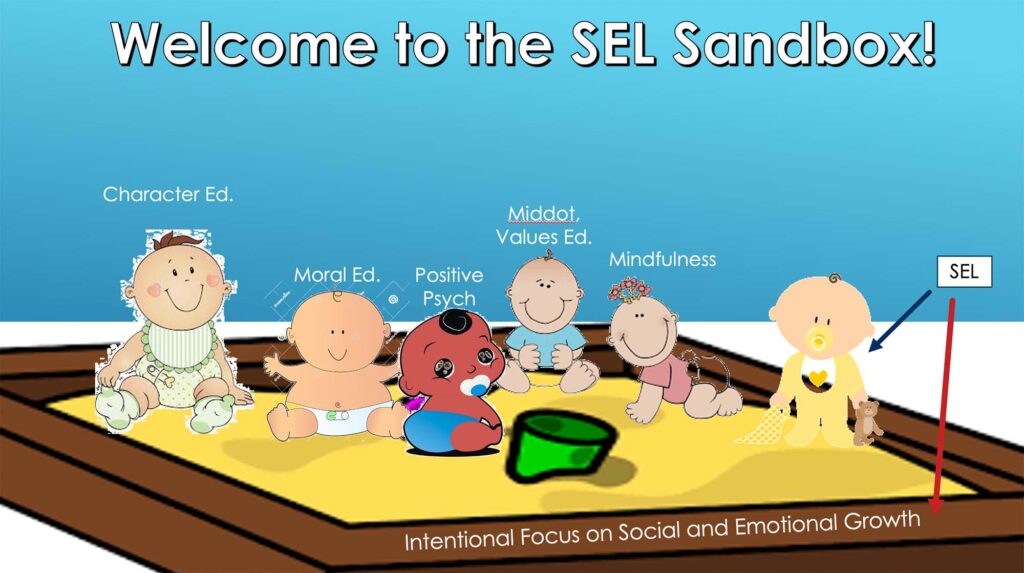
Davidson alumni remember their classes with Kress (which were often oversubscribed), especially how he has paired social and emotional learning approaches with the priorities of Jewish education. The “sandbox” image Kress often uses when he teaches about social and emotional learning positions common Jewish educational goals such as character education, moral education, positive psychology, middot/values education, and mindfulness all within the framework of social and emotional learning.
“If you ask, ‘what’s Jewish about social and emotional learning?’ you find a lot of common ground,” said Kress. He identified four specific common elements:
Goals. Both social and emotional learning and Jewish education focus on the sort of person the learner will become, or “mensch-making.”
Judaism’s everyday content has obvious potential to tap into social and emotional dynamics. There are wonderful Jewish sources about who we are as social and emotional people. The stories we teach show people hundreds of years ago grappling with many of the same issues of today.
Musar/character education focuses on a topic or content area that is consistent with social and emotional learning skills, such as self-regulation or decision making.
The spiritual component that is part of social and emotional learning resonates in Jewish education through prayer, reflective practice, even the ecstatic dancing at a Jewish summer camp.
Kress sees social and emotional learning as a tool for achieving Jewish educational goals. “I like to ask my students, what does it take to be ‘good at’ b’tzelem Elohim (acting in God’s image)? If I want to be ‘good at’ b’tzelem Elohim, what do I need to be able to do?” Social and emotional skills and competencies–like self-awareness, self-regulation, social awareness, relationship skills, decision making and creative problem solving–are an important part of the answer.
Jewish education is about continuity and connections. Kress sees in this a key application of social and emotional learning: “to understand where you connect, you need to understand yourself and your community.” This perspective informs his teaching, research, consultation, and collaboration work.
Throughout his career at JTS—he has been at JTS since 2000 and served as Interim Dean of the William Davidson School in 2013-2014—Kress has viewed the institution as a kind of laboratory for social and emotional learning. “JTS embodies the idea that ‘learning’ can go hand in hand with meaning-making,” he said.
When Kress was appointed Provost by Chancellor Shuly Rubin Schwartz in 2020, he brought his perspective on social and emotional learning to the broader institution. “As Provost, I’m looking for ways to bring together academic and social – emotional learning. Neither needs to get diluted.”
As social and emotional learning has taken center stage during the pandemic, Kress has witnessed the impact in all JTS schools. “Interestingly, while we were teaching online, many faculty recognized the importance of small group work, checking in with students, and getting to know them and their interests. These things enhance learning and can and should carry over to in-person teaching.”
Starting in New Jersey public schools and now reaching the leaders of 21st century Judaism, Kress has been a force for broadening the appreciation of and embedding social and emotional learning into our goals for educational achievement and real-world resonance—for learners, educators, and scholars alike.
Making Joyful Learning an Active Experience
William Davidson School alumna Nancy Parkes came to Jewish education after a career in sports medicine. Her commitment to social, emotional, and spiritual learning embodies her own personal experience as an elite athlete and trainer who recognized the power of the mind-body connection. It was her personal Jewish educational journey that lit a spark for advanced graduate work in social and emotional learning, leading her to create a new model for congregational learning and ultimately propelling her to devote the rest of her career to helping educators acquire and adapt social and emotional skills and strategies.
“Like trying to keep a beach ball under the water,” is how Nancy Parkes describes the intense emotional pull Jewish education has for her. “Jewish learning fills my soul like nothing else.”
Using an analogy from the world of sports is not surprising for Parkes, a former elite tennis player herself whose first career in sports medicine brought her traveling around the country with championship University of Connecticut teams.
“So much success in sports has to do with emotional and social well-being,” said Parkes. “As I embarked on my second career in Jewish education, I knew instinctively that these same ideas would inform my practice.”
Upon receiving her MA from the William Davidson School in 2006, Parkes became assistant director of the congregational school at Temple Israel Center in White Plains, NY and ultimately created a new model for the school as its director. A sought-after speaker and consultant, she is currently completing her EdD at Davidson with a dissertation entitled, “Obtaining a Heart of Wisdom: Social and Emotional Learning in the Congregational School Setting.” In addition, she founded JTeachNOW, which promotes social and emotional learning in Jewish education.
The path Parkes took to the William Davidson School started when her three children attended Jewish day school in Rockland County. “I started to learn along with them–my children were really my first Jewish educators as an adult.” Turned on to learning after her adult Bat Mitzvah, she took classes at Drisha, and Rabbi David Silber ultimately encouraged her to strengthen her Hebrew skills at JTS.
“At the William Davidson School I completely switched gears in my career,” said Parkes. “I was part of an incredible cohort of women who were pursuing Jewish education as their second career, and I took advantage of everything,” including a summer working at Ramah Day Camp in Nyack.
That summer, Parkes, who had not attended Jewish camp herself, witnessed enormous joy every day. She was convinced that joy was the salient way to connect kids to Judaism, something she had learned in her William Davidson School classes and now saw first-hand. “Working at Nyack further proved to me how motivating emotions are when it comes to Jewish identity, practice, and love of Israel.”
Sure she would pursue opportunities in Jewish camping, Parkes was encouraged otherwise by then Dean Steve Brown. “He told me, ‘we need you in congregational schools,’ and I knew he was right,” said Parkes.
Parkes joined the staff of Temple Israel Center in White Plains with a clear goal: “I wanted that unmitigated joy in my school, the passion that comes through active participation. I wanted teachers to be knowledgeable and joyful.” She was fortunate to be able to recruit and hire a number of Davidson graduates as full-time educators.
She found that having talented educators was only the start. “I could do all the professional development I wanted with teachers and get them on board, but the students were so used to being passive learners. They didn’t have the skills to be active learners.”
Parkes participated in the 4M Project, a joint program with JTS and Hebrew Union College on social and emotional learning. In unpacking what it means to teach social and emotional learning skills, Parkes understood and related to the ideas as an athlete: success starts with skill development.
“Every athlete needs to be taught the skills of their sport. They also need to see what those skills look like in action. Coaches encourage their athletes and tell them when to use certain strategies until it becomes part of ‘just what they do’ in certain situations. And lastly, they practice, practice, practice. These same steps are needed to acquire social and emotional skills,” said Parkes.
The “skills of the sport” in Jewish education, according to Parkes, are more than technical skills to acquire content knowledge. “Social and emotional skills are necessary so that students can be active participants in their learning,” she said. “Our goal is for them to develop healthy identities and relationships, to learn to manage their emotions and feel and show empathy for others so that they can make a difference in this world.” As Parkes puts it, “we want them to be living the Jewish education and values they are learning.”
As an example, Parkes described the way they rethought Israel education at Temple Israel Center. “Our goal was to convey complexity, to transmit some knowledge about modern day Israel as well as Jewish history,” she said. Out of this goal and what Parkes knew about the power of social emotional learning emerged the kernel of the idea for a school-wide Israel marathon, the brainchild of one of her full-time teachers who was a William Davidson School graduate.
They distributed bibs just like in a real race, and students ran around the outside of the synagogue building with stops marking real sites in Israel. Faculty were not on the sidelines but were active participants in the “race,” which incorporated Hebrew vocabulary as well. The race ended with presentations by students to their peers and the school community, which included a “mayor” who awarded them each medals. The “cool down” period was time for reflection.
“Once the learners were physically and mentally active and emotionally engaged in a positive way, the amount they were able to absorb was astounding,” said Parkes. “They had motivation to learn and as a result they remembered a lot.”
Parkes sees spiritual education as an integral part of the social and emotional learning process. “Every child had spiritual needs,” said Parkes. “Can we give them spiritual skills? Of course!”
“We may teach gratitude or prayer as a technical skill, not as a spiritual practice,” Parkes said. “But when we convey to students that the way they behave—by practicing kindness for example—can bring God into a moment, it is enormously empowering.”
At Temple Israel Center, Parkes noticed how educational changes made an impact on educators and learners alike. As the congregational education model was redesigned, Parkes began teaching her educators social and emotional learning skills and then studied the impact of these skills through action research techniques she studied with William Davidson School professor Meredith Katz. “What affected me the most,” said Parkes, “was seeing changes in teachers. It made a difference personally and professionally,” said Parkes. This research, which became the core of her dissertation, showed that social and emotional learning mitigated educator burnout, made teachers more effective in the classroom, and helped them feel better about what they do.
Parkes wants to advocate for Jewish educators to be recognized as heroes and spiritual partners, “first responders” alongside rabbis and cantors. She also wants congregational education to become a career of choice for promising young leaders. “I want the stars of youth movements and Hillels to be drawn to careers in congregational education,” she said. JTeachNow proposes a teaching hospital model where new professionals have two years of training under a mentor and then go on to direct their own schools.
From the tennis court to her first career as an athletic trainer and now to Jewish education, Parkes brings an emotional perspective to her work, with the “winning prize” a legacy of meaningful learning and joy. “Learning is an emotional experience,” she said. “So is teaching.”
Social and Emotional Learning and Camp: A Perfect Fit
Leaving her career in television for soul-filling work in the field of Jewish camp, Jill Goldstein Smith embarked on graduate work in Jewish education and discovered how social and emotional learning could help nurture stronger, more resilient learners and communities. The relationship-based approaches she experienced growing up and which she later explored academically at the William Davidson School have helped her deliver new, proactive initiatives that benefit staff and campers alike.
“Seven years ago, I was not a Jewish professional or student; two years ago, I was not a parent,” said William Davidson School MA candidate Jill Goldstein Smith, who also serves as senior program manager at Foundation for Jewish Camp (FJC). “We bring new identities to our lives and work as we evolve over time.” A core principle of social and emotional learning, self-awareness, runs like a theme in the way Smith sees her own career and individual growth—and in the way she incorporates these strategies into her professional role.
Just a few years into her dream job in television production, Smith, a native of South Florida, realized that she had reached her goals “faster than anticipated,” she said. As an undergraduate she had studied journalism and Jewish history at NYU, leading to a job at NY1 News. She moonlighted as a teen youth advisor at a Reform synagogue, building on her own love of her youth group and summer camp experiences. (She attended URJ’s Camp Coleman and Kutz Camp).
Wondering about her next professional challenge, Smith realized that “everything I learned about being a supervisor I learned at Jewish camp.” She found herself looking for more meaning in her work and left TV for FJC in 2015.
“FJC provides lots of support for professional development, and as I considered the areas where I felt I needed to grow, I sought out opportunities in Jewish education that would broaden my network, provide the credentials I had not yet achieved, and allow for the interpersonal exchange of ideas.” She knew she wanted online learning so she could continue working at FJC, and she liked the idea that the William Davidson School MA program was based in New York to allow for meeting classmates and faculty in person at times.
Smith said that she was attracted particularly to the fact that William Davidson School students are cross- denominational. As co-president of NYU Hillel in college, Smith knew the value of multidenominational environments. “I find it helpful to learn in settings where people come from multiple perspectives,” said Smith.
Enrolling in 2016 in the Educational Leadership Track, Smith has found her classes and professors accessible and relevant to her day-to-day work. “The camp setting maps seamlessly on many of the strategies of social and emotional learning,” said Smith. “When I studied the practices of Responsive Classroom techniques, for example, I immediately connected morning circle to the flagpole ritual that takes place each day at many camps.”
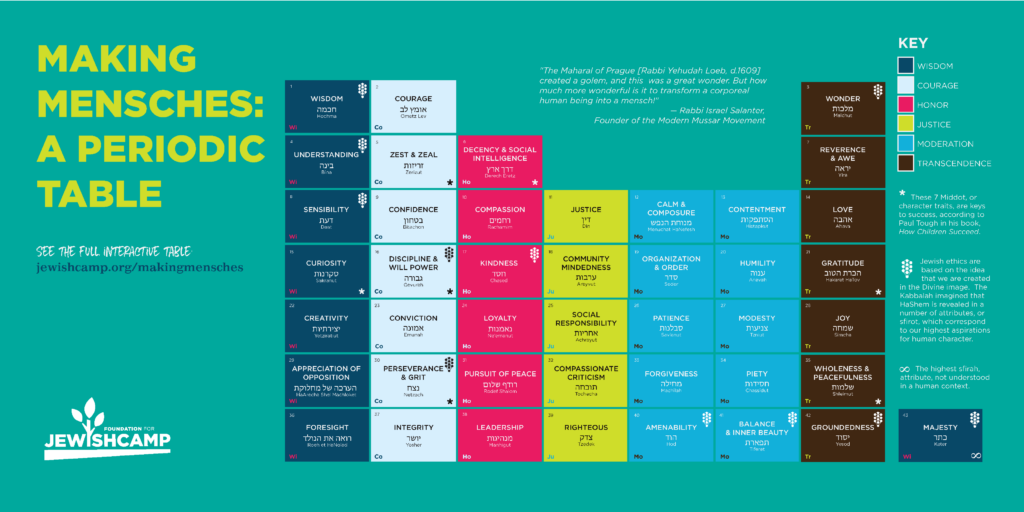
In 2017 FJC piloted the Youth Mental Health First Aid curriculum with several camps with support from Neshamot Women’s Impact Philanthropy at UJA-New York. Smith, who had no formal background in mental health, made a connection to her William Davidson School class with Jeff Kress on social and emotional learning, one of her favorite classes. Character development, one aspect of social and emotional learning, had already been an area of focus for FJC, where Smith’s colleague Rabbi Avi Katz Orlow created an interactive Making Mensches Periodic Table and related resources.
“Mental health started getting more attention in the field of Jewish camp, and I spoke up about how important I felt it was,” said Smith. “We need to be proactive about providing for staff and campers’ emotional and social well-being just as much as we are reactive to times of crisis.” Smith and her colleagues learned that the existing Youth Mental Health First Aid curriculum needed to be adapted for the camp setting, and in 2019 they opened a New York area community of practice for camp mental health professionals.
With generous support from The Marcus Foundation, FJC then launched the Yedid Nefesh initiative with Smith’s leadership, which provides financial and programmatic support for camps to address mental, emotional, social and spiritual health (MESSH) in holistic ways – supporting camps’ hiring of qualified mental health professionals to serve on their staff, enhancing counselor training, integrating wellness programming into activity areas, and developing other ways to create cultural change within their camp communities year-round. “Yedid Nefesh adds the spiritual component to what we know about mental health and social and emotional learning,” said Smith. “At camp, we are aware of the extra opportunity to build resilience through spirituality.”
The overarching goal of mental health and all the MESSH strategies is to acknowledge and make accessible opportunities which will ultimately lead to stronger, resilient, thriving communities, said Smith. “We know that camp isn’t therapy, but it can be a safe space for kids to explore who they want to become.” In the first year, pre-pandemic, over 90 camps applied for 30 spots in Yedid Nefesh, and in January 2022 a second cohort of 30 camps will be announced.
Smith knew from a young age that educational leaders convey a lot more than content. At 13, Smith lost her mother, an educator and elementary school speech pathologist, to cancer. “Many of the teachers from my middle school knew her, even though we were in a large school district, and rallied to support me. The educators at my synagogue, especially our Youth Director, really stepped in to support me and my dad,” said Smith.
“This time in my life is one I think of often when I think about teaching character development, Jewish community, and hidden curriculum. My friends during this time period were also learning, following the cues of the adults around them, showing up to pay shiva visits, and engaging me in meaningful activities beyond the house.”
Smith’s identity as an educator comes in no small part from her mother. “Just like a lot of kids, I wanted to be like her when I grew up – helping people and especially kids. While I also wanted to be a Rockette, Broadway singer, lawyer, and other professions, being an educator was the one that stuck,” she said. “I love helping people show up and be seen as they want, to model that for camp staff who can model that for their campers.”
Through her work at FJC, she promotes a relationship-based model of educational impact. “We take for granted the value of Jewish community and relationships. Jewish education needs to move from ‘community over content’ to ‘content is community,’” she said.
Read more about how summer camp informed Smith’s career.
An Accelerator for Jewish Placemaking
Concepts from social and emotional learning influence every aspect of Beverly Socher-Lerner’s work, including how she approaches family education. Creating a totally innovative approach to Jewish afterschool, she focused on meeting the needs of parents and children and building structures and routines that allow for self-reflection, meaning-making, and community-building.
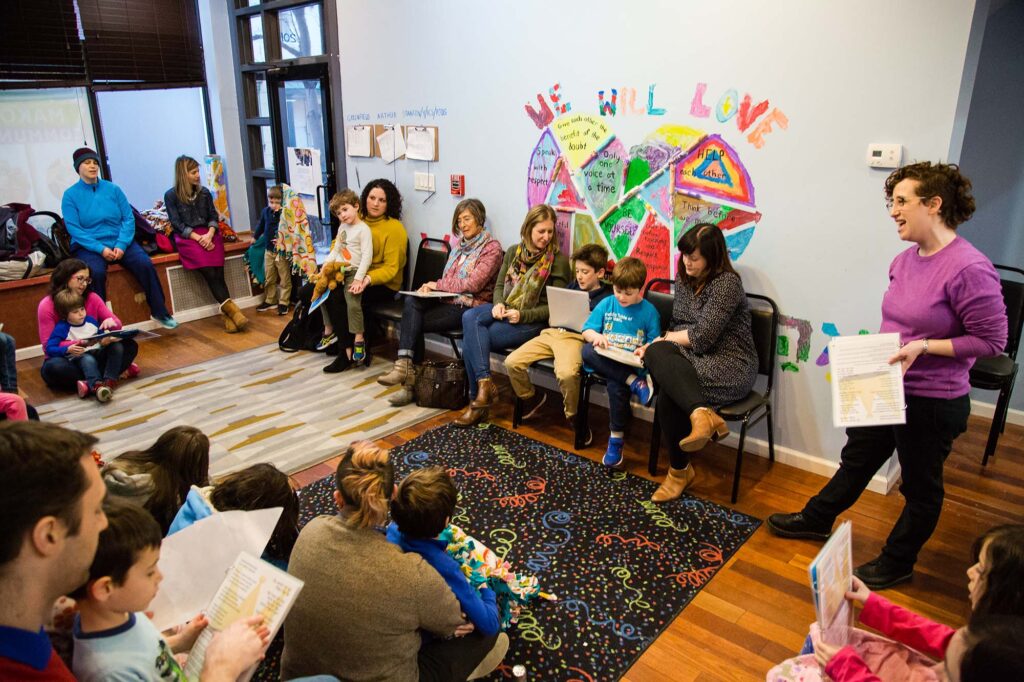
Beverly Socher-Lerner started Makom Community, a Jewish enrichment center that creates family-centered Jewish experiences in Philadelphia, out of a deep commitment to social and emotional learning and the value of helping children identify and express their needs through the lens of Jewish wisdom.
“I grew up with a sense that Jewish communal spaces were where kids’ voices were heard,” she said. “At Makom Community, we empower parents to build a Jewish life that is meaningful for their family.”
Growing up in Marietta, GA in a Reform congregation that was very youth-centered, by the time Socher-Lerner graduated high school, she had been on her synagogue board and held leadership positions in NFTY. “This set a very high bar for feeling like my voice mattered.”
During college at the University of Maryland, she ran a small rural synagogue school which was a contrast to the huge Jewish population on campus. Building on her own educational experiences at Camp Coleman and in her synagogue, she created a structure of multi-modal learning. “Every child in the school lived at least 45 minutes away from where the school met—we had to create a model that met their needs,” she said. “The entire content of the school, which met at temporary locations, fit in the trunk of my car.”
Photo Credit: Rachel Utain-Evans
After graduation Socher-Lerner was a fellow at Yeshivat Hadar, and went on to receive her MSEd from the University of Pennsylvania, where her mentor was Rabbi Dr. Karen G. Reiss Medwed, a graduate of List College and JTS Rabbinical School and former Davidson adjunct faculty member. Socher-Lerner directed congregational schools in Maryland and New Jersey and taught at Barrack Hebrew Academy.
Settling down in Philadelphia, Socher-Lerner saw unmet needs in Jewish education. “There are few synagogues downtown, and there are lots of working parents who need afterschool coverage for their kids and don’t want to give up a weekend for typical congregational school,” said Socher-Lerner. “I started to have coffee and talk with people about a new model.”
“Immersive, playful, child-led—these were the priorities I kept hearing from parents and others interested in Jewish education,” said Socher-Lerner.
The new model Socher-Lerner created is called Jewish Placemaking. It is a pedagogy with three pillars: placemaking, non-violent communication, and studying Jewish text. Transforming the urban planning concept of placemaking, Jewish Placemaking brings together stakeholders to articulate their needs and to see how many can be met at one time through engagement with Jewish texts.
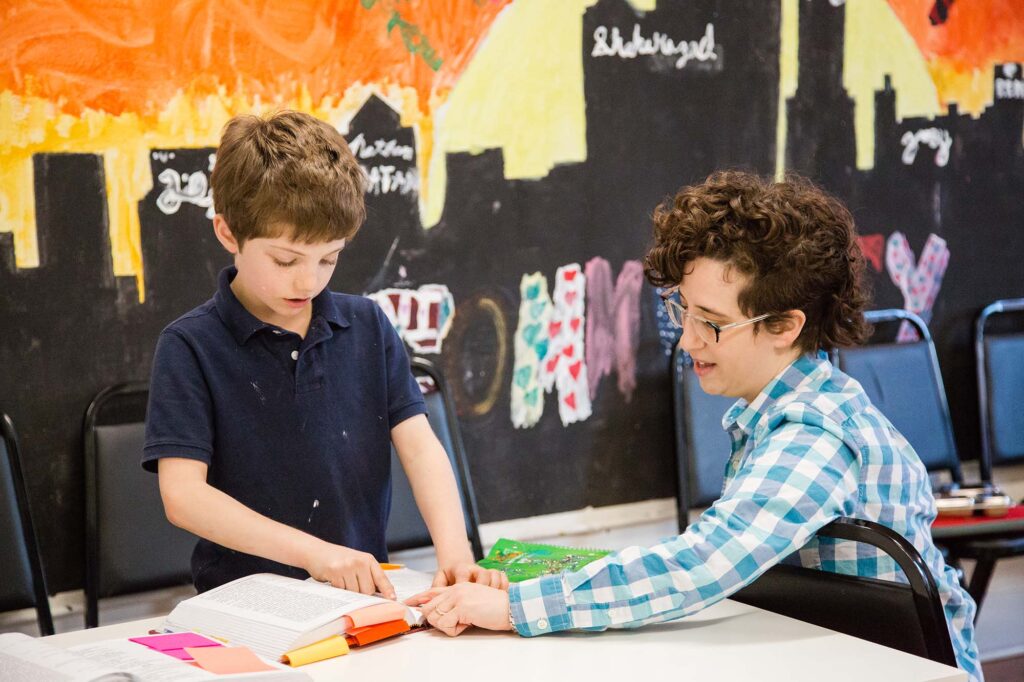
“Texts can help us listen, know each other, and think with empathy,” said Socher-Lerner. “How can a text help me get to who I want to be? And how can I do that in this space we are building together?” asked Socher-Lerner. “That learning from text is applied to the physical space of communal life and the relational space between people.”
Socher-Lerner’s model integrates the practice of non-violent communication, the idea that if two people are in conflict, that conflict is about unmet needs. “Our goal is to figure out what those needs are in order to get to peaceful community-building,” said Socher-Lerner.
Photo Credit: Rachel Utain-Evans
These elements of Makom Community’s pedagogy inform programming, now taking place at two sites that are walkable from six or seven neighborhood schools each, one in Center City and one in South Philadelphia. Children in PreK to grade eight attend on a flexible schedule up to five days/week from 3-6 pm. Makom Community also offers “school’s out camp” programming during vacation time. Socher-Lerner estimates that 70% of the families are not connected to a synagogue. On Fridays, most families stay after pickup for family-centered Shabbat services.
Routines at Makom Community blend the pedagogical approach. Each afternoon begins with an opening text study over snack time. “It is a moment for self-reflection, engagement, and making meaning,” said Socher-Lerner, “while meeting the needs of children after a busy day of school.”
Being an educator at Makom Community means contributing to the new model in a constructive way. “Every educator calls at least three families each week to share something wise, wonderful or kind that the child did that week,” said Socher-Lerner.
For Socher-Lerner, innovation in Jewish education depends on professionals responding to the needs of families today. “If we want to change the face of Jewish education, we do that not by opening more sites but by training education directors and teachers.”
In the summer of 2020, as the first year of remote learning came to a close, the Covenant Foundation funded “Learning from Jewish Afterschool,” a three-day zoom conference attended by professionals from across North America. It was the first time that Socher-Lerner had the chance to teach about Jewish place-making, with coaching sessions afterwards to a small number of educators.
That experience led to the creation of the Jewish Placemaking Accelerator which applies Socher-Lerner’s model in a cohort approach. The Accelerator, funded by the Jewish Federation of Greater Philadelphia, engages teams of education director, rabbi, and up to three educators from one institution in a summer intensive, monthly seminars, and coaching. “We need to work in teams,” said Socher-Lerner, “because the changes we are envisioning are not limited to what happens in an individual congregational classroom.”
“The Accelerator is a kind of laboratory for Jewish Placemaking,” said Socher-Lerner. “We can create tools such as annotated lesson planning guides for teachers and guidelines for classroom observation and reflection for education directors.” The real obstacles have to do with finding teachers with bandwidth for additional engagement.
Most of the educators in the Accelerator, a self-selecting pool open to what Socher-Lerner calls “experimentation and play” work part-time in their schools with other draws on their time. “What would it take to build toward a more full-time congregational educator role?” Socher-Lerner asked. “In the aftermath of so much ‘shut-down,’ we immediately need teachers who can imagine ‘what could be’ for families looking to be connected.”
The teams in the Accelerator are engaged in their own social and emotional learning experience at the same time as they are designing and delivering meaning-based educational settings. “We are modeling what we want them to accomplish, creating space and time to reflect on their own experience, revealing the structure, and then empowering the teams to practice what they are learning,” said Socher-Lerner. “Experience—reflect—practice—reflect again,” is our approach.
Social and emotional learning principles cut through every aspect of how Socher-Lerner sees herself as an educator. “Parents, educators, children—everyone involved in Makom Community sees themselves as builders,” she said. “Our goal is not ‘sales’ in terms of enrollment but authentic connection to individual identity and dedication to a joyful and meaningful community.”
News from William Davidson School Alumni
We are delighted that so many William Davidson School alumni responded to our call for professional updates! The expansive listing below is inclusive of alumni in our academic programs (MA, executive doctoral), as well as our field-based instructional leadership programs. If you have an update that you would like to share in the next issue, please reach out to Melissa Friedman, Director of Alumni Affairs at mefriedman@jtsa.edu.
Mazal Tov to our alumni included in Cohort 10 of the Mandel Teacher Educator Institute: Kevin Peters, Assistant Rabbi and Director of Jewish Education & Youth Programs at Temple Sholom, Greenwich, CT; Amanda Phillips, Center City Director at Makom Community; and Amy Deutch, Religious School Director,Temple Ohabei Shalom, Brookline, MA.
Mazal Tov to our two alumni who received their certification of Conservative Jewish Educator (CJE) from the Jewish Educators Assembly (JEA) at the January 2022 annual conference: Elizabeth Singer, Director of Lifelong Learning at B’nai Aviv in Weston, FL and Rabbi Matthew Nover, Assistant Rabbi & Education Director at Beth El Synagogue in East Windsor, NJ. These talented educators are being recognized for “their ongoing dedication to Jewish education on the national level as well as in their own communities.”
Mazal Tov to Saul Kaiserman and Anna Hartman, doctoral candidates in the William Davidson School executive program, who were both named doctoral fellows at the Mandel Center for Studies in Jewish Education.
We are very proud of our alumni who shared the following professional achievements and brought us up to date on their roles:
Danny Aviv is now the Director of Engineering and Design at the Leffell School in Westchester, NY.
Eli Bass recently joined the professional team of Pearlstone in Reisterstown, MD, as its Program Director.
Etta Bendavid is a Board-Certified Chaplain (Spiritual Care Counselor) in the US and Israel. She has a private practice in Raanana, specializing in end-of-life, grief and spiritual support in all life transitions. Before Aliyah four years ago, she worked in hospice and palliative care. Etta is the Rabbanit of Shivtei Israel in Raanana and a graduate of the Morot LeHalacha (Yoetzet Halacha) program at Matan. Etta is also a singer and leads tefilat nashim.
Stephanie Ben Simon moved back east and is the Director of Education at Temple Shaaray Tefila in Bedford Corners, NY.
Mara Berde joined the professional team at Camp Kingswood, a Jewish overnight camp in ME, as its Director of HR and Operations.
Yoni (Jonathan) Berger became the Head of School at Solomon Schechter of Greater Hartford in July 2021.
Lori Binder, who serves as Head of School and CEO at Gray Academy of Jewish Education in Winnipeg, Manitoba, just became Chair of the Manitoba Federation of Independent Schools.
Matthew Check has a new EP coming out in March and is also working on new material, that will be recorded in Nashville this February with an expected release in the fall of 2022. Additionally, he serves as the Interim Education & Family Program Director at Ansche Chesed through the end of the 2021-2022 school year.
Daniel Cohen joined ezCater as a Director, Sales Acquisition.
Lynn Anne Cutler joined Temple Har Shalom in Warren, NJ as Director of Congregational Education.
Jamie Darsa recently transitioned to a new role at the JCC of Greater Boston and is now the Director of Communications.
Shira Deener is Head of School at JCDS, Boston’s Jewish Community Day School.
Anne A. Ebersman now serves as both the Early Childhood/Lower School Program Director and Director of Hesed and Tzedek N-12 at The Abraham Joshua Heschel High School in New York.
Sara Evangelista became the Director of Student Life at George Washington University Hillel.
Naomi Fabes has served as the Director of Education at Congregation Emanu-El of Westchester since July 2020. Additionally, Naomi is a member of Cohort 4 of the Ruskay Institute.
Laurence Fhima became the Head of School at Ecole Maimonide in Saint-Laurent, Quebec.
Rachel Figurasmith was promoted to Regional Director of the Northeast at Repair The World.
Jeremy Fine became the rabbi of Congregation Bnai Tikvah, Deerfield, IL in July 2021.
Brad Garoon recently became the Senior Director of Onward Israel Marketing & Communications at Birthright Israel.
Nessa Geffen recently became the Director of Ramah Eastern Great Lakes and US Engagement Manager, Camp Ramah in Canada.
Rebekka Gold is the Director of Israel Experiential Education with RootOne at The Jewish Education Project.
Elliot Goldberg is an executive coach and education consultant who coaches individuals during professional transitions and works with educational institutions to develop leadership, refine curriculum and improve instruction.
Jodie Goldberg’s position at the Jewish Education Project has transformed with her skills and she is now the Education Consultant, Teen Engagement and Educator networks. Additionally, Jodie designed and is overseeing the GENERATE Fellowship, a one-year experience to provide early career teen engagement professionals with the tools, skills, and knowledge to become better mentors for their teens.
Merav Goldman is the co-founder of a CBD personal care brand, allbetterco.com.
Debbie Goldsmith became Executive Director of Aardvark Israel gap year program.
Julie Goodman became the Director of Hillel at Dartmouth.
Sheryl Gordon is the Director of the Religious School of Temple B’nai Torah in Wantagh, NY.
Hannah Grossman has been the Manager of Repair the World NYC’s Family and Youth Senior Program since Summer 2020.
Rachelle Grossman is the bibliography and collections manager at YIVO as she pursues a doctorate from Harvard in comparative literature.
Bruce Helft is the owner of Darlings Coffee Roasting, a company that procures and roasts specialty coffee for select clientele. When he’s not roasting, he’s an energy specialist for the state of California, working on policy implementation for clean energy regulations and decarbonization initiatives.
Branden Johnson joined the yearlong team at Northern Ramah California as its Program Director.
Yossi Kahan is now the Director of Student and Jewish Life at Donna Klein Jewish Academy in Boca Raton, FL.
Abby Kerbel is the Director of Jewish Life/Middle School Judaics at Gesher Jewish Day School in Fairfax, VA.
Darren Kleinberg is now serving as Visiting Scholar with the Concentration in Education and Jewish Studies at the Stanford Graduate School of Education and is also the 2022 Visiting Educator at Urban Adamah, in Berkeley, CA.
Sharon Knafo serves as the Head of School of Shenker Academy in Las Vegas, NV.
Dani Kogan is now the Manager of Programs and Innovation for B’nai Jeshurun’s Center for Prayer and Spirituality.
Kelly Kossar became the Associate Director of Youth Education at Congregation Kehillath Israel in Brookline, MA.
Danielle Leader was promoted to Program Specialist at the Veterans Health Administration last March. Danielle is now also a FAC-COR I, which is a first-level Contracting Officer’s Representative.
Gideon Levin has spent the last fifteen years at the Abraham Joshua Heschel School in New York City in a variety of roles, most recently as the Lower School Specialist working on curriculum for the elementary science program as well as teaching English Language Learners from Israel and working as the Lower School Special Projects Associate. He has spent the last twenty summers working in a variety of roles at Ramah Day Camp in Nyack.
Mitch Levine recently became the rabbi of Congregation Beth Israel in Asheville, NC.
Karen Lewin recently joined Marlboro Jewish Center as its Education Director.
Meredith Levick is the Director of Strategic Development for the Office of Innovation at Hillel International.
Eliana Light works for NewCAJE as the director of the Leadership for Emerging Education Professionals (LEEP) Fellowship. Additionally, Eliana is the artist in residence at Beth El Synagogue in Durham NC, and continues to be an artist in residence, curriculum writer, and prayer consultant for both local and national Jewish communities.
Rhonda Lillianthal, who continues to be the Director of the Center for Jewish Life at the JCC MetroWest NJ, recently earned a Certificate in Jewish Spiritual Counseling from Beit Tshuvah in Los Angeles.
Marc Lindner now serves as the Head of School at Sinai Akiba Academy in Los Angeles, CA.
Seth Linfield is the new campus rabbi at Dartmouth.
Jeffrey Lipschultz is now the rabbi of Congregation Beth Emeth in Sun City, AZ.
Danna Livstone is a program evaluator for Rosov Consulting. Danna is also an active lay leader at Beth El in East Windsor, NJ
Joshua Lookstein is currently the Head of School at Westchester Day School. In the 2022-2023 school year, he will become the Associate Head of School, Rabbinic Leadership, Jewish Life and Learning at the Ramaz School.
Dani Luft now teaches kindergarten at B’nai Shalom Day School in Greensboro, NC.
Alex Malischostak joined the Global Teletherapy team as a Recruiter in June 2020.
Benjamin Mann became the Chief Planning Officer of Jewish Federation of Greater Metrowest NJ, in July 2021.
Lucy Marshall earned a degree in social work from the University of Minnesota and is the Director of Rising Tide at Mayyim Hayyim.
Myra Maskin received her ordination from the Ziegler School of Rabbinic Studies at the American Jewish University in May 2020, and now works at AJU as the Associate Director of the Maas Center for Jewish Journeys, which includes the Ziering BCI Program, the Miller Introduction to Judaism Program, Marriage for Life, and the AJU Community Mikveh.
Gabe Miner is a second-year rabbinical student at HUC.
Thabatta Mizrahi is the founder of ThabattaSM Consulting and an educational consultant working with schools across the country. Additionally, Thabatta is a professor at the University of Miami School of Education.
Kate O’Brien is a third-grade general studies teacher at The Abraham Joshua Heschel High School in New York.
Raphi Ozarowski assumed a position as a Judaic Studies Teacher at Solomon Schechter of Chicago.
Jeremy Pappas recently joined the senior leadership of the Jewish Community Federation of Cleveland as its Managing Director, Campaign.
Jacob Pinnolis is currently serving as the Interim CEO of Maimonides School.
Zac Price earned a PhD from the University of Massachusetts, Boston. He is now a Postdoctoral Researcher at the University of Maryland.
Daniella Pressner graduated from Yeshivat Maharat and currently serves as the Head of School at Akiva School in Nashville, TN.
Nicole Raphael will be directing an off-Broadway production of Out of the Apple Orchard, a play by Ellen W. Kaplan based on the book by Yvonne David, at the Actors Temple Theatre in New York in fall 2022.
Ronit Razinovsky is currently working at the JCC of Harrison as the educational director for K-12 and also serves as the coordinator of the Hebrew curriculum at the Westchester Hebrew School.
Alison Roemer became the Senior Director of Jewish Journeys and Experiences at the
Louisville Jewish Community Center.
Evie Rotstein serves as the Senior Education Advisor at Hebrew Union College. Additionally, Evie recently founded EMR Educational Consulting. Along with Nancy Parkes, Founder of JTeachNow, they are offering a SESL Certificate Course for Jewish Educators.
Scott Russell became the Director of Operations at The Calgary Jewish Community Centre.
Debbie Cohen Savage recently joined UJA Federation of Greater Toronto as its
Director of Jewish Engagement.
Dr. Melissa Ser, CJE, now in her tenth year as Director of Education at Adat Shalom Synagogue, serves as a Vice President of the Jewish Educators Assembly (JEA) and is a member of the inaugural cohort of the Pardes Senior Educators Learning Fellowship.
Aliza Serbert recently joined the professional team at the Shefa School as a Middle School Teacher and Student Life Educator.
Sam Schindler, along with being a Professor at Pennsylvania College of Art & Design, is also a co-owner of Riverbend Comics, an online comic bookstore.
Adam Shapiro became the President of the Center for Israel Education in Atlanta.
Sara Shapiro-Plevandefended her dissertation,” The Social Networks of Jewish Educators,” and will be graduating in May 2022 with her EdD. Sara is the founder of the Gender Equity in Hiring Project.
Rebecca Shargel, who earned her doctorate from the William Davidson School, was recently promoted to Professor of Education in Towson University’s College of Education. Dr. Shargel teaches courses in the Department of Educational Technology and Literacy as well as to graduate students pursuing a Leadership in Jewish Education and Communal Service degree. She is an affiliate of the Baltimore Hebrew Institute (formerly Baltimore Hebrew University).
Laura Herman Shefter assumed a new role as Director of Program and Evaluation at JPro.
Rachel Sherman became the Director of Religious School at Congregation B’nai Israel in Boca Raton, FL.
Andy Shugerman has recently relocated to Pittsburgh and is now the inaugural Development Director of Congregation Beth Shalom.
Ilana Sidorsky became the Network Director at itrek.
Clara Silver became the CEO of the Katie and Irwin Kahn Jewish Community Center in Columbia, SC.
Daniel Silverman was promoted to Director of Education and Program Development at Beth Tzedec Congregation in Toronto.
Leor Sinai is currently a doctoral candidate at the William Davidson School’s program for Education Leadership. He also serves as the Chair of the Jewish Agency for Israel’s (JAFI) Committee on Youth Aliyah & Absorption. Leor founded Sinai Strategies to provide consulting, mentoring, and other educational services in Israel and around the world.
Monika Singletary is the Director of Engagement and Membership at Temple Emanu-El in Birmingham, AL.
Evita Sokol graduated from Pacific College of Health and Science in August 2021 with a Master’s in Eastern Medicine and is expecting her doctorate in Eastern Medicine by summer 2022. Evita is currently working at WTHN in NYC as a licensed acupuncturist and herbalist.
Sarah (Attermann) Topal is the Director of Youth and Family Engagement at North Suburban Synagogue Beth El in Highland Park, IL.
Eran Vaisben is the Executive Director of the Inland and Desert Hillel in Riverside, CA.
Ayala Wasser became the Assistant Director of Ramah Darom.
Allison Weill recently became the Programming & Communications Associate for the Jewish Federation of Howard County in Columbia, MD.
Ruth Weiss recently transitioned to become a Learning Specialist at Kohelet Yeshiva in Merion Station, PA.
Laura Novak Winer became the Director of the Master of Educational Leadership Program at HUC in the Rhea Hirsch School of Education.
Dori Wolgel is currently teaching 4th and 6th grade at Congregation Beth Shalom in Northbrook, IL and 5th grade at Sukkat Shalom in Wilmette, IL.
Nina Yeske teaches Middle School Judaic Studies and Hebrew at the Alfred and Adele Davis Academy in Atlanta, GA. Nina also recently completed the Pardes JSITT year-long program for day school educators.
Sarah Ellen Zarrow, PhD is an associate professor at Western Washington University.
Shana Zionts became the Associate Director of Columbia/Barnard Hillel.
Special Alumni Giving: JTS Crossroads Campaign
Thanks to the following alumni for making significant gifts to the JTS Crossroads Campaign, our capital campaign supporting scholarships, programs, faculty, the JTS Library, and our endowment.
Want to explore how you can participate? Contact Melissa Friedman at alumni@jtsa.edu.
Courtyard Benches
Jaime Hecht Horwitz Bob Slosberg Park Avenue Synagogue
2004 Rabbinical and Cantorial Class Bench
Rachel Ain Rebecca Ben-Gideon Ryan Dulkin Melissa Friedman Josh Ginsberg Jeremy Gordon Jenna Greenberg Daniel Isaacson Dave Levy
Jonathan Medows*: Courtyard Mezuzah Moshe and Ruth Corson*: Library Entrance Mezuzah List College 2019 Senior Class, in memory of Hannah Weiss (z”l): Moadon Garden Terrace Mezuzah
Residence Hall: Single-Room
Vadim Avshalumov Shachar Binyamin Talya Bock Chava Creque, Ben Ehrlich, Laura Landau, and Dan Walker Adam and Nava Cohen Simeon Cohen & Ariel Fein Yonina Creditor Benjy Brown & Meryl Kramer Brown Jamie & Joshua Diamond Tamra & Bruce Dollin
Ben Ehrlich Carly Siegel Eilender Melissa Friedman Shanna Ackerman Hocking Daniel Max Kestin Ari and Rebeca Perten Richard Reaven Becca Walker & Ariella Rosen Todd Surden
Residence Hall: Double-Room
Daniel Dorsch and Joshua Dorsch Shoshana Brownstein Farbman Leora Rosenblum Holzer & Jesse Holzer Lisa Kravitz Mamaysky and Mara Kravitz
Residence Hall: Staff Apartments
Rachel Ain & Dave Levy Jane-Rachel and Aaron Schonbrun
Residence Hall: Communal Spaces
Eytan & Rebecca Hammerman: Kitchen Mezuzah Barry, Eytan, and Doron Kenter: Kitchen Mezuzah Steven and Jodi Rein: Study Space Mezuzah
Jeremy Ruberg: Dining Room Mezuzah Burt Visotzky: Dining Room Mezuzah Alan Yaillen: Dining Room and Study Space Mezuzot
Carol Bakhos: Kekst Graduate School Robbie Cohen-Millstein: List College Arnold Goodman*: Rabbinical School Jonathan Infeld: Rabbinic Training Institute Ismar Schorsch*: Kekst Graduate School
JTS Fund and Scholarships
Anonymous** Alisa Doctoroff** Victor Mirelman* Shuly Rubin Schwartz* Jonathan Schnitzer*
Leonard Sharzer* Dan Stein David Steinhardt* Leonard Wasserman* Joel Weissglass*
Endowment Gifts
Alisa Doctoroff** Alan Edelman Richard Hammerman* Karen Kaplan*
Planned Gifts
Kassel Abelson Joseph Brodie Gary Creditor Moshe and Ruth Corson* Donald D. Crain Tamra and Bruce Dollin Gideon Estes Deena (Goldstein) Friedman Michael B. Greenbaum Richard Hammerman* Sheila Diamant Hecht Rochelle Hutchings (z”l)
Carol Ingall Karen Kaplan* Lilly Kaufman Barry Kenter Robert Layman Irving Lehrman (z”l) Sheldon Lewis Eliot P. Marrus Michael Meyerstein Richard Plavin Jack Riemer
Ethel Rothenberg (z”l) Lifsa and Stanley Schachter Shuly Rubin Schwartz* Lori and David C. Seed Matthew Shore Marion Shulevitz* (z”l) Malcolm Thomson Annie Tucker Burton L. Visotzky Marilyn S. Werman (z”l) Anonymous
The Eisenfeld-Duker Beit Midrash is the hub of The Rabbinical School, where students gather to study, deepen their connection to sacred texts, and sing out the words of Torah. Today, rabbinical school alumni can support this sacred space for future rabbis.
Individual Rabbinic Support
Micah Peltz Mira Rivera Annie Tucker Gideon Estes
Class Support
Thanks to these graduates, individual rabbinical classes are working together to raise $5,000 to support the Beit Midrash as a Class and be recognized inside the Beit Midrash.
Participate in your class by going to: inspired.jtsa.edu/RS[YearOfGraduation] (i.e. inspired.jtsa.edu/RS1981)
Guy Austrian Josh Dorsch Alex Freedman Jess Minnen Judy Greenberg Adam Roffman Shira Wallach Ari Isenberg
Green Room
JTS’s new Green Room, an essential component of the new, state-of-the-art auditorium, will inspire students to discover their soulful voices, learn to uplift an audience, and mark the Jewish life cycle through music.
Farid Dardashti Alisa Pomerantz-Boro David Lipp Stephen Stein
*These donors have given between $50,000 and $999,999 and are recognized on the scroll in our atrium.
**These donors have given one million dollars or above and are recognized on the wall in our atrium.