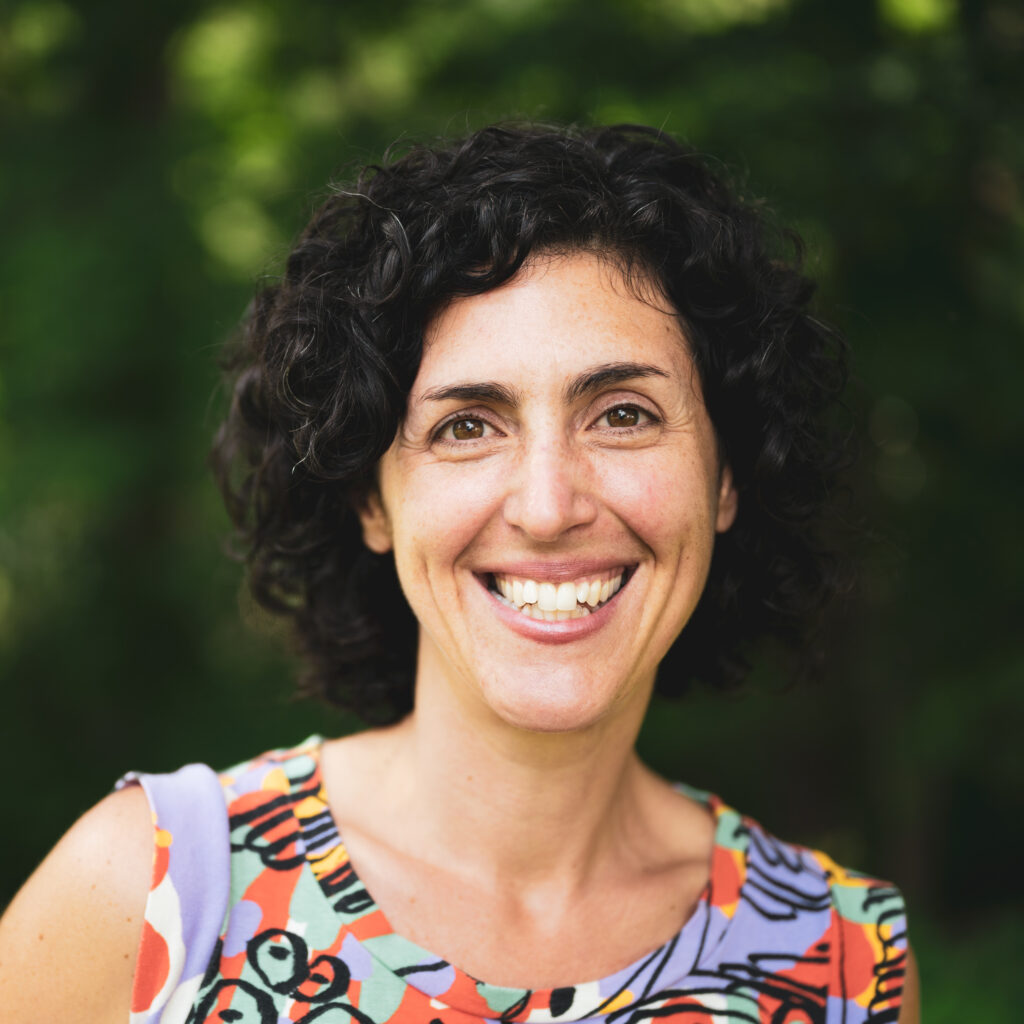
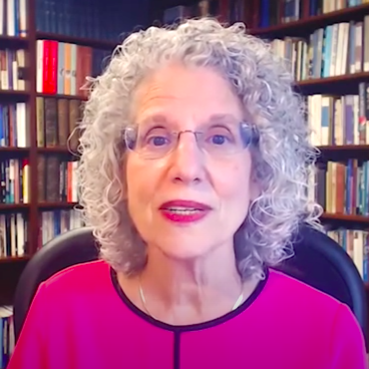
When Shira Forester (William Davidson School MA, May 2022) was a rosh edah (unit head) at Camp Ramah in Wisconsin, she had the responsibility for developing a summerlong educational theme for her unit of entering seventh graders. “The theme was meant to infuse all our programming,” said Forester. Loving to pick apart texts and draw out multiple meanings, Forester chose a biblical verse that she knew was familiar to her campers.
The first line of Psalms 133–“hinei mah tov u’mah naim shevet achim gam yachad” (“how good and how pleasant it is that brothers dwell together”)–became the edah theme, and Forester devoted each week to a deeper engagement with one word from the verse.
“In the first week, we focused on ‘hinei’ and we explored the concept of ‘hineini’ and of being present,” said Forester. “We were able to create connections with and among the campers by making the text come alive,” she said.
The power of text study to open up lines of connection runs throughout Forester’s own background and passion for Jewish education.
Growing up in the Chicago suburbs, Forester attended Solomon Schechter Day School and the Rochelle Zell Jewish High School. At the University of Wisconsin in Madison, she found herself choosing Judaism for the first time as opposed to it being chosen for her. As part of her teaching job at a local Conservative synagogue, she helped facilitate the High Holiday youth programming and found that this filled a need for her.
“I realized that I found my work with the children more meaningful than what I generally experienced in the sanctuary,” she said. Teaching, for Forester, became a real love. “I came to envision a career in which teaching sacred texts would nourish my own spiritual experience and expand my own Judaic knowledge. I thrive off of making connections with kids, and that relationship-based learning is really at the heart of text study,” she said.
Forester was a fellow in the Nachson Project which supported her undergraduate study at Hebrew University in Jerusalem. Through Nachson, she also studied weekly at Pardes where she explored text “for its own sake, not for credit.” “Part of the mission of the Nachshon Project is to inspire future Jewish professional leaders,” said Forester, and she was encouraged to attend The William Davidson School with the organization’s financial support.
“I knew that I would pursue a career in education, and I was really drawn to how The William Davidson School prioritizes the development of one’s own identity as an educator,” Forester said. “When I came to JTS, I chose the pedagogy track. In the end, I learn because I am a teacher.”
In Forester’s practicum placement this past year, she student taught middle school at the Luria Academy in Brooklyn. “My experience with adolescents taught me that I really enjoyed being with sixth, seventh, and eighth graders, and I felt that I would hone my own text study skills with them more than I would with younger kids,” said Forester.
At Luria, Forester teaches humash and some lessons on holidays. When Covid struck her mentor in the fall, she filled in for ten days and this spring she spent a month covering for a teacher on maternity leave.
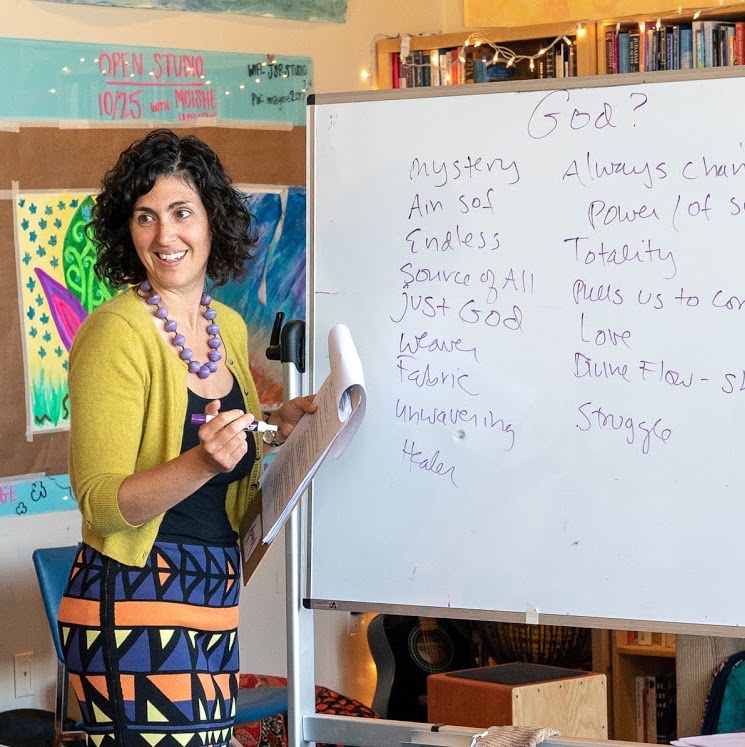
When she teaches text, such as a unit on Sefer Shemot / Exodus, Forester starts by identifying essential questions that the text raises. “Before we even look at a text, I ask the kids to discuss a relevant question, like ‘What makes a good leader?’ Then I pull out Hebrew words that may be unfamiliar and prepare them so that even before they read the text they are familiar with the big ideas and vocabulary,” said Forester. “As we encounter the text itself, the kids translate, mostly on their own, and then we raise questions, sometimes looking at Rashi or other commentators.” The question-asking is Forester’s favorite part of the lesson, where she feels the learners are really engaged in the meaning-making that is her ultimate goal.
“There are a lot of skills that go into unpacking a text—Hebrew vocabulary, syntax, grammar,” said Forester. “Asking questions is also a text skill. Sometimes parents want kids to have mastery over content and our job is to achieve some level of basic literacy alongside the skills of interpreting and analyzing text,” she said. “These are transferable skills that learners will use throughout their lives.”
Forester’s parshanut course with Dr. Walter Herzberg was specifically designed for William Davidson School students, and the experience greatly informed her teaching. “Sometimes it is actually easier to teach text than it is to learn it,” said Forester with a chuckle.
Looking ahead, Forester knows that she thrives off of connecting with kids. “I like to put myself in kids’ shoes and ask myself, ‘What if I were the learner?’ as I plan lessons.” Next year, Forester will be teaching full-time at Luria as a fourth- and fifth-grade Judaics teacher, and this summer she will return to Camp Ramah as an educator. Through cultivating connections with text, Forester will continue to develop her own identity as a teacher.
Written by Suzanne Kling Langman
Fostering Meaningful Connections to Text: Barry Holtz
Barry Holtz
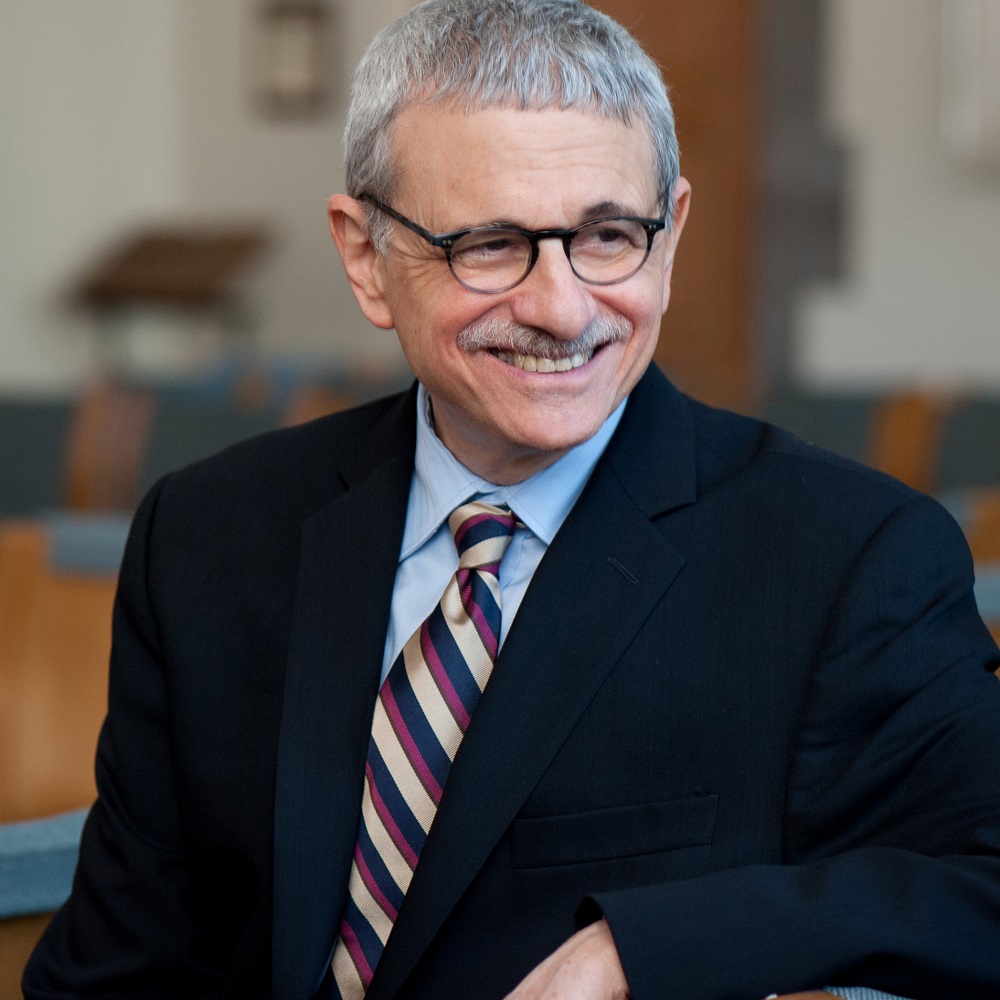
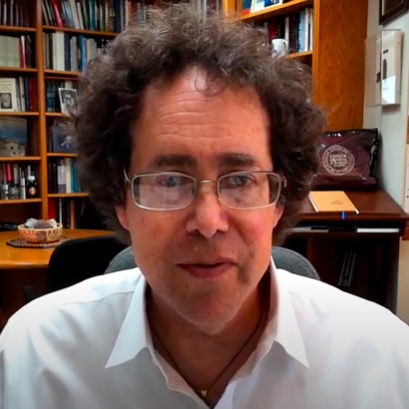
After 43 years on the faculty of JTS, including five years as dean of The William Davidson School and 12 years as co-director of the Melton Research Center for Jewish Education, Barry Holtz has a wide-angle lens on what it means to teach sacred texts.
“At the beginning of my career, teaching Jewish texts was pretty much at the center of what Jewish education was all about,”said Holtz, who started his career teaching English and Jewish studies at a Jewish day school.
In a certain respect, Holtz literally wrote the book on studying Jewish sources. Holtz is the editor of the classic anthology Back to the Sources, a comprehensive guide to the literary legacy of the Bible, the Talmud, the midrashic literature, the commentaries, the legal codes, the mystical texts of the Kabbalah and of Hasidism, the philosophical works, and the prayerbook.
For Holtz, teaching and studying text is at the core of the Jewish educational endeavor. “When we study texts, and when we teach them, we are conveying to learners a belief that we can find what our ancestors found—namely wisdom and insight that can affect our lives in many different ways,” Holtz said. “That is what we are about as educators.”
Throughout his career and drawing on his own educational background growing up in Brookline, Massachusetts, Holtz has observed changes in educational focus. As schools in the latter half of the 20th century took on greater responsibility for conveying the basics of Jewish life, prioritization of text study declined. “Schools became where Jewish children learned how to observe the holidays, for example,” said Holtz, “and there was less time available for developing the Hebrew literacy necessary to engage in traditional Jewish text study.”
The attraction to teaching text today is rising among today’s William Davidson School students, said Holtz, who praises the opportunities for students to do degrees at The William Davidson School and the Kekst Graduate School simultaneously. In that way a student can acquire depth of knowledge in a subject such as Bible or rabbinics at the Kekst Graduate School and explore the theory and practice of teaching those subjects in their studies at The William Davidson School. “Once you have acquired advanced knowledge and competence through studying texts, the next question to ask is ‘What do I do with this?’ How might we teach Bible, rabbinics, or the prayerbook in a day school or a congregational school or at a summer camp?”
To answer those questions, Holtz starts with the basics and invokes John Dewey’s principle that teachers need to start by considering the point of view of the learner. “When you are teaching text—when you are teaching just about anything—you need to ask who is the learner and where are they at? What’s worth learning in that context and under those time constraints?”
With sacred Jewish texts, from the point of view of the teacher, the subject matter is organized and clear, but this is not necessarily the way the learner sees it. “By asking, ‘What’s worth learning here?’ as opposed to ‘What can I tell you about what I know?’ teachers approach text study through the eyes of their learners and ultimately draw out the text’s deeper significance and potential for impact,” said Holtz.
A second principle that Holtz promotes is from the late philosopher of education and Rabbinical School graduate Israel Scheffler. “We need to establish an emotional connection between learners and text,” said Holtz. “Scheffler argued against the distinction between cognitive and affective learning,” said Holtz. “There is no question that you can teach love for text study.”
“If we begin with texts that are really interesting—and there are countless sacred Jewish texts that meet that requirement—we can cultivate that love,” said Holtz. “The primary directive is that the text has to be interesting. We know a lot about helping learners to find things interesting.”
A big challenge in teaching sacred Jewish texts, said Holtz, is language. “We have seen the goal of Hebrew education fluctuate over time,” he said. “Are we aiming for true fluency so learners can, as the old line has it, ‘order falafel in Tel Aviv,’ or is the priority that they can become literate in understanding sacred texts?’”
“Congregational schools devote a lot of time to Hebrew decoding, and we know that six hours a week is not enough to produce fluent Hebrew speakers,” said Holtz. “Even in Jewish day schools where texts are usually studied in Hebrew, the discussion is more often than not in English.” Holtz does not criticize this. “This is not so different from the venerated, romanticized world of our shtetl forbears who spoke Yiddish when they studied humash.”
Teaching texts in translation is possible, said Holtz, with a recognition that something is lost. “We can teach texts in English in a way that both demonstrates why you do get more out of the Hebrew and opens up relevant questions that the text raises,” he said. “You can teach aggadic texts in translation and explore two dimensions—the way the midrash works–and for that you will want to point out puns or other word play from the original–and the ‘why’ of the midrash, what the text is trying to communicate across the ages.”
“Historians like to point out that in the past only a very small percentage of Jews were exploring Talmudic texts,” said Holtz. He believes that the traditional prioritization of studying sugyot focused on matters of halakhah mistakenly sidesteps narrative portions of midrash.
“There are wonderful stories about the Rabbis that are very literary and sophisticated, even in translation,” he said. “By studying these stories, readers can dig into remarkable ambiguities in many of those tales and find meaningful connections to the text.”
For Holtz, a text is sacred because of its own self-representation as well as how it is perceived by those who study it. “The Torah itself claims to have been given by God,” said Holtz,
“Jews have always treated Torah as sacred text,” he said. The question is how do we understand the sacredness of Torah in our times.”
When he taught a course on teaching text to adults and adolescents, the class was grappling with the idea of what makes a text sacred. Holtz asked the students to listen to a podcast called Harry Potter and the Sacred Text. “The two hosts of the podcast treat Harry Potter as sacred text, and for them it is,” said Holtz. He then asked the students to analyze the way that the podcast understood sacredness and compare it to our understanding of that concept as applied to Torah, exploring the significant differences between a book written in recent times by an author whose name and biography we know and Torah, a text whose origins are fundamentally mysterious and which has a history of interpretation more than 2,000 years old.
Transmitting both the sacredness of a text and the ability to read it through a modern critical lens is a particular challenge in Jewish education. “In the modern/postmodern world, there is so much suspicion and skepticism,” said Holtz. “We’re asking learners to view these texts of our tradition with both generosity and kindness, and with the idea that there is much to be found there.”
For Holtz, the reward of teaching in this way has lasting impact. “When we study texts that we believe are sacred, that we treat as sacred, and when we teach them, we try to cultivate a dual attitude: give the text its due not just out of sentimentality but out of a belief that if you are open to the text, it can be a source of great meaning.”
When a teacher conveys this to learners, it is a kind of faith in itself.
Written by Suzanne Kling Langman
Stretching the Canvas of Interpretive Possibilities: Adina Allen
Sacred Jewish text study has been an intellectual pursuit for centuries, and Rabbi Adina Allen, cofounder and creative director of the Jewish Studio Project (JSP) in Berkeley, California, is committed to expanding beyond that modality.
“You can’t separate the emotional component from what it means to study Jewish texts,” said Allen. For Allen, the daughter of art therapy pioneer Dr. Pat Allen, the way to integrate an emotional connection to text study is through creativity and art-making. “When we bring the fullness of our life experiences into conversation with sacred text, we make space for new stories, insights, images, and questions,” she said. The innovative Jewish Studio Process methodology that Allen created in 2015 along with her husband, Jeff Kasowitz, has enabled thousands of learners to discover new ways of encountering and exploring text.
The inspiration for Allen’s work was planted during her childhood in suburban Chicago. “Whenever I had a challenge, my mother would ask me if I had made art about it,” said Allen. “My mother was empowering me to understand that answers exist within me and that art-making is a way to discover them.”
During her senior year of college at Tufts, when she needed a way to explore her own sense of devastation raised by a course about climate change, Allen adapted what she learned from her mother. Together, mother and daughter spent hours in their home studio in a process that helped Allen absorb what she was learning.
“The practice of art-making allowed me to create a space in which to be with my own sadness in response to what I was learning,” she said. “I wondered how art-making could be used to make space for our feelings and to process the emotional component of intellectual work.” Allen replicated the creative art-making and reflection process at a symposium on campus where her body of work was shared, and the response was encouraging.
When Allen entered rabbinical school at Hebrew College, she fell in love with the beit midrash. “I felt so stimulated by the pedagogy of havruta and the way it democratized the learning process,” said Allen. “We were being told that we are the commentators of today, and I began asking how to offer ways for these texts to speak uniquely to our life experiences.”
“How can we bring intuition, creativity to the fore,” Allen wondered. “How can we elongate our experience with the text?” She tried an experiment with her classmates and faculty where they combined some of the familiar components of traditional text study—starting with a question, paired havruta engagement with text, larger shiur-style discussion—with the Open Studio Process techniques she had learned from her mother—intention-setting, playing with color, brushes, and paint, and witness writing in response to the piece and the process to see what emerged.
“It became clear to me that in order for me to answer the charge I’d been given by my teachers, both I and those I would be serving would need new ways to bring ourselves into this world of interpretative possibilities,” said Allen. Out of her experiment with her classmates grew the concept for Jewish Studio Project.
Participants in the Jewish Studio Project have included educators, clergy, lay leaders, and people from all backgrounds. Through public programs, immersive multiday gatherings, and professional development engagements where organizations enlist JSP’s partnership, participants use their own intuition and creativity to surface meaning stimulated by text study. “Making art can be a means to process the emotional component of whatever text one is learning,” said Allen. “The Jewish Studio Process is a full-fledged methodology for text learning, spiritual practice, and personal exploration,” she said, “with no required prerequisite text skills or artistic experience.”
To illustrate what the methodology is like, Allen shared a recent example of a half-day intensive around Pesah that focused on the well-known phrase “with a strong hand and an outstretched arm,” referring to the way in which God took us out of the narrow straits of Mitzrayim. First, Allen invited the participants to consider what it felt like to imagine their own body empowered in that way: What does strength feel like? What is the bodily experience of reaching out one’s arm? The group started with a spiritual grounding and intention setting—which for Jewish Studio Project means “what you would like to gain from the art-making practice,” said Allen, “moving from a statement of ‘I want’ and turning it into a vision of what one can receive from the creative process of text study.”
The next step is havruta study, what Allen calls, using the local parlance of Silicon Valley, “sacred Jewish technology.” Bringing together people with diverse experiences opens up possibilities, said Allen. “We are engaged in collective inquiry into sacred text,” said Allen.
Participants then begin to use art materials to create. “The goal here is to follow pleasure and to let the intellectual mind, and even the intention, recede in order to create the spaciousness into which the answers to our questions could arise.” Art-making, for Allen, “takes advantage of the most compelling opportunity that the beit midrash presents: to take the questions or feelings that have arisen in the learning and explore what they are pointing towards in one’s own life.”
The art-making is an essential element of the Jewish Studio Process, said Allen. “There is something very playful about art-making,” she said. “It is a process of letting oneself be led by pleasure, it allows other parts of oneself to come to the fore. It is a chance for adults to practice what children do all the time: parallel play.”
Playfulness is something that Allen sees adults losing, and it is an element of the spiritual process of making meaning. “It is not only or primarily about the art you create on the other side, that is a relic of the journey that you have taken,” she said.
The conclusion of the Jewish Studio Process is “witnessing,” allowing oneself to reflect on and receive from the work that has been created. “We tell people that during witness writing there is no need to self-censor; the page can hold it all,” she said.
Having started with art supplies packed into the trunk of Allen’s car and grown to focus on public programming, professional development, and studio programs for rabbis, healers, activists, and others through trainings, workshops and one- and multiday immersive programs, JSP is looking ahead to growth in four key areas: lifting up the value of creativity through bold thought leadership; expanding the number and reach of experiential programs; deepening the network of JSP-trained facilitators and community leaders as an ongoing learning cohort; and an R&D studio, which conducts participatory research, prototyping, evaluation, and collaborative learning to adapt and apply JSP’s methodology to emerging challenges and needs.
“Physically having the beit midrash and studio space in one room itself demonstrates our core belief that you can’t separate knowing text from knowing oneself,” said Allen. “We are reweaving the best of both intellect and intuition, like a dynamic strand of DNA.”
While learners usually take home the art they create in the JSP studio, Allen loves seeing the stray marks of paint left on the wall from efforts that went off the paper, a record for those who come next of the ones who have come before. “The walls of our studio as sanctuary–our makom kadosh–themselves tell a story of the learning that has taken place, linking the layers of commentary and engagement across generations.”
Read more about Adina Allen and the Jewish Studio Project:
We are very proud of our William Davidson School alumni who shared the following professional achievements and brought us up to date on their roles. If you have an update that you would like to share in the next issue, please reach out to Melissa Friedman, Director of Alumni Affairs at mefriedman@jtsa.edu.
Josh Ackerman is a hospice chaplain at Jewish Social Services Agency in Montgomery County, Maryland.
Mara Braunfeld is the Director of Children and Families at Hadar.
Mitchell Daar was named the next Head of School at Perelman Jewish Day School in Philadelphia, Pennsylvania, and will assume this new role effective July 1, 2022.
Michelle Dardashti will become the next spiritual leader of Kane Street Synagogue in Brooklyn effective July 1, 2022.
Adam Engle joined the Chicago Community Trust as its Director of the Fund for Equitable Business Growth.
Ronit Goldstein is the Early Childhood Director at Temple Beth Torah Sha’aray Tzedek in Tamarac, Florida.
Shayna Golkow will be returning to Park Avenue Synagogue as Assistant Rabbi.
Ron Koas became the Senior Rabbi of Congregation Beth El, Norfolk, Virginia, in July 2021.
Hillel Z. Konigsburg recently transitioned to Rabbi and Director of Lifelong Learning at B’nai Torah in Atlanta, Georgia.
Glenna Lee is President of the sisterhood at her synagogue, Westchester Jewish Center, as well as the liaison for USCJ Sulam leadership program there.
Rachel Alexander Levy was recently named Executive Director of Jewish Federation of Eastern Connecticut
Joshua Lookstein will be the next Associate Head of School, Rabbinic Leadership, Jewish Life and Learning at the Ramaz School in New York City.
Adra Lustig will become Camp Havaya’s Director of Camper and Staff Experience in summer 2022.
Myra Meskin became the Associate Director of the Maas Center for Jewish Journeys at the American Jewish University (AJU) last summer. Myra also serves as the Director of BCI, an immersive summer program for Jewish young adults, and she oversees the AJU Community Mikveh and Marriage for Life programs.
Orlea Miller returned to JTS as an Assistant Dean of List College in January 2022.
Sarah Montag is the Director of Teaching and Learning at the Solomon Schechter Day School of Greater Hartford in West Hartford, CT.
Leah Nagarpowers is transitioning from teaching third grade at Yeshiva of Central Queens to pursue her work in UX Design.
Adam Pollack is the Chief Program Officer at 18Doors (formerly InterfaithFamily).
Davey Rosen began work as a rabbi with Jewish Hospice and Chaplaincy Network in January 2022 and was ordained by AJR in April 2022.
Leila Roiter is a professor at Dawson College in Montreal where she teaches courses that she has designed in Jewish studies, Hebrew, and arts and culture. Additionally, Leila supports curriculum development and recently created new courses for the Jewish studies department at Herzliah High School in Montreal.
Shirah Rubin is an artist, educator, and consultant working from a studio in Boston. The closing showcase of her Wisdom Exchange Project, funded by Combined Jewish Philanthropies and the Brookline Commission for the Arts, took place at the Brookline Art Center at the end of May. Learn more at https://wisdomexchangeart.com.
Sion Setton is the Principal of Yeshiva Prep High School in Brooklyn.
Mollie Sharfman will be enrolling in Johns Hopkins in the fall to pursue a Master of International Public Policy (MIPP). Mollie was awarded a Public Service Scholarship to support her graduate studies.
Leor Sinai recently joined RootOne as Senior Director of Israel Education.
Jennifer Singer contributed to “Narrow Places: Liturgy, Poetry, and Art of the Pandemic Era,” a collection of poetry, liturgy, and art co-created during the first 18 months of COVID-19, by Bayit’s Liturgical Arts Working Group, a pluralist group of rabbis, liturgists, and artists.
Terri Soifer is the Director of Strategy at Makom in Philadelphia.
Bradley Solmsen is the new Director of Congregational Education at Park Avenue Synagogue in New York City.
Stephanie Tankel was accepted into the first cohort of Mandel Leadership Fellows, specifically with a focus on education/vision.
Judith Weiner recently joined Berkshire Community College in Pittsfield, Massachusetts, as Administrative Assistant for the Osher Lifelong Learning Institute.
Julia Lustig Weiss is the Recruitment & Engagement Associate at Camp Ramah Darom.
Inauguration of Chancellor Shuly Rubin Schwartz
On May 17, 2022, after a nearly two-year delay due to Covid-19, The Jewish Theological Seminary celebrated the inauguration of Chancellor Shuly Rubin Schwartz as its eighth chancellor at a ceremony at JTS’s re-imagined campus. The program included an address by Chancellor Schwartz and remarks by Chancellor Emeritus Ismar Schorsch, Chancellor Emeritus Arnold M. Eisen, and JTS Board Chair Alan Levine, as well as by dignitaries including US Senator and Senate Majority Leader Chuck Schumer (via video), New York City Comptroller Brad Lander, and others. See full program.
Watch Chancellor Schwartz’s Address
I see JTS as a vibrant hub for teaching, learning, and dialogue that models public discourse across the ideological and religious spectrum.
Inauguration attendees watched a video celebrating the chancellors of JTS and their impact on the institution, the North American Jewish community, and the larger world.
Chancellor Louis Finkelstein welcomed President Harry Truman to JTS.
Rabbi Naomi Kalish explores the wisdom we gain not only from the qualitative nature of telling the story of the Exodus, but through the quantitative process of counting the Omer.
Rabbi Jan Uhrbach examines the role of storytelling in the journey from Pesah to Shavuot as well as a particular rabbinic “recounting” of the original story.
Are you looking to extend your Jewish leadership and community engagement in college? Join us to hear how current List College students strengthen their leadership skills through active involvement in organizations both inside and outside the Jewish world.
Get expert advice in a 20-minute individualized college counseling session with an admissions counselor. Answer all your burning college questions about application essay writing, building a college list with Jewish life in mind, and more!