

Search Results
Back to JTS Torah Online's Main page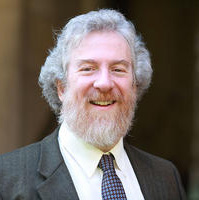
Following Boston, Prayers for Healing
Apr 23, 2013 By Samuel Barth | Commentary
Once more murderous acts have literally blasted their way into our hearts and souls. Images from the bombs in Boston are seared into our minds and memories, and these depictions challenge us. Our faith in humanity is challenged no less than our faith in God.
Read More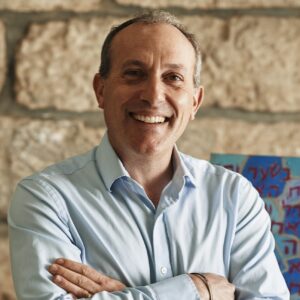
Uncertainty and the Omer
Apr 23, 2013 By Matthew Berkowitz | Commentary | Emor
As we journey through these days and weeks, we find ourselves in the midst of Sefirat Omer, the counting of the Omer (the sheaf of barley offering, a ritual that took place in Temple times).
Read More
Heschel and Kaplan: Cross Sections and Intersections
Apr 18, 2013 By The Jewish Theological Seminary | Public Event video
Dr. Susannah Heschel, as the devoted student of her father’s (Rabbi Abraham Joshua Heschel) life and thought, and Dr. Mel Scult, as biographer of Rabbi Morecai M. Kaplan and scholar of his voluminous diaries, discuss the private lives of Kaplan and Heschel, the relationship between them over many years of teaching at JTS, and their contributions as Jewish public intellectuals.
Read More
Israel: Memory and Dreams (Part 2)
Apr 17, 2013 By Samuel Barth | Commentary | Yom Hazikaron-Yom Ha'atzma'ut
Following the transition from the pain-filled memories of Yom Hazikkaron (State of Israel Memorial Day) to Yom Ha’atzma’ut (State of Israel Independence Day), it is fitting to look closely at the prayer recited in so many synagogues (of all denominations) around the world: Tefillah l’Shalom HaMedinah (the Prayer for the State of Israel). There is a “legend” that the text was composed by Israeli Nobel laureate Shmuel Yosef Agnon, but in fact the text was composed by Israel’s Chief Rabbi Yitzhak HaLevi Herzog (1936–1949), and a critically important phrase was added by Agnon in a handwritten note.
Read More
Embracing Life in the Face of Death
Apr 17, 2013 By Matthew Berkowitz | Commentary | Aharei Mot | Kedoshim | Yom Hazikaron-Yom Ha'atzma'ut
This past week, we commemorated State of Israel Memorial Day (Yom Hazikkaron) and State of Israel Independence Day (Yom Ha’atzma’ut). The juxtaposition of these two observances is jarring. Living in Israel, one feels how mourning permeates every moment of Yom Hazikkaron: from the piercing siren that sounds around the entire country at 8:00 p.m. to the mournful songs played on Israeli radio; from the Yizkor (memorial service) stickers with the Israeli plant known as dam hamakabim (the blood of the Maccabees) to the throngs of Israeli citizens flooding Mount Herzl Cemetery. At the close of this sobering day, transition ceremonies give way to the festivities of Yom Ha’azma’ut: fireworks decorate the night sky and festive barbeques fill the landscape of every square meter of Israeli parks.
Read More
Building Bridges Among Jews
Apr 16, 2013
“Kol yisrael arevim zeh bazeh.” “All of Israel are responsible for one another.” Dr. Ruth Calderon of the Knesset discusses, how in an ever global world, Jews from all paths can join together and “build bridges.”
Read More
Getting Out of Your Own Way
Apr 16, 2013 By Abigail Treu | Commentary | Aharei Mot | Kedoshim
“You shall not . . . place a stumbling block before the blind. You shall fear your God. I am the Lord.” Taken literally, this is a verse about respecting the disabled. Taken figuratively—as the Rabbis give us ample precedent and license to do—it is about all of us.
Read More
Israel and Us: Responsibilities, Commitments, and Opportunities
Apr 10, 2013 By Arnold M. Eisen | Public Event video
A special address given by Chancellor Arnold M. Eisen of the Jewish Theological Seminary entitled “Israel and Us: Responsibilities, Commitments, and Opportunities” in honor of The State of Israel’s 64th year of independence, Yom Ha’atzma’ut 5772/2012
Read More
Israel: Memory and Dreams (Part 1)
Apr 10, 2013 By Samuel Barth | Commentary | Yom Hazikaron-Yom Ha'atzma'ut
Yom Ha’atzma’ut, State of Israel Independence Day, is observed on Tuesday, April 16. It is not only a political and national celebration for the citizens of Israel and their supporters around the world, it is also a festival of the Jewish calendar. The Psalms of Hallel are recited, there is a special Torah reading, and there is an additional paragraph in the ‘Amidah of the Conservative Movement, in a style similar to Hanukkah and Purim (see the Rabbinical Assembly’s Siddur Sim Shalom for Weekdays, 42, 50, 343). So this day is not simply the Israeli equivalent of July 4—it is rooted, as is the State of Israel, in the ancient Jewish dream for the perfection of the world.
Read More
Land, Language, and Leprosy
Apr 10, 2013 By Matthew Berkowitz | Commentary | Metzora | Tazria
The second of this week’s parashiyot, Metzora, is an enigma on so many levels.
Read More
The Radical American Judaism of Mordecai M. Kaplan
Apr 10, 2013 By Library of the Jewish Theological Seminary | Public Event audio
The philosophy of Mordecai M. Kaplan, longtime professor at JTS (1910 – 1963), dean of its Teachers Institute (1909 – 1946), and founder of the Reconstructionist Movement, is presented in its entirety for the first time in The Radical American Judaism of Mordecai M. Kaplan.
Read More
The Torah’s Prescription for Healing
Apr 9, 2013 By Alan Cooper | Commentary | Metzora | Tazria
At a glance, the opening chapters of Parashat Metzora seem like a biblical antecedent of WebMD. Leviticus 13 describes the disfiguring symptoms of צרעת/tzara`at, starting with “a swelling, a rash, or a discoloration” that “develops into a scaly affection” (Lev. 13:1).
Read More
The Battle of the Warsaw Ghetto
Apr 9, 2013 By The Jewish Theological Seminary | Podcast or Radio Program
Originally broadcast in 1944, just six months after the Warsaw Ghetto Uprising ended, “The Battle of the Warsaw Ghetto” provides a dramatic account of life in the Ghetto.
Read More
A Song for the Conqueror
Apr 4, 2013 By The Jewish Theological Seminary | Podcast or Radio Program
A 1955 episode of The Eternal Light depicting the power of music to sustain life and hope amidst a Polish ghetto during the Holocaust.
Read More
The Soul Is Pure
Apr 3, 2013 By Samuel Barth | Commentary
The “preliminary prayers” recited at synagogue each morning are rarely encountered; even if you arrive 15 minutes after the published starting time for a service that might last more than three hours, you will miss those first important words. This fills me with real sorrow, for within this section of Siddur Sim Shalom for Weekdays (4–13) are remarkable, beautiful affirmations and reflections. In previous weeks, we looked at Adon Olam, focusing especially on the way the poet entrusts body and soul to God each night. So, in the morning, it is natural to give thanks for one more day of life, and to reflect on who we are as human beings, composed of body and soul.
Read More
Finding Atonement After Sin
Apr 3, 2013 By Matthew Berkowitz | Commentary | Shemini
Parashat Shemini opens with the initiation of the Tabernacle altar.
Read More
Isaiah: Visions and Wellsprings of Salvation
Mar 25, 2013 By Samuel Barth | Commentary | Pesah
It is often interesting to look closely at the haftarot (readings from the Prophets), and wonder about the juxtaposition of texts, themes, and ideas; what is this text looking to tell us or provoke/inspire within us?
Read More
The Light of Passover
Mar 25, 2013 By David Hoffman | Commentary | Pesah
Why did the Rabbis use the word light when they intended darkness? The Hebrew word leila (לילה) would certainly have worked. Why did the Rabbis not say what they meant?
Read More
The Secret of Shmurah Matzah
Mar 25, 2013 By Matthew Berkowitz | Commentary | Pesah
One of the centerpieces of seder night is the eating of matzah, the unleavened bread.
Read More
Josephus and the Theologies of Ancient Judaism
Mar 25, 2013 By Library of the Jewish Theological Seminary | Public Event audio
A Discussion with Dr. Jonathan Klawans, Author, JTS, March 19, 2013, 7:30 PM
Read More


SUBSCRIBE TO TORAH FROM JTS
Our regular commentaries and videos are a great way to stay intellectually and spiritually engaged with Jewish thought and wisdom.