

Search Results
Back to JTS Torah Online's Main page
Being Holy in the 21st Century
Apr 25, 2014 By Gerald C. Skolnik | Commentary | Kedoshim
If I were challenged to present a one-sentence, pithy articulation of the overarching responsibility of a Jew in this world, I would be hard pressed to find abetter phrasing than the second verse of this week’s Torah reading, Parashat Kedoshim: “Kedoshim tih’yu, ki kadosh Ani Adonai Eloheikhem”(Be holy, for I the Lord your God am holy).
Read More
The Kosher Golden Rule
Apr 25, 2014 By Matthew Berkowitz | Commentary | Kedoshim
Two great questions are often asked in our community: What is our obligation to our fellow Jews?
Read More
The Song of Songs: Lovers Absent and Present
Apr 18, 2014 By Samuel Barth | Commentary
This Shabbat, Hol Hamo’ed Pesah, we read Shir Hashirim, the Song of Songs, the provocative and enigmatic cycle of lusty love poetry that is embraced (though not without challenge) by the canon of the Hebrew Bible. Dr. Francis Landy of Calgary University wrote a powerful and lyrical treatise on the Song of Songs entitled Paradoxes of Paradise, which opens with the reflection of Rabbi Akiva—“All the Scriptures are kedoshim, holy, but Shir Hashirim kodesh kodashim, the Song of Songs is the Holy of Holies”—radically deploying the term otherwise used to describe the holiest place in the Temple.
Read More
“This Year We Are Slaves”: How and Why Do We Celebrate Freedom in the Face of Oppression?
Apr 18, 2014 By Eliezer B. Diamond z”l | Commentary | Pesah
What does it mean to celebrate Passover in the shadow of death?
Read More
The Meaning of the Shmurah Matzah
Apr 18, 2014 By Matthew Berkowitz | Commentary | Pesah
One of the centerpieces of seder night is the eating of matzah, the unleavened bread.
Read More
Preparing for Seder Part 3—Visual Midrash on the Four Children
Apr 11, 2014 By Samuel Barth | Commentary | Pesah
The four children (formerly known as the four sons) are among the most provocative part of the seder—for children provoke their parents. That is why Elijah is needed to restore peace between the generations. The evolution of the text as we find it in our Haggadah is complex, and interesting explanations can be found in the recent JTS collection of Sound Bytes of Torah for Passover on YouTube. I have long been fascinated by the interpretation in imagery that offers four books, presumably each book representing one of the four “types” of child. But which one is which?
Read More
Sacrifice and Humility
Apr 11, 2014 By Matthew Berkowitz | Commentary | Aharei Mot
The Torah reading opens with God speaking to Moses in the aftermath of the death of Aaron’s two sons, Nadav and Avihu, who “drew too close to the presence of the Lord” (Lev. 16:1). But most immediately, as is the case in the aftermath of any trauma, we want to learn how to avoid another tragic “accident.”
Read More
For Millennials and Their Families
Apr 10, 2014 By Arnold M. Eisen | Commentary | Shabbat Hagadol | Pesah
I gathered six students from JTS’s undergraduate Albert A. List College of Jewish Studies in my office last week to talk about the ways in which family dynamics add meaning—and tension—to family Passover seders. I wanted to find out how these dynamics play out at the seders of my students, and share their insights with you here—millennials and college students, teens and tweens—in the hope that our discussion about the holiday will enrich yours.
Read More
The Bitter Truth
Apr 8, 2014 By David C. Kraemer | Short Video | Pesah
This short video details the history of maror and suggests the possibility of a maror tasting to reflect on what best symbolizes slavery at a seder.
Read More
Men And Women: In The Kitchen And At The Seder
Apr 8, 2014 By Judith Hauptman | Short Video | Pesah
Read More
The Right Answers For The Wrong Questions
Apr 8, 2014 By Julia Andelman | Short Video | Pesah
Read More

Why Is This Historic Event Different From All Other Historic Events?
Apr 8, 2014 By Burton L. Visotzky | Short Video | Pesah
Read More
The Gefilte Fish On My Seder Plate
Apr 8, 2014 By Anne Lapidus Lerner | Short Video | Pesah
Read More

Elijah’s Cup: A Time For Family Reunion
Apr 8, 2014 By Daniel Nevins | Short Video | Pesah
Read More
Breath of Life—Night or Morning
Apr 3, 2014 By Samuel Barth | Commentary
The journey through the Passover seder is beloved by many households and communities that gather together. While the meal itself is a feast, the Aggadah, the telling of the story that comes before it, is a rich and multifaceted experience that brings together text and song, classic primary sources, modern interpretations, and personal experience.
Read More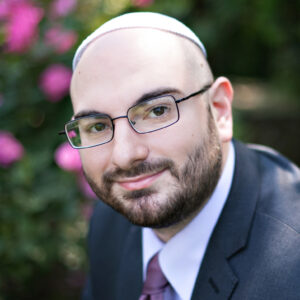
Paying Attention to Our Bodies and Ourselves
Apr 3, 2014 By William Friedman | Commentary | Metzora
What are the rituals that help us transition from one experience to another?
Read More


SUBSCRIBE TO TORAH FROM JTS
Our regular commentaries and videos are a great way to stay intellectually and spiritually engaged with Jewish thought and wisdom.