

Search Results
Back to JTS Torah Online's Main page
Inside Out
Apr 15, 2016 By Ally Sterling | Commentary | Metzora
This week’s parashah, Metzora, details the special procedures a kohen performs to purify the recovered metzora (a person suffering from some kind of skin condition), tzara’at in the home, and ritual impurity. Metzora is about the insides (childbirth and emissions) and outsides (skin afflictions) of the body. I created Inside Out as part of a series of biological drawings that explores the beauty and intricateness of the inner workings of the human body. When I made Inside Out, I wanted to explore the different functions and shapes of human anatomy and physiology, and also the way in which everything is connected.
Read More
Beyond the Exodus from Egypt
Apr 15, 2016 By Arnold M. Eisen | Commentary | Shabbat Hagadol | Pesah
Most of us, at one time or another, have asked the question about the Passover seder that the Haggadah attributes to the “wicked son”: What is the point of all this? At such moments of skepticism, we probably understand why an annual family gathering is worthwhile, we perhaps remember fondly the seders of our youth, and we may even confess to being moved by the rituals reenacted at the seder table year after year: reciting the four questions, dripping wine from cup to plate at the recital of the ten plagues, singing Had Gadya. But really, we ask: Why is the event of Israelite slaves leaving Egypt over 3,000 years ago (if it ever happened in the first place) so important that an entire holiday is devoted to it (not to mention countless daily prayers)?
Read More

Here I Am, Tzara’at and All
Apr 8, 2016 By Rachel Rosenthal | Commentary | Tazria
When I was 12, a few weeks before my bat mitzvah I went in to meet with one of the rabbis of my synagogue. At the time, the synagogue newsletter included a “pasuk of the week,” a verse from that week’s Torah portion that was particularly interesting or thought provoking. However, as the rabbi confessed to me, the week of my bat mitzvah was to be the end of that custom. He just couldn’t find anything that fit the bill. That week’s parashah? Tazria.
Read More
Keep Calm and Consult a Priest
Apr 8, 2016 By Hillel Gruenberg | Commentary | Tazria
Tazria begins with a discussion of the ritual purity of a woman following childbirth and goes on to relate the treatment of leprosy. Reflecting on this juxtaposition of topics, my thoughts turned to the Zika virus, which has garnered global attention because of evidence it may cause birth defects in the children of mothers infected while pregnant.
Read More
How Can People Be Holy?
Apr 1, 2016 By Stephen A. Geller | Commentary | Shemini
Shemini (Lev. 9–11) contains two main topics: the elaborate sacrificial rites performed on the eighth day of the dedication of the Tabernacle, and the laws regarding kosher and nonkosher animals. The first topic details the numerous sacrifices accompanying the last stages of the dedication of the shrine, which reach an intensity matched only by the yearly rites of the Day of Atonement. This is no accident, because the annual event is meant to restore the shrine to the purity it possessed on the day it was dedicated.
Read More
Easing the Transition From Shabbat
Apr 1, 2016 By Shira D. Epstein | Commentary | Shemini
The parashah delineates several distinctions between holy and unholy: what constitutes an acceptable sacrifice; which animals fall within the category of kosher; the actions that might transition a vessel, oven, or garment to the status of unclean.
At the end of Shabbat, we invoke these same words during havdalah, praising God “who makes a distinction between holy and profane.”
Read More
Free Speech vs. Hate Speech: The Changing Contours of Free Expression
Mar 28, 2016 By The Jewish Theological Seminary | Public Event video
Frederick M. Lawrence—Yale Law School senior research scholar, past president of Brandeis University, and a leading expert on civil rights, free expression, and bias crimes—explores the boundaries of free expression in the 2016 Bernard G. Segal Memorial Lecture.
Read More
A Set Table
Mar 25, 2016 By Yonatan Dahlen | Commentary | Tzav
Read MoreI try to bless
When I wear Your stars as my blanket;
My winter coat when days are dark
When life is a knife
Resting on the altar of time.

Creating I-Thou Moments That Strengthen Relationships, and Communities
Mar 18, 2016 By Stephanie Ruskay | Commentary | Pekudei
Semikhah, ordaining of clergy, is on my mind these days as we move closer to my first JTS ordination as an associate dean. No longer the person receiving semikhah, this time I am privileged to help ordain new clergy.
Read More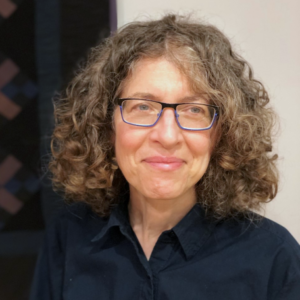
Purim Heroines
Mar 18, 2016 By Stefanie B. Siegmund | Commentary | Purim
I did not wear the crown and satiny dress, or stand in line for the beauty pageant. Queen Esther was not a role model I—or many other children—could choose. Later, in the academy, I understood that Esther’s subterfuge and seduction were the strategies of the weak, the politics of the minority.
Read More
Rabbinic Judaism: Space and Place
Mar 15, 2016 By David C. Kraemer | Public Event audio
In the aftermath of the conquest of the Holy Land by the Romans and their destruction of the Jerusalem Temple, Jews were faced with a world in existential chaos—both they and their God were rendered homeless. In a religious tradition that equated Divine approval with peaceful dwelling on the Land, this situation was intolerable. In response, the Rabbis sought to build new “structures,” new homes for both God and Israel. Rabbinic Judaism: Space and Place offers the first comprehensive study of spatiality in rabbinic Judaism, exploring how the Rabbis reoriented the Jewish relationship with space and place following the conquest and destruction.
Read More
The Call to Find a Mentor and to Mentor Others
Mar 11, 2016 By Mark Young | Commentary | Pekudei
In parashat Pekudei, the Israelites are on a journey to a new life, having escaped the Egyptians, experienced the revelation at Sinai, and completed the building of the Tabernacle. They are now in the wilderness, sometimes unclear about their direction, sometimes filled with fear, and in need of guidance. However, they had mentors to guide them. They had the cloud that indicated the Presence of God, and they had Moses on their side.
Read More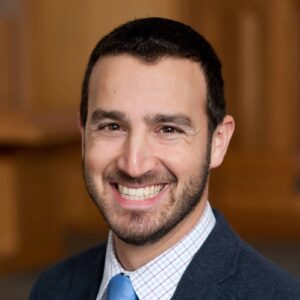
With God, It’s Complicated . . .
Mar 11, 2016 By Rami Schwartzer | Commentary | Pekudei
For a story that began with the promise of intimacy, I had hoped for a happier ending.
Read More
Imagining Community, Then and Now
Mar 4, 2016 By Arnold M. Eisen | Commentary | Vayak-hel
Anyone who has mounted a fund-raising campaign, or sought volunteers for an institution or organization, will immediately recognize the account of the Tabernacle’s construction in this week’s Torah portion as utopian in the extreme. “All the artisans . . . said to Moses, ‘The people are bringing more than is needed for the task entailed in the work that the Lord has commanded to be done.’ Moses thereupon had this proclamation made throughout the camp: ‘Let no man or woman make further efforts toward gifts for the sanctuary!’ Their efforts had been more than enough for all the tasks to be done” (Exod. 36:5–7).
Read More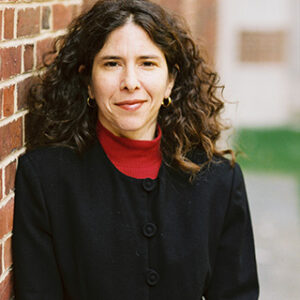
Artisan and Architect
Mar 4, 2016 By Barbara Mann | Commentary | Vayak-hel
Ben Uri looked at the work of his hands and was astonished at how the ark stood firm while he himself was like an empty vessel. His soul was sad and he broke out in tears.
—S. Y. Agnon, Agunot
Read More
The Beautiful Possible: A Novel
Mar 2, 2016 By Library of the Jewish Theological Seminary | Public Event audio
A lively discussion with Amy Gottlieb on her epic debut novel The Beautiful Possible, in the vein of Nicole Krauss’s The History of Love. Gottlieb’s story follows a postwar love triangle between an American rabbi, his wife, and a German-Jewish refugee.
Read More


SUBSCRIBE TO TORAH FROM JTS
Our regular commentaries and videos are a great way to stay intellectually and spiritually engaged with Jewish thought and wisdom.