


Choosing to Choose
Sep 3, 2021 By Jan Uhrbach | Commentary | Nitzavim | Rosh Hashanah
The rabbis taught that Rosh Hashanah commemorates the creation of the world, or by some accounts, the sixth day of creation, the day that humanity was created. Liturgically, the day is seen as more than just an anniversary. We pray “Hayom Harat Olam,” today the world is born, suggesting that the world, humanity, and each of us individually, are created “today,” every Rosh Hashanah.
Read More
Reliving Sinai Every Day
Aug 27, 2021 By Alisa Tzipi Zilbershtein | Commentary | Ki Tavo
Parashat Ki Tavo opens with Moses addressing B’nei Yisrael: “The Lord your God commands you this day to observe these laws and rules; observe them faithfully with all your heart and soul. You have affirmed this day that the Lord is your God, that you will walk in His ways, that you will observe His laws and commandments and rules, and that you will obey Him” (Deut. 26:16–17). During my years at JTS, one of the themes that always captivated me was the mystical understanding of the concept of time in the Torah. That is why my attention was immediately drawn to this quote. The specific timeframe “this day” occurs twice here and is repeated multiple times in the parashah. What does “this day” mean? Or rather, when is “this day”?
Read More
Traveling to Babylon—For Good
Aug 23, 2021 By David C. Kraemer | Public Event video | Video Lecture
The first time Jews traveled to Babylon, it was part of a great exile. But when the rabbis returned to Babylon many centuries later, joining a now “native” Jewish community there, they found themselves very much at home. Some did indeed claim Babylon as home, while others traveled back and forth between Babylon and Palestine as rabbinic messengers to ensure that the teachings of each were available to the other. Two confident centers of Jewish life developed, not unlike modern New York and Jerusalem. In this session, Dr. David Kraemer explores the legacy of those rabbis and how their work continues to impact Jewish life today.
Read More
Before Going Out to Fight, Look Inside
Aug 20, 2021 By Jeffrey Kress | Commentary | Ki Tetzei
We know that every extra word in the Torah invites exploration to arrive at its deeper meaning. The opening words of Parashat Ki Tetzei require such consideration: “When you go out to war against your enemies . . .” Why mention enemies? Who else would one be going to war against? Rabbinic interpretations focus on the use of the plural (enemies) as signifying a distinction between categories of conflict, each requiring different rules of engagement. This helps explain why the rules of war that open the parashah differ from the closing instructions about how to fight Amalek. The Torah is talking about two different categories of conflict.
Read More
A Journey Without End—
The Explusion From Spain and the Age of Perpetual Jewish Migration
Aug 16, 2021 By Jonathan Ray | Public Event video | Video Lecture
In the summer of 1492, the Jews of Spain were expelled from their homeland by royal decree. The dispossessed embarked on a series of journeys in search of new homelands – a process that would last generations and transform Sephardic society and culture.
Read More
Making Space for Community
Aug 13, 2021 By Rafi Cohen | Commentary | Shofetim
For two weeks this summer, I was a visiting educator at Ramah Sports Academy. My responsibilities were fairly typical for a visiting rabbi at camp: leading classes for campers and staff, supporting a particular edah (age group). But I also had an opportunity to assist the summer mashgiah in assessing and repairing the eruv before Shabbat. The camp’s eruv—a ritual legal enclosure fixed for the purpose of allowing activities such as carrying from one domain to another on Shabbat—was constructed using some of the natural boundaries around camp. To identify the sightline of the trees at the far end of a field or a stream of water that connects one part of camp to another as part of the created boundary, string and small wooden posts (lehim) were affixed along parts of the camp periphery.
Read More
Work-Life Balance in Ancient Times:
Why the Rabbis Left Their Homes to Study Torah
Aug 9, 2021 By Rachel Rosenthal | Public Event video | Video Lecture
We often think of questions about how to balance work and family as modern ones. However, a series of stories in Ketubot show that people have been struggling with these issues for hundreds of years. In these stories, the rabbis leave home to learn Torah, and often return to domestic chaos. Dr. Rachel Rosenthal explores these stories to better understand how the rabbis understood their obligations to Torah, to themselves, and to their families.
Read More
Can We Mourn Too Much?
Aug 6, 2021 By Katja Vehlow | Commentary | Re'eh
When someone dies, this week’s parashah tells us, we should not ritually cut ourselves or our hair. In other words: we should not mourn excessively.
Read More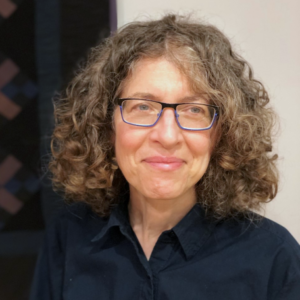
The Early Modern Travel Pass:
Controlling the Plague and Jewish Mobility in 16th Century Tuscany
Aug 2, 2021 By Stefanie B. Siegmund | Public Event video | Video Lecture
In the wake of the Black Death, governments in the Italian states began to enlarge their departments of health and sanitation in an effort to control the plague. Over time they experimented by banning travel to and from suspect regions and quarantining merchants’ goods. Italian Jews, heavily invested in local and regional commerce, were among the merchants affected, attracting the attention of the authorities.
Read More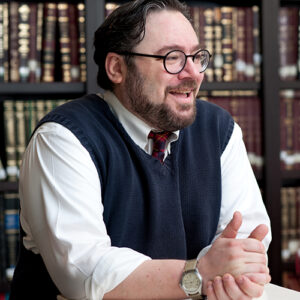
A Legacy of Peace
Jul 30, 2021 By Marcus Mordecai Schwartz | Commentary | Eikev
Why do we still need kohanim? What purpose do hereditary priests—the descendants of Aaron—serve in a culture that appoints religious leaders based primarily on education? Whatever authority rabbis have stems mostly from their knowledge and individual personalities, but the kohanim inherit theirs. Leviticus 21 describes the kohanim as a holy caste who, due to nothing other than heredity, assume the religious leadership of B’nei Yisrael. Their heritage is not land, like the other clans of Israel; rather, their legacy is God, Sanctuary, and sacrifice alone.
Read More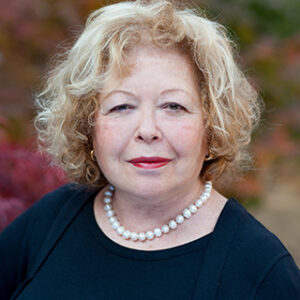
The Spectacular Story Of S. Ansky’s
The Dybbuk and How it Transformed American Jewish Theatre
Jul 26, 2021 By Edna Nahshon | Public Event video | Video Lecture
Since its premiere in 1920 The Dybbuk has been revived countless times in both Jewish and non-Jewish languages and inspired a substantial corpus of works in various media: it was famously filmed in Yiddish 1936 in Warsaw, and to this day has fired the imagination of artists and writers around the globe. Join Dr. Edna Nahshon to discuss this unique play and its various interpretations, focusing on its two foundational productions and the 1936 Polish Yiddish film.
Read More
The Commandments We Need
Jul 23, 2021 By Rachel Rosenthal | Commentary | Va'et-hannan
The act of retelling is, by virtue of necessity, an act of interpretation. Certain details sharpen and others fade as we place a past experience in the context of our needs and thoughts in the present moment. As Yosef Chayim Yerushalmi famously argued in his seminal book Zachor, there’s a difference between history and memory—both are deeply important, but they play different roles in our lives.
Read More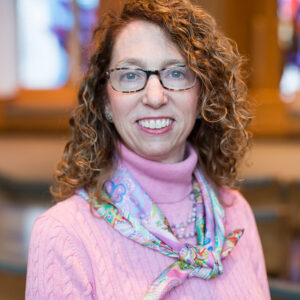
Finding Hijar: A Scholar’s Quest to Uncover the History of Her Jewish Community Through the Journey of Its Books
Jul 19, 2021 By Marjorie Lehman | Public Event video | Video Lecture
With Dr. Marjorie Lehman and Dr. Lucia Conte Aguilar of Universitat Pompeu Fabra
Read More
Rebuilding the Temple Within
Jul 16, 2021 By Eitan Fishbane | Commentary | Devarim | Tishah Be'av
With this parashah, we begin the book of Deuteronomy, the opening of a book of memory—a recalling of the forty years of desert wandering while simultaneously anticipating the entrance of the people into the Land of Israel.
Read More
“The Catastrophist”: A Theatre Talkback
Jul 15, 2021 By The Jewish Theological Seminary | Public Event video
Watch the recording of our conversation with the team behind the acclaimed virtual drama “The Catastrophist,” a stirring meditation on scientific discovery, Judaism, family, life, and loss.
Read More
Flight, Return, and Emigration:
The Wanderings of a Yiddish Writer During and After the Holocaust
Jul 12, 2021 By David Fishman | Public Event video | Video Lecture
The Yiddish poet Chaim Grade fled his native city of Vilna, known to Jews as “the Jerusalem of Lithuania”, in late June 1941, as the Germans invaded the city. He spent the next four years as a refugee in the Soviet Union, homeless and malnourished. When Grade returned to Vilna in 1945, he found the city in ruins – and learned from survivors of the Vilna ghetto that his wife, mother, friends and colleagues had been murdered by the Nazis. We will follow his journey of exile and redemption through selections from his works.
Read More
Who Gets the Last Word?
Jul 9, 2021 By Judith Hauptman | Commentary | Masei | Mattot
Mattot and Masei, the last two portions of the book of Numbers (30:2–36:18), are usually read one after the other on the same Sabbath. Are these portions linked by something other than the quirks of the Jewish calendar?
Read More
In the Face of Violence, a Covenant of Peace
Jul 2, 2021 By Marc Gary | Commentary | Pinehas
Karen Armstrong, the scholar of religion and popular author of such works as The History of God, relates that wherever she travels, she is often confronted by someone—a taxi driver, an Oxford academic, an American psychiatrist—who confidently expresses the view that “religion has caused more violence and wars than anything else.” This is quite a remarkable statement given that in the last century alone, tens of millions of people have been killed in two world wars, the communist purges in the Soviet Union and its satellites, and the Cambodian killing fields of the Khmer Rouge, none of which were caused by religious motivations.
Read More
Backstage Pass: Ben, Jonah, and Henry Platt in Conversation with Abigail Pogrebin
Jun 29, 2021 By The Jewish Theological Seminary | Public Event video
Watch the recording of our conversation with Ben, Jonah, and Henry Platt as they discuss their professional achievements and aspirations as well as how their Jewish experiences and involvements have influenced their careers. The annual Henry N. and Selma S. Rapaport Memorial Lecture.
Read More
Judah Halevi: Poet and Pilgrim
Jun 28, 2021 By Raymond Scheindlin | Public Event video | Video Lecture
In the summer of 1141, Judah Halevi, a distinguished doctor, poet, and religious thinker sailed from his homeland, Spain, for the Holy Land, leaving behind his family, his medical practice, and his position as a distinguished leader of the Jewish community. Although little is known of his life before the pilgrimage, we can trace his journey in detail thanks to letters preserved in the Cairo Geniza. More importantly, we can follow Halevi’s inner religious journey through the stirring poems that he composed in anticipation of and during the voyage. In this session with Dr. Raymond Scheindlin, we will touch on both the external and internal journeys by drawing on the letters and the poems, all in translations by Dr. Scheindlin.
Read More


SUBSCRIBE TO TORAH FROM JTS
Our regular commentaries and videos are a great way to stay intellectually and spiritually engaged with Jewish thought and wisdom.