
How Should We Translate Genesis 1:1?

בְּרֵאשִׁ֖ית בָּרָ֣א אֱלֹהִ֑ים אֵ֥ת הַשָּׁמַ֖יִם וְאֵ֥ת הָאָֽרֶץ׃
The opening words of the Torah are surprisingly difficult to translate. The grammatical issues are technical, the stakes are high, and there is pressure on the interpreter to get it right. Here we will explore the pros and cons of the two most popular approaches. Warning: we are about to get grammatical.
Interpretation #1: “In the beginning”
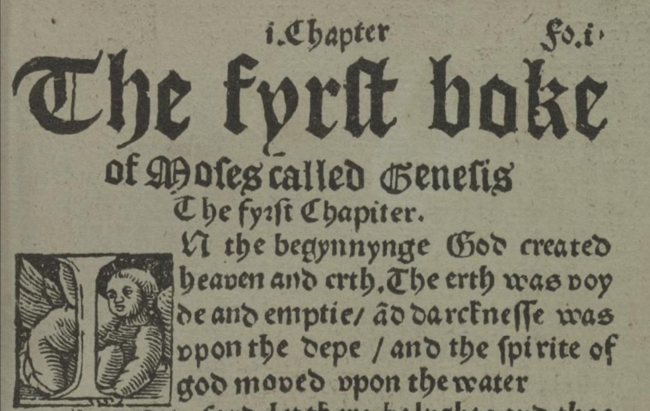
The Christian linguist William Tyndale (1494–1536) was the first to translate the Torah into English from the original Hebrew. This was forbidden at that time in Catholic England, and in 1536 he was strangled and burned at the stake. Tyndale coined many of the popular “Biblical English” phrases that would later be associated with the more popular 1611 King James Version. Tyndale’s “In the begynnynge God created heaven and erth” would in the KJV become “In the beginning God created the heaven, and the earth.”
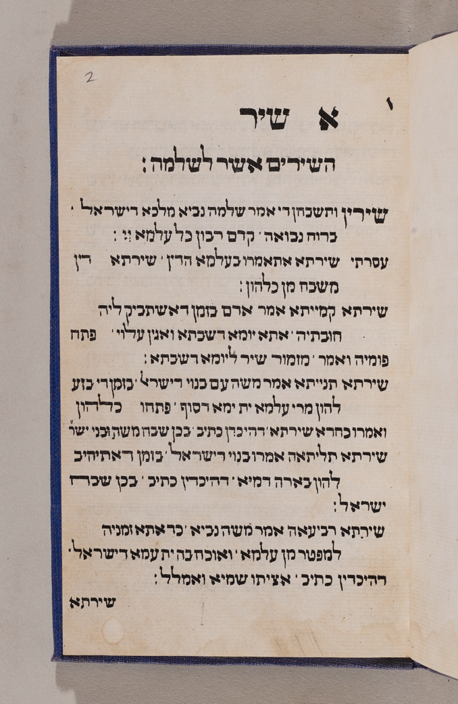
This approach, which accentuates the beginning, can also be found in ancient Jewish Bibles such as the Greek Septuagint and the Aramaic Targums. Targum Pseudo-Jonathan, for example, has מן אוולא ברא אלקים ית שמייא וית ארעא, “From the beginning, God created the heavens and the earth.” The key feature is the א at the end of the word אוולא. This is the mark of the determined state in Aramaic. Much like the prefix ה in Hebrew, the ending א means that אוולא is “the beginning.”
Although Interpretation #1 seems to have fallen out of favor in contemporary Jewish English translations, it can be seen in the 1917 Jewish Publication Society version: “In the beginning God created the heaven and the earth.”
The greatest challenge to Interpretation #1 is the other occurrences[1] of the word בְּרֵאשִׁית. All of these are in the construct state, meaning they are accompanied by the word “of.” The words בְּרֵאשִׁ֗ית מַמְלְכ֛וּת יְהוֹיָקִ֥ים mean “In the beginning of the reign of Jehoiakim,” and the words בְּרֵאשִׁ֗ית מַלְכ֛וּת צִדְקִיָּ֥ה mean “In the beginning of the reign of Zedekiah.” This suggests that Genesis 1:1 does not mean “In the beginning” by itself, but rather “In the beginning of” some other thing.
The second challenge is the prefix vowel in בְּרֵאשִׁ֖ית. There is a difference between a prefix בְּ, which means “in,” and a prefix בָּ, which means “in the.” The word בְּרֶכֶב means “in chariots” but בָּרֶכֶב means “in the chariots.” Instead of meaning “In the beginning,” the word בְּרֵאשִׁ֖ית appears to mean “In a beginning.”
The third issue is whether Genesis describes creation from nothing, also known as creation יֵשׁ מֵאַיִן or ex nihilo. This question arises from Genesis 1:2, which mentions darkness, the deep, the waters, and even an unformed earth. All of these seem to be present when the story begins, which would technically make Genesis 1:1 not “the beginning,” but rather “a beginning” that came after other unmentioned beginnings.
These three challenges are not insurmountable. First, despite the other attestations, it is not a foregone conclusion that בְּרֵאשִׁ֖ית is in the construct state. The word בְּרִית “covenant,” for example, has the same spelling whether it is in the construct state or not. בְּרֵאשִׁ֖ית could easily function the same way.[2]
As for the second challenge, one could maintain that the opening vowel of בְּרֵאשִׁ֖ית was a mistake. The Masoretes first wrote down the vowel points in the second half of the first millennium, and even they were susceptible to error. Questioning the vowel points was not yet in vogue in the times of Tyndale, but it is certainly present in Biblical scholarship today, especially as a last resort.
The third issue, about creation from nothing (יֵשׁ מֵאַיִן, ex nihilo) is more of a Genesis 1:2 problem than a 1:1 problem. One could justifiably interpret Genesis 1:1 as “the beginning,” even if there was some preexisting stuff, such as darkness or water, already present.
Despite its obstacles, Interpretation #1 has the advantage of being conceptually well-suited for the opening of a book such as Genesis. If there ever was “a beginning” that should be conceived of as “the beginning,” it would be this one: the beginning of the world as we know it.
Interpretation #2: “In the beginning of”
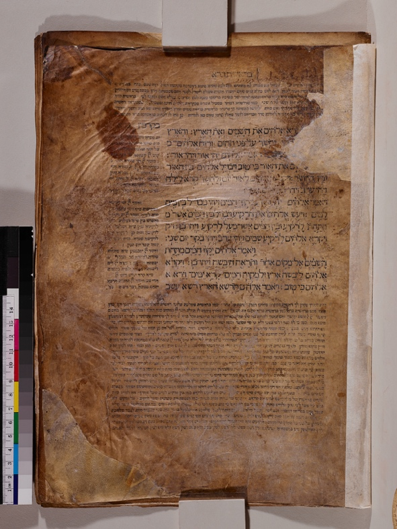
The second approach can be found in the writings of Rashi (1040–1105), Ibn Ezra (1089–1167), Rashbam (1085–1158), and many other Jewish interpreters. It is perhaps best seen in the translation of contemporary Jewish Bible scholar Everett Fox: “At the beginning of God’s creating of the heavens and the earth…”
According to this approach, the word בְּרֵאשִׁ֖ית is in the construct state, which adds the word “of.” בְּרֵאשִׁ֖ית is not “In the beginning” alone, but rather “In the beginning of” this one particular event.
The greatest challenge to this approach is the grammar of Hebrew noun chains, and here things get tricky. Nouns in the construct state (סְמִיכוּת) such as בְּרֵאשִׁ֖ית are typically followed by nouns or other noun-like words (an example: בְּנֵי יִשְׂרָאֵל “the children of Israel”). This is standard for Biblical Hebrew and occurs tens of thousands of times in the Tanakh.
The word בָּרָ֣א, however, is a finite verb—not a noun—and should not follow a construct noun such as בְּרֵאשִׁ֖ית. The nonsensical translation would be, “In the beginning of, God created…” The beginning of what exactly? To give an English equivalent, “The breakfast of champions” would become “The breakfast of the champion ate.” It does not make sense.
Rashi, Ibn Ezra, and Rashbam all solve this problem by pointing to Hosea 1:2, which also has a finite verb in a noun chain: תְּחִלַּ֥ת דִּבֶּר־יְהוָ֖ה בְּהוֹשֵׁ֑עַ. Here דִּבֶּר “he spoke” is treated as an Infinitive Construct בְּרֹא, translated as a gerund: “In the beginning of the Lord’s speaking to Hosea.” Hosea 1:2 is remarkably close to בְּרֵאשִׁ֖ית בָּרָ֣א אֱלֹהִ֑ים, “In the beginning of God’s creating the heavens and the earth.”
Depending on how one counts, there are up to thirty more examples of noun chains with finite verbs (e.g., Gesenius-Kautzsch-Cowley, §130d).
Despite the occurrences, I do not find this explanation entirely satisfying. As two grammarians plainly put it, “This construction is extremely rare.” (Waltke and O’Connor, Biblical Hebrew Syntax, §9.6e). Just how rare is “extremely rare”? There are approximately 1,000 regular noun chains for every exception. Would the book of Genesis begin with such unusual language without any obvious benefit? Are readers meant to have their Biblical Hebrew grammars open just to understand the very first words?
The payoff for taking Interpretation #2 is immense. One is now free to explore things that existed before creation. The Talmudlists seven things that existed before Genesis 1:1 including the Torah, repentance, and the Garden of Eden (Pesachim 54a). Scientific readers might add the preexistence of space, time, matter, energy, and the universe itself. There is no problem of creation from nothing because this is not necessarily the first creation.
My Approach
Every year, I re-evaluate these two translations. Some years I favor one; some years I favor the other. At times, both are appealing, and at times, both are difficult to accept.
Currently, I favor Interpretation #1 “In the beginning, God created the heavens and the earth.” It is not perfect, and it is by no means proven.
This translation grasps the magnitude of the moment. Genesis 1:1 is not meant to be a random verse tucked away inside a grammar book. It is not meant to upend standard Biblical Hebrew. It is meant to be simple, powerful, and awe-inspiring. It is introducing you to God. This is not just another beginning this is the beginning, and hence the beginning of everything as we know it. Genesis 1:1 opens boldly and proclaims: “In the beginning,”—yes, the beginning—“God created the heavens and the earth.
Invitation
As Rashi famously put it, אין המקרא הזה אומר אלא דורשני “This verse says nothing but, ‘Interpret me!’” If you have read this far, you probably have some of your own ideas about Genesis 1:1 and other verses in Tanakh. I invite you to join me at the Biblical Hebrew Program at the Jewish Theological Seminary, where we look forward to learning with you and learning from you.
[1] (Jer. 26:1; 27:1; 28:1; 49:34; also Hos. 9:10)
[2] For examples of רֵאשִׁית “beginning” in the absolute state, see Lev. 2:12; Deut. 33:21; Is. 46:10; Psa. 105:36; Neh. 12:44


