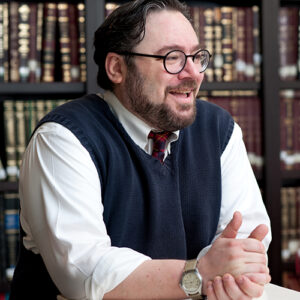
Counting as a Spiritual Practice: Bemidbar and the Road to Shavuot
May 30, 2025 By Marcus Mordecai Schwartz | Commentary | Bemidbar | Shavuot
Every year, without fail, we read Parashat Bemidbar just before the festival of Shavuot. This liturgical pairing is more than a scheduling convenience; it offers a profound insight into the spiritual architecture of Jewish time. Bemidbar begins with a count: “Take a census of the whole Israelite community by their clans, by ancestral houses, listing the names, every male, head by head” (Num. 1:2; בְּמִסְפַּר שֵׁמוֹת לְגֻלְגְּלֹתָם). This act of counting seems administrative on the surface, but like so much in the Torah, its spiritual depth lies beneath.
Read More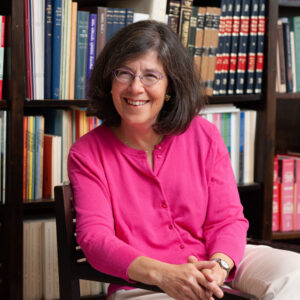
Who Shall Cross: A Talmudic Reimagining of the Passover Narrative
Mar 24, 2025 By Jan Uhrbach | Public Event video | Pesah
In preparation for your seder, Rabbi Jan Uhrbach, Director of the Block / Kolker Center for Spiritual Arts, led a thought-provoking session, exploring a Talmudic story that reflects key themes of Passover, raising profound questions about free will, obligation, and inclusion. How do we determine our purpose? Who are our fellow travelers, and what do we owe them? This discussion offers new insights to bring to your Passover table.
Read More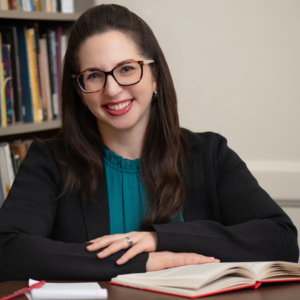
The Day Is Short, but Our Story Is Long
Mar 14, 2025 By Yael Landman | Commentary | Ki Tissa | Purim
Within the book of Exodus, certain details link the golden calf story with the account of revelation at Sinai. Mount Sinai is the site of the Israelites forming a covenant with God, but it is also the site of them violating that covenant. It’s where God tells Moses to go up and receive the stone tablets, and where Moses carries down those tablets before he witnesses the Israelites partying and hurls the tablets to the ground. The word kol (which we might translate “sound,” “noise,” or “thunder”) recurs in the context of God’s revelation, only to recur in the account of the golden calf with respect to the Israelites’ ill-advised festivities. In these ways, the golden calf story is inextricably connected to the initial moment of revelation and lawgiving at Sinai, even as it threatens to destroy that covenantal foundation.
Read More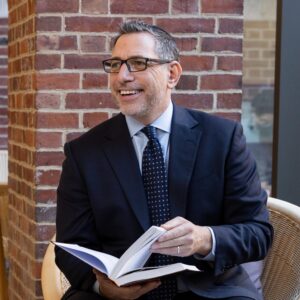
The Masks of Doubt: Exploring Purim, Uncertainty, and the Hidden Divine
Mar 10, 2025 By Rabbi David Ingber | Public Event video | Video Lecture | Purim
Purim is a celebration of uncertainty—a holiday that invites us to embrace the hidden, the paradoxical, and the unknown. Join Romemu’s Rabbi David Ingber for a deep dive into the mystical themes of Purim, where doubt becomes a gateway to faith and masks reveal more profound truths. Together, we explore how the story of Purim reflects the concealment of the Divine, the role of chance and chaos in our lives, and the profound spiritual lessons that arise when we step into the space of not knowing. Discover how Purim challenges us to find meaning and connection amid mystery.
Read More
Sacred Words in Liturgy and Life
Oct 11, 2024 By Shira Billet | Commentary | Rosh Hashanah | Yom Kippur
Human communication, the commitment to taking words seriously and to viewing the words we write and speak as serious commitments, has become even more imperiled in an age where our words are mediated through the technologies of social media, artificial intelligence, and the crippling social phenomena of political polarization and widespread mistrust.
Read More
Crying With God
Oct 1, 2024 By Gordon Tucker | Commentary | Rosh Hashanah
In an essay some years ago, the Israeli teacher and poet Sara Friedland ben Arza asked us to focus on the prayer Hayom Harat Olam (Today the World Stands as at Birth) in the Rosh Hashanah liturgy. She asks why, in a religious tradition that moved away so notably from ancient mythological motifs, is there a rare reference to the “birthing” of the world? And why is that short prayer placed just after the shofar
is blown?
Shemini Atzeret, Rain, & Resurrection
Sep 23, 2024 By Mychal Springer | Public Event video | Video Lecture | Shemini Atzeret
In this session, we explore the unique themes of the Shemini Atzeret and hold them in dialogue with this moment of brokenness, the weight of war, the complexities of peoplehood, and the ongoing need for healing and rebirth.
Read More
Shattering Our Idols
Sep 20, 2024 By Matthew Berkowitz | Commentary | Ki Tavo | Rosh Hashanah
Judaism tantalizes the senses with the sights, sounds and fragrant smells that characterize its observance. Rosh Hashanah is certainly one of those times when we are overwhelmed by the richness of Jewish symbolism. At the heart of our New Year observances, however, lies the piercing cry of the shofar. What is the meaning of the shofar?
Read More