Blood, Water, and Desire
Aug 30, 2019 By Marcus Mordecai Schwartz | Commentary | Re'eh
These days most observant Jewish women in North America do not soak and salt their own meat. What was once a common and familiar marker of Jewish kitchens, and a deeply gendered rite of passage for young Jewish women, has been professionalized and sequestered away from the eyes of most of those who cook and eat kosher meat. In the United States, the act itself is often performed by mostly non-Jewish workers under the supervision of Orthodox rabbis—a largely male caste. The sounds, sights, and smells of this “kashering” process as performed today would seem strange, unfamiliar, and perhaps even repulsive to most Jewish North American women.
Read More
The Soul of the Stranger: Reading God and Torah from a Transgender Perspective
Nov 20, 2018 By Joy Ladin | Public Event audio
Reading some of the best-known Torah stories through the lens of transgender experience, Joy Ladin explores fundamental questions about how religious texts, traditions, and the understanding of God can be enriched by transgender perspectives, and how the Torah and trans lives can illuminate one another.
Read More
The Changing Face of the American Jewish Family
Nov 19, 2018 By Leonard A. Sharzer
Co-published by the Louis Finkelstein Inistitute for Religious and Social Studies and JTS Press, and edited by Rabbi Leonard Sharzer and Rabbi Burton Visotzky.
Read MoreIn the American Jewish community of the 21st century, as in the broader American community, the meaning of being a family is changing, often at a pace that communal institutions have difficulty keeping up with.
The Legacy of Sodom
Oct 26, 2018 By Steven Philp | Commentary | Vayera
Following the destruction of Sodom and Gomorra, Lot and his two daughters flee to the mountains above Zoar. They are stricken with fear, having witnessed the devastation of the two cities. They grieve the dead, a vast number that includes Lot’s wife, the mother of the two women, who—having paused to look back toward Sodom—was turned into a pillar of salt (Gen. 19:23–26). It is necessary to understand the emotional frame within which they are operating, as it underlies the following narrative.
Read More
Would Our Mother Forget Us?
Aug 3, 2018 By Benjamin D. Sommer | Commentary | Eikev
This Shabbat is the second of the seven Shabbatot of consolation that follow Tishah Be’av, and, as on all these Shabbatot, its haftarah comes from the last part of the book of Isaiah. These are highly appropriate passages to console us after we commemorate the destruction of Jerusalem, because they were written by a prophet who lived in exile roughly a generation after the Babylonian empire demolished the Jerusalem Temple, destroyed the Judean state, and exiled much of its population.
Read More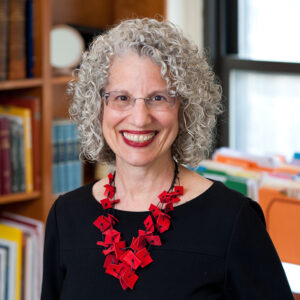
Power and Gender in the Wilderness
Jun 15, 2018 By Shuly Rubin Schwartz | Commentary | Korah
Last month’s volcanic eruptions in Hawaii are just the most recent example of the violent displacement and destruction that natural disasters can cause. Looking at the photos, I was grateful to learn that no lives had been lost, but I couldn’t help thinking of the fate of Korah and his followers for spurning the Lord: “The earth opened its mouth and swallowed them up with their households” (Num. 16:32). This strange parashah has always puzzled and disturbed me. What exactly did Korah and his followers do to merit such swift, cruel divine judgment?
Read More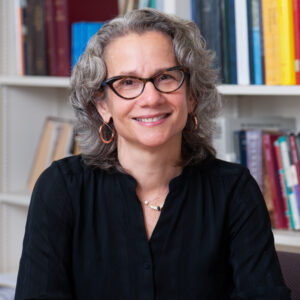
Women of Faith
Nov 3, 2017 By Amy Kalmanofsky | Commentary | Vayera
Abraham passed God’s litmus test of faith. God commands Abraham to take his beloved son Isaac to the land of Moriah and kill him. Faithful Abraham does not hesitate. Genesis 22 may be the most loved and hated story in the Torah by every reader, no matter what their faith. Certainly, generations of Jews have struggled to make sense of this story, and of the father and God it portrays.
Read More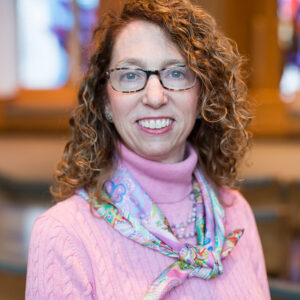
From Sarah to Mrs. Portnoy
Oct 10, 2017 By Marjorie Lehman | Commentary
From Sarah in the Bible to Philip Roth’s Mrs. Portnoy, images of the mother have been a hallmark of Jewish culture. Hallowed by some, excoriated by others—mothers have been depicted, on the one hand, as all that is good and sacred in the Jewish family, and, on the other, and far more frequently, as overbearing, guilt-inducing, and interfering.
Read More