Empathy for the Other
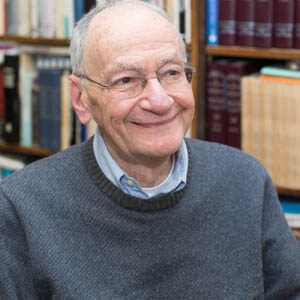
Feb 7, 1998 By Ismar Schorsch | Commentary | Beshallah | Pesah
It took God but six days to create the world; it took my mother at least twice that long to prepare for Passover. At the seder on the first night she would often doze contentedly from a mild case of exhaustion. Everything sparkled; nothing was out of place. The beauty of the table and the aromas coming from the kitchen attested to her toil and artistry. By turning ritual into a fine art, she enhanced the presence of God at our family seder.
Read More
A Stranger to Israel
Jan 17, 1998 By Ismar Schorsch | Commentary | Shemot
I find the figure of Moses endlessly fascinating. He is the founder of Israel and its greatest prophet, a sculptor who works with human life, transforming a clan into a nation, a motley multitude into a polity of high moral order. Seized by God, he labors to complete the social vision first glimpsed by Abraham. As his ancestor abjured the religion of Mesopotamia, he rejects the religion of Egypt. In their stead, he voices the full scope of monotheism and lends it both cultic and political form. The measure of the man lies in the odds against him: the might of the Egyptian empire, the unheroic nature of a people impaired by slavery and his status as a stranger to Israelite society.
Read More
A Strategy of Inclusion
Nov 17, 2001 By Ismar Schorsch | Commentary | Toledot
The disputes over water rights between Isaac and the King of Gerar have a contemporary ring. Beyond the current Intifada looms the persistent shortage of water that threatens Israelis, Palestinians and Jordanians alike. With the Kinneret at its lowest ebb ever and aquifers depleted and increasingly polluted, the region’s bitter adversaries are at least united in their hopes for a rainy winter.
Read More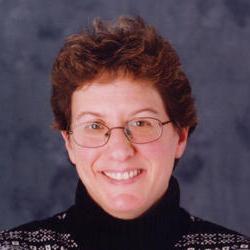
The Mitzvah of Welcoming Guests
Nov 10, 2001 By Melissa Crespy | Commentary | Hayyei Sarah
On our honeymoon in Jerusalem, almost ten years ago, my husband and I decided to attend Shabbat morning services at a Conservative minyan in the Baka neighborhood of the city. We didn’t know anyone personally in theminyan , but we had heard the davening was nice, intimate and egalitarian. We were not disappointed.
Read More
Learning Through Torah
Nov 3, 2001 By Lewis Warshauer | Commentary | Vayera
The five books that form the most sacred writings of the Jews are called by various names in various languages. Only the Hebrew name conveys exactly the content and not just the structure of these books. “Torah” means teaching. One of the aspects of the Torah that has made it so compelling for so many people over so long a time is that it not only is a teaching but teaches about teaching. The Torah, in its own terms, is both God’s teaching for human beings and the handbook for people to teach each other.
Read More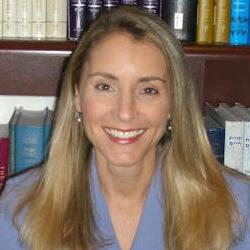
The Ongoing Processes of Creation
Oct 27, 2001 By Lauren Eichler Berkun | Commentary | Lekh Lekha
Parashat Lekh L’kha is the story of God’s covenant with Abraham and, by extension, with all future Israelite generations. The climax of this story is the mitzvah of circumcision. Few mitzvot in our tradition have elicited the enduring commitment and unwavering observance of the majority of our people as has the ritual of circumcision. Few mitzvot have yielded the intensity of emotion and fascination which pervades any brit milah.
Sukkot-A Festival of Water
Oct 2, 2001 By Ismar Schorsch | Commentary | Sukkot
The joy of Sukkot is offset by a pervasive concern about water. As we give thanks for the harvest just completed, we begin to worry about the bounty of the next one. But be mindful: it is the rainfall in Israel of which we speak.
Read More
Darkness As Threat & Haven
Jan 19, 2002 By Lauren Eichler Berkun | Commentary | Bo
In an emotional television interview, the last person rescued alive from the World Trade Center described her panic when she saw that night had arrived while she was still trapped beneath the wreckage. Once this woman realized that the light had faded from between the slabs of concrete and metal and that it was truly dark outside, she lost hope of ever being rescued.
Read More