Transcending “Soulless Piety”
Mar 2, 2002 By Ismar Schorsch | Commentary | Ki Tissa
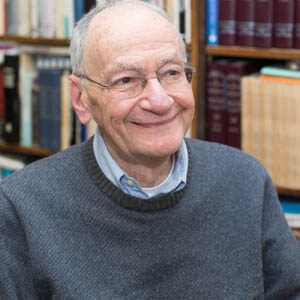
Writing in the week of my father’s yahrzeit, I am drawn to reflect again on some of the spiritual heirlooms he left behind. One of my favorites is the piquant term “soulless piety” which he coined to describe an all too common phenomenon that results when ritual observance loses its emotional charge and we find ourselves just going through the motions. Judaism is a religion predicated on behavior rather than belief; compliance outranks spontaneity in its scale of values.
Read More
Reconciling the Generations
Mar 26, 1994 By Ismar Schorsch | Commentary | Shabbat Hagadol | Tzav | Pesah
My father died in 1982, some five weeks before Passover. Till then I had never conducted a seder, except for the two years I spent as an army chaplain at Fort Dix, New Jersey and Taigu, South Korea. The custom in the Schorsch family since time immemorial had been to celebrate the seders in the home of my parents. Each Passover my older sister and I, with spouses and children, would happily converge on that sacred space to hear our father sing, read, and talk his way through the Haggadah and to savor our mother’s delicious Passover menu. My mother died the following year and my sister and I, awash in memories, are now the older generation. Ten years later our families are larger and more widely dispersed and the rendezvous changes, but the tradition of an inclusive family seder has not unraveled. I have assumed my father’s mantle.
Read More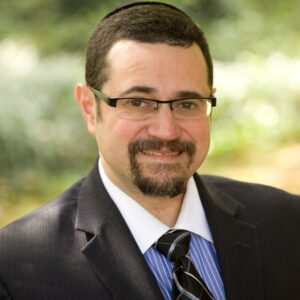
“A Place for Your Stuff.”
Feb 16, 2002 By Joshua Heller | Commentary | Terumah
I’ve always appreciated a monologue by George Carlin on the topic of “a place for your stuff.” The comedian describes the way we accumulate physical things in our homes and basements. When we travel, we take a smaller version of our “stuff” with us.
Read More
How We Strengthen Each Other
May 17, 1995 By Ismar Schorsch | Commentary | Behukkotai
From the messianic vision of a society where divine sovereignty preserves economic equality for all, we descend to the mundane subject of funding the sanctuary. The book of Leviticus ends where it began, with the Tabernacle as a sacred institution that needs to be maintained annually. It is a subject that arouses my sympathy. I can readily testify that the holy lacks the capacity to sustain itself. It depends on the commitment and generosity of many in society who appreciate its unique value.
Read More
Heavenly Justice
Feb 9, 2002 By Lewis Warshauer | Commentary | Mishpatim
The other day, I was mentioning the wide impact of the books of Rabbi Harold Kushner, and the person I was talking to said, “Oh yes When Good Things Happen to Bad People.” We laughed, because the actual title of the book is When Bad Things Happen to Good People. It is the suffering of good people — or, at least, innocent people — that is so troubling and that accounts for the great popularity of books that address this topic.
Read More
To Save a Life
May 6, 1995 By Ismar Schorsch | Commentary | Kedoshim
Passover this year was not a festival of freedom for Alisa Flatow of West Orange, New Jersey. The Brandeis junior was rendered brain dead by a piece of shrapnel on April 9, when a Palestinian suicide bomber drove his van of explosives into a busload of Israelis near Kfar Darom in the Gaza Strip. But before her father Stephen allowed his daughter to be taken off the respirator in Beersheva Hospital, he snatched the last measure of life from her limp body: her undamaged organs and corneas were removed “as a lasting contribution to the people of Israel.”
Read More
A Leadership Checklist
Feb 2, 2002 By Joshua Heller | Commentary | Yitro
This week we read parashat Yitro, whose primary focus is the revelation at Sinai, and the Jewish people’s preparation for that unique event in the history of the Jewish people. Aside from several spiritual and ritual preparations, the creation of a effective system of leadership is an essential practical component of the readiness for this great event.
Read More
“After the Death…”
Apr 29, 1995 By Ismar Schorsch | Commentary | Aharei Mot
The name of this week’s parasha, “After the Death,” captures our state of mind as Americans. In the wake of the carnage in Oklahoma City we fear acts of terrorism more than acts of nature. An earthquake or hurricane can be devastating, but never vicious. As it smashes our pride, an act of nature fills us with awe, not loathing or revulsion. In one horrifying episode, we realize again the stark truth that for all of humanity’s daunting conquests of nature, we have barely begun to conquer ourselves. Americans are as vulnerable to the demented fury of the allegedly aggrieved as anyone else.
Read More