
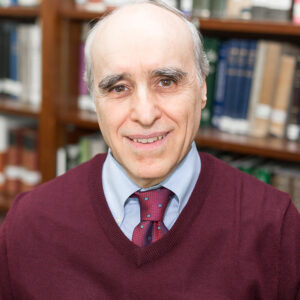
Why Did Moses Listen to Yitro’s Advice?
Feb 17, 2017 By Walter Herzberg | Commentary | Yitro
Yitro heard that God had done wonders for Moses and Israel and had redeemed them from Egypt. He journeyed from Midian with Moses’s wife and sons to the Israelites’ encampment at the mountain of God. We hear nothing of Moses’s reunion with his wife and children, but rather a detailed account of Yitro’s organizational advice to Moses.
Read More
Crossing the Sea Every Summer
Feb 10, 2017 By Jacob Cytryn | Commentary | Beshallah
As a camp director, Beshallah speaks to me in certain rather obvious ways. It is focused on the power of song—both the Song of the Sea (Exodus 15:1-18) and Deborah’s Song (Judges 5:1-31) in the haftarah—and camp is nothing if not filled with song and music. Experience, similarly, is central to the entire endeavor, especially as recounted in the Passover seder. And Beshallah also represents the birth of possibility, the beginning of an independent community. In other words, this week’s parashah encapsulates the basic work we in the camp business embark on every summer.
Read More
“Us” and “Them”
Feb 3, 2017 By Paula Rose | Commentary | Bo | Pesah
“They tried to kill us, we won, let’s eat.”
This tongue-in-cheek summary of most Jewish holidays applies most strongly, perhaps, to the Passover Seder. We retell the story of the Exodus from Egypt, we praise and thank God for redeeming us, and then we eat a festive meal. Cast in that light, the story of the Exodus seems so straightforward. The Israelites are innocent victims, somehow pawns in God’s larger plan. The Egyptians, and especially Pharaoh, are wicked, oppressing the Israelites with forced labor.
Read More
Precious Sufferings: The Dynamics of Transformation
Jan 27, 2017 By E. Noach Shapiro | Commentary | Va'era
Listening to Moses try and wrap his mind around becoming an agent of change and transformation for the Israelites and the Egyptians is, at times, painful. As we eavesdrop on the early exchanges between God and Moses, a raw intimacy between Moses and us emerges. In his back and forth with God about his assignment to be God’s voice in Egypt, Moses immediately reveals his deep insecurity: “Who am I that I should go to Pharaoh and free the Israelites from Egypt?!” (Exod. 3:11).
Read More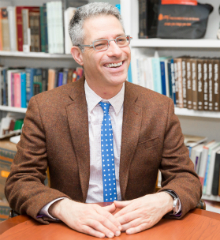
The Doing that Comes from Knowing
Jan 20, 2017 By Joel Alter | Commentary | Shemot
Among the undercurrents in our portion are the consequences of forgetting and remembering on rescue and liberation, and of seeing and knowing on oppression and death. The Israelites’ fortunes are transformed, and transformed again, so rapidly in our portion’s opening, it seems the Torah wants to signal the tenuousness of circumstances that seem secure. The Torah goes to the trouble of naming the eleven sons of Jacob who relocate to Egypt (Joseph already having been there) and reports that their entire generation passed away. In the space of 11 words—and seemingly no time at all—their 70-member extended family explodes in number and becomes an innumerable presence to be reckoned with in Egypt (Exod. 1:1-7).
Read More
Pictures at a Benediction: Envisioning Jacob’s Blessing of his Sons
Jan 13, 2017 By Eliezer B. Diamond z”l | Commentary | Vayehi
The Tanakh is notoriously parsimonious when it comes to providing visual details. They are supplied only when they are germane to the biblical narrative. Was Isaac good-looking? We are not told. But we are told that Joseph was, because it explains why Potiphar’s wife cast her eyes upon him. Was Moses bald? We will never know. But it is made clear that the prophet Elisha was; because of this, he was taunted by jeers: “Go away, baldhead! Go away, baldhead!” This is the beginning of the brief but horrifying story in which Elisha curses the children who mock him, who are then mauled by bears emerging from the forest).
Read More
In Pharaoh’s Court
Jan 6, 2017 By Arnold M. Eisen | Commentary | Vayiggash
Our attention as readers of Vayiggash is naturally riveted by the dramatic events in the first half of the portion: Joseph’s self-revelation to his brothers; the family of Jacob coming to dwell in Egypt; and Jacob’s declaration that he “must go and see [Joseph] before I die” (Gen. 45:28). What happens later in Vayiggash, however, is to my mind of far greater significance for the future of the children of Israel and the people of Egypt alike. The second half of the portion bears truths about Jewish history and destiny as relevant now as ever before.
Read More
The Unpardonable Sin
Dec 30, 2016 By Marc Gary | Commentary | Miketz
Among baseball aficionados, the name of Ralph Branca is universally known. Branca, who died at the age of 90 at the end of November, was famous (or, for many, infamous) for being the pitcher who gave up the “Shot Heard Round the World.” In the final game of the 1951 National League championship, the Brooklyn Dodgers were leading 4-2 in the bottom of the 9th inning with two men on base when the New York Giants’ power hitter, Bobby Thomson, came to the plate to bat. The Dodgers called on Branca to save the game, but his second pitch flew off of Thomson’s bat and over the green wall in left center field for a home run.
Read More

