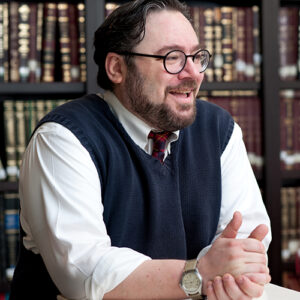
Blood, Water, and Desire
Aug 30, 2019 By Marcus Mordecai Schwartz | Commentary | Re'eh
These days most observant Jewish women in North America do not soak and salt their own meat. What was once a common and familiar marker of Jewish kitchens, and a deeply gendered rite of passage for young Jewish women, has been professionalized and sequestered away from the eyes of most of those who cook and eat kosher meat. In the United States, the act itself is often performed by mostly non-Jewish workers under the supervision of Orthodox rabbis—a largely male caste. The sounds, sights, and smells of this “kashering” process as performed today would seem strange, unfamiliar, and perhaps even repulsive to most Jewish North American women.
Read More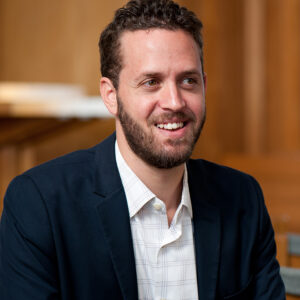
A Leader’s Limits
Aug 16, 2019 By Hillel Gruenberg | Commentary | Va'et-hannan
The very title of this week’s parashah, Va’et-hannan (“and I pleaded”), presents the larger-than-life figure of Moses in a humbling place. Before sharing with the people fundamental elements of the faith that they have taken on and the civilization that they aspire to become, Moses confessed to them that his exclusion from the destined land of promise was against his will, and in spite of emotional pleas to God (Deut. 3:23–26). The man who chose to forgo the trappings of a life among the royal Egyptian elite to lead an at-times ungrateful band of liberated slaves through the desert would ultimately be barred from tasting the final fruit of his sacrifice.
Read More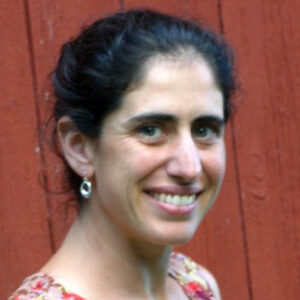
A Land That’s Too Good?
Aug 23, 2019 By Nicole Wilson-Spiro | Commentary | Eikev
I received a call one evening this summer from the doctor at Ramah Palmer. My son had tripped, and she wanted permission to bring him off camp the next day to have his swollen wrist x-rayed. Of course! But by the next morning I had convinced myself that I should pick him up from camp and bring him to our local orthopedist. I even convinced my husband that this would be best for insurance, since our orthopedist is in our insurance network. Unfortunately for me, the camp’s local hospital also turned out to be in our network. Truthfully, I wanted him to come home because I wanted to see him with my own eyes to make sure he was OK. My son is eleven, and he was hurt badly enough that he needed x-rays.
Read More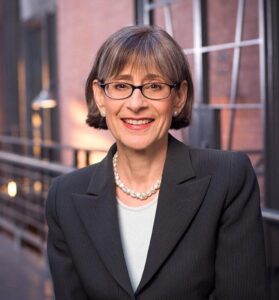
Hope Amid Destruction
Aug 9, 2019 By Sara J. Bloomfield | Commentary | Devarim | Tishah Be'av
Tishah Be’av, which begins immediately after this Shabbat, is a moment on the Jewish calendar when we pause to reflect on the nature, impact, and significance of destruction. I’ve spent 33 years working at the United States Holocaust Memorial Museum, so naturally I’ve thought intensely about what the catastrophic destruction of European Jewry means for me, for Jews, and for humanity.
Read More
Boundaries on the Move
Aug 2, 2019 By Benjamin D. Sommer | Commentary | Masei | Mattot
Every week, we read a parashah from the Torah during our Shabbat morning service, and then the beginning of the next parashah during our Shabbat afternoon service. The result of reading from two parashiyot on a single day can be surprising. This week, as we read first from Masei, the last parashah of Numbers, and then from Devarim, the first from Deuteronomy, we can hear an ancient debate about an issue that remains deeply contested: where to draw the line.
Read More
In the Face of Violence, a Covenant of Peace
Jul 26, 2019 By Marc Gary | Commentary | Pinehas
Karen Armstrong, the scholar of religion and popular author of such works as The History of God, relates that wherever she travels, she is often confronted by someone—a taxi driver, an Oxford academic, an American psychiatrist—who confidently expresses the view that “religion has caused more violence and wars than anything else.” This is quite a remarkable statement given that in the last century alone, tens of millions of people have been killed in two world wars, the communist purges in the Soviet Union and its satellites, and the Cambodian killing fields of the Khmer Rouge, none of which were caused by religious motivations.
The Sorcery in Our Midst
Jul 20, 2019 By Jonathan Milgram | Commentary | Balak
In this week’s Torah reading, Parashat Balak, we read a riveting story of the diviner, Balaam, who was commissioned by Balak, king of Moab, to curse the Israelites (Num. 22:2–24:25). Balak’s goal was to weaken the Israelites, encamped at the borders of Moab, so that he could defeat them in battle. Balaam is richly and, at times, inconsistently described in our detailed narrative. Part of the story’s complexity is due to the historical fact that two narratives about Balaam were conflated in the finally redacted text of the Bible.
Read More
Handling Our Anger
Jul 12, 2019 By Abigail Uhrman | Commentary | Hukkat
Among the many stories in Parashat Hukkat, perhaps the most discussed is when Moses, in response the Israelites’ grievances, is instructed by God to “order the rock to yield its water.” Moses, instead, strikes the rock twice with his rod. Water comes forth, but God rebukes Moses for disobeying his instructions: “Because you did not trust Me enough to affirm my sanctity in the sight of the Israelite people, there you shall not lead this congregation into the land that I have given them” (Num. 20:2–13).
Read More