God’s Currency
Feb 12, 2021 By Gordon Tucker | Commentary | Mishpatim | Shabbat Shekalim
The arrival of Parashat Shekalim (plural of shekel) each year is what might be called the liturgical “rite of spring” in the Jewish tradition, signaling that Pesah is six–seven weeks away, and preparations (spiritual and physical) for the great festival are very soon to begin. This year, it will be observed on Rosh Hodesh Adar, when the weekly reading will be Parashat Mishpatim.
Read More
Can God Prohibit an Emotion?
Feb 5, 2021 By Sarah Wolf | Commentary | Yitro
Part of my current research focuses on how human emotions are discussed and legislated in the Talmud and other ancient rabbinic texts, and so the last of the Ten Commandments (as counted in the Jewish tradition) raises for me some fundamental questions.
Read More
Speaking of Exodus: Beshallah
Jan 29, 2021 By David G. Roskies | Commentary | Beshallah
My mother, Vilna-born, spoke a very idiomatic Yiddish. When she wanted to convey how delicious something was she would say: “ketsa-PIKH-is bi-DVASH.” Although I studied Sefer Shemot in seventh grade, in a Yiddish day school, it wasn’t until my first year as a member of Havurat Shalom, where we read, translated, and subjected the weekly parashah to open debate, that I was able to identify the source of this delicious expression: “The house of Israel named it manna; it was like coriander seed, white, and it tasted like wafers in honey” (Exod. 16:31).
Read More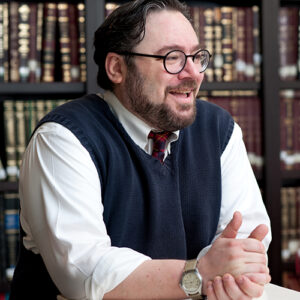
To Destroy and to Overthrow, to Build and to Plant
Jan 15, 2021 By Marcus Mordecai Schwartz | Commentary | Va'era
For me, this is one of the most troubling passages in the Torah. First, God assigns Moses and Aaron the task of speaking to Pharaoh, explicitly calling Aaron a prophet. Presumably, a prophet tells people what could come to pass, so that they have the opportunity to repent their sins and turn toward God.
Read More
Sworn to Sacred Service
Jan 22, 2021 By Daniel Nevins | Commentary | Bo
The most powerful ritual in American life is the oath of office administered to our President. The text is prescribed by the Constitution, but its choreography is a matter of convention. Most Presidents have placed their left hand on a Bible as they raise their right and swear to execute their office faithfully, to “preserve, protect and defend the Constitution of the United States.” This ritual signals solemnity and anticipation for the work awaiting our new leader.
Read More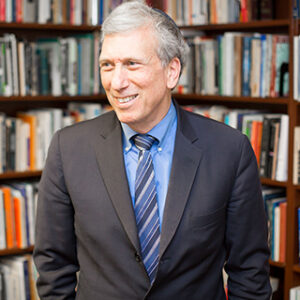
Guided by the Covenant
Jan 8, 2021 By Arnold M. Eisen | Commentary | Shemot
There is a wonderful midrash in Pesikta Derav Kahana that suggests a profound relationship between the arrival of the manna described in Parashat Beshallah and the giving of the Ten Commandments recounted in the following parashah, Yitro. Just as the manna tasted different to each and every Israelite, Rabbi Yosi teaches, so each was enabled according to his or her particular capacity to hear the Divine Word differently at Sinai (12:25).
Read More
In Every Place
Jan 1, 2021 By Rafi Cohen | Commentary | Vayehi
Just about anyone who has moved homes will agree that sometimes one place will take on outsize influence in our lives. Indeed, even environments in which we’ve only briefly resided can have a resounding impact on our upbringing and outlook.
Read More
A Song of Hope
Dec 25, 2020 By Burton L. Visotzky | Commentary | Vayiggash
In a curious foreshadowing of the book of Exodus, in this week’s Torah reading (Gen. 46:8) we read, “Ve’eleh shemot—These are the names of the children of Israel who came into Egypt . . .” This is verbatim the same report as the opening verse of the book of Exodus. But there, the names are limited only to Jacob’s actual sons, and the full enumeration of their own offspring is absent.
Read More