
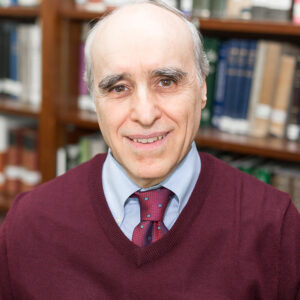
Rashi’s God and Ibn Ezra’s God
May 16, 2009 By Walter Herzberg | Commentary | Behar | Behukkotai
I am in the midst of reading Michael Fishbane’s recently published book Sacred Attunement: A Jewish Theology. Especially compelling, from my perspective, is the emphasis he places on experiencing the act of biblical interpretation which “is understood to foster diverse modes of attention to textual details, which in turn cultivate correlative forms of attention to the world and divine reality” (page xi). To quote my student Rachel Isaacs (rabbinical student in my Advanced Exegesis class), “Fishbane articulates most clearly the reason why rabbinical students are engaged in the types of learning they are. Close reading [of the Torah text] is not a useless skill or a rite of passage. It forces us to have an intimate, thoughtful, and challenging relationship with the text. As a result, we acquire new revelations through the process of encountering the text as much as we do from the content itself.”
Read More
Developing True Leadership
May 9, 2009 By Matthew Berkowitz | Commentary | Emor
Ten years ago, when I began teaching for The Jewish Theological Seminary, I had the honor of teaching in the office of a prominent New York businessman who would go on to become a political visionary and leader. When I was introduced to this executive as “Rabbi” Matthew Berkowitz, he responded by wagging his finger at me, remarking, “You people [read: clergy] are responsible for every conflict in this world.” Though taken aback by his opening salvo, I composed myself and responded, “With all due respect, the problem is not the message but the messenger; and you have yet to meet a good messenger.” While I was proud of my comeback, I also understood the rationale and frustration underlying his comment.
Read More
Caring for Our Parents
May 9, 2009 By Judith Hauptman | Commentary | Aharei Mot | Kedoshim
The third verse of Parashat K’doshim says, “Ish imo v’aviv tira’u” (One should revere his mother and father) (Lev. 19:3). The same mandate appears twice as the fifth commandment, “Kabed et avikha v’et imekha” (Honor your father and your mother) (Exod. 20:12; Deut. 5:16). Honoring parents was considered a virtue in the Roman world. Parents took care of their children, and children were expected to return the favor when parents grew old. But Rome did not create a legal obligation to care for parents, and a child who refused to do so could not be compelled by the courts.
Read More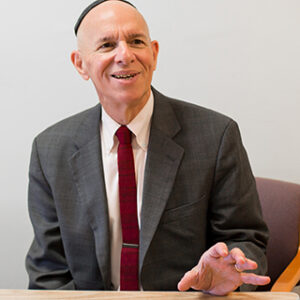
Realizing Our Human Potential
Apr 25, 2009 By Alan Cooper | Commentary | Metzora | Tazria
This week’s double dose of purity laws is unlikely to top anyone’s list of favorite Torah portions. While the laws may be discomfiting and obscure, however, they also are fundamental to an understanding of biblical theology and anthropology, and they convey a message that transcends their particular details.
Read More
Sin, Ritual Pollution, and Divine Alienation
Mar 28, 2009 By David Hoffman | Commentary | Vayikra
Why begin a young child’s Torah education with something as remote from his or her own life experience as sacrifices and Temple pageantry? Leviticus is difficult for adults to find relevant, let alone children. Give young students the drama of the Exodus and the moment of the Covenant at Sinai. Take children through the family narratives of Genesis that might captivate their imagination as they navigate their own familial dynamics as sons and daughters and brothers and sisters. Teach them the Book of Deuteronomy, which amounts to a review of the entire Torah. But to what ends might we throw them into a world of entrails and gore, the burning of frankincense, the sprinkling of blood, and the choreographies involved with the various sacrificial offerings?
Read More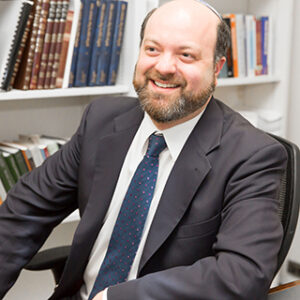
Preparing Ourselves to Receive Shabbat
Mar 20, 2009 By Eitan Fishbane | Commentary | Pekudei | Vayak-hel
“On six days work may be done, but on the seventh day you shall have a Sabbath of complete rest, holy to the Lord . . .”
So begins the speech of Moses to the Israelites in Parashat Va-yakhel. But the text almost immediately shifts to discuss the intricate details of the Mishkan (Tabernacle) and its construction at great length, neglecting any elaboration on the opening commandment. This move leaves the reader wondering why Shabbat was mentioned here at all! Indeed, this strange juxtaposition is remarkably similar to last week’s parashah (Ki Tissa). In that case, the Shabbat commandment is placed after remarks about the Mishkan—though there too its mention is brief and seemingly out of place.
Read More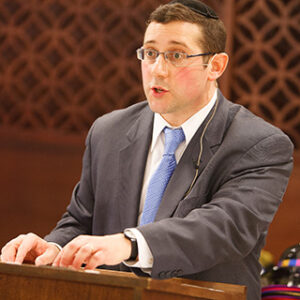
The Desire for Power
Jun 27, 2009 By Jonathan Milgram | Commentary | Korah
This week’s Torah reading, Korah, has a central theme: encroachment on the Tabernacle and its related punishments. No fewer than four separate uprisings are recorded in our reading, all associated with Korah: (1) the Levites against Aaron and Moses, (2) Dathan and Aviram against Moses, (3) the heads of the tribes against Aaron, and (4) the whole community against Moses and Aaron. The punishments for at least two of these rebellions are clearly documented: Dathan and Aviram are swallowed up by the ground and the tribal leaders are burned by a divinely sent fire. Korah’s fate, however, is not as clearly stated. It may be that he dies with the tribal heads or that he is consumed by the earth with Dathan and Aviram.
Read More
When Humanity Creates with God
Feb 28, 2009 By Vivian B. Mann <em>z”l</em> | Commentary | Terumah
Parashat T’rumah records God’s commission to Moses to build the Tabernacle as the spiritual center of the Jewish people, the place where God would dwell among them (Exod. 25:8). Set in the center of the Israelite camp, viewed from the surrounding tents, the Tabernacle was intended to be a physically imposing structure. Its specified height and size gave it a grandeur lacking elsewhere in the camp, and the sumptuous materials of which it was composed were outward signs of its special nature. Height and materials differentiated the Tabernacle from all the other covered spaces surrounding it, emphasized its distinctiveness, and contributed to defining it as a holy space. The concept of a holy space had appeared earlier in the Bible, for example, as Moses approached the burning bush (Exod. 3:5); now it was to be applied to a man-made structure that would allow God to dwell in the midst of His people.
Read More

