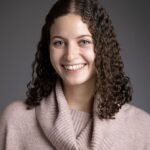
Teaching learners with language-based disabilities has enabled Eva Bogomolny Kaufman to employ research-based multisensory curricula in her classroom. Making sure learners are “available to learn” means recognizing the need for movement and creatively designing lesson plans that incorporate physical activity.
“Everyone who is wearing blue, come up and grab a worksheet,” is just one of the ways that Eva Kaufman makes sure that students in her classroom participate actively. “The expectation to sit still and listen is impossible,” said Kaufman, who is in her fifth year teaching at the Shefa School in Manhattan. She has taught from second to fourth grade.
“In my teacher brain, this kind of approach will get everyone moving,” said Kaufman who believes that moving your body physically can trigger your mind to move as well, in other words, to learn. Creating an environment where students can be “available to learn” is one of the core principles that drew Kaufman to education and specifically to the Shefa School, a Jewish community day school in Manhattan that offers students with language-based learning disabilities a place to grow, thrive, and reach their full potential.
Kaufman herself was primed to learn when she entered the masters program at The William Davidson School for Jewish Education in the fall of 2019 after graduating from Ohio State University. Born and raised in Cleveland in a Reform Jewish family, she spent a semester of college in Israel through the Nachshon program which prepared her for being in a diverse Jewish environment. Participating in Nachshon also enabled Kaufman to apply for and receive a fellowship for graduate school that provided funding, additional conferences, and supplemental cohort-based distance learning.
It was during her first year at Davidson that Kaufman visited Shefa on a field trip and felt that the school was “the” place where she could learn and grow. “They didn’t really have student teachers at Shefa, but I was persistent and knew that my second-year placement had to be there,” Kaufman recalled. Alongside her practicum, Kaufman supplemented her Davidson coursework with classes in special education at Teachers College.
As Covid took hold in the spring of 2020 and Davidson went fully remote, Kaufman accepted that her graduate school experience would be not exactly what she expected. “Ohio State is one of the largest universities in the country,” said Kaufman, “and my Davidson cohort—even before Covid sent us all remote—had all of four people.” Fortunately, Davidson had amassed considerable experience in online learning and so was able to make the switch with relative ease.
Determined to experience her practicum in person at Shefa, Kaufman signed a lease for an apartment in Hell’s Kitchen. “I just knew I had to be there,” she said. After graduation, Kaufman was hired through the Shefa residency program and subsequently became a lead and now mentor teacher at the school.
“One of the things that I learned very early on at Shefa is that while ‘special education’ is required for some, it is beneficial for all,” said Kaufman. Many of the techniques that she uses daily in her classroom are about making sure students are in a place to learn, which is a necessity for all teachers.
Like many progressive schools, Shefa embraces the Responsive Classroom approach, an evidence-based approach to teaching and discipline that creates safe, joyful, and engaging classrooms and school communities. Kaufman is continuously reading the temperature of her classroom. “I want to know what happened at recess,” she said, “are they available to learn? What does our class need at this moment—a mindfulness moment, breathing exercise, watching a calm.com video, turning the lights down or maybe do I need to bring in an energizer?”
Movement in Kaufman’s classroom is intentional and takes place throughout the general flow of the day. “We don’t just ask students to raise their hand in response to a question. First of all, some of them just won’t do that. Instead we use kinesthetic tactics: thumbs up/thumbs down, moving to a side or corner of the room,” she said. One method her students love is passing a ball around so everyone has a turn to respond.
Shefa uses research-based multisensory curricula that invite students to move their bodies as they learn, Kaufman explained. The PAF program uses skywriting as a kinesthetic approach, forming muscle memory while reviewing letter sounds, spelling of non-phonetic words, and suffixes. In math, Shefa teachers use a combination of Jump Math which is a multisensory, hands-on, visually supported, step-by-step approach that adheres to the US common core standards, alongside Marilyn Zecher’s Multisensory Math, which is an Orton Gillingham type instruction that uses manipulatives and a hands-on approach to introduce, teach and reinforce each concept.
Visitors to Kaufman’s Shefa classroom will see different strategies at work all the time. “Every class is different, and we are always modifying and differentiating,” she said. “This is ultimately less frustrating for teachers than drilling in on one approach and then having to pivot.” One day you may see students completing a math worksheet by walking around a classroom with clipboards, another day they may be doing a “gallery walk” with a checklist and sticky notes as they observe their classmates’ writing assignments hanging on the walls. If Kaufman sees that a student could use a break, she might send them on an “errand” which teaches independence and strengthens multi-step chunking for the many Shefa students with executive functioning needs.
As a child growing up in Cleveland, Kaufman inherited a love of being physically active from her parents who both have a strong commitment to staying healthy by moving and strengthening their bodies. “We usually start the day at Shefa with a movement-based activity like a community building game or even dancing and music, just being silly,” she said. “It’s good for the kids and good for me.” In morning meeting after a weekend, she will often share about her runs in Central Park or the tennis she played, modeling to her students the value of keeping her body healthy.
For Kaufman, the lessons of healthy body, healthy mind work in both directions. Last year, some of her sporty students taught her more than she ever thought she’d need to know about ice hockey. “Teachers can’t help but get engaged in things that their students are interested in,” she said. “When there is a shared ‘playing field’ in the classroom, the possibilities for learning grow exponentially.”
Full-bodied Learning and Teaching
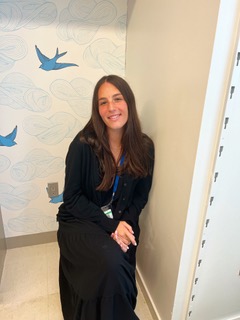
In Sammie Brenner’s preK classroom, learners practice moving their bodies and cultivate a rich educational ground from which to grow. Unlike her completely online experience in the Hitlamdut Fellowship at The William Davidson Graduate School of Jewish Education, Brenner is on the move all day.
It wasn’t a hard decision for Sammie Brenner to become a teacher. She grew up in Bergen Country, NJ, in what she calls a “Jewish bubble,” and is a graduate of Solomon Schechter Day School of Bergen County. At Muhlenberg College, she studied English and Jewish studies and in her senior year decided to pursue a career in education. Brenner loved Jewish day school and was thrilled to accept a position teaching preK at Ramaz in New York City, following in the footsteps of her grandmother who taught preK at the Moriah School in Englewood, NJ for 20 years.
“Having gone through the ‘system,’ of Jewish education, I know that I have been shaped by the Jewish educators in my life,” said Brenner. Becoming a teacher would enable Brenner to make a similar impact going forward.
Brenner spent most of her childhood summers at Ramah Day Camp in Nyack, and she has remained on staff for the past 10 years. It was director Rabbi Ami Hersh (see profile in this issue) who connected her to the William Davidson School of Jewish Education the summer before she started working at Ramaz. “Ami introduced me to then-dean Shira Epstein who suggested I apply to for the Hitlamdut Fellowship.” Brenner graduated from Muhlenberg in May 2021, started working at Ramaz in August and entered Davidson in September.
The Hitlamdut Fellowship is designed for novice Judaic studies teachers. Participants are enrolled in Davidson’s online, part-time, asynchronous MA program while they are teaching in a day school full-time. The name Hitlamdut reflects the Mussar-based value of mindfulness through learning. A key feature of the fellowship—in addition to coursework with Davidson and JTS faculty–is individualized and cohort-based coaching and feedback.
For Brenner, whose 2020 semester abroad in Israel as a Nachshon fellow was cut short by Covid, online learning had become second nature by that point. “Davidson had been offering asynchronous classes for some time already, and I was fortunate that Hitlamdut was a perfect match for my schedule.” While Brenner acknowledged that the isolation of sitting and studying alone was challenging and even lonely at times, she gained much from the intensity of the program and camaraderie with the other Hitlamdut fellows.
“Being part of a small cohort of other novice teachers created a community in which I could learn and grow, whether it was in person or not,” said Brenner. “I had only been to the JTS campus a few times throughout my years in the fellowship, and the other fellows were the only students I knew. Hitlamdut was really a savior,” she said, adding that she still has yet to meet one of her cohort members in “real life.”
By teaching at the same time as she was herself learning, Brenner found an ideal combination. “We would unpack case studies on ways to strengthen teaching, and I could then bring these ideas into my classes right away,” she said. “My professors were right there for me, helping me work on lesson plans and then reviewing my self-recorded teaching.”
As a preK teacher, Brenner has no choice but to keep things moving, a welcome change from the solitary and stationary part of her graduate studies. “Our schedule is built for a lot of active learning,” she said. When learning the letter C, for instance, Brenner’s class practices moving like cats. Brenner knows that children at this age learn through play, and creativity is a powerful teaching tool.
“I have learned a lot about movement,” said Brenner, confirming that some of the basic modalities that work for young learners establish patterns that lead to lifelong social and emotional health, as well as good habits for learning. “We are attentive to the physical needs of the children in our classroom; we know that their bodies have to be ready to learn just as much as their minds.”
In Brenner’s classroom, for example, she encourages her students to relax their bodies. “We want to be loose like cooked spaghetti,” she tells them. “We don’t want to be like raw pasta that has trouble going with the flow.”
With preK being a transitional year for many, in Brenner’s classroom there is a deliberate “January shift” in an effort to prepare for the expectations of kindergarten. “We start to flip our model and have the children sit for longer times, practicing for kindergarten,” she said. Using timers and games, she still incorporates moving around but models and explicitly teaches ways for students to control their bodies more.
When she reflects back on what it was like to finish college during the pandemic and complete her MA sitting by herself in her apartment, Brenner finds further resonance in the term Hitlamdut, which is often translated as “self-learning” or “internalizing what you learn.” “Making your learning a part of you comes so naturally to young learners,” said Brenner. “The challenge is to continue that ‘full-body reflective experience’ throughout a lifetime of learning.”
News from the William Davidson School Alumni
Mazal Tov to 2024 graduates on their next chapter!
Justin David is the interim rabbi of Beacon Hebrew Alliance.
Maya Ehrenreich is a Talmud teacher at the Abraham Joshua Heschel High School in New York City.
Andrew Ergas is the chief executive officer at Hebrew at the Center.
StaceyGlazer is program and conference director of NewCAJE.
Grace Hack is continuing her JTS studies in the Kekst Graduate School.
Hannah Isaacs-Arkin is the education director of Adath Israel in Merion, PA.
David Kessel is a senior vice president and director of the Mandel Center for Jewish Education at the Jewish Community Centers Association of North America.
Luciana Pajecki Lederman is the director of The Beit Midrash and Nishma summer program at JTS.
AliceManning is the program manager of Congregation Rodeph Sholom in New York City.
Lucy Marshall is the director of community services at the Jewish Family and Children’s Service of Minneapolis.
Aimee Schwartz is the program and events manager at Shaarei Tikvah in Scarsdale, NY.
RobertShorr is the high school Jewish life chair at the Charles E. Smith Jewish Day School in Rockville, MD.
Dov Smilovic is a Jewish studies teacher at the Shefa School in New York City.
Hannah Stein is a kindergarten teacher at Yavneh Day School in Los Gatos, CA.
We are very proud of our alumni who shared the following professional achievements and brought us up to date on their roles. If you have an update that you would like to share in the next issue, please reach out to Melissa Friedman, Director of Alumni Affairs at mefriedman@jtsa.edu.
Mazal tov to WDS alumnae Anya Morgulis and Jessica Jobanek, two of the five Jewish educators who were recognized by and received the Jewish Education Project’s 2024 The Robert M. Sherman Young Pioneers Award.
Adam Bender is the newly appointed director of engagement of Queens College Hillel.
Stephanie Ben Simon recently became the director of education at Temple B’nai Shalom in Fairfax Station, VA.
Rafi Cohen is the rabbi and assistant director of meaningful life/spiritual care of the New Jewish Home in New York City.
Lynn Anne Cutler recently became the director of education and youth of Beth El Synagogue in Durham, NC.
Tehilah Eisenstadt is now the assistant director of congregational learning at East End Temple in New York City.
Heather Rubin Fiedler was promoted to vice president for impact and strategy at the Jewish Federation of Greater Hartford.
Rachel L. Figurasmith is serving as the interim executive director of National Queer Asian Pacific Islander Alliance.
Annie Glickman is the new head of school of the Hyman Brand Hebrew Academy in Overland Park, KS.
Allison Gutman recently joined the William Davidson Foundation as its Jewish life program officer.
Saul Kaiserman is now the scholar-in-residence at Tamid: The Downtown Synagogue in New York City.
Judd Kruger Levingston won the 2024 Covenant Award.
Yoni Nadiv recently became the senior director of leadership development of JewishColumbus.
Paulette Posner recently joined the Bronx Psychiatric Center as a rabbi and is providing spiritual care to residents.
Yanira Quinones recently became the director of programs and membership engagement at Temple Beth El of Great Neck, NY.
Adi Raz is co-director of the Middlebury School of Hebrew in Middlebury, VT.
Geza “Rafi” Roehrig is featured in the film “AFTER: Poetry Destroys Silence,” a deep dive into the creative responsibility of writers when faced with the Holocaust, catastrophe, and genocide.
Kim Rosenthal was recently appointed as senior Jewish educator of Hillel at the University of Oregon.
Calle Schueler was recently appointed director of education and engagement at Temple Beth-El in Ithaca, NY.
Kathy Schwartz was recently promoted and now serves as the director of HUC-JIR’s executive MA in Jewish education program.
Holly Seidenfeld was promoted to principal of Katz Yeshiva High School in Boca Raton, FL.
Rachel Smith was recently appointed assistant professor in the department of history at University of California Irvine.
Sarah Ellen Zarrow received one of AJS’s Jordan Schnitzer First Book Publication Awards for her book, Displays of Belonging: Polish Jewish Collecting and Museums, 1891-1941.
A Rosh Hashanah Message from Chancellor Shuly Rubin Schwartz
Chancellor Schwartz discusses Psalm 27, the Yamim Nora’im, and October 7.
In July, I traveled to Israel to celebrate my grandson’s bar mitzvah. Like any of us who have spent time in Israel this past year, I experienced both happiness and heartbreak, admiration and anguish. It’s impossible to approach the Days of Awe without Israel being front of mind. With the first anniversary of the October 7 massacre coinciding with the Days of Awe, how ought we focus our prayers for 5785?
I’ve always looked to Psalm 27 to guide me through this season. This psalm, which we begin to recite on the first day of Elul, cuts right to the trepidation that the Yamim Nora’im—the intense period of introspection and repentance—evoke in each of us. As the liturgy reminds us again and again, we are at God’s mercy; our prayers evoke vulnerability and, in so doing, expose our deepest fears.
This intimate psalm, written in the first person, captures anxieties common to us all, the panic that bubbles up at times. The psalmist feels paralyzed by evil doers, armies, abandonment, and spreaders of falsehood. Whether real or metaphorical, these fears overwhelm, impelling the psalmist to seek God’s shelter, guidance, and deliverance. Only faith in the Divine keeps the psalmist from sinking into the abyss.
Reciting this psalm daily during this season reminds us that at our worst moments, we yearn for ways to escape our struggles and find meaning in our challenges. We long for peace and purpose. These desires are reflected in the different verbs used to describe the psalmist’s request: He wants to dwell in God’s House, gaze upon God’s beauty, and frequent God’s Temple.
One thing I ask of the LORD, only that do I seek: to dwell in the house of the LORD all the days of my life, to gaze upon the beauty of the LORD, to frequent God’s Temple.
Image provided by The JTS Library. MS 8892, The Rothschild Mahzor, Florence, 1490, folio 247r, Liturgy for Rosh Hashanah.
After October 7, Psalm 27 reads very differently to me. This year, the “I” of the author captures not individual weakness but rather the collective anguish of the Jewish people, Am Yisra’el. As we approach the Yamim Nora’im and October 7, our heartache feels collective and manifold. We mourn the murdered and the captured; we feel abandoned by a world that has grown more receptive of antisemitic rhetoric and behavior; we worry about the mounting consequences of a year-long war with so many victims.
We also yearn desperately for the release of all the hostages, but also for an end to the war, with the safe return of Israelis to the north and south in peace; for an end to the untold sufferings of so many innocent people on all sides; for a lasting peace that will enable Israel to thrive and Palestinians to cultivate a home with dignity; and for a global repudiation of antisemitism.
Sadly, our hearts also ache for the internal distress we are experiencing as a people. We are at a fraught moment, experiencing division among us as we prioritize certain goals and discount others and as we grow distant from those whose choices differ from our own. Even though we are beset by external adversaries, we also struggle to find common ground as a people.
As we know, the problems we face as a people are beyond our ability to remedy ourselves. So what can we realistically ask of God at this time?
Image provided by The JTS Library. MS 8230 – Seder Birkat ha-mazon, Mannheim, 1736, f16r. King David playing the harp.
I take comfort in the ancient “ask” of Psalm 27, knowing that these words have sustained individuals and our people throughout the centuries. Radak, Rabbi David Kimhi, the 12th to 13th century biblical commentator, reminds us that the traditional author of Psalms, King David, wrote many of these psalms during wartime. As the psalmist recounts in verse 3, “Though an army besiege me, my heart will not fear.” Through countless crises, our common tradition, the words of these psalms, have shown us the way forward.
Radak goes on to imagine King David penning this psalm and not imploring God for victory—though that no doubt was also important to him—but asking with “all his heart” (בכל לבו) to literally “quiet him from the wars” (להשקיטו מהמלחמות).
David was so focused on day-to-day wartime concerns that he was too besieged to hear any voices other than his own. He implores God to grant him the stillness “to dwell, to gaze, to frequent”—in other words: to think, to consider, to hear other perspectives.
Radak highlighted the specific, yet invisible, toll those wars took on King David’s inner life. Similarly, today, the soul of the Jewish people has been frayed in both body and spirit after this painfilled year. We ache for the stillness that Radak identifies and pray for the ability to hear each other and work through our differences.
As we approach 5785, we pray that God will answer our requests, both the physical and spiritual, in a way that brings us closer as a Jewish people and leads us toward the peaceful future we long to see.
Alumni Donors 2023–2024
Each year, JTS alumni around the world make generous contributions to support the next generation of students. We extend our heartfelt gratitude for these gifts. Thank you, and we hope you’ll consider supporting JTS again as you plan your future giving.
A special thank you to the JTS alumni who have included JTS in their estate plans. They are esteemed members of the JTS Tzaddikim Society who care deeply about the Jewish future and have made a commitment to leave a lasting legacy at JTS. For more information on how you can become part of this special group, or if you have already included JTS estate plans, please contact us at plannedgiving@jtsa.edu.
We’d also like to extend a special thank you to our Friends of JTS Synagogues. These synagogues support JTS’s mission, and, like you, make it possible for JTS to recruit, train, and educate Jewish leaders to serve tomorrow’s communities. Please contact Melissa Friedman, Director of Alumni Affairs, to learn how your synagogue (whether you are part of its leadership or congregation) can become a Friends Synagogue.
Albert A. List College
Danielle Aarons Rachel Ain Vadim Avshalumov Nicole Berman Haskell Bernat Erin Beser Shachar Binyamin Eliav Bock Talya Bock Hannah Brody Deborah Bromberg Seltzer Benjamin Brown Sara Bucholtz Suzanne Chipkin Adam Cohen Robbie Cohen-Millstein Chava Creque Isabella Dayani Tamar Dayanim Alisha Deluty Jamie Diamond Nava Edelman Benjamin Ehrlich Shoshana Farbman Nora Feinstein Anna Feldman Eliana Fisher Ilana Garber Reena Glazer David Goldman Richard Gratz Ross Haimowitz Jodi Hirsch-Rein Shanna Hocking Jaime Horowitz Evan Jacobs
Alison Joseph Joshua Joseph David Kalender Matthew Kalin Eliana Katz-Seltzer Eitan Kensky Daniel Kestin Orly Klein Daniela Kogan Helene Kornsgold Yona Kornsgold Meryl Kramer Brown Zoe Kress William Krieger Michelle Kwitkin Elie Lehmann Tatyana Leifman Chavie Lescher Jacob Levenfeld Elan Levine David Levy Anya Manning Paul Margulies Andrea Merow Benjamin Metsch Adina Milgram Jonathan Milgram Maya Newman Naomi Nuta Susan Palefsky Ari Paul Leah Penkava Ari Perten Rebecca Perten Jonah Rank Richard Reaven
Jessica Rezak-Schwab Pauline Rose Ariella Rosen Leora Rosenblum-Holzer Lisa Rosen-Metsch Emanuella Rozenfeld Robin Rubenstein Jeremy Ruberg Ariel Russo Matthew Russo Ari Saks Rachel Saks Ilana Sandberg Evan Schaffer David Schnitzer Yoni Schwab Evan Serpick Ellen Shaw Ellie Sheinwald Erez Sherman Dina Shtull-Leber Tyler Silver Noah Small Arielle Solomon Jeffrey Spitzer Miriam Spitzer Sarah Steinmann Marissa Sterling Todd Surden Danielle Truglio Justin Truglio Daniel Walker Rebecca Walker Ora Warmflash
H. L. Miller Cantorial School
Nancy Abramson Heather Batchelor Elizabeth Berke Steven Berke Arianne Brown David Childs Jennifer Cohen Farid Dardashti Mira Davis Joshua Diamond Elisheva Dienstfrey Arthur Giglio Israel Gordan Jesse Holzer
Deborah Jacobson Amy Kanarek Barry Kanarek Lilly Kaufman David Lipp Brian Mayer Joseph Ness Marilyn Okoshi Gedalia Penner-Robinson Paula Pepperstone Misha Pisman Alisa Pomerantz-Boro Elliot Portner Noah Rachels
Daniella Risman Jacob Sandler Neil Schwartz Anna Silverman Stephen Stein Neal Taibel David Tilman Eliot Vogel Saul Wachs Lorna Wallach-Kalet Isaac Yager Elaine Zimmerman
Kekst Graduate School
Ellen Abramson Ronald Androphy Guy Austrian Elizabeth Baron Joshua Bender Kenneth Berger Elizabeth Berke Dina Bernat-Kunin Tahlia Bliss Deborah Bromberg Seltzer Ellen Cahn Nina Cardin Reba Carmel Margaret Cella Geoffrey Claussen Martin Cohen Ruth Corson Debbie Cosgrove Judy Craig Amy Cytryn Ronald Daitz Jillian Davidson Jack Dermer Eliezer Diamond Stephanie Dickstein Alisa Doctoroff Gail Dorph Alan Edelman Debra Edelman Charles Edelsburg Chaim Eliezer Edelstein Amy Eilberg Judith Eisenberg David Fishman Martin Flashner Joan Freeman Edna Friedberg Hillary Gardenswartz Deborah Geller Henry Glazer Ariel Goldberg Linda Golding Megan GoldMarche Leslie Goldress Benjamin Greenberg Galya Greenberg Ariel Greenberg-Platt Rishe Groner
Jack Gruenberg Seth Haaz Nellie Harris Robert Harris Lindsey Healey-Pollack Lauren Henderson Marcelle Hohl Elizheva Hurvich Jill Jacobs Marcie Jonas Naomi Kalish Amy Kalmanofsky Richard Kalmin Karen Kaplan Talia Kaplan Annette Kasle Lawrence Katz Eliana Katz-Seltzer Jan Kaufman Allan Kensky Barry Kenter Melissa Kerbel Shelley Kniaz Lori Koffman Daniela Kogan David Kraemer Ruben Kraiem Jonathan Kremer Sarah Krinsky Paul Kurland Alisa Kurshan Gail Labovitz Barbara Lerner Melanie Levav Aaron Leven Judd Levingston David Levy Adele Lobel Jonathan Lopatin Max Malitzky Mitchel Malkus Aliza Mann Benjamin Mann Ruth Margolin Guy Massie Liati Mayk-Hai Miriam Meir Rachel Mikva-Rosenberg
Shira Newman-Wohlberg Luciana Pajecki Lederman Abby Pitkowsky Michael Pitkowsky Louis Polisson Isaac Pollak Edward Portnoy Irit Printz Jonah Rank Mark Raphael Esther Reed Steven Rein Avram Reisner Gisela Romang de Baler Paula Rose Ariella Rosen David Rosenfeld Zahava Rosenfeld Gilbert Rosenthal Marian Rothenberg Emanuella Rozenfeld Michael Safra Meira Saks Ilana Sandberg Robert Scheinberg Yaffa Schlisserman Aviva Schwartz Marcus Schwartz Shuly Schwartz Joel Shaiman Robyn Shoulson Lilliana Shvartsmann Laurie Siegel Stefanie Siegmund Sidney Solomon Jeffrey Spitzer Daniel Stein Regina Stein Alan Stern Lori Sumberg Samuel Vingron Burton Visotzky Abigail Weber Bracha Werber Ethan Witkovsky Deborah Zuker
The Rabbinical School
Jonathon Adler Rachel Ain Daniel Alder Morris Allen Robert Alpert Joel Alter Ronald Androphy Noah Arnow Jeffrey Arnowitz Hillel Aronson Stanley Asekoff Toba August Guy Austrian Shaina Bacharach Sharon Barr-Skolnik Marvin Bash David Baum Michael Beals Joshua Bender Joshua Ben-Gideon Rebecca Ben-Gideon Alfred Benjamin Kenneth Berger Gordon Bernat-Kunin Mark Bisman Jacob Blumenthal Eliav Bock Dana Bogatz Jill Borodin Geoffrey Botnick Akiva Brilliant Caleb Brommer Howard Buechler Ivan Caine Richard Camras Ariana Capptauber Nina Cardin Margaret Cella Gary Charlestein Joel Chernikoff Geoffrey Claussen Alan Cohen Ayelet Cohen Martin Cohen Mitchell Cohen Rafi Cohen Moshe Corson Elliot Cosgrove Tirza Covel-Schmelzer Melissa Crespy Eric Cytryn Michelle Dardashti Alexander Davis Jessica Dell’Era Jack Dermer Mark Diamond Stephanie Dickstein Robert Dobrusin Elliot Dorff Sheldon Dorph Shosh Dworsky Moshe Edelman Chaim Eliezer Edelstein Amy Eilberg Richard Eisenberg Bernard Eisenman David Eligberg David Englander Murray Ezring Charles Feinberg Theodore Feldman Baruch Feldstern Lyle Fishman Gordon Freeman Ilana Garber Eli Garfinkel Stephen Garfinkel Adam Gillman Henry Glazer David Glickman Daniel Goldfarb Megan GoldMarche Nason Goldstein Israel Gordan Sarah Graff Michael Greenbaum Kate Greenberg Ariel Greenberg-Platt Gary Greene Rishe Groner Mayer Gruber Nicole Guzik Seth Haaz Jill Hammer Robert Harris Lindsey Healey-Pollack Joshua Heller Lauren Henderson Benjamin Herman Sherre Hirsch Howard Hoffman Marcelle Hohl William Horn
Jonathan Infeld Ronald Isaacs Jill Jacobs Abby Jacobson Allen Juda David Kaiman David Kalender Naomi Kalish Jeremy Kalmanofsky Elana Kanter Raphael Kanter Louis Kaplan Talia Kaplan Michael Katz Lilly Kaufman Alvan Kaunfer Herbert Kavon Stuart Kelman Allan Kensky Barry Kenter Paul Kerbel Sheldon Kirsch Chanan Klaristenfeld Adam Kligfeld Shelley Kniaz Lori Koffman Randall Konigsburg Helene Kornsgold Jay Kornsgold Joseph Krakoff Charles Kraus Harold Kravitz Jonathan Kremer Sarah Krinsky Paul Kurland Neil Kurshan Gail Labovitz William Lebeau Alan Lettofsky Melanie Levav Aaron Leven Moshe Levin Morton Levine Murray Levine Judd Levingston David Levy Sheldon Lewis Daniel Liben Micah Liben Howard Lifshitz Jonathan Lubliner Akiba Lubow Jacob Luski Mitchel Malkus Eliot Malomet Jonathan Maltzman Howard Mandell Barry Marks Myrna Matsa Jonathan Medows Aryeh Meir Juan Mejía Andrea Merow Daniel Merritt Joel Meyers Michael Meyerstein Clifford Miller Raphael Miller Victor Mirelman Michael Mishkin Shoshana Mitrani Knapp Jack Moline Steven Morgen Leonard Muroff Beth Naditch David Nelson Daniel Novick Luciana Pajecki Lederman Stephan Parnes Lee Paskind Micah Peltz Andrew Pepperstone Lawrence Perlman Ari Perten Kevin Peters Richard Plavin Louis Polisson Moshe Pomerantz Michael Pont Charlie Popky Daniel Pressman Irit Printz Michael Ragozin Jonah Rank Mark Raphael Esther Reed Steven Rein Avram Reisner Joel Rembaum Arnold Resnicoff Mira Rivera
Gisela Romang de Baler Kayley Romick Carnie Rose Neal Rose Paula Rose Ariella Rosen Elliott Rosen James Rosen Shira Rosenblum Gilbert Rosenthal Rebecca Rosenthal Joel Roth Moshe Rothblum Steven Rubenstein Jeremy Ruberg Robert Rubin Arthur Rulnick Ariel Russo Marc Sack J.B. Sacks Michael Safra Ari Saks Moshe Saks David Saltzman Moshe Samber Ilana Sandberg Stuart Saposh Craig Scheff Robert Scheinberg Jonathan Schnitzer Ismar Schorsch Joel Schwab Amanda Schwartz Marcus Schwartz Moshe Schwartz Steven Schwartz Daniel Schweber Laurence Sebert Ahud Sela Bruce Seltzer Joel Seltzer Joel Shaiman Arthur Charles Shalman Leonard Sharzer Erez Sherman Sanford Shudnow Andrew Shugerman Ronald Shulman Lilliana Shvartsmann Steven Silberman Leor Sinai Melvin Sirner Hillel Skolnik Jonathan Slater David Small David Soloff Sidney Solomon Abigail Sosland Miriam Spitzer Raphael Spitzer Harvey Spivak Murray Stadtmauer David Starr Daniel Stein David Steinhardt Kenneth Stern Sholom Stern Ari Sunshine Malcolm Thomson Jeffrey Tigay Robert Tobin Mervin Tomsky Anne Tucker Gordon Tucker Samuel Vingron Burton Visotzky Dov Vogel Hannah Wallick Andrew Warmflash Michael Wasserman Jonathan Waxman Abigail Weber Arthur Weiner David Weiner Cara Weinstein Rosenthal Philip Weintraub Samuel Weintraub Raysh Weiss Steven Wernick Bryan Wexler H. Scott White Edmund Winter Ethan Witkovsky Adam Wohlberg Joseph Wolf David Wolpe Eric Yanoff Herbert Yoskowitz Sidney Zimelman Deborah Zuker
Teachers Institute/Seminary College
Nancy Abramson Robert Alpert Fredda Bisman Annette Botnick Geoffrey Botnick Steven Brown Joel Chernikoff Jeanette Chiel Alan Cohen Henry Cohen Eric Cytryn Aryeh Davidson Stephanie Dickstein Marlynn Dorff Risa Doris Gail Dorph David Eligberg Charles Feinberg Donna Fishman Stephen Freed Stuart Gershon Leslie Goldress Gary Greene Robert Harris Sheila Hecht Rita Herskovitz Howard Hoffman Rivkah Horowitz
Carol Ingall Ronald Isaacs Allen Juda Harold Kasimow Stuart Kelman Vicky Kelman Paul Kerbel Francine Klagsbrun Shoshana Joy Knapp Jay Kornsgold David Kraemer Risa Krohn Alisa Kurshan Joel Laitman Susanna Levin Richard Magidson Sherwood Malamud Hadassah Mark Sandra Meyers Michael Meyerstein Jeannette Miller Raphael Miller Leonard Muroff Joel Newman Nina Ostrovitz Chaim Reich Avram Reisner Selma Roffman
Judith Rohn Marvin Rosen Sandra Rosen Judith Rosner-Berman Menorah Rotenberg Arthur Rulnick Meira Saks Moshe Samber Stuart Saposh Yaffa Schlisserman Rhea Schwartzberg Priva Simon Helayne Sotnikoff Regina Stein Jessica Stern Esther Stern-Bloom Kenneth Stern Helene Tigay Gila Vogel Karen Vogel Saul Wachs Leonard Wasserman Sherry Werb-Leffert Alan Yaillen
The William Davidson Graduate School of Jewish Education
Rachel Ain Michele Alperin Joel Alter Matthew Altman Charles Arian Daniel Aronson David Baum Sara Beth Berman Rachel Blatt Ilene Bloom Cohen Eliav Bock Talya Bock Jill Borodin Arianne Brown Randall Brown Alexis Cobo Rafi Cohen Treasure Cohen Michelle Dardashti Alexander Davis Jamie Diamond David Englander Ilana Garber Hillary Gardenswartz Adam Gillman Annie Glickman Israel Gordan
Wilhelmina Gottschalk Benjamin Greenberg Kate Greenberg E. Joseph Griminger Wendy Heller Benjamin Herman Amy Kanarek Eliana Katz-Seltzer Daniela Kogan Helene Kornsgold Aleza Kulp Micah Liben Mitchel Malkus Benjamin Mann Orlea Marlin Andrea Merow Deborah Miller Beth Naditch Daniel Novick Marilyn Okoshi Luciana Pajecki Lederman Micah Peltz Andrew Pepperstone Ari Perten Kevin Peters Jacob Pinnolis Michael Pont
Ilene Richman Amy Ripps Kayley Romick Shira Rosenblum Rebecca Rosenthal Jeremy Ruberg Ariel Russo Sharon Safra Ari Saks Barbara Saunders-Adams Ivy Schreiber Amanda Schwartz Moshe Schwartz Andrew Shugerman Libby Spitzer Adrian Strizhak Joshua Troderman Anne Tucker Hannah Wallick Judith Weiner Joel Weissglass Bryan Wexler Michael Wikes Dori Wolgel Isaac Yager Eric Yanoff
Tzaddikim Society
Rabbi Robert Alpert Rabbi Joseph Brodie Rabbi Alan L. Cohen Ruth and Rabbi Moshe S. Corson Rabbi Donald D. Crain Rabbi Gary S. Creditor Tamra and Rabbi Bruce Dollin Rabbi Gideon Estes Deena Friedman Rabbi Michael B. Greenbaum Rabbi Richard Hammerman Sheila Diamant Hecht Dr. Carol K. Ingall Dr. Karen Kaplan Rabbi Lilly Kaufman Rabbi Barry A. Kenter Rabbi Jonathan Kremer
Rabbi Robert Layman Rabbi Sheldon J. Lewis Rabbi Richard J. Margolis Rabbi Eliot P. Marrus Rabbi Michael Meyerstein Rabbi Richard Plavin Rabbi Jack Riemer Rabbi Arthur D. Rulnick Dr. Melvin Scult Dr. Shuly Rubin Schwartz Dr. Lifsa Schachter Lori and Rabbi David C. Seed Matthew J. Shore Rabbi Malcolm Thomson Rabbi Anne Tucker Rabbi Burton L. Visotzky
Friends of JTS Synagogues
Beth El Synagogue, East Windsor, NJ Beth El Synagogue, New Rochelle, NY B’nai Jeshurun Congregation, Pepper Pike, OH B’nai Torah Congregation, Boca Raton, FL Congregation Adath Jeshurun, Elkins Park, PA Congregation Agudath Israel, Caldwell, NJ Congregation Beth El, Voorhees, NJ Congregation B’nai Sholom/Fair Lawn Jewish Center, Fair Lawn, NJ Congregation Ohev Shalom, Wallingford, PA Congregation Sha’arey Israel, Macon, GA Congregation Shaarey Zedek, Southfield, MI El Emeth, Youngstown, OH Germantown Jewish Centre, Philadelphia, PA Har Zion Temple, Penn Valley, PA
New City Jewish Center, New City, NY Rodef Sholom, Newport News, VA Rumson Jewish Center at Congregation B’nai, Rumson, NJ Park Avenue Synagogue, New York, NY Temple Beth El, Allentown, PA Temple Beth Hillel-Beth El, Wynnewood, PA Temple Beth Shalom, Livingston, NJ Temple Beth Torah, Westbury, NY Temple Emanuel, Newton, MA Temple Israel of Natick, Natick, MA Temple Sholom, Greenwich, CT The Park Synagogue, Cleveland, OH Tiferet Bet Israel, Blue Bell, PA Tikvat Israel Congregation, Rockville, MD
Library Exhibits
Current Exhibit
Illuminating Sacred Text: Contemporary Jewish Book Artists and Their Work
September 9–January 19
Sacred Jewish texts have long been crafted with exquisite beauty, reflecting their spiritual significance. Throughout history, artisans have adorned these books with masterful calligraphy, intricate decorations, and brilliant illuminations. Figurative illustrations have also found their way into these sacred volumes, adding yet a further layer of commentary onto the text. While the mass production of the printed book resulted in the decline of this rich tradition of decorated Hebrew manuscripts, the Jewish book arts have experienced a remarkable revival in recent years. Contemporary Jewish artists have embraced the challenge of “illuminating” sacred writings, both artistically and conceptually, bringing new life into an ancient practice.
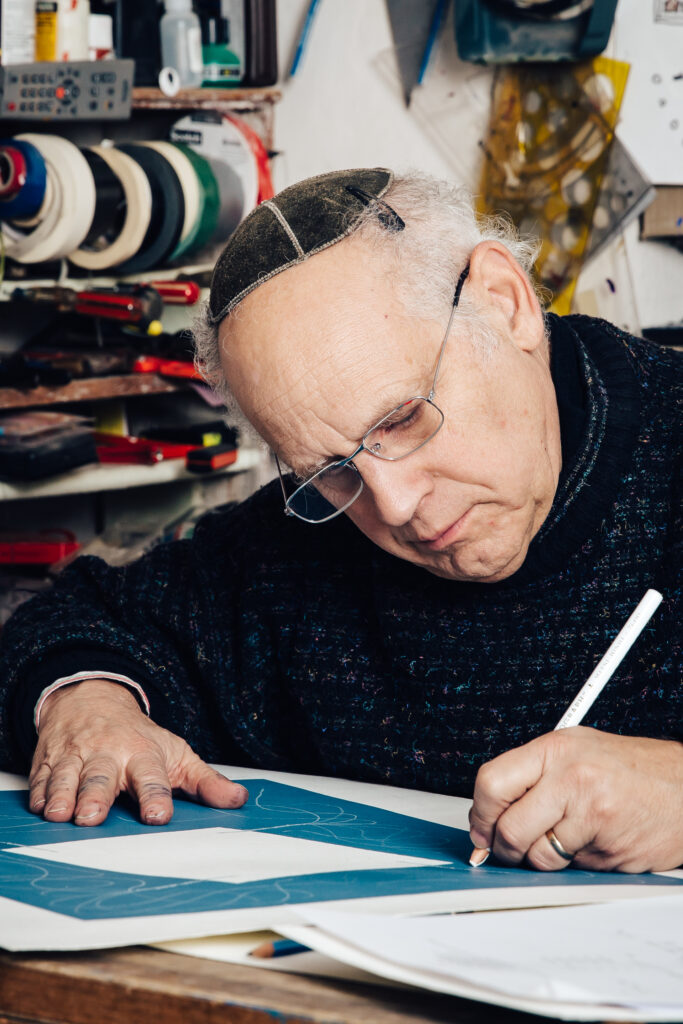
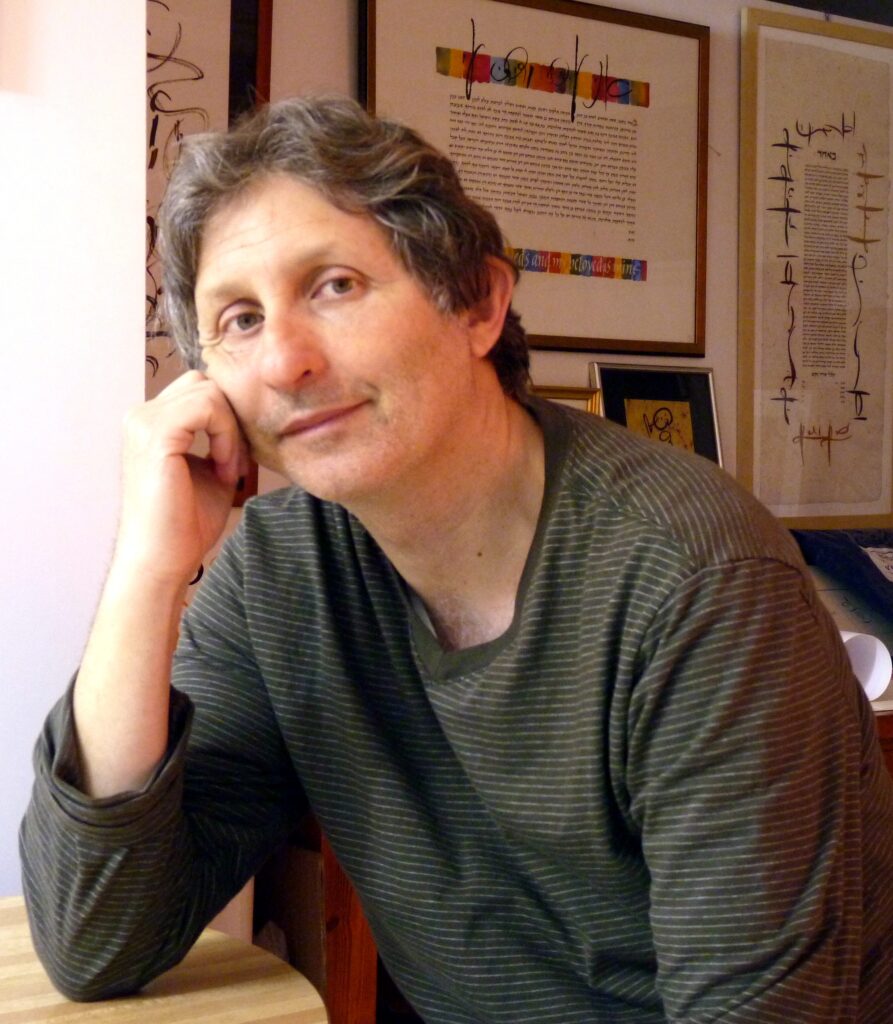
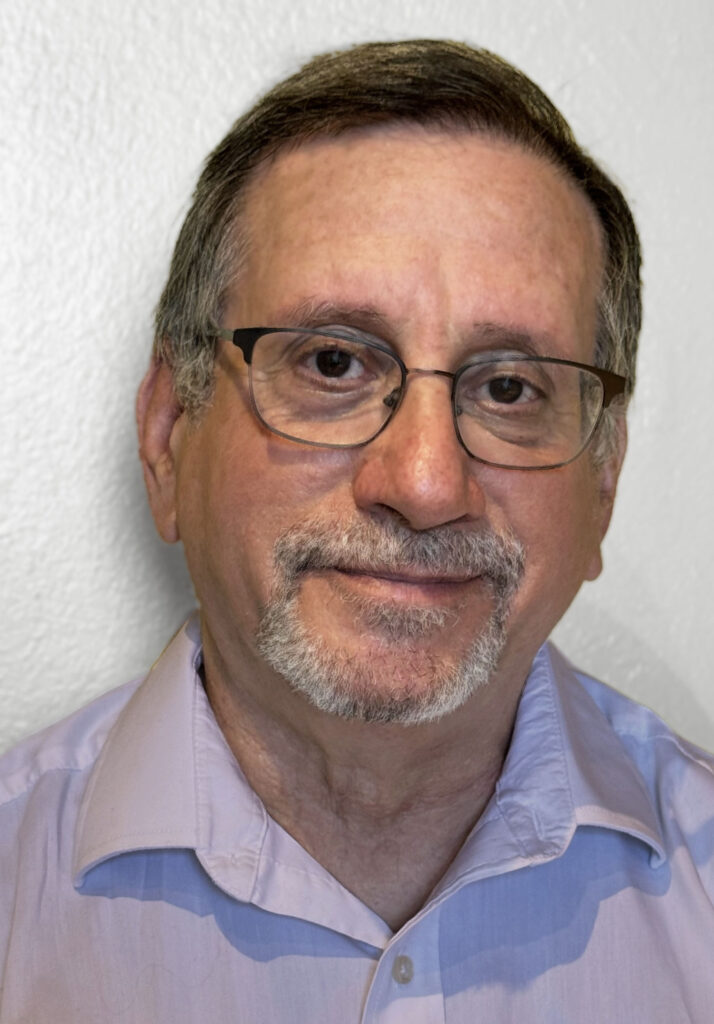
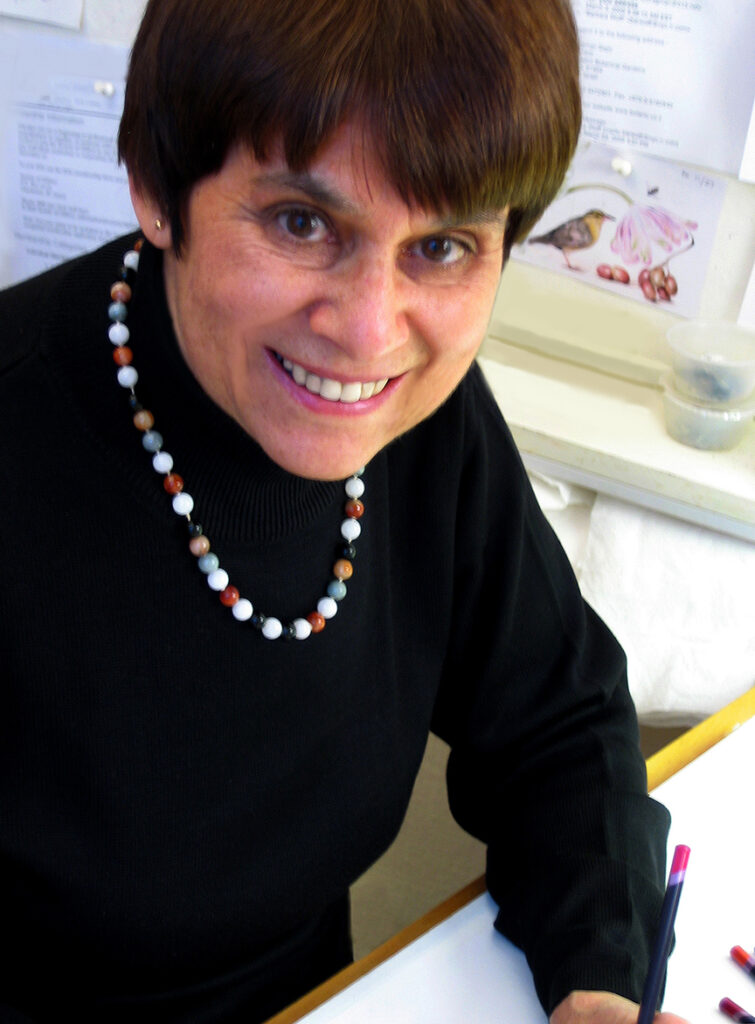
This exhibition showcases the work of five outstanding contemporary Jewish book artists: David Moss, Avner Moriah, Izzy Pludwinski, David Wander, and Barbara Wolff. On display are 24 contemporary works, ranging from haggadot to biblical texts, beautifully illustrated and decorated by these artists. Their creations demonstrate how the ancient tradition of beautifying sacred texts endures, as these artists not only embellish but also interpret the timeless stories, teachings, and wisdom of the Jewish inheritance through their art.
David Moss has devoted his career to discovering unique new approaches to making Jewish ideas, values and text relevant for our times. By working in a vast range of media and forms of expression, he constantly enhances and enriches Jewish life. David revived the art of the hand-made Ketubah. The Moss Haggadah introduced a fresh approach to this beloved ancient book combining research, image, writing, history and ideas as each page is a miniature world of Jewish thought and lore. The Tree of Life Shtender, in collaboration with Noah Greenberg, transformed the primitive study-prayer stand into a treasure chest incorporating all aspects of Jewish life. Moss has developed a unique approach to architecture for Jewish institutional buildings—one that makes the buildings active participants and partners in the organizational goals of each client organization.
David is a co-founder of Kol HaOt that uses the arts to illuminate Jewish life. He is the initiator and coordinator of the Teachers Institute for the Arts, a year long, funded program to synthesize the arts and creativity with Jewish studies for day schools throughout North America. His “Minyan” program, in which he surprises his many subscribers with new original, signed limited editions several times a year, has been going on for over a decade.
Born in Jerusalem in 1953, Avner Moriah is among the first generation of Israeli-born artists, and holds a BFA from the Bezalel Academy of Art and Architecture and an MFA from Yale University’s Graduate School of Art and Architecture.
Moriah is an active artist and prolific painter whose creative career spans more than five decades. Among his most recent accomplishments is a monumental project to illuminate the complete Pentateuch, a work of 15 years.
For this unparalleled artistic undertaking, Moriah created hundreds of original illustrations that provide a singular visual interpretation of the ancient texts. Hand-painted in gouache with gold-leaf alongside the Hebrew text in artisan calligraphy, these volumes are an unrivalled work of art and a profound tribute of the highest accord to the ancient tradition and text.
Moriah has also created an original illuminated Passover Haggadah, the illuminated book of Song of Songs, the illuminated book of Ruth, and a series of illuminated Scrolls of Esther, each unique and specially commissioned as limited editions. His latest Scroll of Esther is titled The Ganze Megillah, completed in 2022 after 17 years. At over 34 meters long, it is recognized with three Guinness World Records as the longest and largest of its kind in the world. Additional projects on biblical themes include a full series of the 52 weekly portions.
Prior to turning his brush and focus to illuminating Hebrew scripture, Moriah created murals depicting biblical scenes, painted a range of series on Jewish and Israeli themes and history, and captured the landscapes of his native Jerusalem and Israel in a series of on-site paintings.
Moriah’s works, which reflect his roots in Western art as well as the atmosphere and inspiration of the Middle East, can be found in the collections of major museums and libraries throughout the world, as well as hundreds of private collections.
Izzy Pludwinski is a Jerusalem based professional calligrapher, and Sofer STaM. He is the author of Mastering Hebrew Calligraphy, which was chosen as a finalist for the National Jewish Book Awards in 2014, and the recently published and critically acclaimed The Beauty of the Hebrew Letter, published by Brandeis University Press.
Over the years, in addition to his own works, he has collaborated with many top Judaica artists, including Malla Carl, Amalya Nini, Avner Moriah (Moriah Haggadah) and Barbara Wolff, for whom he did the calligraphy for several of her books—The Rose Haggadah, The Book of Ruth, Shir Hashirim (Song of Songs), as well as a book on Medieval Spanish Hebrew poetry.
His calligraphic artworks have been included in international exhibitions in England, the US, Japan, Germany, Russia and Austria, and he has had several one-man shows in Israel. His works have been featured many times in the prestigious Letter Arts Review journal.
Though firmly entrenched in the world of traditional Judaica, Izzy’s calligraphic passion lies in finding ever-new expressive forms for the Hebrew aleph-bet—a path that has led him to anywhere from font development to Zen-influenced abstract Hebrew calligraphy.
David Wanderis deeply rooted in the exploration and visual interpretation of Jewish texts. Through his current collaboration with Professor David Kraemer, Wander delves into Tanach, Hasidic stories and folk tales, translating these rich narratives into compelling visual forms. He seeks to capture the essence and spiritual depth of the texts.
Wander’s work has gained significant recognition and has been showcased in prestigious venues. His one-man show at Yad Vashem in Jerusalem stands as a testament to his ability to evoke powerful emotions and reflections through art. Additionally, his exhibitions in various museums and religious spaces across America highlight his broad appeal and the universal themes in his work. These exhibitions not only celebrate Jewish heritage but also invite a wider audience to engage with the stories and concepts that Wander brings to life. Through these displays, his art continues to inspire and resonate with viewers, bridging the gap between ancient texts and contemporary artistic expression.
Teaching at SAR High School, Wander imparts his passion for art and Jewish culture to his students through courses like “A Drawing from the Text” and Hebrew calligraphy and illumination, fostering a new generation of artists who appreciate the intersection of tradition and creativity.
David Wander’s artistic contributions include significant works that intertwine historical and contemporary themes, reflecting on Jewish heritage and resilience. One of his most notable projects is a commission from Zygfried Wolloch to create a Haggadah in memory of the Holocaust. In this piece, Wander masterfully blends the narrative of the Exodus from Egypt with the Holocaust and the subsequent establishment of the State of Israel. By incorporating symbolic objects in line with the haggadic tradition, he narrates this profound story with new elements that resonate with both historical and modern contexts.
Wander’s exploration of sacred texts extends to his accordion scroll of the Book of Daniel. He vividly depicts the life and experiences of the prophet’s interaction with the divine. Daniels lessons, experiences with angels and trials are rendered through vibrant acrylic paintings.
His work on the Book of Echa, inspired by his observations of Tisha B’Av, is another profound creation. This piece involves a deeply symbolic process where the text, written in white ink on black paper, is burned, attached to a scroll, and then rewritten in black ink on white paper. This method of writing and rewriting and burning serves to vividly retell the tragedies of destruction, adding a rich layer of depth and emotion to the work. These creations not only highlight Wander’s artistic talent but also his ability to convey complex narratives and historical memories through his art.
The New York City artistBarbara Wolff is one of today’s foremost illuminators. Her exhibit at the Morgan Library & Museum in 2015, Hebrew Illumination for Our Time: The Art of Barbara Wolff,” laid the foundation for the Morgan’s first collection of Hebrew manuscripts. Subsequently, her Haggadah, Ten Illuminations on Psalm 104, The Book of Ruth, and lately, The Song of Songs, have all been acquired by the Morgan and have joined its renowned collection of priceless manuscripts. Her current commission, a manuscript in the form of an album, is a selection of some of the finest Medieval Hebrew poetry from Spain’s Golden Age. It reflects that extraordinary time of shared cultural richness and innovation.
Her work has been exhibited at The New York Illustrators Club, The Jewish Theological Seminary, Yeshiva University Museum, The Museum of Biblical Art, and the Morgan Library & Museum. Wolff has produced a number of films showing her at work. These may be viewed on her website, www.artofbarbarawolff.com.
Her exploration of the world of nature as it relates to Biblical texts has been enriched by her background and work as a renowned natural science illustrator. She is a member of The American Society of Botanical Artists, The Guild of Natural Science Illustrators, The American Society of Botanical Artists, The New York Society of Scribes, The Society of Gilders, and The Society of Scribes & Illuminators London.
Low Residency Mekhinah Program
Students Take First Steps Toward the Rabbinate
JTS’s Low-Residency Mekhinah was first offered in January 2024 as a pilot. We’re now excited to officially launch this program, designed for students who are interested in becoming rabbis but need additional preparation. This accessible on-ramp to Rabbinical School allows students to participate in online classes focusing on Hebrew, Rabbinic Literature, Bible, and Liturgy. The program also offers mentoring, virtual cohort sessions, and a one-week in-person gathering.
The Rabbinical School student body increasingly reflects the diversity of the North American Jewish community. Part of that diversity is welcoming students with varied Jewish educational experiences and entry points into observant Jewish life. The Mekhinah program embraces this diversity by inviting all students, regardless of their backgrounds, to acquire the skills needed to thrive at JTS. Enrolled students can take the time to prepare themselves before beginning Rabbinical School full-time. After finishing the Mekhinah, they will be well-prepared to enter Rabbinical School with a depth of Jewish knowledge and critical intellectual thinking, two fundamental components of a hallmark JTS education.
Mekhinah students can continue to live and work in their home communities, while acquiring the skills needed to maximize their JTS education. Throughout the program, they will learn about the formative texts and rituals of the Jewish people, build professional skills, deepen their spiritual lives, and form their rabbinic identities, which will sustain them in the evolving rabbinate.
Last year’s program yielded four new JTS Rabbinical School students who will begin their rabbinic journey this September. One of these students recently remarked, “As a foreign student, the Mekhinah program allowed me to discover the campus of JTS, meet with renowned professors, and study with a curated cohort of potential future rabbinical students. This experience was life-changing!”
Mr. Wolf Blitzer will deliver the Commencement Address.
Honorary degrees will be conferred upon:
Mr. Wolf Blitzer, CNN anchor and award-winning journalist Dr. Gail Twersky Reimer, founder of the Jewish Women’s Archive Dr. John Sexton, president emeritus of New York University Professor Yair Zakovitch, Emeritus Father Takeji Otsuki Professor of Bible at Hebrew University
GRADUATING STUDENTS
Jonathon Gordon Adler Naomi Ruth Alberts Jessica Q. Alperin Yola Ashkenazie Ingrid Alexandra Barnett Daniel Max Barth Sivan Danielle Barzeski Jessica Charlotte Belasco Joshua Aaron Bender Jason Aaron Bloch Anna A. Boiko-Weyrauch Daniel Borovskiy Miriam Kayla Broches Caleb Milian Shahan Brommer Joshua Ezra Brunnlehrman Max Buchdahl Gadi Capela David Samuel Childs Ilan Spencer Cohen Justin David Isabella Dayani Ezra Dayanim Maya Simona Ehrenreich Andrew Solomon Ergas Annika Lynne Erickson Jeremy Evan Faust Shara Naomi Zierler Feit
Naomi Davida Fox Solomon Israel Fox Noah Ezriel Friedman-Nathan Blake Garber Jacob Gillis Stacey Elise Glazer Julia Rose Goldberg Leah Goryachkovsky Maor Gili Greene Emma Rose Grungold Rachel Guidanian Grace Zweiback Hack Sophie Ilana Hanin Craig Hartman Caleb Shai Holzhauer Elizabeth Leipzig Holzhauer Hannah Elizabeth Isaacs-Arkin Talia Laya Kaplan Natalie Hana Katalan David Michael Kessel Annabella Rose Kliman Rose Marlee Leveen Neeve Levi Talia Chaya Levin Elan David Michael Levine Yaakov Lipsker Elisheva Yonit Sandler Malomet Alice Rose Manning
Lucy Marshall Shira Michaeli Ariella Esther Mitchell Elianna Mitnick Rebekah Ngan Neuman Rachel Leah Nielson Luciana Pajecki Lederman Gedalia Moshe Penner Alyssa Pustilnik Gisela Andrea Romang-Baler Emanuella Nadya Rozenfeld Ilana Mardell Sandberg Max Lon Mullino Schain Aimee Schwartz Robert Walter Shorr Lilliana Elizabeth Shvartsmann Andrew D. Siegel Max Henry Silverstone Dov Raphael Smilovic Hannah Sophie Stein Malka Strasberg Edinger Jeremy Zalman Tabick Neal Michael Taibel Derek Jack Tassone Jr. Shaqed Tzabbar Samuel Joseph Vingron Amalya Miriam Volz