Learn More About Nishma
The Search for Meaning on College Campuses
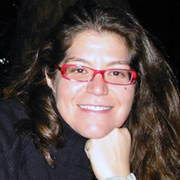
Dr. Gwynn Kessler (GS PhD ’01)
The Davidson School recently invited three professionals who work in the areas of Jewish Studies and Jewish life on college campuses to reflect on how they think emerging adults explore meaning and meaningfulness through Judaism. This is a paper shared by Dr. Gwynn Kessler of Swarthmore College.
Open Hillel, sexual misconduct, divestment—be it from fossil fuel companies or the contemporary state of Israel/Palestine—all join the list that includes, among other things I am sure, questions about race, ethnicity, gender identity, sex and sexuality, the search for purpose, meaning, justice, and profit that emerging adults currently face throughout their time on college campuses across the nation.
In my brief talk I draw from my more recent experiences as a professor and my past experiences as an undergraduate Jewish studies major in order to reflect on the interconnectedness between issues of politics, identities, and religion and spirituality.
I would like to begin by offering some brief vignettes drawn from my experiences at Swarthmore College over the past six years I’ve been teaching there. I will then put them in the broader context of the meaning of meaning for college students as they search out their own identities and make sense of the world and their places in it. In short, to anticipate what I will say in slightly more detail during these remarks, I think that emerging adults in higher education continue to search out meaning in both profound acts and everyday occurrences, both inside college classes where they—at their best—are expected to critically examine both their intellectual and embodied selves, as well as outside the classrooms in their activism that is imbued with Jewish spirit. Now, as ever, college students seek to make meaning of their lives and construct the course of history, Jewish and non-Jewish, with the lives they lead.
I offer an opening frame by citing an overly famous statement attributed to Hillel the Elder that appears in Mishnah Avot 1:14: “If I am not for myself, who will be for me? If I am only for myself, what am I? If not now, when?”
The meanings of this framing, in this context, will become apparent by the end of my remarks, if not sooner.
In the fall of 2013, a handful of students at Swarthmore College declared what was then the campus Hillel an “open Hillel.” I learned about this from a friend of mine in Israel, who texted me, “Kol hakavod Hillel Swarthmore. You advising them?” I then Googled my institution to discover what had transpired. In fact, I was not advising them, I was teaching them. I soon discovered that the two leaders of this move—one, the brains behind it and the other, its public face—and others on the Hillel Board active in the decision and its aftermath were in my Intro to the Hebrew Bible class that semester. Many of those same students often remarked about how what they had been learning in the class surfaced in their drashot and conversations at Shabbat services and dinners. And many of these same students are pre-enrolled for my upcoming class on the Talmud for the fall of 2015. The student I am referring to as the brains behind declaring Swarthmore Hillel an open Hillel went on to spend a semester in Israel and Palestine. When she returned to Swarthmore she continued studying in our beit midrash, taking Hebrew for text study classes. She also did an independent study with me on the Talmud, and she wrote her honors performance piece for the Drama Department on the rabbinic tradition about the four who entered pardes.
One of my first students at Swarthmore in told me in 2009, “You don’t come to Swarthmore to be Jewish.” This student recently texted me a picture of Facebook post from another Swarthmore alum. The post was written by a woman who was sexually assaulted on campus before she graduated a couple of years ago; she was writing on the eve of her alleged rapist’s graduation. My student wanted to pass this information on; he wanted me to know about it; he wanted to do something about it as well as know something was being done about it. Knowing that I had served on the campus’s Sexual Misconduct Task Force the previous year and a half, he wanted me to do something.
During the past semester, students at Swarthmore staged a sit-in—one of the earliest, if not the first, US colleges to do so to convince the boards of their institutions to divest from the fossil fuel industry. Rabbi Arthur Waskow came to the sit-in one afternoon to meet with the students. One of my students, a transgender son of a Reconstructionist rabbi, came to meet Arthur and show his support of the divestment campaign.
Perhaps none of these students decided to spend four years of their early adult lives at Swarthmore College “to be Jewish,” but their Judaism meant something to them, and that meaning, those meanings, developed and flourished there. Their answers to Hillel ha-Zaken’s challenge (“If I am only for myself, what am I?”) are of course quite varied, but they are alive and well in their activism for Palestinian rights, in their support for survivors of sexual abuse, and in their concern about the health of the planet, as well as in their efforts to remake and re-envision gender and sexuality or to stand up against racial injustices. Indeed, I am sure they often ask themselves, “If not now, when?”
I don’t often reflect on my students’ experiences as similar to mine as an undergraduate. How the formation of my Jewishness as an integral part of my identity took shape on a college campus in Jewish studies courses, as I sought to make sense of my own heritage. I, too, arrived on a college campus with an inherited sense of my Jewishness, handed down and fostered by my parents and my upbringing, but what that meant, as well as the details of Jewish history and rabbinic and philosophical text study, were more opaque. When I look back on what led me to the academic study of Judaism I see it as a search for meaning and understanding—my early grappling of and with my Jewish identity.
At the same time, as a college professor, I am uneasy with the notion that my students take courses simply to buttress their Jewish identities for the sake of an amorphous concept of Jewish continuity, anxious at the very thought that I continue the work of Jewish day schools that instill somewhat more simplified notions of Judaism, Jewish history, and Jewish identity than I want my students and my children to engage with as emerging adults. (Don’t worry, I say this with one child enrolled in my local Philly Jewish Day School and the expectation that my six month old will one day attend the same school.)
This brings me to the meaning of meaning for my own work—both in research and teaching. What is it that I seek to convey to my students about identity? About history? About the future?
I spend a great deal of time searching out the meaning of things for the Rabbis of late antiquity to address contemporary issues with fetuses or what might now be called genderqueer bodies. I think that often one of the differences between a more seasoned scholar and a younger one is the realization that the access I have to the meaning for another group of people across time and space is at best fraught, fractured, muddled, and messy. It is my responsibility as a scholar to find plausible meanings for ancient contexts, within their own settings. It is also my responsibility to realize the meaning I make is not entirely divorced from the meaning I wish to make. That meaning is always filtered through experience. It is my responsibility to teach that to my students as well. As a college professor, the meaning I try to make for students is also mediated by the meanings they are making and will make of this information for themselves. Meaning and meaning-making are messy endeavors.
One of the things I’m attempting to do here is make meaning of my students’ political activism. To see and set their activism around Israel/Palestine, sexual misconduct, the environment, and other injustices as part of a broader process of searching out identities and meaning for themselves, especially as it is connected to their Jewishness and the meaning of Judaism for them.
In closing, “If I am not for myself, who will be for me?” is for many emerging Jewish adults of this generation a question that brings about inquiries into the meaning of their privilege. My students are far more aware of their privilege than I was at their age. The meanings of this privilege and what they make of those meanings, will, I have no doubt, set the stage for their own quests for meaningful lives. It will also expand, even stretch and test the meanings of Judaism and Jewishness for the foreseeable future, or maybe more accurately, the future that is unforeseeable. I, for one, am excited for this future, these prospects, and these expansions of Jewish meaning for generations to come.
Dr. Gwynn Kessler received her PhD in Rabbinics from The Jewish Theological Seminary (GS ’01). She has taught at the University of North Carolina at Greensboro and the University of Florida in Gainesville, and she currently teaches in the Department of Religion and serves as the coordinator for the Gender and Sexuality Studies Program at Swarthmore College. Dr. Kessler is the author of Conceiving Israel: the Fetus in Rabbinic Narratives, published by UPenn Press.
Finding Meaning in Jewish Studies at College
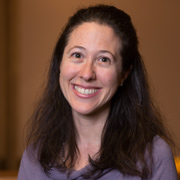
Rabbi Lauren Kurland (RS ’05, DS ’05)
At institutions of higher learning around the country, enrollment in the humanities is down, in some disciplines precipitously; Jewish studies has not been spared from this trend. Under the direction of Chair Noam Pianko, the Stroum Center for Jewish Studies at the University of Washington (UW) sought to address declining enrollment by creating a new staff position: director of Student Engagement, a position that I am honored to hold.
In this role, I meet with students coming from different backgrounds and heading toward different futures to learn about their experience with Jewish studies. Some of the students I meet are committed Jewish studies majors or minors-students who came to college interested in learning more about Jewish history, culture and thought. Others are taking their first-and possibly only-Jewish studies course because they heard something good about the professor, because it fulfills a general education requirement, or because it falls at a convenient time in their schedule. Over coffee or a walk around campus, I learn about these students’ backgrounds, why they enrolled in a Jewish studies course, what they have found inspiring about the course they are taking, and where we could do better.
In other words, I have the privilege of asking students where they find meaning in their academic pursuits and discovering where Jewish studies can be present in supporting or providing that meaning.
The students I interact with are not all Jewish. Approximately 900 students enroll in Jewish studies courses at UW per year, and while data about the percentage of those students who are Jewish is not available (nor significant to the Stroum Center’s mission and work), it is notable that half of our majors in 2015 were not Jewish, and one of the two co-chairs of our Jewish Studies Student Committee is not Jewish. Moreover, the conversations I have with both Jewish and non-Jewish students are not all that different, reflecting that regardless of one’s religious background, emerging adults are searching for meaning, identity, and connection.
It is also worth noting that while there are certainly many students-Jewish and non-Jewish-who take advantage of the many resources that the thriving and pluralistic UW Hillel provides, many students are attracted to Jewish studies precisely because it is not Hillel. These students deliberately look toward academia as the place to nurture personal meaning-making because in the classroom, there is no requirement-perceived or otherwise-for any student to have a certain type of pre-existing personal familiarity with Judaism. There is no ritual practice, no expectation of a certain heritage, no requirement to eat, dress, or commemorate time in certain ways. In the classroom, students must think critically, even about things they thought they already understood. In the Jewish studies classroom, there are therefore no outsiders or insiders; each individual has equal right and value in the conversation.
That said, not every one of the thousand students who takes a Jewish studies course finds it meaningful. Meaning is personal; meaning is found where the self connects. That place can be mysterious, unpredictable, and serendipitous-hence while some of us are passionate about applied physics, others can’t get enough of architecture and still others are fascinated by 15th-century English history. Yet in that place of meaning, wherever it is found, something inside the learner is stirred and inspired; something inside the learner hums and craves to learn more, to engage more, to hang on to every word. On the college campus, this is manifest in the decisions students make as newly independent adults: they never skip class, they attend the professor’s office hours, they do the optional reading, they write a compelling final paper.
Yet, while where we find meaning can be as varied and unique as each individual, there are some common patterns in students’ reports about what makes a particular course or topic meaningful. Relationships-with the topic, with the professor, and with other students-are key and commonly expressed factors in a student’s sense of a course’s personal meaning. Thus, meaning is often found in a college classroom when the following elements exist:
- A student connects with a topic, even if (or sometimes especially when!) they didn’t think they would, often (although not always) because of one’s identity or family history.
- The material and the way in which it is presented compels students to question previously held assumptions about what they think they know or who they think they are;
- The professor is passionate about (not just an expert in) the topic they teach, and even more so if the professor shares with the students why he or she feels passionately about the topic.
- The professor learns and uses students’ names (even in large classes), and finds a way to connect with each student personally. If a student is upset or absent frequently, the professor notices and checks in with the student in a nonjudgmental way.
- The professor gives students opportunities to interact with and get to know other students in the class (e.g., through small group discussion, jigsaw activities, or havruta study.
Two composite examples of students who have taken Jewish studies courses that illustrate these observations:
- Simone, a sophomore biology major who grew up in an observant Jewish home in a wealthy suburb of Seattle and went to day school K-12, confessed that she enrolled in Introduction to Jewish Cultural History at UW because she thought it would be an easy class to fulfill her general education requirements. Simone said she figured she knew everything about Jewish history already and would “basically be able to teach the class myself.” However, to her surprise, by the end of the first lecture she realized that the history she had studied in day school was nothing like what she was learning about in her Jewish studies class. While at first she was disappointed with her elementary Jewish education, asking “Why did my parents spend all that money if I never really learned Jewish history at all?” her growing passion for the course eclipsed that disappointment. She described herself as being in “awe,” saying that she “didn’t speak basically the whole quarter because she was soaking it all in.” In particular, a lecture in which the professor cried while talking about a particularly harrowing story related to the Holocaust moved her. The professor’s ability to be vulnerable while teaching-belying the stereotype of the cold, dispassionate college professor-connected deeply with Simone. Learning about Jewish history as an emerging adult from a professor who taught with nuance and integrity and showed human emotions hooked her. She found the class inspiring and deeply meaningful, eventually writing a paper on her own family’s immigrant experience in which she interviewed her grandmother about emigrating from Iraq and opened up previously undisclosed chapters of her family’s history. Now she describes herself as a Jewish studies “groupie” who will likely declare a Jewish Studies minor and has begun to attend Stroum Center for Jewish Studies events as a way to connect further with the community.
- Joanna, a nursing student from Seattle, took Introduction to Judaism to learn more about Judaism and to complete her graduation requirements. She was surprised to find out how much she “could learn about [her]self and about the community” through the topic; the integration of traditional havruta study in the course, rather than just frontal lecture, was transformative for her. She reflected that “having conversations with my neighbors about the texts and how we related to them” was a very powerful experience. As they studied, the professor roamed around the classroom, answering questions, encouraging students to think about the material in new ways and getting to know them better. Joanna indicated that, “as academics, we are raised to be in competition with each other . . . those groups really broke those walls down.” For Joanna, Introduction to Judaism was “far more than the description written in the course catalog.” Although graduating this year and unlikely to take another formal Jewish Studies course at UW in the future, the personal connection that Joanna felt to the material by dint of her being able to engage with it personally and in conversation with other students made a lasting impression and was incredibly meaningful to her.
Emerging adulthood is an especially exciting time in the world of meaning-making. Students come to college with permission to explore, to try on new identities, to make decisions, and to make mistakes. In this environment of experimentation and searching, Jewish studies offers a remarkable opportunity for students to consider universal questions through the lens of the Jewish experience. They are encouraged by faculty-often the adults who interact with them at the most intense level for four or more years-to question their assumptions and to find different ways among myriad to connect to the culture that surrounds them, as, indeed, Jews themselves have done for millennia.
Remaining Questions
As I continue to meet students and learn about their experiences, many questions still remain. Among them:
- Many students who take Jewish studies courses find them meaningful. Many more do not, at least as evidenced by the relatively low number of students who take multiple Jewish studies courses in sequence. How can we change the style, structure or content of Jewish studies courses to help more students connect? One way to tackle this might be to allow more autonomy to students in developing a “so what?” final project. One UW Jewish Studies professor, for example, allows each student to write their final paper on something related to Jewish culture that speaks to them personally. This has resulted in papers as diverse as “Jews in Egypt,” “A History of the Bagel,” and “Jews and The Simpsons.” The professor reflects that the papers are generally better written because they answer a question that the student proposed-one that was meaningful to that student and that allowed the student to apply knowledge and critical thinking-rather than one that the professor assigned that required only regurgitation of facts.
- In an academic setting, faculty, in their desire to be a neutral party, can inadvertently be cast as dispassionate or aloof. Yet students repeatedly indicate that when a professor “notices” students, it makes a huge difference in how they personally experience the class and therefore in how much meaning they ascribe it. Thus, how can we train college professors (and, even earlier in the process, graduate students) to consider being more present in students’ lives without being overbearing or invasive? How vulnerable should professors be and how can they connect with students in real ways, aware of necessary academic boundaries?
- How do we help students who are looking for meaning find their way into Jewish studies courses? Though Jewish studies courses are open to all and have no prerequisites, is there something about the word “Jewish” that automatically alienates a broad section of potential students and stymies enrollment? Indeed, this question might be asked about queer studies, Chicano studies, and disability studies as well; do students think they need to be of a group to take a course about a group? If so, how do we push students to think more critically about why they take the courses that they take (beyond having a diversity requirement in the curriculum, which UW has), so that they take advantage of the opportunity in college to take courses about different cultures and from different perspectives?
Takeaways for Jewish Educators
Although half of the students I meet with are not Jewish, there are some practical implications for Jewish educators based on my observations:
- Many Jewish students have indicated disappointment that their Hebrew or day school did not offer the broader perspective that Jewish studies courses in college provide. How might Hebrew and day schools broaden the cultural and historical perspective of their courses so that this rude awakening does not happen so often in college? Additionally, how might middle and high schools partner with Jewish studies professors or graduate students to expose younger learners to the richness of Jewish studies in college (such as Makor of Hebrew College in Boston, which is already experimenting with such a model)?
- The same factors that inspire meaning-making in college students also inspire younger learners. To that end, how can we find, train and hire elementary and secondary school teachers who are not only pedagogically qualified but also genuinely passionate about what they teach; encourage younger students to question their assumptions about who they are and what they know; create intentional and authentic connections between students in the classroom; and grant students autonomy over their learning?
Lauren Kurland serves as the director of student engagement at the Stroum Center for Jewish Studies at the University of Washington (UW). In this position, she works with students and faculty to create more meaningful relationships and helps develop further opportunities for the interdisciplinary study of Judaism at UW. She has also written curriculum for The Davidson School’s Etgar Yesodi. Rabbi Kurland received a BA in Education and Social Policy from Northwestern University, an MA in Jewish Education from the William Davidson Graduate School of Jewish Education (DS ’05), and rabbinic ordination from The Jewish Theological Seminary (RS ’05).
The Sociology and Psychology of Meaning: a Mental Health Perspective
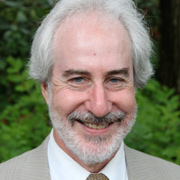
Dr. Jonathan Cohen
A Conference on The Meaning of Meaning in Jewish Education, June 2015

Dr. Judith Hauptman (Seminary College of Jewish Studies of JTS ’67, now Albert A. List College of Jewish Studies, GS PhD ’82)
The Davidson School recently invited three Judaica scholars from the JTS faculty to teach a piece of text to a group of learners for the purpose of exploring meaning and meaningfulness generally as a part of Jewish life and particularly through Jewish education. After the study sessions, the entire conference gathered together and the three scholars discussed their pedagogic decision-making. We are happy to publish the reflections of one of the scholars, Dr. Judith Hauptman, E. Billi Ivry Professor of Talmud and Rabbinic Culture, JTS.
Pondering the meaning of meaning in Jewish education is not easy. To do so, I will examine why I chose a particular text for my session at the conference, how I choose texts in general, and how I understand the meaning of meaning in Talmudic texts. I think it axiomatic that in life most people are looking for meaning and community. Studying great Jewish texts together with others is one way to find both.
Why I Chose This Passage to Teach at the Conference
Of all the possible passages I could have chosen to teach at this conference, I selected Bavli Shabbat 54b-55a. The mishnah contains a seemingly extraneous comment about a rabbi who, in the eyes of his colleagues, violated the Sabbath. The Gemara claims that the concluding sentence of the mishnah, which is also the concluding sentence of the chapter, teaches the principle that if one does not protest the immoral behavior of the members of one’s household, one’s neighbors, and even one’s countrymen, the one who is silent is as guilty as the perpetrator of the wrongdoing. After presenting a number of anecdotes in which people either did or did not protest the behavior of others, the unit continues with an interpretation of several verses of the book of Ezekiel in which God is reprimanded by the Attribute of Justice for not acknowledging that silence in the face of wrongdoing is also wrongdoing and is punishable. My reasons are as follows:
The passage will show the participant an example of how the Talmud intertwines detailed description of Jewish law with presentation of Jewish values. Many people are not aware of this other aspect of the Talmud, imagining it principally as a repository of rules of Jewish practice, which it is, but it is also much more.
The passage under discussion presents a core moral principle and then illustrates it with several anecdotes. The anecdotes help one grasp how to apply the principle to life situations. The passage also contains a fanciful midrash that will engage the student and be easily understood and remembered.
The principle in question is the obligation to speak out in the face of wrongdoing. It is addressed to everyone, but in particular to those who work for either religious or secular authorities and have knowledge of internal corruption.
This passage is so clear in its moral demands and so inspirational that I think it an excellent choice to teach to people who are looking to understand Judaism and to grasp why the Talmud is a foundational Jewish document. I am not attempting to dismiss or downplay the numerous discussions of the fine points of Jewish practice and ritual that abound in the Talmud, but when given a one-time opportunity to talk about meaning in Jewish education, I would sooner deal with a broad moral demand than with a rule of Sabbath observance. This passage, by the way, includes both.
Another reason I chose this particular passage to present at this conference is that I taught it last March in Israel at the Knesset library, during the weekly Talmud class that takes place there (presenters are either in-house staffers or invited guests). Speaking truth to power, to paraphrase the Talmud, seemed to me like an important lesson for legislators and senior staff. The people who attended “got it.”
This Talmudic passage, more than many others, speaks to people in their contemporary lives. It is one I can easily relate to issues we face today. When I do so in class—and when I did so at the Knesset—people immediately internalized the lesson. They proceeded to give me instances of applying the moral principle in their own lives. This passage also generates good questions, such as: Are we also expected to speak out about ritual failings of others or only about immoral behavior? If both, is it not obnoxious to do the former? What impact can I have as just one individual?
How I Choose Talmudic Passages for the Classes I Teach at JTS and Elsewhere
I often teach classes at JTS on the topics of family relations and how the Talmud views and treats women. I don’t shy away from “troubling” texts. I bring the “insufficiencies” of the text, as viewed from a contemporary perspective, out into the open. My goal in text selection for these JTS classes, which are intended to give future rabbis necessary knowledge for addressing contemporary issues, is to show students the continuum, or arc, of legal statements. A teacher could opt to only cite statements about “purchasing a wife for money” as we find in the Torah (Exod. 22:16) and the Mishnah (Kiddushin 1:1), and view marriage as the sale of a woman by her father for money. But, such an approach may lead people away from the Talmud and even away from Judaism.
A more intellectually honest way of analyzing those two texts (and others like them) is to compare them to most other Talmudic statements on the subject of marriage and note that the verb ‘’to purchase” is replaced by the verb “to sanctify.” The Rabbis of the Talmud created a new term for marriage, kiddushin (from the root Q.D.SH), which means “to sanctify,” and employed it consistently. In this way the Rabbis distance themselves from the Torah model of wife as chattel.
The message students get is clear: Although marriage in the Torah was considered a purchase, the Rabbis, over time, transformed it into a negotiated relationship between husband and wife—each with obligations and privileges. This is a far better social arrangement than that prescribed by the Torah, but still not sufficiently egalitarian to satisfy a contemporary individual.
I think that pointing out this evolution in Jewish marriage is an instance of “making meaning.” We examine the passage in wider and wider concentric circles, first Torah, then Mishnah, then Gemara, then Shulhan Arukh (Code of Jewish Law, 1565), and finally in contemporary society. Patriarchy reigns in Jewish texts but has been gradually reduced and totally eliminated today. One can either condemn rabbinic thinking by examining individual passages on their own or grasp what the Rabbis were trying to accomplish on a grand scale by examining passages along a timeline. Each time I choose a text for my students, be it on marriage, the ketubbah, the wedding ceremony, procreation, divorce, or conversion to Judaism, I keep these considerations in mind.
An even larger goal of mine is to get students to love the text, to become as addicted to Talmud study as I am. One way of doing this is as described above: reading texts in a wide context. Another, of course, is the way I model my attitude toward the text. It is not my mode of operation to say to students, as I hear is done in some yeshiva settings, “Isn’t this amazing?! Aren’t these rabbis holy men?!” To me, making such statements is an attempt at indoctrination. Rather, by laying out the various texts for the students, I make it possible for them to come to similar conclusions on their own. What pleases me is when a student exclaims, “isn’t this a great text?!”
To bring students to the point at which they see the enduring meaning in the text, it is necessary to help them acquire the skills of reading texts in the language in which they were composed. Every translation, as we know, is an interpretation. Therefore, to have students find meaning in the text, it is important that they discover it by reading the words of the text as they were formulated. That is, they first need to understand the text word by word as well as understand the structure of the argument or the flow of logic of the sugya (discursive unit). After which they jump to the next level, which is figuring out why the Rabbis decided law as they did, what were their animating principles, to what extent can we relate to these principles today, and so on. And then I ask students to consider more general questions: What ongoing Jewish values are present in the text? Why is Talmud considered to be the basis of rabbinic education?
Another text that can be used to explore meaning is Bavli Shabbat 119a. It gives 15 examples (an unusually large number) of Rabbis who personally prepared for the Sabbath—engaging in such activities as chopping beets, stoking the fire, grilling fish. The takeaway message is that the Talmud is speaking loud and clear about the need not just for household staff but also for the head of household to regard the Sabbath as a royal guest for whom one makes lavish preparations with one’s own hands. Honoring the Sabbath means to be personally involved in welcoming the Sabbath, not just delegating all tasks to others.
This text does not speak about Sabbath restrictions, which occupy so much space elsewhere in the Talmud, but about the principle of oneg Shabbat (Sabbath pleasure), which means to view the Sabbath as a day of delight and not limitation. This message is not conveyed by statute or by requiring Sabbath preparation, but by giving anecdotal evidence of Rabbis who chose to prepare to welcome the Sabbath queen on their own. The hope of the text is that the reader will seek to emulate the actions of these rabbis. Therefore, one way to put students in touch with the meaning of texts is to analyze the goal of the editor of the texts with them.
The meaning of meaning is grasping the meta-message of the text after first working it through word by word. To see the forest after identifying every tree. And hopefully, to realize how beautiful the forest is and how wonderful it smells.
Dr. Judith Hauptman received a degree in Talmud from the Seminary College of Jewish Studies of JTS (’67; now Albert A. List College of Jewish Studies) and a degree in Economics from Barnard College, and earned an MA and a PhD in Talmud from JTS (GS ’82). In May 2003, she was ordained as a rabbi by the Academy for Jewish Religion.
In addition to her full-time post at JTS, Dr. Hauptman is a frequent instructor in the adult-education program at the 92nd Street Y in New York City, and has served on the faculties of many prestigious education institutions. She has also authored many influential articles. Among them are “Women and Prayer: An Attempt to Dispel Some Fallacies” (Judaism, Winter 1993); “A Time to Mourn, A Time to Heal” (Celebration and Renewal, Jewish Publication Society, 1993); and “Judaism and a Just Economy” (Tikkun, January/February 1994).
What Is the Meaning of Meaning in Jewish Education?

Rabbi Dov Lerea (RS ’83, DS ’13)
My work in Jewish education focuses exclusively on teaching texts to students of all ages. Recently, at a presentation made to rabbinical students by a practitioner in the field of experiential education, the presenter remarked, “So often courses in experiential education are not taught experientially.” I liked the playfulness of that remark because it captured the notion for me that learning a text is a primary experience of Jewish learning and therefore should be taught experientially. That implies that the involvement with a text, one’s engagement with it along with the engagement between students of that text in havruta, or in a facilitated discussion, should involve an exchange of ideas and feelings that penetrate students deeply as they are learning. To appropriate a term coined by Professor Israel Sheffler, the learning of a text should evoke cognitive emotions. Ideas should be felt and experienced.
This is the way I conceptualize meaning. Meaning, in my teaching, suggests that in the process of learning and teaching a text, learners feel the ideas they construct in response to and through the engagement with that text. What I have found to be of lasting value in my teaching for students is the pedagogic centrality of challenging them to stay with all of the dimensions of a text they come to see—its language, grammar, rhetorical structure, context, conceptual implications—while taking their own thinking about that text seriously. “What are the many meanings this text conveys?” and “What are the many meanings this text holds for me?” are the two questions that my pedagogic decisions intend to balance and hold in tension with each other. The textual basis for pedagogically balancing the external, transmitted integrity of a text with as full a range of meanings deeply felt by the learner at the same time is found in two different traditions that conceptualize revelation. In one tradition, Torah is transmitted to Moses from the outside: Moses received Torah from Sinai and transmitted it to Joshua. In the other tradition, the Sages wonder how it was that Avraham had Torah knowledge if he lived before the revelation at Sinai. They answered that his source of Torah knowledge flowed, literally, from the inside out:
Each of the generations before Avraham disappointed God, since none walked in God’s pathways until Avraham, as the Torah says, “Since Avraham heard My voice and kept My ordinances, My commandments, My laws and My Torot” (Gen. 26:5). The verse does not say, “torah,” but rather, “torot.” How did Avraham know these torot (i.e., the written and the oral torot)? God created two kidneys, which functioned like two Sages. They stimulated his understanding and counseled him and taught him wisdom all night long, as Scripture says, “I will bless God who has counseled me, as well as steered me through the night through the wisdom flowing through me [literally “through my kidneys”]. (Psalms 16:6) (Abot d’Rabbi Natan version A, chapter 33)
These two traditions provide pedagogic guideposts in this work: Moshe Rabbenu insists that learners stay true to the demands the text makes of them, while the tradition I am calling “Avraham the Wise” encourages flow, imagination, and the constructing of personal meaning as a pathway to understanding, or making sense of, the text for one’s self.
The two most prominent ways I encourage students to engage with texts for meaning is through constant conversation and processes of visualization. Teaching conversationally as a way of constant engagement with text includes several pedagogic principles. Perhaps the most important has to do with clarifying my task as the teacher. My task, as Eleanor Duckworth has described in several places, is to keep my students interested and engaged so that they come to increasingly satisfying and meaningful ways of understanding the material. In order to achieve this goal, I teach more by listening than by talking, and certainly almost never by telling. I listen as carefully and as closely as I can to how the students are thinking and how they understand the material, and then constantly make decisions about how to challenge them next. The students do not always notice what I think they should consider in the text, and then I have to decide how to get them to pay attention to something they have missed in a way that they will find challenging to their own thinking. I have often found, in these situations, that the most difficult thing for a student to do is to reevaluate her own thinking, abandon a theory, and start to think differently about something she had thought she understood in a certain way. I will bring some examples of these moments, along with examples of the pedagogic decisions I made. Of course, such an approach to meaning—the teacher facilitating ways for the students to remain engaged with the text—requires constant reevaluation of those pedagogic decisions in thinking about planning for the coming lessons.
A second pedagogic commitment I have made in teaching texts so that students form meaningful ways of understanding the material for themselves is by including the goal of visualizing the text in some way. By asking students to visualize the text—by facilitating the disciplined habit of mind to do so—challenges the learner to imagine a meaning, a way of understanding it, in a very specific, vivid way. By asking the learner to then produce that vision and then describe it by composing an “artist’s statement,” the student effectively retranslates his non-verbal view back into a linguistic, conceptual form. I begin this process by reading the text with students. Then I spend considerable time thinking about how to frame the right questions to stimulate interest in what students notice about the text. Then I ask students to imagine how they see some dimension of the text—either a concrete dimension or a conceptual understanding. At some point, I ask students to show their understanding visually through some medium: water color, chalk, paper, three-dimensional materials. Finally, I ask students to compose an artist’s statement describing what they did and explaining why and how what they did relates to the ways in which they read the text. That process provides a way for entering a text, stepping back from it, and capturing an interpretation of personal meaning. Here, by “personal meaning,” I mean how the student has come to make sense of the text.
Lessons learned. The motivation to learn Torah is a foundational goal of learning Torah. Motivation depends upon the student feeling that the learning was intrinsically worth her time and effort. Meaning, in this sense, has to do with how the student came to make sense of the text, which requires that my pedagogic decisions must take seriously how learners are thinking about the text. I do not know how to teach a text without teaching the students directly and primarily. Similarly, whenever I learn a text myself, I am ultimately learning and investigating myself at least as much as the text in front of me, as reflected by the image of Avraham acquiring Torah knowledge.
I have two pressing concerns in this work. One is the alienation and discomfort many learners have with visual art. Usually, the older the learner, the greater the discomfort. Adults sometimes say to me, “Oh, we are going to color today?” The second concern I have is about the imbalances of privileging the text over personal meanings or privileging personal meaning-making over the demands of the text and the integrity of an inherited tradition. Both must be held in balance with each other. These days, I often find that this demand is a bit too nuanced for some teachers, as well as for some learners. This research—and this conference—seems to me to be extremely important because the more we share and expand visions of meaning, the deeper the engagement with the knowledge and wisdom of our culture, and the lives we lead and the world we inhabit need these processes of learning for meaning. Such processes acknowledge value and cherish diversity of thought and experience, and the commonalities often shared by people who learn with each other.
Rabbi Dov Lerea is dean and mashgiach ruchani at Yeshivat Chovevei Torah, and the rabbi of Beth Aharon, the Sephardic congregation of Riverdale. Rabbi Lerea has an undergraduate degree from Brown University in Religious Studies, rabbinic ordination from The Jewish Theological Seminary (RS ’83) and Rabbi Isaac Elchanan Theological Seminary, an MA in Learning and Teaching from the Harvard Graduate School of Education, and an EdD from the William Davidson Graduate School of Jewish Education (DS ’13). Rabbi Lerea served as teacher and dean of Judaic Studies at the Abraham Joshua Heschel School, Rosh Hinuch at Camp Yavneh in New Hampshire, and director of Kivunim in Jerusalem. Rabbi Lerea has also taught at Drisha and the Wexner Foundation.
Exploring Jewish Meaning Through Authenticity, Lived Experience, and Reflective Practice

Dr. Belinda Keshen