Jewish Studies in Day School: A View into the Present and Future
MITCHEL MALKUS

Only 10 percent of all Jewish school-age children attend day schools in the United States even though we know it is the most effective way to build the foundation of a strong Jewish identity and knowledge base. While the product is outstanding, the vast majority of families with Jewish children do not perceive the value of a day school education to be high.

In 1991, the Commission on Jewish Education in North America published a report titled A Time to Act. On the heels of the 1990 Jewish Population Survey that found declining Jewish engagement and rising intermarriage, Jewish educational organizations, and particularly day schools, experienced renewed energy. For more than a quarter century, Jewish studies in day schools have evolved significantly. As we consider the future of these schools, it is valuable to take stock of the current curricular landscape and to offer some suggestions for what Jewish studies might look like in the coming decades.

Current Jewish studies curricula in day schools are informed by three predominant notions: how Judaism relates to modernity, significant advances in pedagogical approaches in general education, and the opportunity for students to choose their course of study. About the same time as A Time to Act was released, Michael Zeldin, former senior national director of the HUC – JIR School of Education, wrote that the relationship between Judaism and the “curriculum of modernity” was at the center of the educational experience in day schools. Jonathan Sarna frames this idea as the fundamental question of being Jewish in America: how to live in two worlds at once, how to be both American and Jewish. Curriculum in day schools today also reflects wider changes in general education and the growing knowledge base of what constitutes effective teaching and learning. Last, Jewish day schools, particularly at the high school level, have been influenced by our choice-based consumer society to employ curricular choice, specifically in Jewish studies where there are not specific state requirements.

Day school curricula have sought to integrate Jewish and general studies in significant ways. One example of curriculum integration now widely applied in day schools is Facing History and Ourselves (FHAO). FHAO integrates the study of history, literature, and human behavior with ethical decision-making and innovative teaching strategies. At the Charles E. Smith Jewish Day School (CESJDS), where I serve as the head, we have tailored FHAO’s Holocaust and Human Behavior course to be used within our seventh-grade Humanities Experience block. Humanities experience is a block dedicated to grade-level, interdisciplinary, humanities-based units facilitated by teaching teams. The units are grounded in our core values and themes for each grade. At CESJDS, this experience integrates history and ethics and promotes an understanding of how Jewish values and texts are brought to bear on understanding and addressing prejudice. Large numbers of other day schools also integrate Jewish ideas, concepts, and values into their individual school-based general studies curricula.

A second area of integration in day schools is often within Jewish studies. At CESJDS we have developed a class called Judaics Workshop that is designed to nurture students’ relationship with two major features of Jewish life: Hagim (Jewish holidays) and Israel. Through hands-on learning experiences, students develop a deeper understanding and appreciation for the practices and themes associated with holidays, as well as the history, diversity, and innovation that characterize Israeli culture. The workshop provides students with an opportunity to apply the overarching themes of their grade level to Jewish content. For instance, seventh grade, which focuses on the theme of community, explores Shabbat practices of Jewish people from different eidot (ethnic communities) around the world.

In the field of Jewish text, the Legacy Heritage Instructional Leadership Institute’s Tanakh (Bible) and Rabbinics Standards and Benchmarks programs are an example of best practices instructional methods from general education being used in Judaic studies. This program applies standards-based approaches to aid schools in articulating a coherent vision for their curriculum and provides sustained professional development to build individual school capacity to deliver high quality instruction. The standards and benchmarks inform the selection of materials, support the design of assessments, and provide guidance for the design of teacher professional development. At my school we have seen students become more deeply engaged in the study of Tanakh because the nature of this approach and how it connects students personally to their learning. Since building teacher capacity to develop lessons is central to the methodology, our teachers have also become more deeply engaged in their own learning and, subsequently, their teaching.

CESJDS, along with other schools, employs the Proficiency Approach for Hebrew language learning. Historically, when teaching Hebrew at our school, teachers emphasized the importance of learning to read. Learning to read in a new language helps students access class material and our faculty believed that by practicing this skill learners retained the language for a longer period of time. However, learning to read does not translate into language acquisition. Reading as a goal of language curriculum helps students learn about the language without giving them the opportunity to fully acquire it. Through the Proficiency Approach we have asked teachers to move away from teaching the rules and structure of Hebrew and, instead, to focus on the use of simulations so that students have a more authentic experience when using the language. The Proficiency Approach is based on the American Council on the Teaching of Foreign Languages (ACTFL) standards as a benchmark for curriculum and instruction. CESJDS uses these metrics to benchmark our students’ progress and the overall effectiveness of our Hebrew language curriculum. We assess students and collect data at key grade levels through an online, ACTFL standards-based assessment of language proficiency.

A third area in current Jewish day school curriculum relates to choice. While the vast majority of day schools are in the K–8 arena where schools generally only offer required classes, some Jewish day high schools have worked to embrace choice by offering their students options within the Jewish studies realm. As just one example, CESJDS created a Jewish Pathways program where students have the opportunity to forge their own journey in Jewish studies. The Pathways program provides students with options to specialize in Tanakh, rabbinics, modern Jewish history, or Jewish thought and philosophy. There is also a pathway for students who have not previously studied in a day school. This is just one of a few similar programs that seek to engage students through choice in curriculum.

A VIEW INTO THE FUTURE

Hebrew College president Daniel Lehman notes that much of the thought and language that animates contemporary day schools does not sufficiently capture the imagination of 21st-century North American Jews. He sees “in-marriage,” “Jewish literacy,” the “continuity of the Jewish people,” and “Jewish identity” as terms and concepts that no longer resonate with a significant percentage of American Jews. Instead, he suggests day schools should articulate their missions and develop curriculum around the conceptual categories of creativity, hybridity, transformative spirituality, textured particularity, and ethical audacity.

Philanthropist Michael Steinhardt attributes the lack of deeper day school penetration to the fact that too many contemporary Jews view the prospect of sending their children to an exclusively Jewish school as a step backward in their American engagement. Steinhardt proposes that day school curriculum better balance Jewish and secular education. More specifically, he argues that day schools teach what he sees as the unprecedented level of Jewish achievement in the secular world as the basis for building pride and Jewish engagement in their students.

With this in mind, what might Jewish studies in day schools look like in the future? It is clear that to attract students, the conceptual frameworks of Jewish studies in schools must continue to evolve. Day schools must be committed to growth and change, while also amplifying what is currently working well. I see Jewish studies becoming more interdisciplinary in the future. Just as we see the emergence of hybrid fields such as biotechnology and neuroscience, day schools might seek to develop more interdisciplinary courses of study. In the realm of Israel education, there is an opportunity to learn about Israel through the prism of innovation and technology. Israel’s status as a “start-up nation” holds the promise that schools will look to teach about Israel in science, engineering, and other creative areas.

While day schools have been shown to be the most effective form of Jewish education, there are other areas, such as Jewish camping, that have evidence of success. Day schools should seek to emulate the spirit, community building, and emotional engagement seen in camps around areas such as tefillah, Jewish living, and celebrations that have been less successful in day schools. Finally, day schools have an opportunity to engage their broader community in the education they offer young people by expanding to offer adult Jewish education. With the outstanding faculties and expertise in teaching day schools hold, there is an opportunity to bring the day school experience to an adult audience.

Rabbi Mitchel Malkus serves as head of school at the Charles. E. Smith Jewish Day School. He is a member of the board of the Consortium for Applied Studies in Jewish Education (CASJE), the editorial board of HaYidiyon, and a past DSLTI mentor.
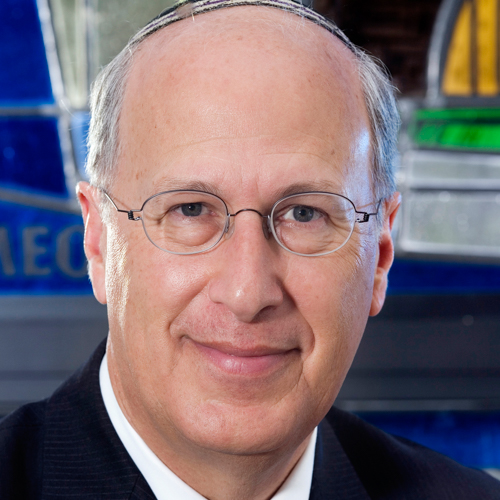
Day Schools Provide the Best Preparation for Civic Engagement

“American education is too much about measuring, and not enough about meaning.”

—Shlomo Bardin, c. 1930

DR. BRUCE POWELL

Most education today focuses upon test scores, college admissions, and measures. We know these are important, but not in isolation, as they have very little to do with what is important in life. While hard work and good grades are expected from our children, we, as Jewish educators, also understand that education in the Jewish community has always been a top priority and a key ingredient to leading a rich, meaningful life imbued with a duty to community and service. Our goal should be to pass down values, culture, meaning, purpose, and behaviors. Josiah Royce put it best: “Teach those skills which the civilization has found to be indispensable.” Nearly all Jewish high schools in North America are college preparatory institutions with extraordinarily high graduation and college enrollment rates. So what does a Jewish high school offer that goes beyond narrow views of educational purpose and is so important, so transformative, so unique, and so worth the journey?

First, Jewish day schools provide a vibrant, intellectual community where students understand that kindness must combine with academics, where powerful knowledge without goodness is a dangerous thing, and where goodness without deep knowledge is weak.

Second, Jewish day schools offer unique and superior academic learning environments where Jewish studies courses enhance the overall academic program. The study of Talmud or Bible, for example, demands continuous engagement with the higher order thinking skills of analysis, synthesis, and evaluation. These thinking skills are core to great writing, literary vision, scientific inquiry, historical understanding, mathematical problem solving, and second or third language acquisition. The hevruta method of learning, for example, a method that teaches 21st-century skills of collaboration, deep questioning, and clear paths to action, is a mainstay of almost every Jewish high school in the nation. This method enables and enhances learning in all disciplines.

Third, Jewish high schools create unique cultures founded upon Jewish values and actions. For example, the Talmud asks six questions of human beings:

  •  Were you honest in business?
  •  Did you make a set time to study?
  •  Did you raise up community?
  •  Did you have hope?
  •  Did you act with wisdom?
  •  Did you understand a big thing from a small thing?

These questions drive students’ thinking in how they interact with their fellow human beings (honesty in business); the importance of lifelong learning; the importance of vibrant community building and an understanding of one’s obligations to that community; how to develop wisdom for life’s tough choices; and

how to gain perspective about what is truly important in life and students thereby develop a mature ability to distinguish what is not worth pursuing.

Fourth, Jewish high schools help students find their “prophetic voices,” using their deep knowledge and skills to determine what is ethical, what is moral, what is obligated, what must be said, and when to remain silent. The prophetic voice continues to power the single, most transformative revolution in human history—ethical monotheism—a revolution that continues to demand moral and ethical behavior and justice, and to envision peace and the unity of humankind.

Fifth, Jewish high schools enable students to discover who they are and what they stand for. Many parents have approached me over the past decades worried that our schools are “too Jewish.” They worry that their children will not be able to handle the multicultural life on American college campuses. They are concerned that the Jewish high school creates a bubble for our children and does not introduce them to the realities of modern life. The opposite is actually the case. Students from Jewish high schools are far better able to handle the social complexities of college campus life. They are secure in their identities. Instead of blending in and disappearing into the vast student populations on large campuses, they stand out. They are able to contribute their unique Jewish culture and values into the multicultural conversations.

Lastly, a Jewish high school is an inclusive community that takes seriously Jewish values such as visiting the sick, welcoming guests, not standing idly by the blood of one’s neighbor, being careful with speech, and embracing the “other.” Jewish values require that our schools include and embrace. Jewish high schools are community assets that welcome all with open hearts and hands.

In the midst of our chaotic world today—constant turmoil, ethical confusion, questionable truths, social insecurities, and lack of clarity regarding the human condition—Jewish high schools are no longer a luxury, but rather an existential necessity for the Jewish community of America. They instill strong Jewish values and learning so as to ensure Judaism’s contribution to America. Jewish high schools provide the content, values, and vision for that unique contribution. Indeed, the Jewish high school moves the vision for education from measuring to meaning.

Dr. Bruce Powell is founder and current head of school of the de Toledo High School (dTHS), formerly New Community Jewish High School, in West Hills, California. In addition to founding dTHS, he has helped to found, develop, and lead two other Jewish high schools in the Los Angeles area over the past 37 years including the Milken Community High School and Yeshiva University of Los Angeles High School. He is a founding DSLTI mentor and has also consulted on the development of 23 Jewish high schools in cities throughout the United States. Dr. Powell holds a PhD in Education from the University of Southern California and has won both the Milken Family Foundation Jewish Educator Award (2005) and the Covenant Award (2008) for his contributions to Jewish education.

Educating for Curiosity, Empathy, and Imagination

NORA ANDERSON

Through the end of the 20th century, education evolved in slow and systemic ways. The Industrial Revolution in the late-19th century ushered in the Industrial Age, and the digital revolution in the mid-20th century spurred the emergence of the Information Age. In the traditional model of education, born in the Industrial Age with a one-size-fits-all approach, students learned about history and how to read, write, and do arithmetic. The education system emphasized memorization and judged students by their ability to recall factoids on multiple-choice exams.

Today, rapidly evolving technology is transforming the way that knowledge is imparted and absorbed. The internet now plays a crucial role in the digital educational environment. In 2005, Daniel Pink wrote the book A Whole New Mind, where he introduced the term “the Conceptual Age.” According to Pink, the Conceptual Age demands that students develop areas of the brain that include empathy, design, innovation, story, play, and meaning—namely, higher-order thinking skills. “If we want students to become good critical thinkers, we need to teach critical-thinking skills, rather than assuming that students need to learn basic skills before they can engage in higher-order thinking.”

Twenty-first-century skills of collaboration, communication, critical thinking, and creativity have changed the way we, Jewish educators and leaders, need to approach the way we teach. The questions we need to answer in an ever-changing world are critical to how we lead our schools. Namely, how do we foster curiosity in our students in both Judaic and general studies? How do Jewish educators ensure that tradition is immersed in new educational methods? Are we throwing out memorization of text for the benefit of critical thinking? What is the role of the Jewish day school educational leader? How do we effect everlasting change that remains true to Jewish tradition while moving students to care? What is innovation in Jewish life? The answers to these questions must reflect the vision, mission, and culture of each school. Yet, without these answers we run the risk of graduating generations of apathetic students who do not see the relevance of elementary, middle, and high school education in their lives.

Albert Einstein said, “Imagination is more important than knowledge. For knowledge is limited, whereas imagination embraces the entire world, stimulating progress, giving birth to evolution.” Imagination, ideation, empathy, creativity, and innovation should not happen in one room or one lab. Imagination and innovation are mindsets that happen in an environment that celebrates students’ stories, passions, interests, and goals. This environment needs to go beyond the “innovation room” or the “makers space” that have become almost ubiquitous in today’s educational landscape. In order to spark each student’s innovative curiosity, these ideals need to be part of a full school culture and the way we teach every child, all the time.

Crucial to this mindset shift is education. Educating faculty happens through systemic and comprehensive professional development and understanding that the changes will not be immediate but will take time. As with every professional development initiative, support, role modeling, feedback, and accountability are the avenues for culture change. Ultimately, we want our Judaic and general studies faculties to have shared language, plan together, and view integration, curiosity, and critical thinking as their mandate and responsibility when teaching the next generation of critical thinkers and leaders.

At Carmel Academy, we have dedicated years of professional development and parent education to ensure that through traditional sacred text learning and critical thinking skills, our students gain empathy for the world, identify needs, and take action. An example of this is our Yamim Noraim project-based learning that we undertook with our middle school students this fall. At the center of Rosh Hashanah tefillot are three unique blessings: Malchuyot, Zichronot, and Shofarot. The liturgy describes three characteristics through which we can relate to God. Malchuyot: crowning God as King; Zichronot: remembrance; and Shofarot: blast that calls to action. Then on Yom Kippur we read the Avodah, the detailed account of ancient Jewish service to God.

Our middle school students learned, experienced, and took action on these blessings—first by studying the verses and then further exploring the meaning of those verses through experiential programs that took them off campus into the real world. We wanted the liturgy to come alive for the students, to transform the words on the page with a clear, cohesive message for the way we live our lives.

Our eighth graders studied the liturgy regarding crowning God as King through the idea of service. In visiting the US Military Academy at West Point, they learned why people dedicate their lives to service through military work. Our students heard about personal sacrifice and the satisfaction of giving back. After the trip, they discussed what it means for them to have a calling to serve something bigger than themselves. They reflected on what might be their calling to serve and how the trip connected back to the Malchuyot prayers.

Our seventh-grade students studied Zichronot, the idea of God as one who remembers our actions, our merits, and our intentions. They visited a cemetery where they cleaned old graves and made “remembrance” stones, which they then placed on the graves of people who are too easily forgotten. They explored the question, “What is the role of memory in our sacred tradition?”

Our sixth graders studied the liturgy surrounding Shofarot and visited the Anshe Chesed synagogue in New York City where they learned about a homeless shelter that runs every night at the synagogue and met with leaders of Midnight Run, which provides food for homeless people. There, the students learned how the synagogue’s call for action is to care for the homeless.

This liturgy asks us to take action, to remember those who are not as privileged as we are, and to support those who face challenges that we cannot imagine. The end result of this project-based, experiential-learning program is enduring lessons that we hope our students will remember and act on for life.

Effective leaders think deeply about the needs of today’s students, they are curious about how to best reach each and every faculty member and child, and they demonstrate and provide space for learning, experimentation, failure, and success. In today’s educational environment, we can claim success when our students leave our schools more curious than when they entered, when they are empathic and assume responsibility for making the necessary changes to improve the world, and when they take risks and understand that failure is part of success.

Nora Anderson is in her 15th year as Carmel Academy’s head of school. She has been a presenter at RAVSAK and PEJE Conferences, served as a mentor in the RAVSAK / AVI CHAI SuLaM program for heads of school with limited Jewish background, and is currently a mentor in the Day School Leadership Training Institute (DSLTI), a joint JTS and AVI CHAI foundation venture. Nora has also served on the Board of the Connecticut Association of Independent Schools (CAIS) and is a member of the CAIS Leadership Institute Steering Committee.

Is Personalized Learning a Path to Reversing Enrollment Trends?

YOSSI PRAGER

Day schools are a supercharged engine of American Jewish life. Research has long shown that they are the strongest generators of Jewish practice, communal life, and charitable giving to Jewish causes. Moreover, research in 2010 confirmed that day schools disproportionately produce leadership for Jewish organizations.

It should not be surprising that day schools have a unique impact. They socialize and educate young Jews when their minds and hearts are, in the words of Pirkei Avot, a clean parchment. They provide children with Jewish community, peers, and role models. Judaism seeps into their being as they gain Hebrew language skills, literacy in basic Jewish texts, the songs and rhythms of Shabbat and holidays, trips to Israel, and other backbones of a rich, multifaceted Jewish life.

In addition to being an engine of Jewish life, day schools reflect Jewish life in the sense that enrollments evolve with the changing demographics of American Jewry. The latest census by Dr. Marvin Schick (based on 2013/14 enrollment data) shows that while day school enrollment grew significantly over the prior 20 years, almost all of the growth had been in the Haredi sector. Modern and Centrist Orthodox enrollment has been fairly steady, while enrollment in non-Orthodox schools has been slipping in recent years, with the greatest decline in Solomon Schechter and Reform day schools. Some of the decline in the Schechter and Reform schools is due to below-replacement birthrate, leading to a smaller pool of children, and another factor is the post-denominational thrust of American Jewish life, which has led some schools to shift their affiliation from denominational to community/pluralistic.

Outside of the Haredi world, the question of how to maintain and increase enrollment is top of mind for day school and other communal leaders. The greatest challenge is for community, Schechter, and Reform day schools, where the declining pool of children means that schools will need to penetrate their markets more deeply simply to maintain a stable enrollment. Expanding enrollment will require even greater penetration.

How can day schools increase their market share?

There is, of course, no simple answer. Part of the solution lies in marketing at the national and local levels, changing the climate of opinion and helping parents to understand the value of day school education. Even communal leaders have wondered how day schools are cost-effective given the proven impact of Jewish summer camping, which costs less. We need to find language that resonates in the 21st century to explain why the outcomes of intensive and immersive Jewish education should not be passed up.

But marketing takes us only partway. Schools must actually succeed in their substantive goals. From a Jewish perspective, if a day school education offers no better Jewish educational outcomes than a summer camp, parents would have every reason to combine public or private school education with summer camping. From an academic perspective—general and Jewish studies—day schools also need a distinctive educational value proposition. In the balance of this article, I introduce the notion of personalized learning and argue that embracing this educational/pedagogic approach has the potential to improve educational effectiveness and give day schools a marketable value proposition: at the leading edge of the personalized learning movement.

PERSONALIZED LEARNING

Say “schools,” and most people picture teachers lecturing at the front of rooms to rows of children in desks. While this style remains common in American education generally, and in Jewish day schools as well, the nature of education is changing, and the pace of change is increasing. These changes are leading to more personalized, and I believe, effective and confidence-building education for students. The summary here is drawn from AVI CHAI’s experience and a forthcoming report on blended learning in 36 day schools by Dr. Leslie Santos Siskin of NYU.

One force driving change is the easy availability of technology. Not long ago, children used computers in labs during one period of the day. Today, more and more schools have the ability to provide a computer for each student as needed (through shared tablets or Chromebooks that are carted around the school). These computers and a slew of free software programs enable teachers to add resources—curricular material, videos, and games—to enrich general and Jewish studies classrooms. And students can access many technological resources to help with homework. For example, websites such as Sefaria enable students to quickly access most of the Jewish canon, with a growing number of texts in English. Khan Academy provides tutoring in math to students who need extra help. And technology enables new kinds of communication with parents, including electronic access to homework, attendance records, and progress reports/grades.

These new resources and communication tools are increasingly common in day schools. A smaller number of schools and teachers are taking the next step, which involves restructuring class time to enable a blended learning approach. Instead of all students learning the same material at the same pace, technology enables students to spend some of their time working independently, at their own pace, using software to learn new material and practice what they have learned. The computer work instantly generates assessment data for teachers who can (with training) tailor their teaching to the individualized educational needs of each child. Having a portion of the students working independently enables educators to teach smaller groups or even individuals as necessary.

The independent student work can be facilitated by software such as i-Ready for math and other subjects, and Lexia for reading On the Jewish studies side, existing curricula such as iTalam for primary-grade Jewish studies and Bishvil HaIvrit/NETA for middle and high school Hebrew language have been upgraded with multi-level games and robust learning management systems (LMS). These systems provide a wealth of data on class and individual performance that can support personalized learning. Some schools have integrated online courses in general and Jewish studies to supplement the course offerings available in school. The Lookstein Virtual Jewish Academy and the Online Judaic Studies Consortium offer different models for fully online Jewish studies courses that can enable schools to offer classes or approaches not otherwise available.

There is one additional, radical step that has thus far been implemented by a small number of schools and teachers. These teachers have not only added resources and restructured class time but have used blended learning to allow for a different kind of relationship between students and teachers. Students gain greater control over the content, pace, and modality of learning, helped by the availability of software and websites that expand the range of ways for students to learn, practice, and produce. Teachers manage the learning process, helping students plan, learn, and then master content and skills. Students demonstrate their mastery at least in part through projects that generate products that are useful to people outside the school community. In the process, students gain increased enjoyment and greater skill.

Such change in instructional role and practices requires high teacher motivation and intensive professional development. What is significant in Dr. Siskin’s research is the shared vision across the 36 schools she studied of a changing role for teachers. Teachers will continue to play a critically important role in support of students and their learning, but frontal teaching will no longer be the norm.

LOOKING FORWARD

As noted above, almost all day schools today offer technology-enhanced education, but the move away from frontal teaching toward student-owned, personalized learning is happening slowly. Many schools prefer slow evolution, especially since personalized learning is still at the cutting edge, meaning that the educational outcomes of the new approaches are not yet proven. Furthermore, a successful change in instructional role and practice requires a massive commitment in which the school’s professional and lay leadership are all explaining and advocating the change to the parent body and larger community. Especially in long-established schools, it is very hard to generate broad-based support for an as yet unproven and thus risky change.

However, I believe that in communities where enrollment stability/growth depends on greater market penetration, the risk of not changing may be greater: a decline in enrollment in schools perceived to be “tired” or of uneven quality. Boldly embracing and then effectively implementing personalized learning offers a change in the equilibrium that holds the potential to rejuvenate or jumpstart the reputation of local schools. More than that, the new pedagogy holds the possibility of enabling each child to maximize his/her own general and Jewish potential. Isn’t that what schools are for?

In addressing the day school recruitment challenges, we can help each other develop the right language to explain why the Jewish outcomes justify the tuition. The actual education is more of a school-by-school decision, based on the educational context and beliefs. Schools seeking to emphasize the distinctiveness of their personalized learning will find support among a still small but growing number of leaders and teachers who are bringing a revolution to their classrooms.

Yossi Prager is North American executive director of The AVI CHAI Foundation. A graduate of Yeshiva College and Yale Law School, Yossi has served on the boards of a variety of non-profit organizations. Yossi lectures and writes on Judaism, Jewish education, and Jewish philanthropy. He is the editor of Toward a Renewed Ethic of Jewish Philanthropy.

Beyond Academic Excellence: Establishing Competitive Advantage in a Challenging Market

DR. MICHAEL A. KAY

Over the past 10 years, the market for North American Jewish day schools, particularly those that are not strictly Orthodox, has shifted dramatically. Affiliation with religious institutions in general has declined, and day school enrollment has been affected by this trend. Financial pressures have increased tremendously, as school tuition has risen faster than disposable income. And the very notion of parochialism in American society has been called into question, challenging schools to make the case for a type of educational community that is often perceived to be insufficiently heterogeneous.

In the corporate world, companies react to evolving market demand in different ways. Some make the bold decision to completely re-envision their products and services in order to meet shifting needs—think AT&T and IBM. Others, such as Chevrolet and Domino’s Pizza, publicly commit themselves to dramatically improving their existing products in order to attract customers to try them anew.

Neither of these approaches is an ideal strategy for Jewish day schools. We are committed to an ancient, sacred mission and to the enactment of a particular vision for the world, rather than to long-term survival for its own sake, and are therefore appropriately reluctant to pursue dramatic redefinition of our basic product. And while it is crucially important for our schools to offer a top-tier general academic program, even dramatic improvement in this area is simply not enough to differentiate ourselves sufficiently. Families have many educational options, and nearly all of them claim academic excellence as a primary selling point—it is therefore unrealistic to expect to attract attention to our schools with a marketing message that sounds like merely another voice in this chorus.

Ultimately, many non-Orthodox day schools face the unenviable situation of a dwindling core target population, strong competition at all price points (including free), and considerable financial and psychological obstacles to attracting the attention of new populations, even if the central educational product is top-notch. Must we therefore resign ourselves to a path of retrenchment?

Not so fast. The key to successfully turning the heads of mission-appropriate prospects who might not have seen themselves as “day school families” may lie in a tripartite strategy: placing our programmatic and marketing emphasis on building character, establishing an educational “Hedgehog Concept,” and promoting our schools as models for the pluralistic Jewish and American societies of the future.

BUILDING CHARACTER

When I speak with families about the factors driving their decision to enroll their children in our school, the concept of Jewish schools as “guaranteed mensch factories” is cited more than any other. This focus on character, values, and kindness is not only a moral imperative, but a strategic opportunity as well. In a world dominated by news of childhood anxiety, bullying, and exclusion, schools that develop reputations as genuine bastions of respect and inclusivity and as incubators of ethical conscience can truly distinguish themselves in a crowded marketplace. Should our schools be able to accomplish this successfully—a difficult task not to be taken for granted, as our communities face the same at-times-insidious social pressures as others—we should be unabashed about promoting it as a selling point. Increasing the likelihood of nurturing a human being of strong character matters significantly to families, even in places where academic rigor reigns.

EDUCATIONAL HEDGEHOG CONCEPT

Jim Collins introduced the Hedgehog Concept in his landmark 2001 book Good to Great, based upon the work of philosopher Isaiah Berlin. Collins argues that every organization should focus its attention on an activity that 1) inspires passion in the organization, 2) is something at which the organization can be the best in the world, and 3) drives the generation of sufficient resources (in the case of schools, students, and funds) to enable the organization to thrive.

Jewish day schools have the capability to draw attention to themselves by establishing a Hedgehog program—something of widespread appeal but outside the traditional core of academic subjects and sufficiently splashy to attract broad attention. At Schechter Westchester, our Engineering and Entrepreneurship (E2) program seeks to fulfill this function. In this four-year sequence, students learn advanced principles of coding, electronics, and physical computing, and they work collaboratively in our three maker spaces to design products, fabricate working prototypes, and pitch their companies to real-life entrepreneurs. Each new product is designed to address a social problem in the world, in pursuit of what we call Tech-un Olam. Parents rave about the technical engineering competencies that the students develop, as well as the creativity, collaboration, empathy, and public-speaking skills that are crucial to success in the program. The number of Schechter Westchester graduates accepted to university programs in engineering and computer science has skyrocketed, and one team has a US patent pending. The program has attracted media attention, hundreds of thousands of dollars in grant funding, and several students who reported that E2 was a decisive factor in their choosing us over public school.

MODELING THE JEWISH/AMERICAN FUTURE

Jewish day schools prepare students more effectively than any other type of institution for engaging with diversity. This seemingly counterintuitive statement may in fact be our most valuable selling point in the 21st century. Jewish tradition has long been characterized by the interplay of multiple perspectives and the imperative to craft community among individuals and groups whose systems of belief and practice differ from one another. Our schools are uniquely suited to inculcate students with strong, individualized identities while preparing them to engage actively with difference in their adult lives. We hear repeatedly from our graduates that on their college campuses, they feel empowered to establish substantive relationships with people whose worldviews and backgrounds differ markedly from their own, because they had spent so much time in their Judaic studies classes learning to articulate their own perspectives and interacting meaningfully and respectfully with people with different viewpoints. By emphasizing our unique ability to train young people of divergent views to build community with one another without seeking homogeneity, Jewish day schools may be able to overcome damaging misconceptions and position ourselves as a highly progressive educational option that is closely aligned with the demands of the modern world.

The fundamental challenge facing our field is ensuring that we can differentiate our schools’ core educational product from that of other outstanding institutions, particularly as our unique brand of Jewish life and learning is proactively sought out by a shrinking core constituency. Once the baseline expectation of fundamental academic excellence—crucial to have, but probably not enough to be truly differentiating—has been ensured, perhaps the most promising path may be to focus our leadership attention on the prioritization of three areas:

  • Cultivating a culture of radical menshlechkeit within the school and—importantly—a public reputation to match;
  • Establishing a buzzworthy Hedgehog Concept program that is related to an academic discipline but sufficiently distinctive; and
  • Emphasizing the critical role that Jewish day schools have to play in modeling the pluralistic world of the future by nurturing the now-indispensable skills of developing an individualized identity, articulating it eloquently, and engaging constructively with people who think and act differently.

This combination may present a key to attracting an ever-broader array of families and enabling our schools to thrive though the uncertainty of a changing market.

Michael Kay is head of school of Solomon Schechter School of Westchester. He holds a PhD in Educational Leadership and Jewish Studies from New York University and a BA in Religion and History from Harvard University. He is an alumnus of the Day School Leadership Training Institute and the Wexner Graduate Fellowship.

Beyond Chemistry: Conditions for Successful Leadership

JANE TAUBENFELD COHEN

The head of school had held his position for two years. The school had added a third kindergarten during his tenure, with plans to continue that growth through eighth grade over the next years. Fundraising totals had tripled since the new head had begun, and the parent survey feedback had improved dramatically each year. By all metrics, the school was succeeding beyond the expectations of the board of directors. And yet, they were not happy with their head of school. Unable to define the gap, they declared it a mismatch from a chemistry perspective and did not renew his contract. The head went on to another school where he reached the same metrics. The board of directors felt incredibly blessed to work in partnership with such a talented leader and offered him a three-year contract with the hope that he would stay for the rest of his career.

We often look at leadership programs and try to design learning opportunities that will prepare our leaders for success in any school. My many years at the Day School Leadership Training Institute (DSLTI) have been filled with amazing successes. Emerging and new leaders explore the content of leadership through the lens of head of school, strengthen their management skills, and build a cohort. They are mentored through a year of practice and both problem solve and spend time on the balcony, examining their role and its leadership challenges from 30,000 feet. Prizmah’s leadership program for leaders include You Lead and HOSPEP, the Head of School Professional Excellence Project. You Lead is content-based, allowing participants to learn from expert facilitators on a variety of topics pertaining to day school leadership and debrief with a cohort of their peers. Because it is primarily completed online, asynchronously, it fits well within the life of a school leader at any level. HOSPEP takes new leaders and provides them with one-on-one coaching designed to develop their ability to think and reflect on leadership. That one-on-one coaching builds leaders’ capacity for deep understanding of the context of the school. All three of these programs are impactful in ways that can be quantified and have made a difference in the readiness of leaders to meet the ever-growing demands of the job.

Yet, we have not yet fully explored the real conditions that a leader needs to succeed. Prizmah, the recently established network of Jewish schools, who, supported by AVI CHAI and through the work of Rosov Consulting, has embarked on a study of existing leadership programs, in and out of the Jewish world. Our goal is to learn from existing examples so that we can design an array of options for professional and lay leaders to develop their skills, their dispositions, and their communities of learners. In addition, the Leadership Academy at Prizmah will spend the year examining and building on the results of that study to further explore those conditions needed for a leader to succeed.

Preliminary reports tell us that one of the study’s findings will relate to leadership dispositions and the way that some leadership programs use the concept of dispositions to frame learning opportunities. A lot of what people mean when they talk about chemistry (or lack thereof) is a reaction to divergent dispositions or to lack of awareness of how one’s unique leadership style functions in various settings with diverse partners. We see this most strikingly in the relationship between the board chair and the head of school. That relationship is built on open and transparent communication characterized by both support and candor. There is a trust that the two parties are in this work together and have each other’s backs. Successful board chairs and heads of school recognize that they may have differing dispositions, but they build a trust-based relationship to make sure those dispositions function in a complementary way for the benefit of the school.

If we can unpack how dispositions function and train our leaders—both board chairs and school professionals—to be more aware of their own and others’ dispositions, I think we can move the needle on that prickly issue of “chemistry.” Understanding dispositions/chemistry, combined with an awareness of the conditions for successful leadership, will go far toward changing the landscape of leadership throughout the Jewish day school field.

Just as important as interpersonal dispositions are the external conditions in which good leadership thrives. The good news is that these conditions—which outlast the tenure of rotating board leaders—can be affected and improved through deliberate and concerted planning and training. Prizmah’s focus groups this year will zoom into the question of the conditions for successful leadership, and the findings will inform the resources we provide in order to support and nurture our leaders.

My work with the many leaders I have had the privilege of coaching has ingrained in me a belief in a number of conditions. We can influence these conditions by promulgating them to board members, search committee members, and heads of school themselves:

  1. From the start, the hiring process needs to be transparent and inclusive. This builds community; ensures that teachers, parents, and sometimes students have a voice; and starts the head off on a good foot.
  2. When a head moves to a new community, the community should work to welcome the whole family and help them get acclimated. We do not do enough to support the spouses of heads of school.
  3. The board of directors has direct responsibility for supporting the head of school. The head needs to work to build the board’s trust, and the board must honor that trust with respect, nurturing, and the benefit of the doubt. There is no perfect head of school. Those who feel like they are in partnership with their boards of directors seem to thrive. Those who do not are often working in a state of tension that does not benefit the school. The support of the school does not need to be uncritical; it should include candor and honesty.
  4. The core values of a board, including self-reflection, need to be constant. While the specific composition of a board will change from year to year, its core values should not. At the same time, the head is in the challenging position of being both the employee of an ever-evolving board and the holder of its core values, even its primary teacher. That dynamic, as anxiety-provoking as it might be, strengthens a school immensely.
  5. There needs to be clear delineation between the role of the board and that of the head of school and professional staff. The relationship between the head and the board chair allows for constant dialogue around the gray areas. There is much that can be read on this subject.
  6. The school needs to be strategic in its work so that it is not only focused on today but also on the future.
  7. Schools that are focused not only on annual fundraising but also on building an endowment ensure that they can succeed in the future with a reduced burden on the annual budget.

These seven conditions certainly intersect with the concept of dispositions, and I have no doubt that what will emerge from the Rosov research will lead to an integrated approach for Prizmah to take in order to influence leadership. We know that day school leadership is lonely and stressful. It is also incredibly rewarding, as each day is filled with joy and purpose, not only for the children in the school but for the generations to come. At DSLTI, Prizmah, and throughout the field, all who are working to develop and support our leaders have the privilege of constantly tapping into research and firsthand experience to ensure that we are providing the tools, the training, and the support for leaders as we build their capacity and entrust them with our Jewish future.

Jane Taubenfeld Cohen is dean of the Prizmah Leadership Academy and a senior mentor at the Day School Leadership Training Institute (DSLTI) at The Davidson School’s Leadership Commons at The Jewish Theological Seminary. She was the head of school at the South Area Solomon Schechter Day School for 22 years and coaches a number of leaders in the day school field.

The Sustaining Nature of Jewish Early Childhood Education

Lyndall Miller

ותאמר רות המואביה אל-נעמי אלכה-נא השדה ואלקטה בשבלים אחר אשר אמצא-חן בעיניו ותאמר לה לכי בתי

Ruth the Moabite said to Naomi, “I would like to go to the fields and glean among the ears of grain, behind someone who may show me kindness.” And [Naomi] replied, “Go, my daughter.”
Megillat Rut, 2:2

I am writing the concluding piece of this Gleanings issue during the end of Sefirat HaOmer, the counting between Passover and Shavuot. On Shavuot, we read the story of Ruth, a woman who left her birth family to find a spiritual parent; who lost her husband, but gained a people; experienced famine yet was brought by love to be the mother of royalty. Ruth was a gleaner, a person who went behind the harvesters to gather what was left, and to make a life out of that sustenance—and what an example she provides for us!

In many ways, this Gleanings—that examines the field of Jewish early childhood education—has been more of a kind of special corner, a peah, left out of the major areas of focus and labor. Those of us who have worked to glean resources, recognition, and appreciation have sometimes had to follow after others. The children in our “field,” after all, are not making decisions about what to do after the celebration of a bar/bat mitzvah, going on a Birthright trip, or finding a life partner. They are learning the power of language, the rewards of relationships, and the wonders of the world, and are completely dependent for their actual survival on others. Their parents are also learning about the power of their presence, the rewards of raising a child, and the challenges of explaining a complex world, and are often dependent upon what we in the Jewish community can offer them. Why see their education, and perhaps even more so their Jewish education, as a major area of cultivation? As these Gleanings articles show, there can be a rich yield from nurturing this field, and from seeing it as a central part of our shared work.

Shellie Dickstein reveals how parents are making important decisions about Jewish education. Her research indicates that, while parents value enrichment for our youngest children (ages birth to two), they approach Jewish enrichment with ambivalence. The reasons for this hesitancy seem to be both that Judaism may be too important—affecting perceptions of their own identity—and that the children are “too young.” The latter is ironic since they are not too young for music, gymnastics, and other kinds of experiences. We know that these parents want their children to have essential physical, emotional, and social skills, yet parents do not yet know that all of these areas can be addressed within a gentle, welcoming Jewish experience. We are indebted to Shellie for her close listening to parents that helps direct our efforts. A gleaning for the bountiful growth of all of Jewish education: listen to and dialogue with families so that the right conditions for everyone’s learning can be provided.

The Jewish Resource Specialist (JRS) project of the Federation of Greater San Francisco addresses this need to be highly responsive to parents and teachers as they explore the ways that they find Judaism meaningful, and relate these ways appropriately to being with children. As Denise Moyes-Schnur describes, the JRS of each school provides information, develops experiences, and is a font of knowledge for those who want more. This program models what can happen when a cohort of individuals in a community collaborate to consider issues in engaging children and parents in Judaism, and then brings both the content and the process back to their individual schools. Relationships are maximized, providing optimal conditions for Jewish engagement to flower. While we can find examples of specialists in other expressions of Jewish education, it is unusual to find such attention given to learners’ “roots.”

The creation of the Shared Communal Goals of Pittsburgh, as relayed by Carolyn Linder, is the result of educators working together across schools to discover both what they consider to be essential characteristics of programs and how each school might express these characteristics. The involvement of parents is a key aspect of the Pittsburgh initiative as well. The foci are quality, engagement, and shared leadership. Jewish education across different age groups in the same institution, never mind across different intuitions, often seems to be happening in separate “plots.” What could cross-fertilize when the entire Jewish educational effort is collaborative in a geographic area?

Anna Hartman presents Chicago as a city with Jewish early childhood education at the center. There are no fewer than five initiatives working as a collaborative ecosystem. The Community Foundation for Jewish Education has originated some of these efforts, and welcomed others. This diverse approach can address the different kinds of hunger for new knowledge and growth throughout the Chicago Jewish early childhood community. In this example, we see collaboration across initiatives as well as across schools in one city, with a strategic plan to examine the synergy between these efforts, which encompass all aspects of Jewish early childhood education from engaging parents to bringing in new teachers to leadership development. How are we cultivating and integrating each other’s ideas across all of Jewish education?

Lisa Farber Miller describes a project addressing parents’ perceptions of Jewish early childhood education in the greater Denver area, looking at the field from a communal perspective. The BUILDing initiative sees the first contact with the family not as a doorway only to an excellent early childhood program, but to a lifelong community. Along with standards of excellence, BUILDing sees itself as a way to reveal and optimize the interpenetrating connections that weave through all aspects of Jewish communal life. Another gleaning that supports the entire enterprise: connect Jewish education to Jewish communal life.

In their article “Heschel at the Gan,” Bill Robinson and Sonya Shoptaugh explain how early childhood education devotes itself to the seeds we plant across the entire field of potential Jewish learning and life-long engagement. In the very contemplation of children, each person engages in introspection—what will our family life be like? What might Judaism mean to me in this new venture? What do I want it to mean to my own offspring? Parenting requires giving life to values. The seeds for a strong flowering of Jewish life are there; they need tender care, even if they are not readily visible.

Megillat Rut ends, fittingly, with the birth of a child. From the sidelines, from a “corner,” both in her origins and her poverty, Ruth gives us David, a central figure in Jewish tradition, and the line of the future Messiah. The knowledge, practices, and initiative of the field of Jewish early childhood education may play a central role in the future vitality of Jewish life and learning.

Lyndall Miller, MEd, MAJEd, MSEd, is the director of the Jewish Early Childhood Education Leadership Institute (JECELI), a collaborative effort between The Jewish Theological Seminary and Hebrew Union College.

The Growth of Jewish Early Childhood Education in the City of Bridges

Carolyn Linder

Visitors to Pittsburgh are often surprised to discover that our city is bursting with bridges, a total of 446 to be exact. We are officially the city with the most bridges in the world, with even more than Venice, Italy. For many residents, the bridges represent the city’s historic ties with industrial production, engineering, and steel. For Pittsburgh’s Jewish community, the bridges serve as a metaphor for our ongoing work in enhancing the quality and impact of Jewish early childhood education.

Our community’s path toward excellence in Jewish early childhood education is rooted in the fundamental belief that young children are strong, capable, and filled with an incredible sense of wonder. We strongly advocate that young children, alongside educators, should be co-constructors of their educational experiences. Our shared communal goals seek to inspire our educational community to create flexible, relationship-driven learning environments that foster creativity, celebrate each young child’s identity, and reflect each school’s unique values. We do not seek to set standards by means of achievement targets. We see these early learning years as an opportunity to foster critical thinking, creativity, communication, and collaboration.

At the very core of any quality program is its staff. A quality early childhood education program supports its staff with opportunities to continue to study and grow in their field, as well as with adequate pay and benefits. Low compensation for early childhood education educators is a national problem, not just a Jewish one, and certainly not one that is unique to our community. Low wages and limited or no benefits for Jewish early childhood educators create a strong barrier for individuals entering the profession. The reality is that quality care is expensive because quality care requires people of ability and training, who must be paid adequately if they are to be attracted to this field of work. Through our ongoing commitment to improving the quality of education, to increasing meaningful opportunities for Jewish living and learning, to strengthening the ties between the early childhood education program and its host institution, to creating effective and targeted marketing strategies, we hope to begin to bridge the divide among compensation and retention of educators by helping to influence perceptions about Jewish early childhood education as an important long-term investment.

As a result of our commitments, a pilot project that started six years ago in three Pittsburgh Jewish early childhood education centers has now grown into an initiative at nine of our eleven programs. Our community’s path toward excellence has meaningfully engaged families who are raising young Jewish children and seeks to increase the number of those choosing to send their children to a Jewish early childhood education program. There are essential requirements for this work in order for it to be deep and authentic. These include synergy within each early childhood education program and its host institution, a significant financial investment by these groups as well as the larger community, and a tremendous commitment from all stakeholders.

We remain focused on interlocking strategies for the greatest impact by bridg-ing together key, but often siloed, aspects of this work. Last year, under the auspices of the Jewish Federation of Greater Pittsburgh, nine directors from our community’s early childhood education programs worked together to create shared communal goals for excellence in Jewish early childhood education. These goals resulted

in standards that articulate a deep commitment to examining and implementing the best practices of teaching and learning in a nurturing environment which provokes exploration, experimentation, problem-solving, negotiation, communication, and collaboration. We strive to create rich environments imbued with Jewish values where all young children learn, play, and grow together. Our collaborating directors then created rubrics by which these goals could be measured, allowing each center to assess its progress as it continues on its own plan for growth. We have intentionally chosen not to create or recreate an accreditation process, but rather to focus our efforts on an ongoing process that fosters a culture of reflection and continuous improvement.

This effort—the Early Childhood Education Rubric Program—identifies key elements across all of our nine programs and allows us to define standards that will guide even higher levels of excellence while maintaining and cultivating each program’s unique identity. Ultimately, our work will allow us to bridge together three core components that have emerged: quality early childhood education, engagement of families in meaningful Jewish living and learning experiences, and shared leadership. The level of collaboration among the diverse participating programs is unprecedented, and it underscores how dedicated each institution is to providing quality and collaborative education with high family participation through meaningful Jewish living and learning opportunities.

Following this yearlong revisionary process, the programs recently participated in a comprehensive baseline assessment measured against our shared communal goals. Conducted by our outside assessor, Dr. Roberta Goodman, the purpose of the assessment was to get a picture “at this time” of what each Jewish early childhood center looked like in relation to our shared communal goals. The leaders of each school can use this information as they determine logical next steps to further strengthen their programs. Over time, this process will allow the schools to see where and how they have grown. The candor of what was shared by each school through photo documentation, evidence gathering, observations, and interviews made this process authentic and powerful.

Each center then received an individual and detailed assessment report. With support provided by a consultant through the Jewish Federation of Greater Pittsburgh, this information is enabling each school to build an individualized, multi-year growth plan. By participating in a cyclical, data-driven quality improvement process, each center is systematically and intentionally improving services and increasing positive outcomes for the young children and families it serves. Assessment, reflection, planning, and implementation are all part of a continuous cycle of improvement, a commitment of striving for excellence. Some programs are working comprehensively and simultaneously on many goals, while others are focusing their efforts on a smaller number of targeted, specific goals. Our Federation has partnered with the schools by creating and implementing the assessment process and by helping to support the implementation of the growth plans. By identifying specific tasks, evidence of success, timeline, individuals involved, and budget, each school’s growth plan has a particular focus and intentionality. The growth plans will also address the ongoing need for targeted professional development in many forms (i.e., coaching, consultation, communities of practice, professional networks, conferences/workshops/courses, site visits to other settings, study seminars, etc.).

As we now have a strong infrastructure in place to help support these programs on their continuum toward educational excellence, the next bridge for us to cross is to better understand and address existing barriers which may be preventing more families from enrolling. From lessons learned, we know that many factors go into a family’s decision regarding the selection of an early childhood education program. Factors such as geographic access, hours of operation, affordability, and quality significantly influence families’ decision-making. Therefore, in tandem with our early childhood education programs, we launched a yearlong mystery shopper program. Mystery shopping is a way for us to gather objective feedback from families on sales and customer experience performance in the marketplace. Used by industries providing services for their customers, this process produces both quantitative and qualitative data. Our program is designed to measure how families see the early childhood education programs in web, telephone, and in-person interactions. The data obtained from this study will help to guide our thinking and planning around such areas as marketing, customer service and retention, enrollment conversion, and family engagement. Ultimately, with this data we will be in a more competitive position when serving the educational needs of our families.

The success of a community-based effort relies, in part, on bridging together broader supports and services. To be successful, an initiative has to meet the needs of the community, and sustaining a community-based initiative requires intentional and ongoing effort.

Carolyn Linder has been in the field of Jewish early childhood education for over 30 years. As the director of early childhood education at the Jewish Federation of Greater Pittsburgh, she brings her passion and experience by providing leadership to the Jewish early childhood learning community and helps to develop the highest-quality programs for its youngest learners and their families.

MORE ARTICLES FROM “GLEANINGS”

READ NOW