Let us be honest with ourselves. Non-Orthodox Jewish day schools in the United States are at risk of becoming dinosaurs. Many Jews consider us parochial, insular, and as particularistic institutions in an increasingly universalistic world. Even as there is a rise in explicitly expressed anti-Semitism across this nation, the spirit of the communities in which many of us reside is still characterized by diversity, integration, universalism, and freedom. As a result, many Jews in these communities do not perceive Jewish day schools as reflecting these ideals.
The seismic shifts in both my home community and on the national level are telling: the number of Jewish preschools and non-Orthodox synagogues in greater Boston has decreased dramatically in the last few years, while formerly separate day school networks have combined to form one national organization. Moreover, the cost of private education continues to present an insurmountable challenge for many families. The National Association of Independent Schools’ data offers clear evidence that the number of families attending private schools has declined sharply as fewer in the middle class can afford it.
With interest and enrollment shrinking, day schools are in the precarious position of being at the nexus of two waning endeavors: the commitment to traditional Jewish institutions and the ability to pay for private schools. As things stand, there is more and more pressure on day schools to prove their raison-d’être. And yet, from my vantage point, non-Orthodox Jewish day schools remain a critical part of the Jewish fabric of our communities, and therefore I argue here that we must remain committed to this sacred work.
We must ask complex questions: Why are we here? What are we trying to accomplish? What can (and what do) we offer our children that is different from the schools around us? How do we prepare our children for an increasingly diverse, rapidly changing world? I believe the responsibility to respond thoughtfully, intentionally, strategically, and sustainably to these questions is shared by both day schools and the broader Jewish communities they serve.
In regards to purpose and presence, research has already shown that future lay and professional leaders of the Jewish community are far more likely to come from day schools. Our collective future thus demands strong Jewish days schools. Moreover, those who currently work for the Jewish community need—and deserve—a top-notch school for their own children.
To state the obvious: Jewish day schools need to continue to be academically excellent in order to prepare our children for the world they will enter, and we must promote this excellence as a core rationale to prospective families.
We must embrace and institute educational programs that reflect current advances from general education. We need to read, research, and respond to the most cutting-edge ideas and practices in the classroom. For us, this means teaching engineering and robotics as part of our expanded and integrated STEAM (Science, Technology, Engineering, Arts, and Math) program, and incorporating instructional strategies that serve the increasingly diverse academic needs of our student body.
Academic excellence is critical, but it is not sufficient. We hold as our sacred missions the development of our children’s spiritual and emotional growth, alongside their intellectual development. For example, at Boston’s Jewish Community Day School (JCDS), we are one of three Jewish day schools in the country currently engaged in a pilot partnership with the Institute for Jewish Spirituality in which we are bringing mindfulness practices to our students, faculty, and staff. We have also created a comprehensive framework for teaching the Habits of Heart and Mind that enable our students to develop a strong sense of individual identity and the know-how to contribute to our pluralistic community with integrity, empathy, and humility.
Jewish day schools should also work to broaden the community of Jewish people we welcome into our buildings and at the same time engage more authentically with the world beyond our walls. As a former executive coach once shared with me, “We need to figure out how to be more like Netflix and less like Blockbuster.” We need to courageously adapt to, and innovate within, a shifting Jewish landscape, or we will be out of business.
At JCDS, we think proactively about how to be a welcoming space for the richly diverse Jewish population of greater Boston. We have made a concerted effort to be a school for families, including interfaith families, who share a commitment to raising Jewish children. We count ourselves fortunate to have families that represent a diverse range of Jewish ritual practice, observance, and beliefs, as well as ethnicity, socioeconomic status, race, and family structure.
If we are living up to our highest purpose as Jewish day schools, broadening our tent is a start, but it’s not enough. We must explicitly teach our children how to engage with difference. A presence of diversity in schools does not actually mean that children are interacting with those different from themselves. At our intentionally pluralistic school, we prioritize teaching our children how to accept and to engage with people different from themselves. We explicitly and repeatedly offer our students the opportunities to develop the requisite skills, capacities, and inclinations to accomplish this. Once acquired, JCDS students have these skills for a lifetime. Thus, as our children grow, they are able to apply what they have navigated in the particular to the context of the universal.
There is much that we as Jewish day schools can do to remain relevant, fulfill our missions, and enact our values. And yet, despite our best efforts, we do not have the necessary financial resources to accomplish our goals. A community-wide response is needed. Schools, particularly small schools, cannot bear this responsibility alone. Many current parents at JCDS, for example, are already struggling to make tuition payments and are unlikely to give large gifts to the school’s annual fund.
I am concerned these issues will only worsen without serious investment from the broader community who can contribute meaningful resources to the schools that shape our children’s futures. There is great urgency to this now. If wealthy benefactors and thought leaders within a community care about the caliber of future Jewish leaders, if they seek to attract compelling Jewish communal professionals, and if they wish to create a vibrant, engaged and sustainable Jewish community, then they should be supporting their local day school and the national programs that support them, regardless of whether their own children or grandchildren attend.
I am hopeful that our future is bright and therefore remain as committed to this sacred work as ever. I feel confident that we will discover new, creative ways to use the current challenges as an opportunity to strengthen our institutions and communities, for our children. I can’t wait to see where we go.
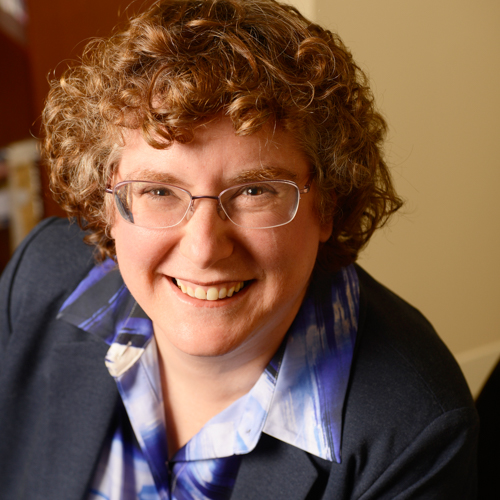
Dr. Susie Tanchel is head of school at Boston’s Jewish Community Day School and a DSLTI alum. Dr. Tanchel holds a BA and PhD from Brandeis University. She has taught in pre-service teacher education programs, as well as many adult education classes in the greater Boston area.