

Search Results
Back to JTS Torah Online's Main page
Blessing and Curse
Aug 21, 2013 By Arnold M. Eisen | Commentary | Ki Tavo
This week’s portion contains some of the highest highs and lowest lows in the entire Torah—or in any other work of literature, for that matter. At the start of the parashah, Israelites in the wilderness are asked to picture what it will be like to testify, from inside the Land of Israel, that they have seen God’s promises of blessing fulfilled. At the end of the parashah, those same Israelites are subjected to 54 verses of terrifying curses detailing the punishments awaiting them “if you fail to observe faithfully all the terms of this Teaching” (Deut. 28:58).
Read More
“Which You, O Lord, Have Given Me”
Aug 21, 2013 By Matthew Berkowitz | Commentary | Ki Tavo
Having underscored the role of memory at the conclusion of last week’s parashah (remembering the cruelty of Amalek), Torah now accentuates the importance of appreciation in Parashat Ki Tavo.
Read More
We Have Met the Enemy, and the Enemy Is Us
Aug 14, 2013 By Marc Gary | Commentary | Ki Tetzei
How does war affect the human soul? Our Torah portion, Ki Tetzei, begins with a verse that raises these issues in a stark and discomfiting manner.
Read More
“No’am Adonai” (the Beauty of Adonai): Psalm 27 and Elul
Aug 14, 2013 By Samuel Barth | Commentary
“[L]ahazot beno’am Adonai ul’vaker b’heychalo” (To gaze upon the beauty of Adonai, and to visit in God’s sanctuary) [Ps. 27:4]d
Read More
Ethics of War
Aug 14, 2013 By Matthew Berkowitz | Commentary | Ki Tetzei
Parashat Ki Tetzei opens by teaching one of the biblical ordinances related to ethical conduct in war.
Read More
Roads to Nonviolence
Aug 7, 2013 By Ofra Arieli Backenroth | Commentary | Shofetim
Is there a way to wage war in a humane way?
Read More
Healing of Body and Soul (Part 2)
Aug 7, 2013 By Samuel Barth | Commentary
If an anthropology student from the University of Mars were to attend a Shabbat morning service in an American Jewish synagogue, what kind of understanding about our real synagogue lives might emerge in the student’s term paper on the topic? The essay might suggest that announcements and kiddush are the most important parts of the experience because that is when the most people are present. The Martian professor (whose appearance we will not explore here) might urge the student to be more subtle and to observe closely the body language of the human participants to discern which parts of the service are most engaging and important to those present.
Read More
Leave Egypt Behind
Aug 7, 2013 By Matthew Berkowitz | Commentary | Shofetim
The Cairo Genizah—a treasure trove of Jewish history rediscovered by Solomon Schechter toward the end of the 19th century (43,000 fragments of which are housed in The Library of The Jewish Theological Seminary)—attests to the rich Jewish life that flourished in Egypt and beyond.
Read More
The Song of Berditchev
Aug 5, 2013 By The Jewish Theological Seminary | Podcast or Radio Program
What happens when a rabbi refuses to continue Yom Kippur services? Find out in this archival recording of The Eternal Light radio program from 1953.
Read More
Balancing Peshat and Sensitivity
Jul 31, 2013 By Matthew Berkowitz | Commentary | Re'eh
Parashat Re’eh contains a categorical pronouncement against idolatry in the Land of Israel.
Read More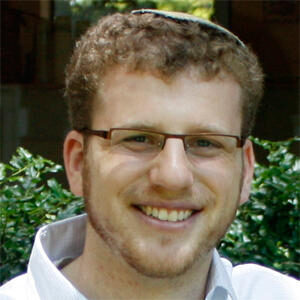
Bacon in the Season of Repentance
Jul 31, 2013 By Charlie Schwartz | Commentary | Re'eh
As it becomes clear that living and dealing with “bacon mania” is part of early 21st-century life in the United States, now is a good time to reflect on the Jewish prohibition of eating pork, which appears in this week’s parashah.
Read More
Healing of Body and Soul (Part 1)
Jul 31, 2013 By Samuel Barth | Commentary
In addition to the well-known mi sheberakh prayer for healing recited (or sung, in modern versions) during the Shabbat Torah Service, our liturgy engages with the theme of healing in the weekday ‘Amidah, in the blessing that begins, “Refa’einu Adonai veneraf’ei, hoshi’einu venivashe’a” (Heal us, Adonai, and we shall be healed, save us and we shall be saved). The blessing continues, asking for complete healing (refu’ah sh’leymah) for all among the People of Israel who are unwell.
Read More
Living in Uncertain Times: Responses to Crisis in the Bible and in Our Own Lives
Jul 24, 2013 By The Jewish Theological Seminary | Public Event video
Whether dealing with personal crisis or collective catastrophe, recovering from emotional and physical hurt is difficult. How do people in the Bible respond to disaster and suffering? And how, from an emotinal and psychological perspective, can these models guide us in coping with and recovering from trauma?
Read More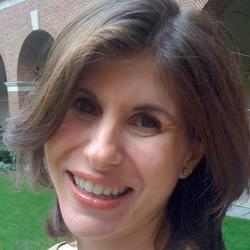
Consolation and Repair
Jul 24, 2013 By Abigail Treu | Commentary | Eikev
Here we find ourselves two weeks into the seven weeks marked ever so gently by their haftarot, the shiv’ah d’nehemata (seven haftarot of comfort or consolation)—seven weeks in which the haftarot have nothing to do with the parashiyot, and everything to do with where we are in the calendar year: heading from Tish’ah Be’Av into the season of teshuvah, and ultimately into a new year.
Read More
Gratitude for the Land
Jul 24, 2013 By Matthew Berkowitz | Commentary | Eikev
Parashat Eikev is centered on the Land of Israel.
Read More
Separation and Connectedness
Jul 17, 2013 By Leonard A. Sharzer | Commentary | Va'et-hannan
In Parashat Va-ethannan, Moses seems to have finally come to accept that he will not enter the Promised Land with the People, whom he liberated from Egyptian slavery and guided during a 40-year trek through the wilderness. As he concludes his first oration, he recalls his pleading with God to allow him to enter the Land, a plea that was denied because of his response to the demand of the People for water. Now, no longer pleading for a pardon, or even a commutation of the sentence, he exhorts the People to follow God’s commandments and the teachings he, Moses, has transmitted to them.
Read More
Jerusalem
Jul 17, 2013 By Samuel Barth | Commentary | Tishah Be'av
As we emerge from our encounter with destruction and desolation on Tish’ah Be’Av, we approach Shabbat Nahamu, named for the opening words of the haftarah “Nahamu nahamu ami” (Be comforted, oh be comforted My people; Isa. 40:1). This becomes the week when we allow ourselves to encounter all the images of Jerusalem that are presented to us as signs and symbols of hope in our liturgy.
Read More
Humility Toward God, Even in Victory
Jul 17, 2013 By Matthew Berkowitz | Commentary | Va'et-hannan
Parashat Va’et-hannan, the second Torah reading of the book of Deuteronomy, places much of its emphasis on the loyal observance of mitzvot, God’s commandments.
Read More
The Laws of Tisha Be’Av
Jul 15, 2013 By Isaac Klein | Tishah Be'av
From: A Guide to Jewish Religious Practice
Read More
A Just and Sustainable Society
Jul 13, 2013 By Daniel Nevins | Commentary | Devarim | Tishah Be'av
What is your vision of a righteous city? This is an important question, because this week is known as Shabbat Hazon, the Sabbath of Vision, and the vision offered by our prophets is that of a city that has gone astray, abandoning the path of righteousness.
Read More


SUBSCRIBE TO TORAH FROM JTS
Our regular commentaries and videos are a great way to stay intellectually and spiritually engaged with Jewish thought and wisdom.