

Search Results
Back to JTS Torah Online's Main page
The Doubtful Path to God
Jan 21, 2012 By Charlie Schwartz | Commentary | Text Study | Va'era
Parashat Va-era opens with a dejected and depressed Moses, crestfallen after an unfruitful encounter with Pharaoh. From the text it seems that Moses had expected the redemption of the Children of Israel to be a quick in-and-out operation, leading to his dismay when the full extent of his mission became clear. This first verse of the parashah, which our midrash builds upon, forms a kind of pep talk from God to Moses, with the Divine trying to reinvigorate and restore faith to God’s servant.
Read More
Transformative Women
Jan 16, 2012 By Daniel Nevins | Commentary | Vayeshev
Male characters and voices dominate biblical literature, yet the near-absence of female characters is particularly striking in Parashat Va-yeishev. Here is the story of Jacob (his wives don’t appear) and his 12 sons (his daughter doesn’t appear) exploring the world of men—in the field, on the road, in the city, and in prison. These narratives are rough and even violent, and this tone carries over to the two stories in which women do appear: Judah’s coarse treatment of Tamar and Joseph’s encounter with Potiphar’s unnamed wife, who physically accosts him.
Read More
Israel’s Quarterback Problem
Jan 14, 2012 By Marc Wolf | Commentary | Shemot
Having concluded the saga of the matriarchs and patriarchs, we encounter a pharaoh who does not know Joseph—or chooses not to remember the good things he did for Egypt. The tide quickly turns, and the Children of Israel face a harsh new reality. As if enslavement were not enough to break the spirits of the descendants of Jacob, the pharaoh codifies cruelty into law and seeks to exterminate the Israelite population. The harsh decrees of the pharaoh actually end up setting the scene for the birth of Moses.
Read More
Moses on the Nile
Jan 14, 2012 By Rabbi Abigail Treu | Commentary | Text Study | Shemot
Here we are given a midrash imagining not only Miriam’s role as a young prophet, but also the emotional turmoil she and her father, Amram, endured as Moses is born and then sent off in his basket down the Nile.
Read More
Was Abe Lincoln Honest?
Jan 7, 2012 By David Hoffman | Commentary | Vayehi
A well-known reading of our Torah portion for this Shabbat finds a source from the story of Joseph’s interactions with his brothers for the idea that the small fib—the white lie—is religiously justified in certain circumstances.
Read More
A Deathbed Blessing
Jan 7, 2012 By Andrew Shugerman | Commentary | Text Study | Vayehi
This midrash about Jacob’s deathbed scene presents ancient rabbinic wisdom about mortality based on insights from key passages in the Hebrew Bible. By presenting biblical metaphors alongside our patriarchs’ experiences of dying, the text above teaches us to accept our limited lifetimes by acknowledging an uncomfortable reality.
Read More
Forgiveness
Dec 31, 2011 By David Marcus | Commentary | Vayiggash
Parashat Va-yiggash continues the longest narrative in the Torah, that of Joseph and his brothers.
Read More
Tears for the Temples
Dec 31, 2011 By David Levy | Commentary | Text Study | Hanukkah
Reading this makes me think of the breaking of the glass during a Jewish wedding ceremony. In a moment of sheer joy at the marriage, we break a glass to remember the Temple and that our joy cannot be complete in light of its destruction. Here, too, the Rabbis imagine, Joseph and Benjamin cannot fully enjoy their moment with the foreknowledge that the Temples will be destroyed.
Read More
Why There Is Suffering
Dec 24, 2011 By Charlie Schwartz | Commentary | Text Study | Miketz | Hanukkah
Who among us has not experienced suffering? After all, loss, sadness, and struggle are as much a part of life as joy, happiness, and triumph. This is as apparent in the emotional arc of Joseph and his family in parashat Miketz as it is in life’s experience.
Read More
Slaves Will One Day Be Free
Dec 17, 2011 By Rabbi Abigail Treu | Commentary | Text Study | Vayeshev
In the narrative unfolding of the biblical drama, the Joseph story accounts for the arrival of Jacob’s sons and their descendants in Egypt. It also serves to introduce one of the main themes to emerge from the rest of the biblical story: the overturning of oppression with redemption.
Read More
I Stayed with Laban
Dec 10, 2011 By Robert Harris | Commentary | Vayishlah
The opening verses of this week’s parashah recount Jacob’s decision, upon returning home after 20 years of “living abroad,” to get in touch with his brother, Esau. You may remember that they—ahem!—had not parted on the best of terms (see Gen. 25:27-34 and especially Gen. 27:1-41 for the gritty details). At the beginning of the parashah, it is not yet clear to what extent Jacob is motivated by fear, by friendliness, by craftiness—or by some combination of these and potentially other concerns.
Read More
A Painful Embrace
Dec 10, 2011 By Andrew Shugerman | Commentary | Text Study | Vayishlah
Rarely do I find a midrash like the one above that reflects love and hate, admiration and anger, in a single passage about how Jews relate to Christians. While the two rabbis quoted here agree that a peculiar scribal feature is crucial to understanding Jacob and Esau’s reunion, they fundamentally disagree about what that detail signifies.
Read More
Between Dante and Jacob
Dec 3, 2011 By Marc Wolf | Commentary | Vayetzei
For Parashat Va-yetzei, although the times are different, the convention is the same and, for us, the question all the more poignant: What is the role of Jacob’s romantic love for Rachel? Does romantic love set us up for an unfulfilled life?
Read More
Torah As Water
Nov 26, 2011 By Charlie Schwartz | Commentary | Text Study | Toledot
The metaphor of Torah as water has always resonated with me. With Torah as water, the idea of learning, engaging with, and living through our sacred texts comes into focus. Just as we cannot live for long without water, so too will our lives become desiccated and empty without the study of Torah.
Read More
Honoring Teachers
Nov 26, 2011 By David Levy | Commentary | Text Study | Vayetzei
Picking up on the surprising mention of Abraham as Jacob’s father, we learn an important lesson about the roles different people can play in our lives. Each of us who has been taught by someone is obliged to honor him/her as we would our parents. And the extension of this teaching is that each of us has the potential to play this important role in someone else’s life.
Read More
Conflicted Relationships
Nov 25, 2011 By Arnold M. Eisen | Commentary | Toledot
At the start of this week’s parashah, and again at its conclusion, we confront the complex, conflicted relationship that binds Isaac’s twin sons to one another and to their father. The middle section of the parashah, by contrast, is concerned with the no less complex and conflicted relationship that binds Isaac and his family to their neighbors.
Read More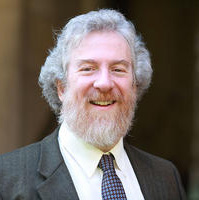
To Speak Is To…
Nov 19, 2011 By Samuel Barth | Commentary | Hayyei Sarah
After the many narratives that explore deeply the life of Abraham and his family, we find in this portion an interlude in which the focus is upon Abraham’s elder servant—not named in our text, but often assumed to be Eliezer (mentioned in Gen. 15:2). Eliezer has been charged by Abraham to find a wife for Isaac—not from the local (Canaanite) population, but from Aram, the place of Abraham’s birth.
Read More
Our Aging Bodies
Nov 18, 2011 By Rabbi Abigail Treu | Commentary | Text Study | Hayyei Sarah
If the rabbis could imagine Abraham’s dismay at the physical signs of aging, how much more so for us, men and women, living in a culture in which we are constantly bombarded with visual images of young, vigorous bodies?
Read More
Sustaining Our Hearts
Nov 12, 2011 By Andrew Shugerman | Commentary | Text Study | Vayera
On its face, this midrash may seem to state the obvious: that eating bread gives one energy. After all, a look at our food packaging today reveals the ingredients and nutrients contained in any given product. This text, however, teaches that not all nourishment comes in physical form. The deceptively simple statement that “bread strengthens the heart” and the prooftexts that follow it actually provide a subtle commentary to the notion that “man does not live on bread alone” (Deut. 8:3); indeed, we derive sustenance at least as much from our gratitude for the company we keep and for the blessing of hospitality.
Read More
Going Toward the Present
Nov 11, 2011 By David Hoffman | Commentary | Vayera
Martin Buber, the great 20th-century Jewish theologian, observed a powerful literary connection between the beginning of Abraham’s life and the end. God first speaks to Abraham suddenly, seemingly without introduction, and commands: “Go forth (lekh lekha) from your native land and from your father’s house to the land that I will show you” (Gen. 12:1). With these few words, God introduces God’s Self to Abraham and it is with these words that their relationship is founded.
Read More


SUBSCRIBE TO TORAH FROM JTS
Our regular commentaries and videos are a great way to stay intellectually and spiritually engaged with Jewish thought and wisdom.