

Search Results
Back to JTS Torah Online's Main page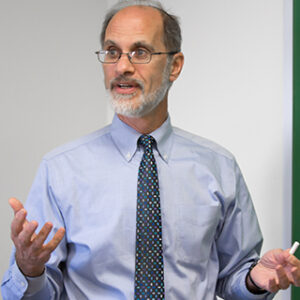
What a Manuscript Can Teach Us about the Jews of Medieval France
Dec 7, 2020 By David C. Kraemer | Short Video
Dr. David Kraemer explains what we can learn about the everyday lives of medieval French Jews from the text—and the margins—of a manuscript from the JTS Library collection.
Read More
Borukh Ate
Dec 7, 2020 By The Jewish Theological Seminary | Short Video | Hanukkah
“Borukh ate” zingt der tate—a father sings the opening words of the blessing, and kindles the light, and its soft rays fall on his pale face. With just a few words, the poet Avrom Reisen paints a picture of a slightly stooped, weary man, who somehow finds meaning and holiness in a simple act of lighting the Hanukkiah. The gentle melody, almost a lullaby, reminiscent of a folk song, yet soaring with emotion, was written by a composer Solomon Golub.
Read More
Communings of the Spirit, Vol. III
Dec 7, 2020 By Library of the Jewish Theological Seminary | Public Event video
A discussion with Dr. Mel Scult: Mordecai M. Kaplan, the founder of Reconstructionism, and the rabbi who initiated the first Bat Mitzvah, also produced the longest Jewish diary on record. In 27 volumes, running from 1913 to 1978, Kaplan shares with us not only his reaction to the great events of his time, but also his very personal thoughts on every aspect of religion and Jewish life. In this volume, editor and Kaplan biographer Mel Scult presents Kaplan contemplating the momentous events of the 1940s.
Read More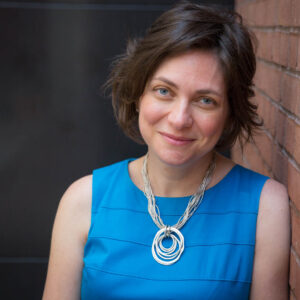
Trauma and Testimony in an Oversharing Society
Dec 7, 2020 By Edna Friedberg | Public Event video | Video Lecture
The pandemic has forced us to live much of our lives online. But what happens when experiences that used to be private and intimate are exposed to the glare of public scrutiny? How is the impact of experience changed by retelling it, and does sharing our experiences make them more meaningful? This is a discussion of how refugees from war-torn Europe were recast as “Holocaust survivors” and how trauma morphs when repackaged for broader consumption. The session will include pioneering early audio and film recordings of survivors as young people in the 1940s and 50s.
Read More
Having It All
Dec 4, 2020 By Matthew Berkowitz | Commentary | Vayishlah
After twenty years of estrangement, Jacob and Esau encounter one another yet again. Time has somewhat softened the bitterness and pain of the injustice done to Esau in Jacob’s theft of the blessing. And Esau has come to his senses, realizing that the murder of his brother will not right the wrong committed under the aegis of his scheming mother. Still, at the beginning of our parashah, Jacob is so uncertain and fearful of the encounter between him and his brother that he plans for the worst—dividing his family into two camps (lest one be destroyed, the other half will survive) and wrestling with the mysterious assailant (which portends his coming to terms with the misstep he committed so many years prior). Clearly, given what Jacob experienced in Laban’s home, the blessing received from Isaac has yet to come to fruition.
Read More
Bound in the Bond of Life
Dec 1, 2020 By Library of the Jewish Theological Seminary | Public Event video
A discussion with author Dr. Beth Kissileff: On October 27, 2018, three congregations were holding their morning Shabbat services at the Tree of Life Synagogue in Pittsburgh’s Squirrel Hill neighborhood when a lone gunman entered the building and opened fire. He killed 11 people and injured six more in the deadliest anti-Semitic attack in American history. The story made international headlines for weeks following the shooting, but Pittsburgh and the local Jewish community could not simply move on when the news cycle did.
Read More
The Certainty of Uncertainty
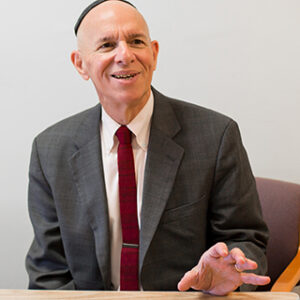
Nov 30, 2020 By Alan Cooper | Public Event video | Video Lecture
Psalm 84, quoted in the Havdalah service, assures us that human felicity arises out of trust in God. But trust is hard to come by, and felicity seems remote in times of duress. In this session we will examine biblical texts that acknowledge the challenges of doubt and uncertainty and offer ways of meeting those trials with hope, faith, and trust.
Read More
The World in God
Nov 27, 2020 By Gordon Tucker | Commentary | Vayetzei
Our patriarch Jacob reaches a night camp on his way to Haran, a fugitive from the anger of his brother Esau. And then the text of Genesis 28:11 tells us: Vayifga bamakom. The New Jewish Version translation [JPS 1962] renders that phrase according to its straightforward, contextual meaning [peshat]: “He came upon a certain place”—a place that we learn was first called Luz, and later Bet-El. But while the peshat is the primary way of reading a biblical text, it is almost never the only way to do so.
Read More
The Real Lives of Jews in the Traditional World
Nov 23, 2020 By David C. Kraemer | Public Event video | Video Lecture
Many of us know the “official version” of the lives of Jews through the ages, according to which Jews were pious and thoroughly immersed in Jewish life—a life apart. But many of the rare materials in the JTS Library offer a different picture, according to which Jews lived in the world with their neighbors, experiencing life first as human beings and then as Jews. Dr. David Kraemer shares evidence from the Library’s great collections, surprising and even shocking you with a corrective to commonly repeated historical “truths.”
Read More
The Wholeness of a Broken Heart
Nov 23, 2020 By Mychal Springer | Public Event video | Video Lecture
Life’s challenges raise up the reality of human vulnerability. Too often, people experience the heartbreak of suffering. In this session we will explore the paradoxical teaching of the Kotzker Rebbe that “there is nothing more whole than a broken heart.”
Read More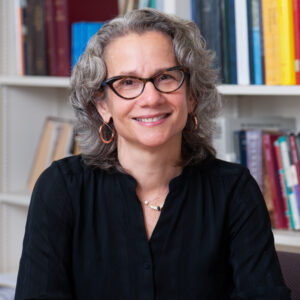
Esau’s Primal Scream
Nov 20, 2020 By Amy Kalmanofsky | Commentary | Toledot
Sometimes words fail us. When they do, depending on the cause and our own propensities, we resort to song, dance, or other forms of wordless expression. And sometimes we scream. Primal screams that communicate an agony beyond verbal expression resound throughout the Torah.
Read More
A Dialogue of Love: Interreligious Cooperation and Global Well-Being
Nov 16, 2020 By The Jewish Theological Seminary | Public Event video
Professor Azza Karam, secretary general of Religions for Peace International, discusses how multifaith alliances can further peace and well-being in our fractured world.
Read More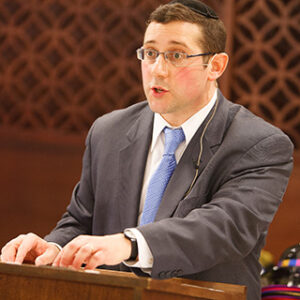
Lessons on Leadership from Abraham and Sarah
Nov 13, 2020 By Jonathan Milgram | Commentary | Hayyei Sarah
Sarah Imenu, matriarch of the Jewish people, is a rich and complex biblical character. As we read this week of her demise and her husband’s quest for her rightful resting place, it seems fitting to reflect on her extraordinary life, her role in the creation of the Jewish people, and the model of leadership she, together with Abraham, bequeathed to us as a legacy.
Read More
Tales of the Holy Mysticat
Nov 12, 2020 By Library of the Jewish Theological Seminary | Public Event video
In Tales of the Holy Mysticat, Rabbi Adler, a professor of Modern Jewish Thought and one of our generation’s most profoundly creative scholars, uses a collection of whimsical stories, interspersed with cleverly drawn black-and-white illustrations, to provide unique insights into Jewish mysticism. And it’s all portrayed through the life of her cat. In this online conversation, Rabbi Adler discusses how, just as the Holy Mysticat became Adler’s teacher, so too can the Holy Mysticat teach us all.
Read More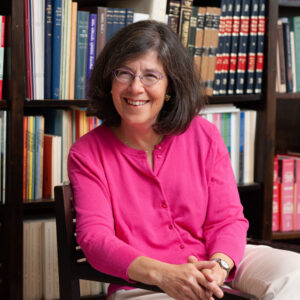
Israel Primer: Exploring the History of the Modern State of Israel
Nov 10, 2020 By Matthew Berkowitz
Read More
Remix Judaism
Nov 9, 2020 By Library of the Jewish Theological Seminary | Public Event video
Relying on modern Jewish sociology, in addition to narratives running the gamut from the Talmud to timely interviews and personal stories, Remix Judaism shows how a Jewish tradition open to personal meaning can substantially deepen one’s connection to Jewish tradition.
Read More
Nurturing Character, Community, and Meaning-Making Through Jewish Education
Nov 9, 2020 By Jeffrey Kress | Public Event video | Video Lecture
Even as we are zooming forward into a new, Covid-altered educational landscape, there are goals of Jewish education—whether in schools, camps, home, or other settings—that are enduring. In this session we will look at Jewish education through the lenses of character, community, and meaning-making to provide context for current discussions of online and hybrid learning, and to expand our thinking about the goals and processes of Jewish learning.
Read More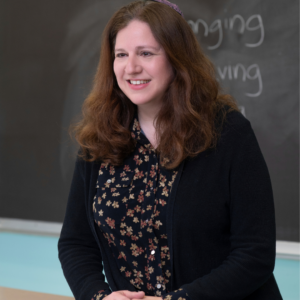
Running Far, Drawing Near
Nov 6, 2020 By Naomi Kalish | Commentary | Vayera
“Shalom, shalom to the one who is far away and to the one who is close.” Drawn from the Yom Kippur haftarah, the editors of Mahzor Lev Shalem used these words to open the high holiday prayer book. This year the words held a special poignancy, as each of us was simultaneously “the one who is far away” and “the one who is close.”
Read More


SUBSCRIBE TO TORAH FROM JTS
Our regular commentaries and videos are a great way to stay intellectually and spiritually engaged with Jewish thought and wisdom.