


Noa Rubin – Senior Sermon (RS ’26)
Oct 23, 2025 By JTS Senior Sermon | Commentary | Senior Sermon | Noah
Noah All Class of 2026 Senior Sermons
Read More
Monotheism: Evolution or Revolution
Oct 20, 2025 By Benjamin D. Sommer | Public Event video | Video Lecture
Professor Benjamin Sommer discussed the debate among modern scholars about the origin of biblical monotheism: did this religious idea develop gradually among the ancient Israelites during the biblical period, or did it appear suddenly early in Israelite history? To what extent were the theological beliefs of the biblical authors radically innovative, and to what extent did they display continuity with the religions of the Israelites neighbors in Canaan, Babylonia, Assuria, and Egypt?
Read More
Making Meaning From Chaos
Oct 17, 2025 By Mychal Springer | Commentary | Bereishit
The opening words of B’reishit are exhilarating. “In the beginning God created the heaven and the earth.” Each day, as God creates the world and everything in it, we are told that it is good. On the sixth day, when God creates people, we are told that it is very good. From the chaos comes order, goodness, and endless possibilities. But the parashah ends with the world on the verge of destruction: “The Lord saw how great was man’s wickedness on earth, and how every plan devised by his mind was nothing but evil all the time. And the Lord regretted that He had made man on earth, and His heart was saddened”
Read More
Sarah Rockford – Senior Sermon (RS ’26)
Oct 16, 2025 By JTS Senior Sermon | Commentary | Senior Sermon | Bereishit
Bereshit All Class of 2026 Senior Sermons
Read More
Impermanence, Empathy, and the Shadow of Faith
Oct 10, 2025 By Yitz Landes | Commentary | Sukkot
It can feel odd that just as it begins to get chilly, and just after the long High Holiday prayers may have left us wanting to simply stay home, we must go outside to sit in the sukkah—an impermanent dwelling that brings us closer to the elements. And it may seem odd that precisely at this moment of impermanence, the Jewish tradition places extra significance on the welcoming in of guests—hakhnasat orhim. Why is it that that we must now enter a place of discomfort? And why is it that we must be extra careful to welcome in guests at this time? In order to answer these questions, we can turn to the representation of Sukkot and its rituals in the Jewish mystical tradition, beginning with the Zohar.
Read More
Our Very Life
Oct 3, 2025 By Lilly Kaufman | Commentary | Ha'azinu
At the end of his life, with Joshua by his side, Moses begins his great, thunderous poem, Ha’azinu, summoning the heavens and the earth as witnesses to his powerful, angry message, as God commanded him to do in the preceding parashah, Vayelekh. And yet, in a one-verse reshut, a prayerful, wishful intention, preceding the central portion of his sermonic poem, he says that he wants his words to land lightly: “May my discourse come down as the rain, my speech distill as the dew, like showers on young growth, like droplets on the grass” (Deut. 32:2). Then suddenly, the central angry theme emerges, and he calls the people “unworthy of [God], crooked, perverse” (32:5), “dull and witless” (32:6).
Read More
When It’s Easier to Hide: Jonah, Antisemitism, and Moral Courage
Sep 29, 2025 By Shuly Rubin Schwartz | Public Event video | Video Lecture | Yom Kippur
As we prepare for the Days of Awe, the Book of Jonah calls us not only to repentance, but to responsibility—especially in a fractured and fearful world. In this session, Chancellor Shuly Rubin Schwartz explored Jonah’s reluctance to engage, his desire to retreat, and God’s challenge to him—and to us. The Book of Jonah summons us to engage and build bridges—even with those who may seem distant or hostile. This session engaged what it means to be brave and morally grounded when it would be easier to turn away—and how, like Jonah, each of us has the power to make a difference.
Read More
The Meaning of Kol Nidre: Human Frailty, Inclusive Community, and the Gravity of Words
Sep 26, 2025 By Shira Billet | Commentary | Yom Kippur
The Kol Nidre service, with its solemn choreography and somber traditional melody,[1] ushers in Yom Kippur with a sobering reminder of the gravity of speech and the importance of honoring our words, setting the tone for a long day of fasting, repentance, and communal prayer.
Read More
When Teshuvah Feels Impossible
Sep 19, 2025 By Noam Blauer | Nitzavim | Rosh Hashanah
Are we really being set up for success for this whole teshuvah business? We might commit to doing all the preparation—journaling, going to shul, talking to therapists, chatting with rabbis, calling up hurt family and friends, New Year’s resolutions, etc.—and it still feels inadequate. Am I actually morally transformed? I am some infinitesimally small fraction of a hypermodern, global, complex network. My actions bear consequences for people on the other side of the globe I will never meet and whose names I will never even know. I still need to bring teshuvah to bear on my most intimate relationships, but is this millennia-old process suitable to the messiness and uncertainty of modern moral life?
Read More
Jews, Non-Jews, and the Purpose of the High Holidays
Sep 16, 2025 By David C. Kraemer | Public Event video | Video Lecture | Rosh Hashanah | Yom Kippur
The Amidah for Rosh Hashanah and Yom Kippur presents a striking, even radical, vision: a world where God alone reigns, where all people—Jewish and not—live in peace, and oppressive regimes vanish. In this vision, the Jewish people are neither erased nor centered. Instead, they are part of a broader human hope.
Read More
The Blessing of Curses: A Rosh Hashanah Puzzle
Sep 12, 2025 By David Hoffman | Commentary | Ki Tavo | Rosh Hashanah
Here’s a puzzle for us to think about as we consider the spiritual work that we need to engage in over the remaining days until Yom Kippur: The Talmud tells us—in the name of Rabbi Shimon ben Elazar—that Ezra the Scribe decreed that, for all time, the Jewish people would read the blessings and curses in Leviticus (Parashat Behukkotai) prior to the holiday of Shavuot and those of Deuteronomy (Parashat Ki Tavo) before Rosh Hashanah (BT Megillah 31b). This decree is strange. Reading these graphic and threatening chapters, which detail the good that will come if we are faithful to God and the suffering that will be wrought if we forsake our relationship with God, is difficult at any time. Why insist that we read them publicly as we ready ourselves to celebrate these joyous holidays?
Read More
Beyond the Sermon: What the High Holiday Prayers Offer and Demand
Sep 8, 2025 By Jan Uhrbach | Public Event video | Video Lecture | Rosh Hashanah | Yom Kippur
We begin our High Holiday webinar series with guidance for how to engage more meaningfully in the prayer part of High Holiday services. Famously long and repetitive, services on these days may sometimes feel overwhelming, boring, or even alienating. In this session, Rabbi Jan Uhrbach, Director of the Block / Kolker Center for Spiritual Arts at JTS, offered practical strategies for participating more fully, and insight into what these services really ask of us and what they offer—especially in tumultuous uncertain times. Along the way, Rabbi Uhrbach will share some of her favorite passages in the Conservative Movement’s Machzor Lev Shalem, for which she was a member of the Editorial Committee. Whether you’re a seasoned prayergoer or showing up with hesitation, this session will help you begin the High Holiday season with openness, intention, and agency.
Read More
Family Matters
Sep 5, 2025 By Jonathan Milgram | Commentary | Ki Tetzei
Academic talmudists are often asked, “Of what use are the findings of academic Jewish Studies to lay people? Can historical research inform our contemporary dialogue on the pressing issues of our day?” I propose that developments in family law from biblical to Rabbinic times have much to teach us in our evaluating the rapidly changing values and their accompanying changing laws in our own times.
I begin in an unlikely place: the curious set of verses in this week’s parashah, Ki Tetzei, about filial favoritism:
Read More
Appoint Judges and Officials
Aug 29, 2025 By Marcus Mordecai Schwartz | Commentary | Shofetim
The year was 1752, the place Copenhagen, and Rabbi Yehonatan Eybeshutz, Chief Rabbi of Hamburg, Altona, and Wandsbeck, was on trial before the royal court of Denmark. King Frederick V himself was acting as the presiding judge. Altona was legally a province of Denmark, and the Altona City Council had turned to the king to resolve a controversy among the Jews that was breaking into violence in the streets. They had already tried placing Eybeshutz’s opponent in the matter, Rabbi Yaakov Emden, under house arrest. Emden’s escape to Amsterdam under cover of darkness made matters worse. The intensified presence of the city watch among the Jews only increased tensions. In desperation the burghers of Altona had turned to the king of Denmark.
Read More
How to Practice Faith
Aug 22, 2025 By Daniel Nevins | Commentary | Re'eh
Why, if this is so obvious, do most people expect that another proficiency will come quickly and without effort? I refer here to faith. Many people think that religious faith is something that one either has or doesn’t have, and that it is acquired in an instant. You should just feel God’s presence the minute you open a prayer book or light the candles. We are impatient with faith and don’t invest the effort needed to develop it. Popular stories of sudden conversions foster the expectation that faith is a gift requiring no effort.
Read More
Adhering to God’s Word
Aug 15, 2025 By Raymond Scheindlin | Commentary | Eikev
In Parashat Eikev, we hear the voice of Moses, that most eloquent of preachers, exhorting the Israelites as to how to behave in the Land that he is never to see. He reminds them of their past misconduct and warns that if it continues, they will not thrive in the Land. He devotes much of his attention to the Land itself. Except for a historical digression on the episode of the Golden Calf and several other occasions of Israelite backsliding, most of the parashah is devoted to describing the excellent qualities of the Land of Israel, foretelling the easy conquest of its inhabitants, promising its bounty, and warning of the consequences of using it badly.
Read More
Holding Fast
Aug 8, 2025 By Mychal Springer | Commentary | Va'et-hannan
This week we emerge from the destitution of Tisha Be’av, the fast day that commemorates the destruction of the Temples, and receive the gift of Shabbat Nahamu, the Shabbat of our being comforted. נַחֲמוּ נַחֲמוּ עַמִּי יֹאמַר אֱלֹהֵיכֶם, “Comfort, oh comfort My people, Says your God” (Isaiah 40:1). What is comfort? One way of understanding the essence of comfort is by engaging with Moshe Rabbenu (our teacher, Moses) in this week’s parashah.
Read More
Black North, White West: Color, Grief, and the Geography of the Soul
Aug 1, 2025 By Marcus Mordecai Schwartz | Commentary | Devarim | Tishah Be'av | Yom Kippur
There’s a tradition in ancient Semitic languages of mapping the world with colors. The north is black. The south is red. The west is white. The east—sometimes blue, sometimes green. In Arabic, the Mediterranean is still called al-baḥr al-abyaḍ al-mutawassiṭ—the White Middle Sea. The Red Sea is to the south. The Black Sea lies to the north.
Read More
Boundaries on the Move
Jul 25, 2025 By Benjamin D. Sommer | Commentary | Masei | Mattot | Shabbat Rosh Hodesh
Every week, we read a parashah from the Torah during our Shabbat morning service, and then the beginning of the next parashah during our Shabbat afternoon service. The result of reading from two parashiyot on a single day can be surprising. This week, as we read first from Masei, the last parashah of Numbers, and then from Devarim, the first from Deuteronomy, we can hear an ancient debate about an issue that remains deeply contested: where to draw the line.
Read More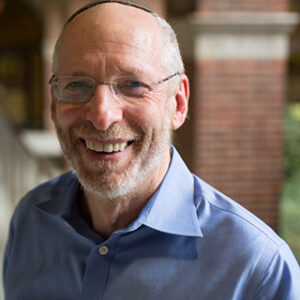
The Liberator and the Zealot
Jul 18, 2025 By Eliezer B. Diamond z”l | Commentary | Pinehas
In his recently published book, The Zealot and the Emancipator: John Brown, Abraham Lincoln, and the Struggle for American Freedom, H.W. Brands contrasts the attitudes of Brown and Lincoln toward slavery, and the methods used by each to end it. In doing so, he makes the case that the terms “liberator” and “zealot” accurately encapsulate the role of each in abolishing slavery.
Read More


SUBSCRIBE TO TORAH FROM JTS
Our regular commentaries and videos are a great way to stay intellectually and spiritually engaged with Jewish thought and wisdom.